The Saturday Read ‘The Portable Veblen’ by Elizabeth McKenzie

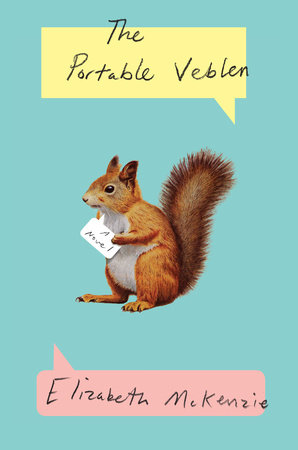
The Saturday Read this week,‘The Portable Veblen’ by Elizabeth McKenzie is about the life choices we make, via a different kind of Silicon Valley story.

The heroine of the novel is Veblen Amundsen-Hovda, a not so typical,’gig’ economy participant, making a living by combining assignments as an office assistant in Neurology at the Stanford University School of Medicine, translating for the Norwegian Diaspora Project in Oslo, and writing about her namesake Thorstein Veblen. (Yes, that witty critic of capitalism who invented the term ‘conspicuous consumption’.)

Or as the author describes her “independent behaviorist, experienced cheerer-upper, and freelance self, who was having a delayed love affair with the world due to an isolated childhood and various interferences since.”

When we meet Veblen she has just accepted a marriage proposal from Paul Vreeland scientist, and inventor of the Pneumatic Turbo Skull Punch.

Did I mention the squirrels?  One in particular, who appears at her window just after her engagement, seeming to ask: “How well do you know yourself, and all the choices you could make?” 

In her review of the novel, NPR’s Heller McAlpin captured the theme that continues to resonate long after the reader arrives at Appendix G (in Norwegian), “this is ultimately a morality tale about the values by which we choose to live.”

If you have spent time in academia you will appreciate the absurdity of naming your child for the subject of your unfinished doctoral dissertation. You will also recognize the financial pressures of ‘technology transfer’, and ‘monetizing research’ that drive Paul’s decision to work for Big Pharma.

What if you invented something that could save lives? Wouldn’t you choose a firm that promised unlimited resources to expedite the process to market?

It’s easy to understand Paul’s choice. But in the world of bright shiny incentives he misses the point of who he will become as part of an unscrupulous conglomerate.

Fortunately for our couple and squirrel(s), good triumphs over evil in a series of memorable scenes that prove ‘what goes around, comes around’.

In ‘The Portable Veblen’, author McKenzie utilizes humor to narrate this story of choices, change, and consequences. If you’re looking for the perfect read for the recent grad, or are working through conflicting values at work, spend a few hours with Veblen, Paul and a supporting cast of frisky, philosophical squirrels.


‘A Way Back To Then’ words and music by Jeff Bowen

The Friday Poem this week comes from the one act musical, [title of show], which ran on Broadway for 102 performances in 2008. ‘A Way Back To Then’ was written by Jeff Bowen.

I discovered the words and music while listening to the ‘On Broadway’ channel as we drove across country this week.

This one is for all the dreamers, as a reminder that “when you least expect, opportunity walks through the door…and there you are, right in the middle of what you love…”

‘Finding My Way Back To Then’

Dancing in the backyard
Kool-aid moustache and butterfly wings
Hearing Andrea McArdle sing
From the hi-fi in the den
I’ve been waiting my whole life
To find a way back to then

I aimed for the sky
A nine-year-old can see so far
I’ll conquer the world and be a star
I’ll do it all by the time I’m ten
I would know that confidence
If I knew a way back to then

So I bailed on my hometown
And became a college theatre dork
I was eastbound and down
Moving to New York
So I crammed my life in a U-Haul
To find my part of it all

But the mundane sets in
We play by the rules
And plough through the days
The years take us miles away
From the time we wondered when
We’d find a way back to then

And when you least expect
Opportunity walks through the door
You suddenly connect
With the thing that you forgot
That you were looking for

And there you are
Right in the middle of what you love
With the craziest of company
You’re having a kick-ass time
And being who you wanted to be in this world

You’re that little girl
With her wings unfurled
Flying again
Back in your backyard dancing
I found a way back to then.

The Saturday Read from the 2016 winners of the Pulitzer Prize

Four writers and journalists, whose work was featured in this blog, were among the winners of the Pulitzer Prize announced on Monday. Today, for the ‘Saturday Read’ we revisit the writings of William Finnegan, Kathryn Schulz, Emily Nussbaum and Lin-Manuel Miranda.

Three journalists call The New Yorker home. On Monday, it became the first magazine to be honored with the Pulitzer Prize. Emily Nussbaum and Kathryn Schulz earned Pulitzers in criticism and feature writing respectively, and William Finnegan received the prize for biography.

CgXH66tUEAAYowv.jpg

“Emily Nussbaum, who has won the 2016 Pulitzer Prize for Criticism, writes essays and reported pieces about television that are fearless, hilarious, and pioneering. Among the pieces submitted to the Pulitzer committee were her standout essays on Joan Rivers, P. Jay Sidney, advertising, and “Mad Men.”

Unknown.jpeg

“Kathryn Schulz, who arrived at The New Yorker less than two years ago, has won the 2016 Pulitzer Prize for Feature Writing, for “The Really Big One,” her piece on the more than a little troubling geology of the Pacific Northwest. Her evocations of the earthquake in Japan in 2011 and of the earthquake that could occur in the states of Washington and Oregon stay with us much like works of the best fiction, to say nothing of horror films.”

The Saturday Read on December 12, 2015 included excerpts from this ‘long read’.

“Just north of the San Andreas, however, lies another fault line. Known as the Cascadia subduction zone, it runs for seven hundred miles off the coast of the Pacific Northwest, beginning near Cape Mendocino, California, continuing along Oregon and Washington, and terminating around Vancouver Island, Canada. The “Cascadia” part of its name comes from the Cascade Range, a chain of volcanic mountains that follow the same course a hundred or so miles inland. The “subduction zone” part refers to a region of the planet where one tectonic plate is sliding underneath (subducting) another. Tectonic plates are those slabs of mantle and crust that, in their epochs-long drift, rearrange the earth’s continents and oceans. Most of the time, their movement is slow, harmless, and all but undetectable. Occasionally, at the borders where they meet, it is not.”

IMG_4026.jpg

“William Finnegan, who has been a staff writer since 1987, has won the 2016 Pulitzer Prize for Biography, for his memoir about surfing, “Barbarian Days.” This project has been Finnegan’s literary obsession for a very long time. It began as a series in our pages more than two decades ago, and came to completion in June, with “Off Diamond Head,” an excerpt from the book, which was published not long after.”

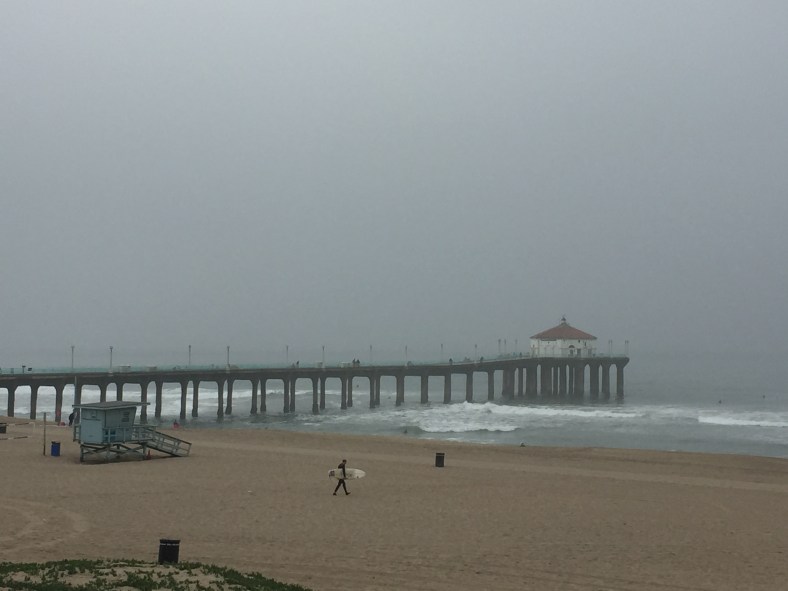
The Saturday Read on August 1, 2015 recommended ‘Barbarian Days, A Surfing Life’.

“When you do a book reading in Manhattan Beach, California you need to use a microphone so the guys with ‘surfer’s ear’ in the back can understand you. Last night New Yorker journalist and lifetime surfer William Finnegan used a mic as he read from his well reviewed new book…

The Q&A at the reading was closer to a book club discussion than a publicity event. Most of those attending had either read the book or the excerpt in the June 1 issue of the New Yorker magazine. This is not just a book about surfing. Mr. Finnegan is a well regarded journalist with a resume that includes reporting from South Africa, Somalia, the Balkans, Central America and Australia. Robert Boynton included him in his conversations with America’s best nonfiction writers in ‘The New New Journalism’.”

IMG_2517

Lin-Manuel Miranda won the Pulitzer for drama, for ‘Hamilton’. “For a distinguished play by an American author, preferably original in its source and dealing with American life.”

“A landmark American musical about the gifted and self-destructive founding father whose story becomes both contemporary and irresistible.”

David Rooney reported on the prize for Billboard. “Miranda wrote the book, music and lyrics for the show, in addition to starring in the title role. The Pulitzer now further cements Hamilton’s status as the toughest ticket in town and the clear frontrunner to take the top musical kudos at this year’s Tony Awards in June.”

I have written about Miranda and Hamilton five times in the past year. My favorite is ‘The Power of Taking a Break & the Unexpected Inspiration of Reading’ on March 4, 2015.

“If Mr. Miranda had not been on vacation, taking time away from work, we may have been deprived of his creativity and ability to connect the dots as he developed his perspective for the play: “Miranda saw Hamilton’s relentlessness, brilliance, linguistic dexterity, and self-destructive stubbornness through his own idiosyncratic lens. It was, he thought, a hip-hop story, and immigrant’s story.”

Ms. Mead’s article tells the story of the evolution of Mr. Miranda’s career, the development of ‘Hamilton’, and the connections he has made along the way with mentors and creative partnerships.

Sometimes we think creativity belongs to the artist and we struggle to find opportunities to relate to our own workplace. But creativity is about imagination and storytelling our way to solving a problem. Taking time away allows for a different view. If we are open to the unexpected we can connect the dots and reframe the narrative. And, maybe be online Sunday to buy tickets and see how it’s done.”

‘I Wandered Lonely as a Cloud’ a poem by William Wordsworth

As world leaders gather in New York to sign the climate accord reached in Paris in December, let’s celebrate Earth Day with a poem by William Wordsworth.

In 1802, the world outside our window looked a bit different. On a walk with his sister Dorothy, Wordsworth observed a “long belt” of daffodils, inspiring him to pen I Wandered Lonely as a Cloud.

wordsworth daffodils.png

The poem captures the essence of Earth Day: preserving the beauty of nature, and the life affirming inspiration of a simple walk outdoors.

I Wandered Lonely as a Cloud

I wandered lonely as a cloud
That floats on high o’er vales and hills,
When all at once I saw a crowd,
A host, of golden daffodils;
Beside the lake, beneath the trees,
Fluttering and dancing in the breeze.

Continuous as the stars that shine
And twinkle on the milky way,
They stretched in never-ending line
Along the margin of a bay:
Ten thousand saw I at a glance,
Tossing their heads in sprightly dance.

The waves beside them danced; but they
Out-did the sparkling waves in glee:
A poet could not but be gay,
In such a jocund company:
I gazed—and gazed—but little thought
What wealth the show to me had brought:

For oft, when on my couch I lie
In vacant or in pensive mood,
They flash upon that inward eye
Which is the bliss of solitude;
And then my heart with pleasure fills,
And dances with the daffodils.

William Wordsworth

The Saturday Read ‘Hamilton The Revolution’ by Lin-Manuel Miranda and Jeremy McCarter

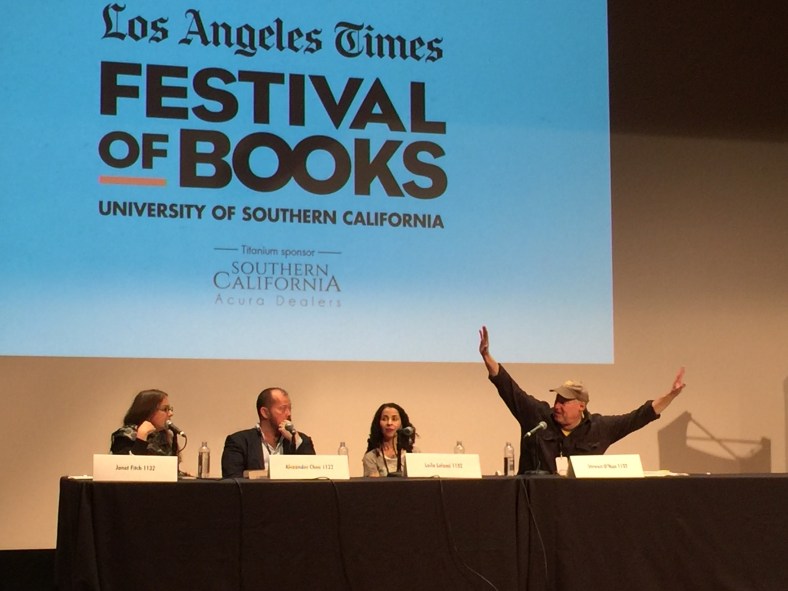
I saw the hat first, ‘A.HAM’ emblazoned on its crown. In the midst of the crowds converging on the campus of the University of Southern California last weekend for the LA Times Festival of Books, a student and her parents were headed to an open house hosted by the School of Dramatic Arts. The black and gold logo was a reminder that the phenomena that is ‘Hamilton’ continues to spark the dreams of the aspiring actor, striving historian, and would-be composer.

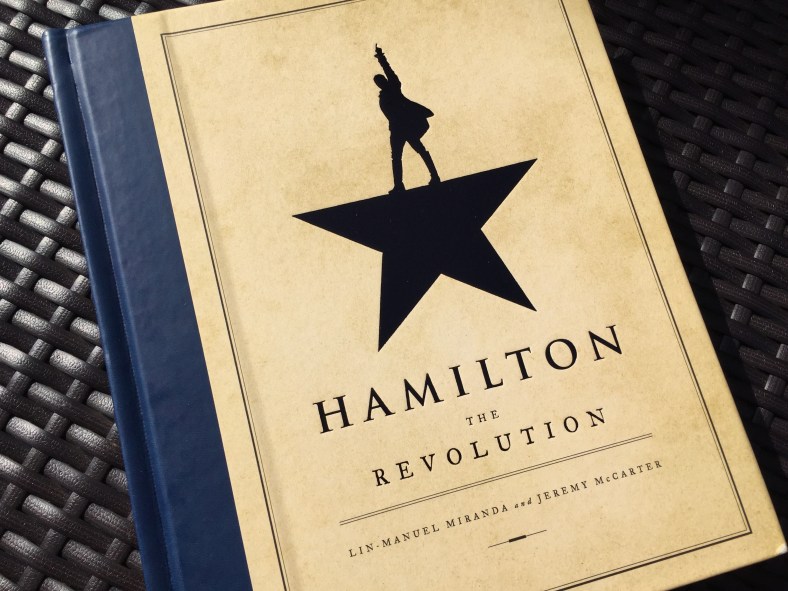
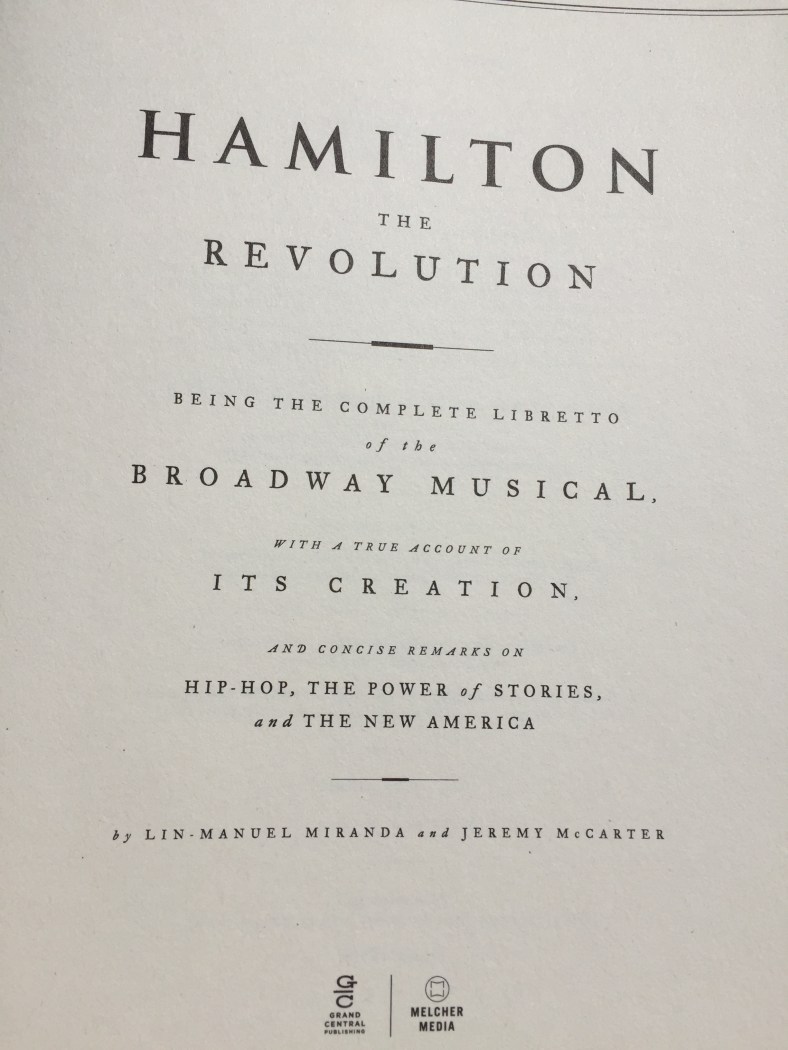
First there was Ron Chernow‘s 2004 book, ‘Alexander Hamilton’. Last summer, ‘Hamilton’, the musical debuted on Broadway. In February, the original cast recording won a Grammy for Best Musical Theater Album. This week the ‘Hamiltome’ arrived in bookstores and immediately sold out on Amazon. The Saturday Read is ‘Hamilton The Revolution’ by Lin-Manuel Miranda and Jeremy McCarter.

title page.jpg

In 2007 Jeremy McCarter, then drama critic for New York Magazine, reviewed a new play, ‘In The Heights’ and posed the question “Could musicals actually be adapting to a new century’s audience?”

“The most obvious of the show’s many virtues is that it doesn’t sound like the half-assed pseudo-pop that clutters up Broadway. Miranda’s score is rich and kaleidoscopic, as it needs to be.”

In the Introduction to ‘HTR’, Mr. McCarter reflects on his time at New York Magazine and his frustration with lack of interest in the possibilities of hip-hop.

“After many disappointments and false alarms, Heights had made me sit up in my aisle seat: Here’s the guy. Lin’s show about immigration in Upper Manhattan fused salsa, hip-hop, and traditional Broadway ballads to make something old and new, familiar and surprising. Best of all, he made the leap that virtually nobody else had made, using hip-hop to tell a story that had nothing to do with hip-hop – using it as form, not content.”

The writer, director and producer McCarter, who studied history at Harvard connected with the composer, lyricist, actor and Wesleyan alum, Miranda and began a collaboration that resulted in ‘Hamilton The Revolution’.

“It tells the story of two revolutions. There’s the American Revolution of the 18th century, which flares to life in Lin’s libretto, the complete text of which is published here, with his annotations. There’s also the revolution of the show itself: a musical that changes the way that Broadway sounds, and alters who gets to tell the story of our founding, that let’s us glimpse the new, more diverse America rushing our way.”

IMG_4314.jpgThe book is a ‘behind the scenes’ look at the development of a musical. It’s a narrative of the creative process and a roadmap for future generations who will replicate the production on high school and summer stages.

In an interview with CBS This Morning, Mr. McCarter stressed the importance of cataloging the moments from the first rap performance at the White House through the six years to opening night.

We wanted to “tell the story which is not about this historical fact or that historical fact, it’s about the emotional reality that these people were living through…This is not just what happened, but this is how it felt at the time. This is the experience that we all went through…So that ten years from now when kids are doing it they can pick up this book and say ‘Oh, that’s how they did it’, now I understand.”

Where do we find inspiration? It’s the curiosity thing. Mr.Miranda is the master of the inquisitive. And he seems to drawn on every life experience and relationship to connect the dots to his project. Here’s one example from the annotations to ‘You’ll Be Back’.

“I was having a drink with Hugh Laurie, with whom I’d worked on his series ‘House’, and I told him I wanted to write a breakup letter from King George to the colonies. Without blinking, he improv’d at me, “Awwww, you’ll be back,” wagging his finger. I laughed and filed it away. Thanks, Hugh Laurie.”

IMG_4308.jpgWe learn from the wisdom of others. ‘Hamilton The Revolution’ introduces us to a serious set of theater luminaries and traces each of their stories as the words and music evolve.

@work we casually use the buzz words creativity and innovation interchangeably. We imagine we are all curious, exemplars of transformational thinking. But most of us can’t reimagine our way out of our comfort zone. Creativity is hard work.

‘HTR’ is the story of a musical. Its value, for those who work outside the theater, is to show us where curiosity can lead and what creativity looks like.

IMG_4309.jpg

“The last song in the show captures the bitter historical truth that every one of Hamilton’s enemies outlived him, and they did all they could to efface his memory. By ending with Hamilton’s afterlife, not his death, the show asks us to think about what we leave behind when we’re gone: It invites us to think about legacies.”

When Ben Brantley reviewed the musical for the New York Times, he wrote “Hamilton” is, among other things, about who owns history, who gets to be in charge of the narrative.”

Lin-Manuel Miranda and Jeremy McCarter own ‘HTR’, their story, and leave no doubt about who is in charge of the narrative.

“Who tells your story?”


The week@work: Inequality on stage, Apple@40, ‘job crafting’ & odd interview questions

As the economy continues to improve, and include workers who had given up, playwrights are staging works that reflect the continued struggle and inequity in the workplace. This week@work we celebrate Apple@40, take a look at ‘job crafting’ as a way to reimagine work and pose a few interview questions.

Nelson D. Schwartz and Neil Irwin reported ‘Jobs and Wages Notching Gains Long In Coming’ for the New York Times.

“Companies have been hiring in recent months at a pace not seen before in this century. Wages are rising faster than inflation. Joblessness is hovering near the low levels last reached in 2007 before the economy’s downturn.

And perhaps most significantly, the army of unemployed people who gave up and dropped out of the job market is not only looking for work, but actually finding it.

“Wages and participation are where the rubber meets the road,” said Michael Gapen, chief United States economist at Barclays. “We will take our cue about the overall strength of the economy based on that.”

At the same time, the chasm widens between the average worker, still trying to recover with modest wage gains, and the quantum leaps in compensation for the wealthy.

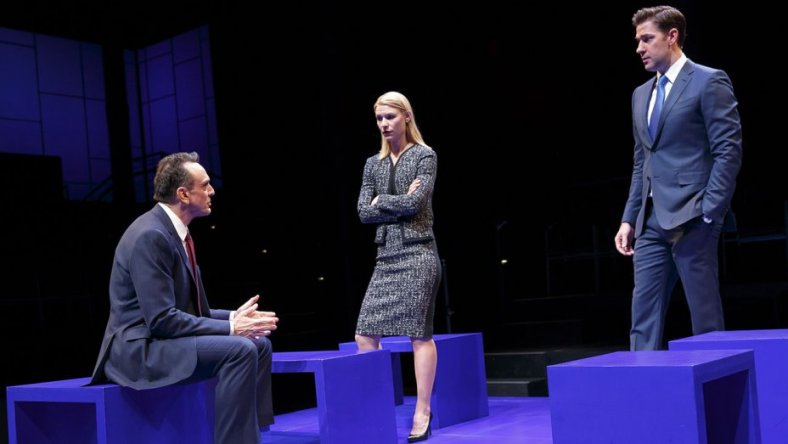
It’s this divergence that is reflected in several theater productions, under the heading ‘Haves and have-nots: Putting America’s financial inequality on the stage’. The Economist article reviews ‘The Humans’, ‘Hungry’, ‘Hold On To Me Darling’, ‘The Way West’, ‘Dry Powder’, and ‘Red Speedo’ to illustrate how the economy and work are inspiring a generation of playwrights.

“There is something familiar about the Blakes, the American family at the centre of “The Humans”, a new play by Stephen Karam that is now on Broadway. Anyone who has navigated the emotional minefield of a family meal will recognise the affectionate way they bicker, their barbs softened with tenderness. But something else about this family will also resonate with a growing group of Americans: each member is struggling financially.

This conversation resembles countless others across the country, as Americans try to make sense of an economy in which working hard is no longer enough to afford a comfortable life. Parents who assumed that their children would surpass their own accomplishments are now startled to find so many of them sweating over rent and saddled with college debt. What does it take to get ahead? Why does the system create so few haves and so many have- nots?”

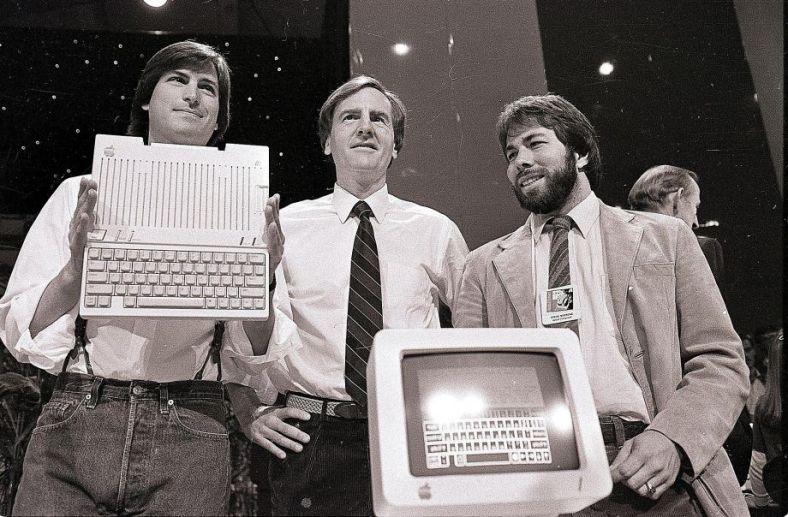
This past week marked the 40th anniversary of Apple. In his commencement speech to the Stanford class of 2005, co-founder Steve Jobs recalled the journey from start-up to his firing by the Board of Directors.

920x1240.jpg

“I was lucky — I found what I loved to do early in life. Woz and I started Apple in my parents’ garage when I was 20. We worked hard, and in 10 years Apple had grown from just the two of us in a garage into a $2 billion company with over 4,000 employees. We had just released our finest creation — the Macintosh — a year earlier, and I had just turned 30. And then I got fired. How can you get fired from a company you started? Well, as Apple grew we hired someone who I thought was very talented to run the company with me, and for the first year or so things went well. But then our visions of the future began to diverge and eventually we had a falling out. When we did, our Board of Directors sided with him. So at 30 I was out. And very publicly out. What had been the focus of my entire adult life was gone, and it was devastating.

We know the rest of the story. Jobs returned to Apple in 1997. David Pierce and Michael Calore identify ‘Fifteen Products That Defined Apple’s First 40 Years’.

iPhone-SE-gaming.jpg

#1 the iPhone

“If you want to understand the iPhone’s importance to Apple, just look at its earnings. But it’s not just that: Without it, our phones might still look like BlackBerries. We might never have learned to pinch to zoom. We might all carry point-and-shoots. It’s almost impossible to overstate the revolution the iPhone started in 2007, which has touched and connected billions of people around the world.”

hiddenbrain_deepbluereverse2_sq-d4dc2bc0fb94c4fa0074fb7ab2e1b681e6245d7a-s400-c85

If you prefer to digest ideas via podcast, add NPR’s Hidden Brain to your subscription list. Last week’s installment featured host Shankar Vedanta in conversation with Yale’s Amy Wrzesniewski on finding meaning in our work.

“Why do you work? Are you just in it for the money or do you do it for a greater purpose? Popular wisdom says your answer depends on what your job is. But psychologist Amy Wrzesniewski at Yale University finds it may have more to do with how we think about our work. Across groups such as secretaries and custodians and computer programmers, Wrzesniewski finds people about equally split in whether they say they have a “job,” a “career” or a “calling.” 

According to Wrzesniewski’s research “people who see work as a calling are more satisfied, engaged, and better performers”. These are folks who “go beyond notice” to craft the boundaries of their job to make work more meaningful.

The last story from this week@work is about interview questions. File it under the query, ‘What was the oddest question you were asked in an interview?’, from recruiting site, glassdoor.com.

Here’s a sample:

“What would the name of your debut album be?” (Urban Outfitters)

“What would you do if you found a penguin in your freezer?” (Trader Joe’s)

And here’s one that we should all be prepared to answer.

“If you were a brand, what would be your motto?” (BCG)

Think about it, and have a great week@work.


The Saturday Read ‘Seven Brief Lessons On Physics’ by Carlo Rovelli

It was the ‘chirp’ heard around the world. In February scientists announced the discovery of gravitational waves formed by two black holes colliding, confirming the century old predictions of Albert Einstein.

If you’re not a physicist or a physics major, you may have only a passing familiarity with the terms used in the previous sentence. And yet, we just experienced, in a ‘galaxy far far away’, what the New York Times science reporter Dennis Overbye described as a moment “destined to take its place among the great sound bites of science, ranking with Alexander Graham Bell’s “Mr. Watson — come here” and Sputnik’s first beeps from orbit.” 

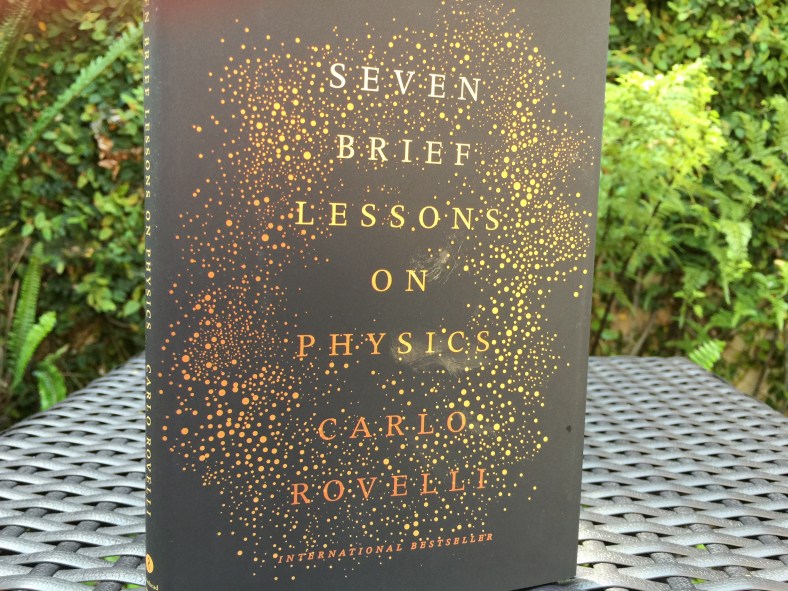
The Saturday Read this week is ‘Seven Brief Lessons on Physics’ by physicist Carlo Rovelli of Aix-Marseille University and the Intitut Universitaire de France. Spend some time with this exquisite book and become a bit more fluent in the language of physics.

“These lessons were written for those who know little or nothing about modern science. Together they provide a rapid overview of the most fascinating aspects of the great revolution that has occurred in physics in the twentieth and twenty-first centuries, and of the questions and mysteries that this revolution has opened up. Because science shows us how to better understand the world, but it also reveals to us just how vast is the extent of what is still not known.”

Beginning with Einstein’s ‘beautiful theory’ of relativity, Rovelli follows the science beyond gravity to quantum mechanics and quantum gravity.

Is your hair is hurting? Hang in there.

“Physics opens windows through which we see far into the distance. What we see does not cease to astonish us. We realize that we are full of prejudices and that our intuitive image of the world is partial, parochial, inadequate. Earth is not flat; it is not stationary. The world continues to change before our eyes as we gradually see it more extensively and more clearly.”

Are we still talking about science? The magic of Rovelli’s prose is its simplicity in conveying painfully complex theories.

We learn the value of ‘wasting’ time.

“In his youth Albert Einstein spent a year loafing aimlessly. You don’t get anywhere by not ‘wasting’ time – something, unfortunately, that the parents of teenagers tend frequently to forget.”

And that we live in “A world of happenings, not of things.”

Rovelli describes concepts visually.

“…before experiments, measurements, mathematics, and rigorous deductions, science is about all about visions. Science begins with a vision. Scientific thought is fed by the capacity to ‘see’ things differently than they have been previously seen.”

And reminds us that “Genius hesitates.”

The essays originally appeared as a series for the culture section of  Il Sole 24 Ore, the Italian newspaper. Released last month in the U.S., the book is ranked third on the New York Times combined print & e-book nonfiction list.

Why read ‘Seven Brief Lessons on Physics’? Because it will take you on an adventure beyond your comfort zone in the time it takes you to commute to work.

“We are made of the same stardust of which all things are made, and when we are immersed in suffering or when we are experiencing intense joy, we are nothing other than what we can’t help but be: a part of our world.”


The week@work: ‘idea debt’, interview questions & women@work: #pledgeforparity & the downside of being a trailblazer

‘Idea debt’, emotional intelligence, International Women’s Day, and lessons from the ‘girl next door who loved sports’, headline our survey of stories this week@work .

Are you a ‘wantrapreneur’? Journalist Oliver Burkeman debunks the belief that thinking about doing something is doing it.
1156.jpg

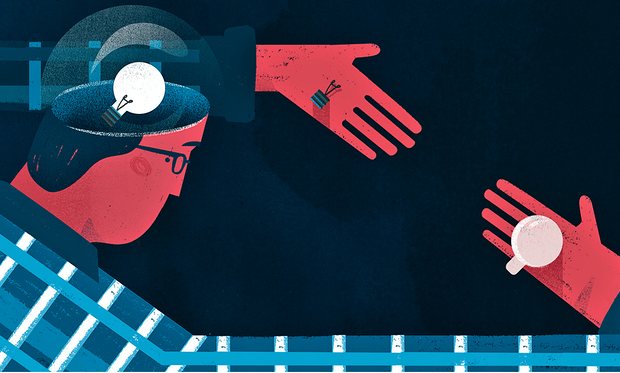
“I hadn’t seen the problem clearly until the other day, when I encountered the illustrator Kazu Kibuishi’s term for it: “idea debt”. You run up an idea debt, Kibuishi’s fellow artist Jessica Abel explained, when you spend “too much time picturing what a project is going to be like, too much time thinking about how awesome it will be… and too little time actually making the thing”.

Just as the accruing interest on a credit card makes it harder and harder to get back on your feet financially, idea debt impedes action. The more glorious and detailed the pictures in your mind, the more daunting it feels to start making them real.

As Gregg Krech writes in his book The Art Of Taking Action, external reality remains exactly the same after your decision to ask someone out, to write a book, or leave your job. What matters is “creating ripples”, as he puts it – actions, however tiny, that alter things in the world outside your head.”

What are the questions employers ask to determine if a job candidate possesses a solid set of ‘people skills’?  With her article, ‘7 Interview Questions That Determine Emotional Intelligence’, Carolyn Sun not only provides tips for interviewers, but explains the rationale behind the questions for potential hires.
images.jpeg

Here’s one example:

“Can you teach me something, as if I’ve never heard of it before? (It can be anything: A skill, a lesson or a puzzle.)
A job candidate’s answer to this question can reveal several qualities:

Whether the person is willing to take the time to think before speaking.

If the candidate has the technical ability to explain something to a person who is less knowledgeable in the subject.

Whether the candidate asks empathetic questions to the person being taught, such as, “Is this making sense?”

On March 8, International Women’s Day, the Economist “created a glass-ceiling index”, to show where women have the best chances of equal treatment at work. It combines data on higher education, labour-force participation, pay, child-care costs, maternity rights, business-school applications and representation in senior jobs. Each country’s score is a weighted average of its performance on nine indicators.

purple-woman.jpgTo no one’s surprise, Nordic countries come out well on educational attainment and labour-force participation. Women are also relatively well represented in their parliaments; Finland and Sweden were among the first countries to allow women to vote and stand for election. Yet even there women are paid less than men for similar work. In Finland and Sweden the gap is close to the OECD average of 15%, though in Norway it has fallen to 8%.

At the bottom of our index are Japan and South Korea. Too few women there have jobs, few senior managers or board members are women and pay gaps are large—in South Korea, at 37%, the largest in the OECD. If, in the UN’s words, “equality for women is progress for all”, both countries have a long way to go.”

If you are interested additional reporting on #pledgeforparity and IWD,  Washington Post journalist Danielle Paquette wrote two stories this week for Wonkblog:

‘It’s 2016, and women still make less for doing the same work as men’

‘Pay doesn’t look the same for men and women at top newspapers’

The next story falls into the category of ‘you should be safe when you pursue your dream job.’

When sports journalist Erin Andrews graduated from the University of Florida in 2000, she began a career that eventually brought her to sidelines of college football at both ESPN and Fox Sports, and the dance floor; first as a finalist and now as the co-host of ‘Dancing With The Stars’.

Sarah Kaplan, reporting for The Washington Post summarized what happened next.

“In 2008, Michael David Barrett, who served 2 1/2 years in federal prison after pleading guilty to interstate stalking — said he chose to target her because she was popular and trending on Yahoo.”

“Erin Andrews wanted to be “the girl next door who loved sports,” she said.

“And now I’m the girl with a hotel scandal,” the Fox sportscaster tearfully told a Tennessee courtroom Monday.”

The trial and jury verdict in her favor last week is just one story of ‘The Dangers of Being a Female Sportscaster’ described by Richard Sandomir and John Branch for The New York Times.

Unknown.jpeg

“Female sportscasters have unparalleled reach in an age of round-the-clock sports broadcasting and the widespread dissemination of their work across social media. There are more of them now than ever, across multiple channels and websites.

The stories Sandomir and Branch recount serve as a guide for all women@work, not just those with a high profile in social media.

“I’ll try to avoid ever being in the hall of a hotel by myself,” said Kim Jones, a reporter for NFL Network. “And I’ll allow whoever is behind me to pass me before I put my card or key in the door. You have to be so aware because unfortunately that one time out of 10,000, something can happen.”

Alyssa Roenigk, a reporter for ESPN the Magazine who also appears on the air, primarily covering action sports like the X Games, said she had rarely given her security much thought. For years, she usually walked from venues to her hotel, even late at night. But as she began to do more television and was recognized more often, she was told by her bosses to start taking the courtesy car provided by the network.

“At first I thought I was getting special treatment, and I don’t want special treatment,” Ms. Roenigk said. “It’s not special treatment. It’s being safe.”

Stay safe this week@work, create some ripples and start reducing that ‘idea debt’.
 

The Friday Poem ‘The Persistence of Song’ by Howard Moss

The Friday Poem this week is ‘The Persistence of Song’ by Howard Moss, the poetry editor of The New Yorker for almost forty years.

“In that influential capacity, this quiet, unassuming man was one of the key figures in American letters in the late twentieth century, boosting the careers of many young poets by publishing their work in one of the few mass circulation magazines which bought poetry and paid well for it.”

This one is for the mentors who open doors, make connections and by their presence create a model to be imitated.

The poem appeared in The New Yorker in the fall of 1966 and takes us to a time in the city, when life after work was anticipated ..” When the secretaries have changed their frocks, And though it is not yet evening, There is a persistence of song.”

The Persistence of Song

Although it is not yet evening,
The secretaries have changed their frocks
As if it were time for dancing,
And locked up in the scholars’ books
There is a kind of rejoicing,
There is a kind of singing
That even the dark stone canyon makes
As though all fountains were going
At once, and the color flowed from bricks
In one wild, lit upsurging.

What is the weather doing?
And who arrived on a scallop shell
With the smell of the sea this morning?
-Creating a small upheaval
High above the scaffolding
By saying, “All will be well.
There is a kind of rejoicing.”

Is there a kind of rejoicing
In saying, “All will be well?”
High above the scaffolding,
Creating a small upheaval,
The smell of the sea this morning
Arrived on a scallop shell.
What was the weather doing
In one wild, lit upsurging?
At once, the color flowed from bricks
As though all fountains were going,
And even the dark stone canyon makes
Here a kind of singing,
And there a kind of rejoicing,
And locked up in the scholars’ books
There is a time for dancing
When the secretaries have changed their frocks,
And though it is not yet evening,

There is the persistence of song.

Howard Moss  The New Yorker, November 19, 1966