The Friday Poem ‘The Familiar Has Taken Leave’

Why are we always surprised when national events veer from a predicted trajectory? Maybe we’ve been spending too much time with analytics and not enough time with the poets.

Megan Garber wrote in The Atlantic last week about the role of poetry in the aftermath of the 2016 U.S. presidential election. “Campaign in poetry; govern in prose,” the old adage goes. This moment, though, has in many ways flipped that idea: The 2016 presidential campaign was decidedly lacking in poetry. Yet in its aftermath, as Americans consider the contours of their new government, they are, often, turning to poems…”

She interviewed Don Share, the editor of Poetry magazine to discover why poetry was having a ‘moment’.

“Well, it’s always been speaking to people—and it’s always been speaking to people about the kinds of things they’re taking about now, because one of the things poetry is really good at is anticipating things that need discussion. Poets are kind of like—it’s a bad metaphor, but—canaries in a coal mine. They have a sense for things that are in the air. Partly because that’s what they do—they think about things that are going on—but partly because they take their own personal experience and see how that fits in with what they see in the world. A lot of people might think that poetry is very abstract, or that it has to do with having your head in the clouds, but poets, actually, walk on the earth. They’re grounded, feet-first, pointing forward. They’re moving around and paying attention at every moment.”

Perhaps next time, we should survey the poets, not the pollsters.

Until then, the events of the past 11 days brought me to a poem selected by Matthew Zapruder for the August 16, 2016 issue of The New York Times Magazine.

The poem, written by broadcaster, documentary filmmaker and poet, Richard O. Moore was part of a “sequence of sonnets about the consequences of losing his sight in old age”.

At its core, the poem is about change…and how we respond.

The Familiar Has Taken Leave

Responding to a world turned outside in
Requires a fresh agility of will
And a surreal mode of thought, both distant
When the world was visible and real.
The only carry-over is the sound:
The hollow clatter of the commonplace,
Ancestral voices, sepulchral complaints
From many sources now invisible.

This is the most dispassionate I can be.
The familiar has taken leave with all I know
And what is left is mostly echo fading,
Never to return. What takes shape then
Is virtual and is a world apart
Assembled half by memory, half by art.

Richard O. Moore (1920-2015) from ‘Particulars of Place’ April, 2015

ParticularsOfPlace-Cover-1.5x2.25-300dpi-CMYK-200x283.jpg


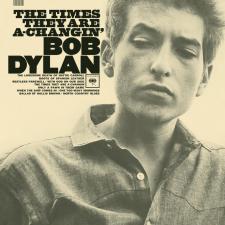
The Times They Are A-Changin’

On Thursday morning Professor Sara Danius, Permanent Secretary of the Swedish Academy, announced the 2016 Nobel Prize in Literature.

“The Nobel Prize in Literature for 2016 is awarded to Bob Dylan “for having created new poetic expressions within the great American song tradition”.

In the hours that followed, the surprise decision was debated by the literati. A frequently mentioned candidate for the prize in literature, author Salman Rushdie, placed the choice in context via Twitter.

“From Orpheus to Faiz, song & poetry have been closely linked. Dylan is the brilliant inheritor of the bardic tradition. Great choice.”

In honor of that choice, the Friday Poem this week is Dylan’s ‘The Times They Are A-Changin’.


The Times They Are A-Changin’

Come gather ’round people
Wherever you roam
And admit that the waters
Around you have grown
And accept it that soon
You’ll be drenched to the bone
If your time to you is worth savin’
Then you better start swimmin’ or you’ll sink like a stone
For the times they are a-changin’

Come writers and critics
Who prophesize with your pen
And keep your eyes wide
The chance won’t come again
And don’t speak too soon
For the wheel’s still in spin
And there’s no tellin’ who that it’s namin’
For the loser now will be later to win
For the times they are a-changin’

Come senators, congressmen
Please heed the call
Don’t stand in the doorway
Don’t block up the hall
For he that gets hurt
Will be he who has stalled
There’s a battle outside and it is ragin’
It’ll soon shake your windows and rattle your walls
For the times they are a-changin’

Come mothers and fathers
Throughout the land
And don’t criticize
What you can’t understand
Your sons and your daughters
Are beyond your command
Your old road is rapidly agin’
Please get out of the new one if you can’t lend your hand
For the times they are a-changin’

The line it is drawn
The curse it is cast
The slow one now
Will later be fast
As the present now
Will later be past
The order is rapidly fadin’
And the first one now will later be last
For the times they are a-changin’

Bob Dylan, 1963

3992253_159.jpg

Photo credit: Rolling Stone Magazine

The Saturday Read – The National Book Award ‘Long List’

This past week The National Book Foundation announced the ‘long list’ of nominees for The National Book Award to be announced on November 16. The books nominated fall into four categories: Fiction, Non-Fiction, Poetry, and Young People’s Literature.

A quick review of the titles provides a cultural snapshot of the issues we face as individuals and society as a whole. ‘The Saturday Read’ this week offers a list those nominated in the  fiction and non-fiction categories.

The fiction nominees includes an Oprah Book Club pick, my favorite of the past year, and an anticipated new novel to be released in October.

In non-fiction, racism is a common topic; echoing the theme of last year’s ‘required reading’, 2016 award winner, Ta-Nehisi Coates’ ‘Between the World and Me’. The nominees in this category remind us why we read non-fiction: to listen, to understand the world in all its complexity, and to make thoughtful decisions about our future.

Fiction

Chris Bachelder, The Throwback Special (W. W. Norton & Company)

Garth Greenwell, What Belongs to You (Farrar, Straus and Giroux/Macmillan)

Adam Haslett, Imagine Me Gone (Little, Brown and Company/Hachette Book Group)

Paulette Jiles, News of the World (William Morrow/HarperCollinsPublishers)

Karan Mahajan, The Association of Small Bombs (Viking Books/Penguin Random House)

Elizabeth McKenzie, The Portable Veblen (Penguin Press/Penguin Random House)

Lydia Millet, Sweet Lamb of Heaven (W. W. Norton & Company)

Brad Watson, Miss Jane (W. W. Norton & Company)

Colson Whitehead, The Underground Railroad (Doubleday/Penguin Random House)

Jacqueline Woodson, Another Brooklyn (Amistad/HarperCollinsPublishers)

Non-Fiction

Andrew J. Bacevich, America’s War for the Greater Middle East: A Military History
(Random House/Penguin Random House)

Patricia Bell-Scott, The Firebrand and the First Lady: Portrait of a Friendship: Pauli Murray, Eleanor Roosevelt, and the Struggle for Social Justice (Alfred A. Knopf /Penguin Random House)

Adam Cohen, Imbeciles: The Supreme Court, American Eugenics, and the Sterilization of Carrie Buck (Penguin Press/Penguin Random House)

Arlie Russell Hochschild, Strangers in Their Own Land: Anger and Mourning on the American Right (The New Press)

Ibram X. Kendi, Stamped from the Beginning: The Definitive History of Racist Ideas in America (Nation Books)

Viet Thanh Nguyen, Nothing Ever Dies: Vietnam and the Memory of War
(Harvard University Press)

Cathy O’Neil, Weapons of Math Destruction: How Big Data Increases Inequality and Threatens Democracy (Crown Publishing Group/Penguin Random House)

Andrés Reséndez, The Other Slavery: The Uncovered Story of Indian Enslavement in America (Houghton Mifflin Harcourt)

Manisha Sinha, The Slave’s Cause: A History of Abolition (Yale University Press)

Heather Ann Thompson, Blood in the Water: The Attica Prison Uprising of 1971 and Its Legacy (Pantheon Books/Penguin Random House)


The week@work – the value of cross-functional experience, empowering introverts, economic recovery, and a new leader @librarycongress

It turns out that the path to leadership is paved not just by elite MBA degrees, but also with experience across a range of business functions. Once you arrive in the ‘C Suite’ it’s to your advantage to pay attention to the introverts in the room.

In other stories this week@work, evidence shows an increase in middle class incomes, there’s a new Librarian of Congress, and can you remember Oprah’s first book club pick 20 years ago?

Generalize or specialize? That is the question Neil Irwin answers in ‘A Winding Path to the Top’ for The New York Times.

“How does a person get to be the boss? What does it take for an ambitious young person starting a career to reach upper rungs of the corporate world — the C.E.O.’s office, or other jobs that come with words like “chief” or “vice president” on the office door?

The answer has always included hard work, brains, leadership ability and luck. But in the 21st century, another, less understood attribute seems to be particularly important.

To get a job as a top executive, new evidence shows, it helps greatly to have experience in as many of a business’s functional areas as possible. A person who burrows down for years in, say, the finance department stands less of a chance of reaching a top executive job than a corporate finance specialist who has also spent time in, say, marketing. Or engineering. Or both of those, plus others.”

Many corporations, in the past, had institutionalized ‘rotational assignments’ in a variety of business functions under the aegis of ‘leadership development programs’. When ‘shareowner’ value became the primary measure for CEOs, these internal employee development initiatives were shut down. But the need for cross-functional expertise never went away.

“To be a C.E.O. or other top executive, said Guy Berger, an economist at LinkedIn, “you need to understand how the different parts of a company work and how they interact with each other and understand how other people do their job, even if it’s something you don’t know well enough to do yourself.”

Developing multiple areas of expertise provide a pragmatic workplace foundation for the aspiring entrepreneur, the Fortune 500 CEO, and the variety of public and private leadership opportunities in between.

You learn the language, make life-long career connections, and maintain contact with your customer.

grand central ny.jpg

Location seems to influence opportunities as well. Take note, all you folks who hesitate to relocate.

“Beyond the results on job functions, the data from LinkedIn shows some trends for which the explanations aren’t completely obvious. For example, former consultants who lived in New York or Los Angeles had higher odds of ending up with a top job than people in other large cities like Washington or Houston. A former management consultant with 15 years of work experience in six different functions and an M.B.A. from a top school had a 66 percent chance of becoming a top executive if he lived in New York compared with a 38 percent chance in Washington.”

Bottom line, moving out of you career comfort zone, whether that means function or city, holds long-term implications for career success.

The second story this week@work comes from the print edition of The Economist, ‘Shhhh! Companies would benefit from helping introverts to thrive’.

Most companies worry about discriminating against their employees on the basis of race, gender or sexual preference. But they give little thought to their shabby treatment of introverts.

The recent fashion for hyper-connectedness also reinforces an ancient prejudice against introverts when it comes to promotion. Many companies unconsciously identify leadership skills with extroversion—that is, a willingness to project the ego, press the flesh and prattle on in public.

What can companies do to make life better for introverts? At the very least, managers should provide private office space and quiet areas where they can recharge. Firms need to recognise that introverts bring distinctive skills to their jobs. They may talk less in meetings, but they tend to put more thought into what they say. Leaders should look at their organisations through the introverts’ eyes. Does the company hold large meetings where the loudest voices prevail? That means that it is marginalising introverts. Does it select recruits mainly on the basis of how they acquit themselves in interviews? That could be blinding it to people who dislike performing in public.”

Jim Tankersley reported for The Washington Post Wonkblog, ‘Middle class incomes had their fastest growth on record last year’.

ny-corner

“Middle-class Americans and the poor enjoyed their best year of economic improvement in decades in 2015, the Census Bureau reported Tuesday, a spike that broke a years-long streak of disappointment for American workers but did not fully repair the damage inflicted by the Great Recession.

Real median household income was $56,500 in 2015, the bureau reported, up from $53,700 in 2014. That 5.2 percent increase was the largest, in percentage terms, recorded by the bureau since it began tracking median income statistics in the 1960s.

In addition, the poverty rate fell by 1.2 percentage points, the steepest decline since 1968. There were 43.1 million Americans in poverty on the year, 3.5 million fewer than in 2014. The share of Americans who lack health insurance continued a years-long decline, falling 1.3 percentage points, to 9.1 percent.

“The highest income growth was in the bottom fifth” of workers, “which is very welcome news,” said Lawrence Mishel, president of the liberal Economic Policy Institute think tank. Furman, of the White House, credited wage-boosting policy initiatives for some of that increase: “The fact that millions of workers have gotten a raise, as states have raised minimum wages, has definitely had an effect there,” he said.

All told, the gains brought median incomes nearly back to their levels before the recession, after adjusting for inflation, though they remain below 1999 levels. Bureau officials said the 5.2 percent growth rate was not statistically distinguishable from five other previous increases in the data, most recently the 3.7 percent jump from 1997 to 1998.”

On Wednesday, Carla Hayden was sworn in as the 14th Librarian of Congress“Hayden, the first woman and the first African American to lead the national library, was nominated to the position by President Barack Obama on February 24, 2016, and her nomination was confirmed by the U.S. Senate on July 13.”4532.jpg

Baynard Woods covered the appointment for The Guardian, ‘Carla Hayden: new librarian of Congress makes history, with an eye on the future’.“Even though librarianship is one of the four what they call feminized professions – social work, education nursing, and librarianship – where 85% of the workforce is female, there haven’t been an equal amount of women in the leadership positions,” Hayden said in an interview.

Hayden is also only the third Librarian of Congress to actually have training as a librarian.

“There have been lawyers and politicians, historians, scholars, librarians, and I think at this time it’s not a detriment to have a librarian be librarian of Congress,” she said.

The librarian of Congress oversees the world’s largest library system. As the name indicates, one of the main roles of the library is to assist Congress in the research it needs in order to pass bills. It also oversees the US copyright system, names the poet laureate, and preserves historical documents and books.

Hayden first came to national prominence in 2003 when she spoke out against certain elements of the Patriot Act as the head of the American Library Association. Attorney general John Ashcroft attacked Hayden for sowing “hysteria” about the provision of the act that would allow the government to search library and bookstore records.

Hayden shot back.

“We are deeply concerned that the attorney general should be so openly contemptuous of those who seek to defend our Constitution,” she said. “Rather than ask the nation’s librarians and Americans nationwide to ‘just trust him,’ Ashcroft could allay concerns by releasing aggregate information about the number of libraries visited using the expanded powers created by the USA Patriot Act.”

At the time, there was political risk in such statements, but Hayden said she never considered that.”

In history@work this week, September 17 marked the 20th anniversary of Oprah Winfrey’s Book Club. Do you remember the first pick? Jacquelyn Mitchard‘s ‘Deep End of the Ocean’.201603-ep521-own-watn-9-949x534.jpgOprah’s Book Club quickly became a hugely influential force in the publishing world, with the popular TV host’s endorsement capable of catapulting a previously little-known book onto best-seller lists.

When Oprah’s Book Club first launched, some in the publishing world were skeptical about its chances for success. As The New York Times noted: “Winfrey’s project—recommending books, even challenging literary novels, for viewers to read in advance of discussions on her talk show—initially provoked considerable skepticism in the literary world, where many associated daytime television with lowbrow entertainments like soap operas and game shows.” However, the club proved to be a hit with Winfrey’s legions of fans, and many of her picks sold over 1 million copies. (She earned no money from book sales.) Winfrey’s ability to turn not just books but almost any product or person she recommended into a phenomenon came to be known as the “Oprah Effect.”

Celebrate this week@work with a selection from Oprah’s long list of book recommendations.


Photo credit: Carla Hayden by Pablo Martinez Monsivais/AP

The Saturday Read ‘Wild Man: Patagonia’s conflicted philosopher-king’ by Nick Paumgarten

The Saturday Read this week is journalist Nick Paumgarten‘s profile of the “tiny terror”, Yvon Chouinard, founder of the outdoor clothing and gear company, Patagonia.

If you are not familiar with Patagonia, “Our Reason for Being” provides a concise tutorial.

“Patagonia grew out of a small company that made tools for climbers. Alpinism remains at the heart of a worldwide business that still makes clothes for climbing – as well as for skiing, snowboarding, surfing, fly fishing, paddling and trail running. These are all silent sports. None require a motor; none deliver the cheers of a crowd. In each sport, reward comes in the form of hard-won grace and moments of connection between us and nature.

Our values reflect those of a business started by a band of climbers and surfers, and the minimalist style they promoted. The approach we take towards product design demonstrates a bias for simplicity and utility.

For us at Patagonia, a love of wild and beautiful places demands participation in the fight to save them, and to help reverse the steep decline in the overall environmental health of our planet. We donate our time, services and at least 1% of our sales to hundreds of grassroots environmental groups all over the world who work to help reverse the tide.”

“Wild Man” is the story of how Chouinard’s career evolved over time, rooted in love and respect for nature. It’s an entrepreneur’s journey, with cameo appearances by familiar names: journalist Tom Brokaw, The North Face founder, Doug Tompkins, Royal Robbins and Tom Frost.

Nick Paumgarten’s first connection to Patagonia came in 1992 when he “had a job answering phones at Patagonia’s mail-order office, in Bozeman, Montana…As far as qualifications, I was another city kid, but I’d been out in nature a bit and was, in descending order of aptitude, a skier, whitewater kayaker, backpacker, mountain biker, and fly-rod flailer. I had come of age poring over the Patagonia catalogue, with its action shots and exotic locales, and I already had Yvon Chouinard right up there with Jack Kerouac and Jimi Hendrix on my list of great Americans. Plus, I liked the idea of getting good gear at a discount.”

When Paumgarten decides to leave the job early, he gets his first inkling of Patagonia’s corporate culture.

“I quit the job before I was supposed to, in order to go on a ski trip. Of the two women who’d hired me, one was angry and the other understanding. Their reaction embodied an intrinsic schizophrenia at Patagonia. Chouinard had always encouraged his employees to cut work and go surfing when the swell came in. But it was also a company trying to claw its way out of a hole.”

Patagonia survived the economic challenges of the early nineties with layoffs and loans “from a friend and from some Argentines who wanted to get their money out of the country.”

“It was hard,” Chouinard said. “I realized we were just growing for the sake of growing, which is bullshit.”

“The company, he worried, was straying from its hard-core origins. “I was faced with the prospect of owning a billion-dollar company, with thousands of employees making ‘outdoorlike’ clothing for posers,” he said early in 1991, in a speech to the employees, in which he outlined his misgivings and his new resolutions. These subsequently appeared in the Patagonia catalogue, as a manifesto, under the heading “The Next Hundred Years.”

This ‘long read’ is a primer for the aspiring entrepreneur. It’s a vivid narrative of the progression of one man’s career from childhood dreams of being a fur trapper, to climber, private detective, surfer and blacksmith; proving there are no straight career paths. Its also a lesson in failure, resilience and a realization over time that success can be a double- edged sword.

“Eco-conscious fun-hoggery, as an ethos, a culture, a life style, and an industry, spans the world, and even rules some corners of it. Chouinard is its best-known avatar and entrepreneur, its principal originator and philosopher-king, and is as responsible as anyone for guiding it from the primitive tin-can and hobnail aesthetic of the mid-twentieth century to the slackline and dome-tent attitude of today. He has made it more comfortable, and more glamorous, to be outside, in harsh conditions. His influence is way out of proportion to his revenue footprint. He has mixed feelings about all this—some apprehension about the world he has made. He celebrates the spread of an ecological consciousness but laments the disappearance of danger and novelty, and the way that the wilderness has become a hobby, or even a vocation. He disdains ski areas (“They’re golf courses”), the idea of professional climbing (“I just don’t like the whole paid-climber thing”), and the proliferation of extreme sports as programming and marketing (“Red Bull’s in the snuff-film business”).”

Malinda Chouinard, Yvon’s wife and business partner, was a pioneer in ‘on-site daycare’ and in 2012 her efforts resulted in Patagonia becoming “the first California business to become a B Corp.”

“Malinda is principally responsible for making the company a notably humane place to work. Many there cite the advantage of having day care on site. In 1985, Malinda created (and has since put aside a vast patchwork of space for) what became known as the Great Pacific Child Development Center, to which I didn’t give much consideration, until I got a tour. A staff of twenty-eight oversees some eighty kids, on sprawling grounds of more than twelve thousand square feet, roughly half of it outdoors, among the fruit trees. A recent baby boom had led to another expansion, which displaced the H.R. department to a trailer. “We’ve raised fifteen hundred kids so far,” Chouinard told me. “None of them have been in prison—that I know of, anyway.”

Chouinard’s management style?

“I’m just the owner.” He called his executive style “management by absence.” He used to read business books and study various executive styles and corporate structures, here and abroad, but he prefers to take his lessons from nature—from ant colonies, for example. “There’s no management,” he said. “Every ant just does his job. They communicate and figure it out. It’s like a Navy seal team. The whole team has to agree on what the mission is.” It’s also true, however, that Chouinard’s occasionally whimsical notions send the ants scurrying. Absent or not, he’s still the big ant.”

There are multiple gems of wisdom interspersed throughout the profile. When asked “if the prospect of death bothered him”, he shared his secret to a good life.

“Nah, I’ve always considered death to be a part of life,” he said. “Tell you the secret to a good life: always be the oldest one in the room.”


Photo credit: Patagonia annual report

A college degree in sports? No.

An essay published in The New York Times print edition yesterday argued for the establishment of a college degree in sports as a means to bring athletics closer to the academic mission of a university. I disagree.

The way to integrate athletics into the academic mission of the university is to ensure student-athletes have every opportunity to earn the college degree of their choice, engaging in all aspects of the academic enterprise: academic advising, interaction with faculty, collaboration with fellow students, and internships.

University of Colorado professor Roger Pielke Jr. asked “Why Not a College Degree in Sports?” Drawing on previous arguments, Professor Pielke suggested an inherent bias on campus against athletics.

“Widespread prejudice and legitimate resentment against athletics remains in academia, and no wonder. The $6.9 million annual salary of Nick Saban, the head football coach at the University of Alabama, is equal to the combined average salary for nearly 100 assistant professors at the school, according to the most recent data available. And beyond such economic disparities, class distinctions of 19th-century England still shape thinking about sport: Classical music is valued by high society, while sport is for the masses.”

Many have voiced concerns about the consequences of the money being thrown at ‘big time’ athletic programs and it’s appropriate to question a football coach’s salary that far exceeds a university president’s compensation.

But what is missed, always, is the student-athlete. And this is where I disagree with Professor Pielke’s proposal.

Students choose a college or university based on a number of factors: ‘fit’, financial assistance, choice of major, access to faculty, availability of internships, and career aspirations. The student-athlete’s choice includes all of the above, plus the chance to compete in their sport at the highest level.

Suggesting student-athletes enroll in a sports degree program, administered by an athletic department, fortifies an existing boundary; discouraging student athletes from developing key relationships with university academic advisors, faculty, administrators, and non-athlete students.

The college experience serves as a bridge to workplace reality. Isolating student-athletes eliminates access to ‘real world’ campus connections critical for career success.

If a student wants to pursue a career in sport, there are a variety of options in the liberal arts, journalism, business and law.

Rather than reinforce the existing ‘athletic department silo’ with a new curriculum, we can initiate these changes today:

A student-athlete should be able to select a major and complete their degree without influence or interference from their coach.

Practices should not conflict with class schedules.

A student-athlete should have access to all career planning activities including internships, networking events, and on-campus recruiting interviews.

A student-athlete should never have to choose between an academic commitment and their sport.

Coaches should venture beyond the venues of comfort and take opportunities to network with faculty.

We don’t need an ‘academic athletic department’. We need the adults on campus to refocus the debate without prejudice to the students.


The Saturday Read ‘New York Fashion Week: An Oral History’

‘The Saturday Read’ this week is an online interactive feature from the September 8, 2016 New York Times ‘Thursday Styles’ section, capturing a multi-media moment in fashion history as the baton is being passed to the next generation of designers. Ruth La Ferla brings us ‘Our Stories’, an oral history from fashion icons Ralph Lauren, Donna Karan, Calvin Klein, Carolina Herrera, Michael Kors, Issac Mizrahi and Alexander Wang.

This one is for all of you who are first to the newsstand for the September issues of Vogue and Harpers Bazaar, hoping to find a few classical wardrobe elements to update your look for fall. Designer outlets may be the closest most of us get to the runway, but many aspire to a career in one of the global capitals of fashion.

“As New York Fashion Week approaches its 75th year (the first official shows, massed under the heading of Press Week, were held in 1943), with 151 shows spread over nine days, many designers are questioning the future of this semiannual gathering. “We are facing the end of an era,” the designer Diane von Furstenberg said in a recent interview. “But there is nothing nostalgic about that. The future will be more exciting.”

The future may well be exciting, but for many in the industry, the past is one to savor and celebrate. Here, a crowd of fashion notables reflect on their experiences: the good, the bad, the awkward and the forever memorable.”

From their “first shows”, through the “unforgettable moments”, “growing pains”, “the glamour girls” and the “dark days” as AIDS devastated the industry, the top designers, models and fashion commentators share their success, and the mistakes along the way to being installed as icons. If you believe we learn from the wisdom of others, this interactive experience is required reading/viewing.

Here’s a sample.

ZAC POSEN

“In February 2002, when I showed my first collection, I did the setup preshow in my parents’ living room. I had done the collection with small seed money that was generally lent by friends, family and with my savings from the lemonade stand that I had started as a kid on Spring Street.”

ALEXANDER WANG

“Our first fashion week show, for fall 2007, was in a Chelsea warehouse. It was hectic backstage. I remember our casting director freaking out because all the models and dressers (who also happened to be my best friends) were eating greasy pizza, and the director was like, “Where’s Alex?” I was right there eating pizza, too. I guess I didn’t know any better.”

DONNA KARAN

“The turning point came in 1985 when I left Anne Klein. At the time I said to my bosses, “I have this vision for a little company.” Women in those years were wearing shirts and little ties to the office. I asked myself: “Where is the sexuality? Where is the comfort? Where are the clothes that go from day into night? How do you travel with your wardrobe in one bag?” And that’s how the Seven Easy Pieces came about.”

ALEK WEK
Model in the 1990s

“When I started modeling, people kept saying, “Oh, she’s so different, she’s bizarre,” like I wasn’t quite normal. Of course there was a racist element to those conversations. People were beating around the bush. But if I focused on that, I don’t think I would have stayed in fashion. Being viewed as different only gave me more incentive. I wanted people to know that your features or your color don’t make you less beautiful. My motivation was deeper than me just putting on makeup and clothes and doing shows.”

SIMON DOONAN

“All those people perished, and now many young people maybe don’t even know that Perry Ellis was an actual person. Many young African-American designers would be inspired to know how many great African-Americans had careers at the time.

These people didn’t all just get on a bus and drive off somewhere. They died excruciating deaths, some in the hallways of hospitals without help or support. In many instances, their families rejected them. I distinctly remember people who didn’t have a funeral or memorial. I had a friend who was buried in an unmarked grave.

It’s always troubled me that these supertalented original thinkers weren’t adequately memorialized.

They were Patrick Kelly, Angel Estrada, Isaia, Clovis Ruffin, Halston, Antonio Lopez and Juan Ramos, Tina Chow, Tim Hawkins, Robert Hayes and Laughlin Barker. And the photographers: David Seidner, Barry McKinley, Herb Ritts, Bill King and so many more. They were window-dresser friends: Bob Currie, Michael Cipriano, Bob Benzio, Stephen Di Petrie. The list goes on.”


The week@work – end of summer, Wells Fargo issues an apology to artists, start-ups adapt, cycling is the new networking, and the August jobs report

In news this week@work: Wells Fargo placed advertising in advance of ‘Teen Financial Education Day’ implying the worth of career aspirations in the sciences rank above those in the arts, Silicon Valley start-ups are adapting  to anticipate a market downturn, networking has moved from the bar to the bike (that’s a good thing), and the U.S. unemployment rate remained unchanged at 4.9%.

Late Saturday morning I checked my Twitter feed and found this from novelist Caroline Leavitt. Forget post-tropical cyclone Hermine, this was the Labor Day weekend’s perfect storm.

According to Forbes contributing writer, Emily Willingham,“Wells Fargo rolled out an ad campaign this week that it almost immediately withdrew following on Internet outrage from a lot of angry artists and humanities professors. That may not sound that scary, but these folks know how to use words and emote.

The ads, using images depicting teens engaging in sciencey things, urge us to “get them ready for tomorrow” by ensuring that the aspiring ballerinas and actors of today become engineers and botanists of the future…

The message here is, of course, that the future is science. That becoming a ballerina or an actor is a dreamscape fairytale that has no place in a real world of cold hard cash and sciencey-sounding things like botany. Imagine if some parents buy into that ad’s message and try to push their budding ballerina into botany instead. The world loses an artist and gains a mediocre, uninterested botanist who’s given up her life’s dream? Lose–lose.”

This was not just a ‘business section’ story. Olivia Clement reported on Broadway’s reaction on Playbill.com.

“A new advertising campaign from Wells Fargo, an American banking and financial services company, has prompted outrage from the theatre community. The ads imply that it is more valuable for young people to pursue a career in the sciences rather than the arts.

A Wells Fargo brochure depicts a young man in a science lab. “An actor yesterday. A botanist today. Let’s get them ready for tomorrow,” reads the accompanying text. Another, depicting a young woman in a lab, reads: “A ballerina yesterday. An engineer today.”

Among those to express their disappointment and frustration at the campaign on September 3 were Alex Brightman, Ann Harada, Cynthia Erivo, Heather Headley and Benj Pasek—who took to Twitter to call out the company directly. “Apparently @WellsFargo doesn’t think that an actor or ballerina require any work at all. Shame!” read Erivo’s tweet.”

Wells Fargo apologized via Twitter late Saturday.

Anticipating the end of the boom, Katie Benner delivered a tech industry status report, ‘Warned of a Crash, Start-Ups in Silicon Valley Narrow Their Focus’.

“Last year, many tech executives, venture capitalists and entrepreneurs were convinced that a multiyear boom that had propelled young companies to great heights could no longer sustain itself.

The worst fallout may yet come, but many of the start-ups have hung on. Across Silicon Valley, engineers are still commanding annual salaries that average $136,000, according to Hired, a recruiting firm. Demand is brisk for $4 buttered toast, and office space rents remain near record highs. The biggest start-ups, like Uber and Airbnb, continue to land billions of dollars in funding. And investors are shoveling money into venture capital funds, which raised so much cash in the first half of this year that it rivaled the amount raised in all of 2015.

For all of the hand-wringing, “there just hasn’t been much of a downturn,” said Paul Buchheit, a managing partner at Y Combinator, a prominent start-up incubator that nurtured companies including Dropbox and Airbnb. “I don’t even see many companies going out of business.”

Wondering where you might meet one of those tech execs or VCs? This past week Sarah Max covered a story that has been growing globally over the past year, ‘Cycling Matches the Pace and Pitches of Tech’. In other words, cycling is the new networking.

20160511__12DCBBIKw~1.jpg

“Thinking he needed to take up a “California sport,” Greg Gretsch started cycling in 1988, when he moved to the Bay Area to work in marketing at Apple after graduating from the University of Georgia. He bought a 10-speed road bike and joined a group of other Apple employees for a standing noon ride.

Today, Mr. Gretsch, 49, is a founding partner with San Francisco-based Jackson Square Ventures, which makes early-stage investments in fledgling companies, including a social network and performance-tracking app for athletes call Strava. He rides an average of five days a week on paved roads in the Bay Area and on trails near his second home near Lake Tahoe. Cycling is primarily for exercise and escape, he said, but it has also been good for his career.

“Connecting with people is important to what I do, and you can learn a lot about a person, and from a person, on the bike,” said Mr. Gretsch, who founded three companies before going into venture capital in 2000 at a firm called Sigma Partners.”

On Friday, the U.S. Labor Department released the August jobs report. Camila Domonoske summarized the data for NPR.

“The U.S. added 151,000 new jobs in August and the unemployment rate held steady at 4.9 percent, according to the monthly jobs report from the Bureau of Labor Statistics.

Both those metrics fell short of expectations: Economists were expecting about 180,000 new jobs, and a slight dip in the unemployment rate, to 4.8 percent…”

Finally, this week@work, we celebrated the last weekend of summer.

IMG_5468.jpg


Photo credit: Boulder cyclists, Cliff Grassmick, Daily Camera


It’s Labor Day #LetsTalkAboutWork!

It’s Labor Day – the last barbecue of summer, the ‘final’ summer sale on everything, and the traditional late evening travel crush. What if we reimagined this holiday as a day of national conversation on work and workers? #LetsTalkAboutWork!

You need not look further than the USA TODAY headline: “Labor Day by the Numbers: Americans Can’t Stop, Won’t Stop Working” to realize we are spending more time @work and less time considering why. Here’s just a sampling of stats journalist Ashley May reported: 41% of workers did not take a single vacation day in 2015, 55% ended the year with unused vacation days, and 41% of employers require staff to work today, Labor Day.

Out of necessity we maintain a laser focus on our own career goals, spending most of the 365 days a year securing our future as best we can in an ever changing workplace. What if we just took one of those days to consider the workplace issues we face as part of a larger context?

The Labor Day holiday was originally conceived as “…a creation of the labor movement and is dedicated to the social and economic achievements of American workers. It constitutes a yearly national tribute to the contributions workers have made to the strength, prosperity, and well-being of our country.”

What better way to offer a tribute to the American worker than to engage in a national discussion that restores respect and considers the reality of today’s workplace?

Politicians will parade and hold forth at Labor Day gatherings, but will not solicit ideas, or listen to the voices of workers who don’t share their agenda.

Access to education and a right to work are fundamental American values. It’s how we define ourselves when asked ‘what do you do?’. Imagine the despair for those with no answer.

It’s time to reestablish the voice of the American worker and address both the barriers to workplace entry, and the challenges @work once you arrive.

Share your ideas @workthoughts.com #LetsTalkAboutWork!


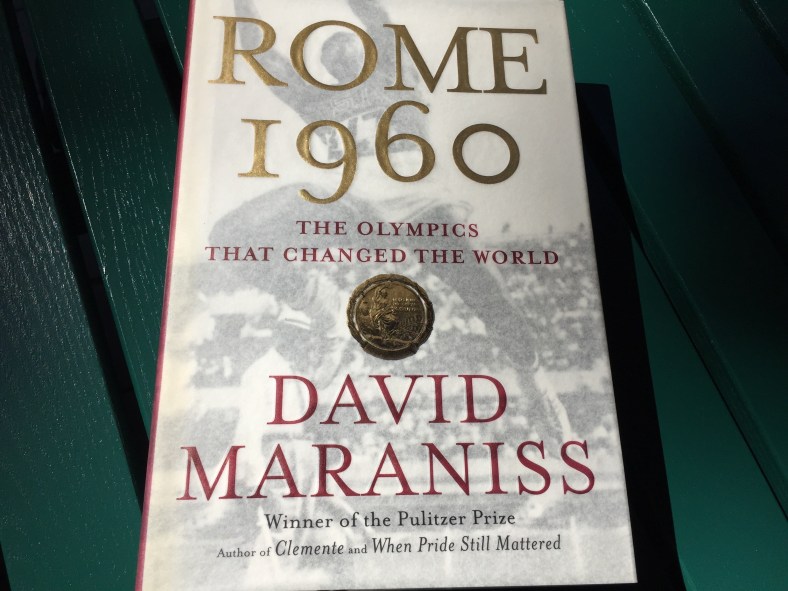
The Saturday Read ‘Rome 1960:The Olympics That Changed The World’ by David Maraniss

For the last weekend of summer 2016, the Saturday Read takes you to ‘Rome 1960: The Olympics That Changed The World’ by Pulitzer Prize winning journalist, David Maraniss.

In the summer of 1960 only 15 years had passed since the end of World War II. The superpowers were angling for global influence, and the XVII Olympiad in Rome provided one more stage to showcase the benefits of competing forms of government.

“History is replete with moments that ache with misplaced optimism, and that seemed true of the period of the 1960 Summer Olympics even as signs of a troubled world riddled those days of late August and early September. The Games were bookended by the Soviet spy trial of American U-2 pilot Frances Gary Powers and Khrushchev’s threat to stir up things at the UN, while in between came increasing tension in divided Berlin and violence in the rebellious Congo. Whatever Avery Brundage’s wishes, the Olympics were in no way isolated from the eruptions and disruptions of the modern world. Rome had its share of spies and propagandists looking to turn every situation to their advantage. Yet those days in Rome were infused with a golden hue nonetheless. The shimmering was literal – emanating from the autumnal sun; the ancient coloration of the streets, walls, and piazzas; the warm angles of refracted light – but it was also figurative, an illumining that comes with a moment of historical transition, when one era is dying and another is being born.”

The reader experiences the eighteen days of the Rome Olympics through Maraniss’ chronicle of events, athletes, coaches, sports writers, and a few nefarious government players. The narrative introduces us to the Americans and their competitors. It’s quite a cast of characters including then Cassius Clay, Rafer Johnson, C.K. Yang, Wilma Rudolph, and Abebe Bikila.

“The pressures of the cold war played an underappreciated role in forcing change in culture and sports, all much in evidence in Rome. At the opening Parade of Nations at the Stadio Olympico, the crowd was stirred by the sight of Rafer Johnson marching into the arena at the head of the U.S. delegation, the first black athlete to carry the American flag. Johnson’s historic act reflected his unsurpassed status as a world-class decathlete, but it also served as a symbolic weapon at a time when the United States was promoting freedom abroad but struggling to answer blatant racism at home, where millions of Americans were denied freedom because of the color of their skin.”

The author is at his best when sharing the story of Coach Edward Temple and his ‘Tigerbelles’ women’s track team from the Tennessee Agricultural and Industrial State University in Nashville. We time travel to an American South before the Civil Rights Act of 1964, when women’s sports were viewed as unimpressive adjuncts to the men’s competition.

“When Temple was named head coach at Tennessee A&I State after graduating in 1950, it was because nobody else wanted the job. His starting salary was $150 a month, which when added to his pay for teaching social science courses, brought a yearly sum of $5,196…By the mid fifties, even after Temple had established his program and led it to a national title, the athletic department still would not give him a desk, let alone an office. “

In Rome, as Olympic coach, Temple could only see a segment of the track from his position at the opening of the tunnel. One of his runners, Wilma Rudolph, who had overcome polio as a child, was competing in the 100 meter race. The day before, ‘Black Tuesday’, the U.S. men’s track and field team suffered its worst losses in the 100 meter, 200 meter, and 4×100 meter relay.

“Wilma won! Wilma won!” someone shouted at Temple in the tunnel. “You’re joking,” he said. Then he stepped into the golden late afternoon sunlight, and “they flashed it on the big scoreboard and put the time, the new Olympic record, ‘Wilma Rudolph, USA.’ and I said, ‘Hot Dog!’.

Earlier in the competition, Ed Temple’s greatest hope was just to get one of his runners on the medal stand. A bronze would do. But in the four days since Wilma Rudolph  won gold in the 100, all of that had changed. From a relative unknown, Rudolph had risen to international stardom, belle of the Olympics, the favorite in anything she did.”

Her success resonated with other athletes, including Anne Warner, a gold medal swimmer.

“I had read the stories about her fight against polio and what she had done. She was really a hero for a lot of us. It didn’t matter that it was a different sport. She was just such a beautiful runner. And I think that polio was such a part of our lives then, too, because we were swimmers. A lot of times your parents were nervous about going to swimming pools in that era. And there was no Salk vaccine yet when we were starting out. So the fact that she had polio meant something special to us.”

Maraniss’ command of the story places the reader ‘on location’ as events unfold.

Rafer Johnson was student body president at UCLA and a member of the track and field team along with CK Yang. On September 5, 1960 they met as competitors for the title of the world’s greatest athlete; Johnson representing the United States and C.K. Yang, Formosa. At the end of the first day of decathlon competition  Johnson led Yang by a slim 55 points.

“Few Olympic athletes know one another as thoroughly as Rafer Johnson and C.K. Yang. It was not that both had trained at UCLA for the same event under the same coaches. A deeper sensibility seemed at work in their symbiotic relationship, a spirited blend of admiration and competitiveness that pushed them to greater accomplishments together than they may have achieved apart.”

Across town, Cassius Clay was the unanimous winner in his bout with Zbigniew Pietrzkowski of Poland.

“Everyone seemed up and about early Tuesday morning. Cassius Clay paraded through the village before breakfast, gold medal dangling rom his neck. “I got to show this thing off!” he kept boasting…He was on his way to signing a professional contract, earning serious money, and becoming even more famous as the heavyweight champion of the world.”

Tuesday was day two of the decathlon.

“After back-to-back fourteen-hour days, ten events, draining humidity, evening chill, rain delays, unbearable tension, and the accumulation of an Olympic record 8392 points, (by the scoring system in 1960), Rafer Johnson left the Stadio Olimpico for the last time at eleven o’clock that night, retracing the steps he had taken nearly two weeks earlier as the captain and flag bearer for the U.S. Olympic team. As he trudged, relieved and exhausted, along the moonlit Tiber and over the bridge, C.K. Yang, now just a friend, no longer a competitor, walked once again at his side.”

The marathon was held on the final full day of competition in 1960. It was to produce one of the most remarkable stories in Olympic history.

Abebe Bikila of Ethiopia waited at the start, barefoot.

“Marathons traditionally were held during daylight and ended with the runners entering the main stadium…In the heat of Rome, the race began at twilight and proceeded into darkness; the finish line was not inside the Stadio Olympico but at the Arch of Constantine amid the Roman ruins.

The British writer Neil Allen, from his seat jammed amid his fellow journalists, feeling “the sudden chill of the night” and looking “dazedly at the floodlit Arch of Constantine,” could not believe it when the loudspeaker crackled the name of the leader, Abebe Bikila…”A completely unknown athlete from Ethiopia was going to win the Olympic marathon…Journalists and officials edged forward in their wooden stands, peering along the darkness of the Appian Way hoping to be the first to spot this last and most unexpected hero of the Games.” At last the lights of a convoy could be seen…There was a brief tussle with one of the persistent Lambretta scooters before it was bundled our of the way, and then – here he came!

The Rome Olympics were the first commercially televised summer games in history. In New York, Jim McKay was beginning his career in TV sports from a small studio in New York.

“It was all so minimal in Rome, with McKay in that little studio in New York, tapping our his own scripts on a portable typewriter, drawing information fro the Encyclopedia Britannica; and with Peter Molnar’s crew of fewer than fifty in Rome filming and editing on the fly, literally trying to beat the clock every night with their canisters winging west toward New York City in the bellies of commercial jets. The televising of the Olympic games grew from that infancy in Rome to an extravaganza, expanding every four years into an ever-larger enterprise that eventually entailed a broadcast army…”

As Rome prepares it’s bid to host the 2020 Olympics, enjoy David Maraniss’ account of the  first time the world came to compete for gold in ‘The Eternal City’.