
Have you ever worked for a person who’s an expert in one field and automatically believes that expertise extends to all other areas of competence? You know, the person who’s constantly reminding you where they went to college?
This past week@work, the first of the new year, stories ranged from the definition of genius, to a new study on millennials and perfectionism, and an analysis of the ‘real’ future of work.
James Fallows shared his experience with ‘How Actual Smart People Talk About Themselves’. The article was inspired by a series of tweets, but the message is one all of us can translate to our behavior@work.
“Here are three traits I would report from a long trail of meeting and interviewing people who by any reckoning are very intelligent.
They all know it. A lifetime of quietly comparing their ease in handling intellectual challenges—at the chess board, in the classroom, in the debating or writing arena—with the efforts of other people gave them the message.
Virtually none of them (need to) say it.
They know what they don’t know. This to me is the most consistent marker of real intelligence. The more acute someone’s ability to perceive and assess, the more likely that person is to recognize his or her limits. These include the unevenness of any one person’s talents; the specific areas of weakness—social awkwardness, musical tin ear, being stronger with numbers than with words, or vice versa; and the incomparable vastness of what any individual person can never know. To read books seriously is to be staggered by the knowledge of how many more books will remain beyond your ken. It’s like looking up at the star-filled sky.”
“The clearest mark of intelligence, even “genius,” is awareness of one’s limits and ignorance.”
One of those ‘smart people’, who traveled across the star-filled sky, Astronaut John Young, died this past week at the age of 87.
 “Mr. Young joined NASA in the early years of manned spaceflight and was still flying, at age 53, in the era of space shuttles. He was the only astronaut to fly in the Gemini, Apollo and shuttle programs. He was also chief of NASA’s astronauts office for 13 years and a leading executive at the Johnson Space Center in Houston.
When he was honored by the Smithsonian’s Air and Space Museum upon retiring from NASA in December 2004, after 42 years with the agency, Mr. Young played down his accomplishments. “Anybody could have done it,’’ he told The Orlando Sentinel. “You’ve just got to hang in there.”
I imagine being an astronaut requires a certain level of detail – being precise vs. being perfect. Kimberly Truong reports on a concerning trend for our workplace future, ‘Yes, Millennials Really Do Struggle With Perfectionism More’.
“According to a new study released in the journal Psychological Bulletin, millennials are more likely than previous generations to put pressure on ourselves — and others — to be perfect, possibly to the detriment of our mental health.
In every phase of our lives, we’re actively being encouraged and rewarded for striving towards perfection, whether that means getting high enough S.A.T. scores or racking up a certain number of Instagram likes or followers. Millennials, it seems, have more metrics to measure success — and therefore failure — than their parents.
Of course, there’s no such thing as “perfect,” which means it’s nearly impossible to strive for perfection and feel anything but disappointment and self-doubt. The question is: Can millennials step out of this vicious cycle?”
The last article of this first week of 2018 is Danny Vinik‘s analysis of ‘The Real Future of Work’.
“Over the past two decades, the U.S. labor market has undergone a quiet transformation, as companies increasingly forgo full-time employees and fill positions with independent contractors, on-call workers or temps—what economists have called “alternative work arrangements” or the “contingent workforce.” Most Americans still work in traditional jobs, but these new arrangements are growing—and the pace appears to be picking up. From 2005 to 2015, according to the best available estimate, the number of people in alternative work arrangements grew by 9 million and now represents roughly 16 percent of all U.S. workers, while the number of traditional employees declined by 400,000. A perhaps more striking way to put it is that during those 10 years, all net job growth in the American economy has been in contingent jobs.
 The repercussions go far beyond the wages and hours of individuals. In America, more than any other developed country, jobs are the basis for a whole suite of social guarantees meant to ensure a stable life. Workplace protections like the minimum wage and overtime, as well as key benefits like health insurance and pensions, are built on the basic assumption of a full-time job with an employer. As that relationship crumbles, millions of hardworking Americans find themselves ejected from that implicit pact. For many employees, their new status as “independent contractor” gives them no guarantee of earning the minimum wage or health insurance.”
Maybe unemployment statistics from the Labor Department aren’t the right metric to view our economy. The December report, out last Friday, showed an increase of 148,000 jobs in the final month of 2017. “Elise Gould, senior economist at the Economic Policy Institute, argues that ten years after the Great Recession, the economy has still not returned to 2007 benchmarks or the healthier levels of economic indicators in 2000.”
Photo credit: The Telegraph

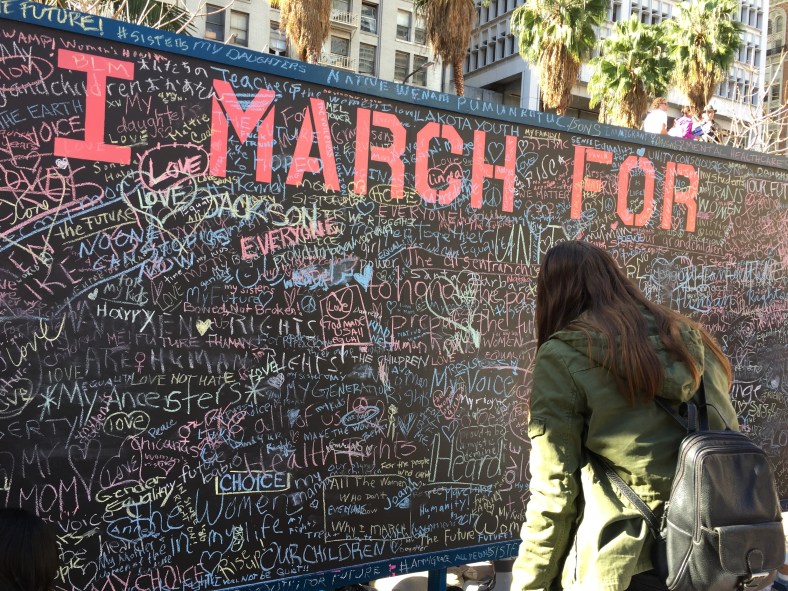 Women@work
 At the time many were skeptical. The Los Angeles Times reported: “New protest era may be emerging, but sustaining unity could prove difficult.”
 On October 5 the first major
 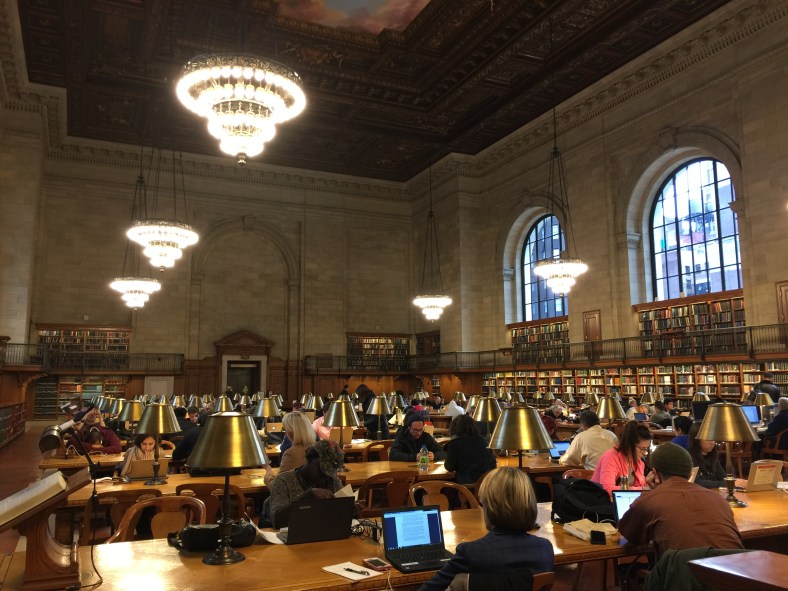 The questioning of expertise
 The gig/side-hustle career
 Up lit: A new genre emerges in publishing
 It begins: “When people ask me what I do – taxi drivers, hairdressers – I tell them I work in an office. In almost nine years, no one’s ever asked what kind of office, or what sort of job I do there. I can’t decide whether that’s because I fit perfectly with their idea of what an office worker looks like, or whether people hear the phrase work ‘in an office’ and automatically fill in the blanks themselves – lady doing photocopying, man tapping at a keyboard. I’m not complaining, I’m delighted that I don’t have to get into the fascinating intricacies of accounts receivable with them.”






 This was the week of the Las Vegas horror. If there was a time for leadership and visibility, this would be the moment. But as I walked the grounds on Capitol Hill, all was quiet.





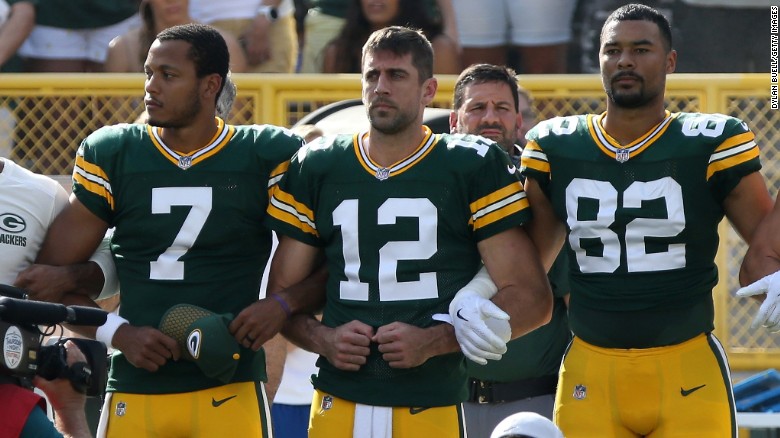 “The NFL had one of its finest moments before the games even began Sunday, coming together from every corner – players, coaches, owners and league office – in forceful rebuke of the latest torrent of hate from President Donald Trump. Whether black, white or brown, on bended knee or with locked arms, the NFL’s rare show of unity was both a dignified condemnation of the wrongs we still must right and a reminder that, for all of our differences, America remains our common ground.”
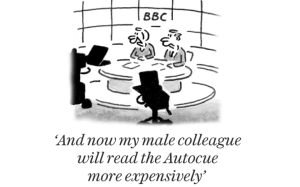
 “In theater as in life, there is a lot of manspreading: Men get more jobs, more money, more prizes, more stories told about them onstage than women do. The numbers are grim nearly everywhere, but especially on Broadway, where an Actors’ Equity study released last month
  “More than 40 years after women began pouring into the workplace, only a handful have made it all the way to the top of corporate America. The percentage of chief executives of Fortune 500 companies who are women just passed 6 percent, creeping up (and occasionally dropping back) at a glacial pace.
 “It’s true that vacationing can hold
  workthoughts