The week@work – Mark Zuckerberg writes a letter, equality comes to combat, 20 predictions/20 years, the November jobs report and terrorism@work

This week@work was dominated, until mid-week, by the story of the ‘Chan Zuckerberg initiative’ to set aside 99% of their Facebook wealth, and overshadowed a major shift in policy within the Pentagon, opening all combat jobs to women, without exception. The November jobs report continued the positive trajectory of the economy with the revision upward of September and October numbers. And the editor of Fast Company Magazine offered ‘Twenty Predictions for the Next Twenty Years’.

All of those stories pale in comparison to the return of terrorism to the workplace at a holiday party at 11 AM on Wednesday in San Bernardino, California.

Mark Zuckerberg wrote a letter to his new daughter and lots of attention was paid to the section on sharing his wealth.  Carmine Gallo of Forbes took closer look and noted that the letter read like a great speech.

“As you’ve probably read by now Facebook founder Mark Zuckerberg and his wife Priscilla Chan welcomed a daughter into the world in a very big way – with the creation of a new initiative to donate 99% of their Facebook shares ($45 billion currently) to philanthropy. That’s the headline. I was struck, however, by how the open letter to their daughter read more like a speech than a letter. It was meant for the eye…and the ear. It was meant to inspire a generation to commit itself to giving and to making the world a better place.

“Like all parents, we want you to grow up in a world better than ours today,” the letter begins. Read aloud at an average speaking pace, the 2,200-word letter takes about twelve minutes to recite, the ideal amount of time for a good speech (many of the most notable speeches in recent history clock in at 15 minutes or less).

Zuckerberg’s hope for his daughter’s generation provides the theme of the letter, a headline that fits into one short sentence. In bold letters, Zuckerberg writes:

“Advancing human potential and promoting equality.”

Amanda Platell of The Daily Mail offered an alternate version.

“Let’s start with the ‘friends’ you may have on Facebook. Do not confuse them with the friends you should trust in the real world. Many will barely know you, plenty may be jealous, others will be insincere and spiteful…

If I have learned anything from running Facebook, it’s that there is no such thing as privacy any more. After all, that’s how I made our billions!

Come to think of it, perhaps we won’t give you a computer until you’re 18, just to be safe. Love, Dad.”

On Thursday the Dan Lamothe reported on the groundbreaking change in staffing policy at the Pentagon.

“Defense Secretary Ashton B. Carter said Thursday that he is opening all jobs in combat units to women, a landmark decision that would for the first time allow female service members to join the country’s most elite military forces.

Women will now be eligible to join the Navy SEALs, Army Special Forces and other Special Operations Units. It also opens the Marine Corps infantry, a battle-hardened force that many service officials had openly advocated keeping closed to female service members.

“There will be no exceptions,” Carter said. “This means that, as long as they qualify and meet the standards, women will now be able to contribute to our mission in ways they could not before.”

Robert Safian, the editor-in-chief of Fast Company magazine marked the twentieth anniversary of the publication with ‘Twenty Predictions for the Next Twenty Years’.

“We celebrate birthdays to remember all that has gone before, and also what is to come. This month, with issue No. 201, we recognize Fast Company’s 20th anniversary by looking toward the future. The dynamic change of the past two decades is just a warm-up for what is still to come.

I have used the phrase Generation Flux to describe this era of transition. Because the changes are coming so fast, there is a rising premium on our ability to adjust, to be adaptable in new ways. This can be scary for some, but it is also undeniably exciting, and for those prepared to embrace this emerging reality, the possibilities are tantalizing.

What follows are 20 observations that we believe will hold fast in the years ahead. They are predictions and, as such, are fraught with limitation and supposition. None of them, on their own, is shocking. That is by design. In combination, though, they outline a world of tomorrow where work is still personal, computing is still social, and knowledge is still power. And where the rules for success will be ever-changing.”

Bouree Lam covered the optimistic economic report from the Labor Department on Friday.

“The November jobs report is out, and it’s meeting what were moderately high expectations. The figures from the Labor Department show that the unemployment rate remained at 5 percent and the economy added 211,000 jobs in November. Jobs were added in construction, health care, and “professional and technical services”—the Labor Department’s term for an assortment of white-collar jobs. Among those, the construction sector showing particularly strong growth, adding 46,000 jobs.”

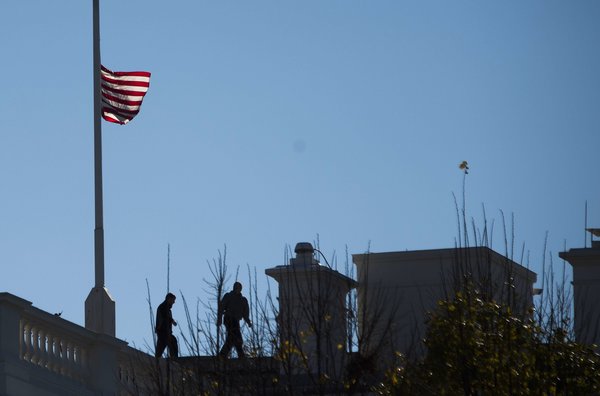
On Wednesday morning a group of colleagues went to work at the Inland Regional Center in San Bernardino, California. As they were taking a break, preparing for a holiday celebration, one of their team and his wife, both heavily armed, entered the room and changed lives forever.

In 2014 there were 404 workplace homicides, 80% were shootings. The ‘mass shooting’ in San Bernardino was the fourth of this year.

Yesterday the editors of The New York Times published an editorial on the front page of the paper, ‘End the Gun Epidemic in America’.

I’m done with the retailers who give away guns to the first 200 customers on Black Friday. And I’m not comfortable with my cubicle mates carrying weapons to work. The workplace is a place to create, engage and perhaps follow a dream. Fear and hostility have never been a productive part of life @work. The last time leading by fear worked was in the mid-20th century Catholic grammar school classroom.

“It is a moral outrage and a national disgrace that civilians can legally purchase weapons designed specifically to kill people with brutal speed and efficiency. These are weapons of war, barely modified and deliberately marketed as tools of macho vigilantism and even insurrection. America’s elected leaders offer prayers for gun victims and then, callously and without fear of consequence, reject the most basic restrictions on weapons of mass killing, as they did on Thursday. They distract us with arguments about the word terrorism. Let’s be clear: These spree killings are all, in their own ways, acts of terrorism.”

On March 4, 1933 newly elected President Franklin Roosevelt delivered his inaugural address. The familiar phrase, “…the only thing we have to fear is fear itself..” has been whispering from the back of my mind since Wednesday and I think it’s particularly relevant to our political conversation today.

“This is preeminently the time to speak the truth, the whole truth, frankly and boldly. Nor need we shrink from honestly facing conditions in our country today. This great Nation will endure as it has endured, will revive and will prosper. So, first of all, let me assert my firm belief that the only thing we have to fear is fear itself—nameless, unreasoning, unjustified terror which paralyzes needed efforts to convert retreat into advance. In every dark hour of our national life a leadership of frankness and vigor has met with that understanding and support of the people themselves which is essential to victory. I am convinced that you will again give that support to leadership in these critical days.”


The week@work #PeaceForParis

On Friday evening Parisians went to work at cafes, a soccer stadium and a concert venue. An American band from Palm Desert, California prepared to take the stage @work at their dream job. And then the trajectory of hundreds of careers changed.

This week @work tells only one story, of graphic designer, Jean Jullien @work and his response to terror in the City of Light.

A year ago, Jean Jullien gave an interview to designboom, answering the typical questions about his career choice, his approach, his influences and skill. As a young artist he was preparing his December 2014 solo show at Kemistry Gallery in London.

“I’ve always loved drawing, but originally wanted to do animation and comics (which I’m ironically just sort of getting into doing now). I applied to many schools but got rejected by all and ended up in a small graphic design course in le paraclet which was actually a blessing in disguise. despite its serious and practical approach, the course was run by passionate teachers who introduced me to the work of masters such as milton glaser, saul bass, raymond savignac, and many others. it made me realize that design and illustration were basically about making the everyday exciting and creative. design for the people, design for the routine, is what really got me into what I do today. the idea that art didn’t stop at the exit of a gallery, but that it could carry on anywhere and that by intertwining with real objects and things, it enhanced them and found a use.”

In response to a question about his strengths and skill, he responded:

“I don’t think of myself as skilled. not in my drawing at least. I’ve become overly critical and empathic at the same time but I’m not sure either of these qualify as a skill, although they are my number one working tool.”

On Friday, the world discovered Jean Jullien’s skill as empathy translated into a representational image that spread across the internet.

eiffel peace

Time.com journalist Nolan Feeney spoke with the illustrator on Saturday and published the transcript of his Skype interview.

Jean Jullien had just begun his vacation when he heard on the radio about the terrorist attacks in his native France that killed more than 120 people on Friday. While others around the world struggled to put their feelings about the violence in Paris into words on social media, Jullien, a professional illustrator, picked up his brush instead.

“I express myself visually, so my first reaction was to draw a symbol of peace for Paris,” Jullien, who says his friends and family are safe and accounted for, told TIME over Skype on Saturday from a location he did not wish to disclose. “From there it seems to have gotten a bit out of my hands.”

The last question in the designboom interview was “do you have a personal motto?”

His answer: “carpe diem or something like that.”

Can the ‘talking cure’ reconnect ‘a band of tweeters’?

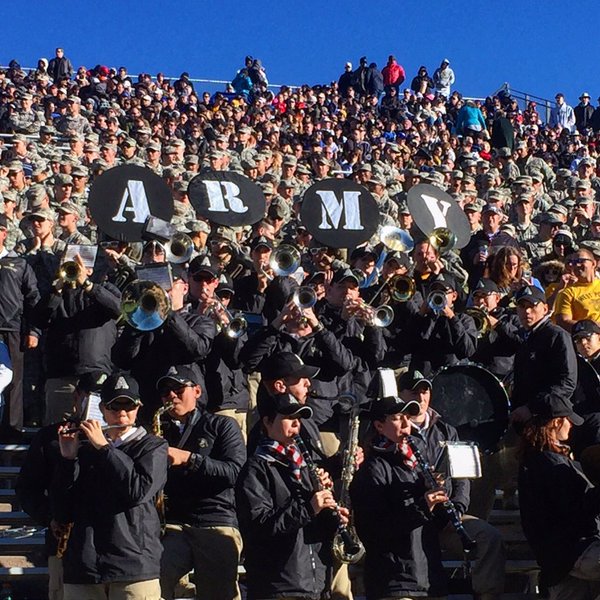
It’s one thing for us to tolerate distraction in the workplace as devices buzz and chime through meetings, but it’s a bit more unnerving to consider the scenario described by a U.S. Army major as soldiers returning from a combat mission opt out of conversation and sit “silently in front of computer screens, posting about their day on Facebook”.

John Spencer is the Army major expressing concern over how “global connectedness has altered almost every facet of a soldier’s daily life”.

“The term “band of brothers” has become almost a cliché to describe how the close personal bonds formed between soldiers translate into combat effectiveness. Yet my combat experience in Iraq suggests that the kind of unit cohesion we saw in past wars may be coming undone because of a new type of technological cohesion: social media, and too much connectivity.”

It’s one more example to support the 30 years of research conducted by MIT professor, Sherry Turkle.

“We’ve gotten used to being connected all the time, but we have found ways around conversation — at least from conversation that is open-ended and spontaneous, in which we play with ideas and allow ourselves to be fully present and vulnerable. But it is in this type of conversation — where we learn to make eye contact, to become aware of another person’s posture and tone, to comfort one another and respectfully challenge one another — that empathy and intimacy flourish. In these conversations, we learn who we are.”

Professor Turkle cites the research of Howard Gardner and Katie Davis on what they call the “app generation,” which grew up with phones in hand and apps at the ready. It tends toward impatience, expecting the world to respond like an app, quickly and efficiently. The app way of thinking starts with the idea that actions in the world will work like algorithms: Certain actions will lead to predictable results.”

Which brings us back to 2008 and Major Spencer’s observations of his ‘band of tweeters’.

“In 2008, I saw the soldiers’ individuality in battle. I saw them arguing about what decisions to make. I often observed much more transactional communications where there would have been friendly banter in the past. Groups seemed unable to learn from their daily challenges or direct any intergroup policing of individual actions. I saw these things especially in the younger soldiers.”

He goes on to emphasize the importance of motivation and social cohesion for any large organization, but identifies the need for conversation as critical in the military workplace.

“What all of the research highlights is the importance of conversation during noncombat time — the hours of nothingness, the shared boredom — where bonds of trust, friendships and group identity are built.”

Most of us go to work in a place where guns and ammo are not part of our daily existence. But the risks to our health and well-being might be in equal jeopardy when we multi-task, “always available elsewhere”.

At the end of his essay, Major Spencer suggests “developing structures to organize the social interactions and conversations that used to occur spontaneously. This would include requiring soldiers to hold post-patrol gatherings on top of their usual mission reviews. This debriefing concept is very effective within other organizations. I would also shift the trend from small two- to four-man living spaces and increase them to four to six, both in stateside bases and especially in combat.”

And leave the devices in another room. Disconnected, we can reestablish conversation.

Professor Turkle cites psychologist Yalda T. Uhls’ research with children at a ‘device free’ camp, demonstrating our capacity for resilience when we untether for a period of time.

“After five days without phones or tablets, these campers were able to read facial emotions and correctly identify the emotions of actors in videotaped scenes significantly better than a control group. What fostered these new empathic responses? They talked to one another. In conversation, things go best if you pay close attention and learn how to put yourself in someone else’s shoes. This is easier to do without your phone in hand. Conversation is the most human and humanizing thing that we do.”

“Conversation is the antidote to the algorithmic way of looking at life because it teaches you about fluidity, contingency and personality.”

Our technology alerts us to ‘recalculate’ when we choose to diverge from the programmed path. It’s another ownership issue of our humanity, to take back control of conversation in a ‘tech free’ space.

“This is our moment to acknowledge the unintended consequences of the technologies to which we are vulnerable, but also to respect the resilience that has always been ours. We have time to make corrections and remember who we are — creatures of history, of deep psychology, of complex relationships, of conversations, artless, risky and face to face.”

And for our ‘band of brothers’ (and sisters) –

“… the benefits of hyper-connectivity for individual soldiers shouldn’t outweigh the collective costs of social cohesion…”

The week@work – A school for watchmakers, innovations in teaching, #OptOutside and other leadership stories

The theme of the past week@work was innovation: creating a school for those who work with their hands, teaching history through theater on Broadway, using video games to modernize MBA education and opting out to #OptOutside.

CBS News produced a segment on luxury brand watchmaker, Patek Philippe and the creation of a school for watchmakers in New York to meet a growing customer demand for craftsmanship in a digital age. “…the 175-year-old company decided to open its own watch school at its New York City offices.

Around 300 people applied; six were chosen. for their temperament as much as for their technical aptitude. So what personal characteristics does Patek Philippe look for in order to select students?

“We need people who are committed, so commitment is a big quality,” replied master watchmaker Laurent Junod, who heads the school. Plus, “Patience, of course.”

“We do a training program here that is two years long. But the learning is not finished. You have to learn all your life.”

Unknown-1

The program provides an alternative career for those who seek to work with their hands. “The school is free. Students are paid a small stipend to cover expenses.

Gaman Kwok had been tutoring elementary school kids. “If somebody told me that I will be training to be a watchmaker a year ago, I would, look at them like, ‘What? Really?'”

Juan Alonzo was working at a men’s clothing store. “I want to be as good as Laurent!” he said of his ambition.

At the end of the course — if they pass their exams — Patek Philippe will hire them. They’ll move on to a lifetime of silence, and precision, and learning.”

Do you think they get an employee discount?

IMG_2516

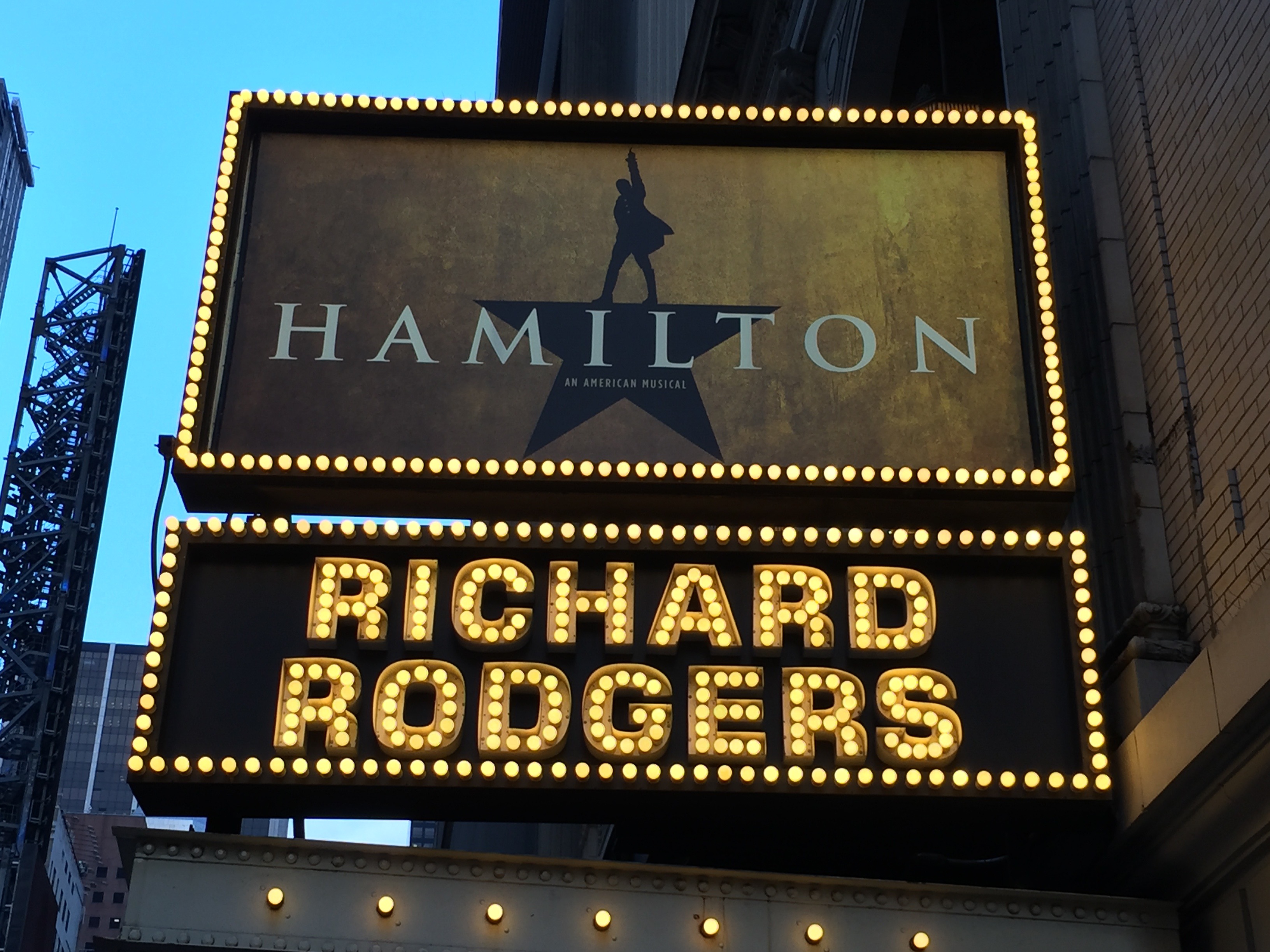
There is a play on Broadway about our founding fathers, one in particular, Alexander Hamilton. ‘Hamilton’ is a hip hop musical retelling of the story of an immigrant who rose to become a force in the building of a new nation. It is based on Ron Chernow’s 818 page biography published in 2004. How many eleventh graders do you think would read an 818 page biography? How many teachers could find the time to read the same?

Sounds like an opportunity to innovate. This week the producers and the Rockefeller Foundation announced a partnership to provide 20,000 New York City eleventh graders with a chance to attend a performance and continue the learning.“The curriculum will be put together by the nonprofit Gilder Lehrman Institute of American History, which plans to create a website with copies of the primary documents that undergird the book and lyrics, and teaching materials about Hamilton and the founding fathers. Students will be invited to create and share their own artistic responses to Hamilton’s life.”

Think about this – 20,000 students who probably have never had access to the lights of Broadway will now be sitting in orchestra seats for one of the most important and creative plays staged in recent memory. And, it’s about history.

“Lin-Manuel Miranda, the creator and star of “Hamilton,” said that he was frequently asked at the stage door how the show, which is both costly to attend and often sold out, could be made more accessible to young people, and he said finding a way to do that has been a priority for him. Mr. Miranda, 35, is a graduate of the Hunter College elementary and high schools for gifted students in New York City.

“If we can excite curiosity in students, there’s no telling what can happen next,” he said. “Not to say we’re going to make 1,300 history majors or 1,300 musical theater writers every time we do the show, but hopefully they will take away how much Hamilton did with his life in the time that he had.”

No telling what can happen next..

Shane Ferro, business journalist for the Huffington Post reported on a new video game, ‘One Day’, being developed for MBA students at the Hult International Business School.

“While it is now fairly common for video games to teach elementary concepts — spelling, basic math, typing — higher education has more or less resisted encroaching technology up to this point. Until recently, higher-level concepts have been harder to program because there may be more than one right answer. “One Day,” which its creators say is the first game of its kind, poses some fairly new questions about learning in the digital age and the role of the professor in a modern classroom.

“I’ve been a business school professor for 30 years,” said John Beck, whose educational consulting company, North Star Leadership Group, developed “One Day.” He lamented that most MBA programs rely on teaching methods honed decades before the personal computing revolution. “For 30 years I’ve been thinking the system is so broken. The case studies model dates from the 1920s, and the lecture model from the 1850s.”

Unknown

The day after Thanksgiving, previously known as ‘Black Friday’, now carries a new hashtag courtesy of the leadership team at retailer REI. #OptOutside is a campaign to encourage folks to leave the shopping behind, enjoy the outdoors and share their experience on social media.

“REI is hoping to convince consumers to start a new Black Friday tradition, one that doesn’t involve buying anything. It has built a dedicated #OptOutside website with resources on local hiking trails. REI’s campaign was built with its employees and customers in mind — the company operates as a co-op, with roughly 5.5 million members who pay a one-time fee for a share of the business. Members contribute to at least 80% of REI’s sales.

The decision to close on Black Friday is bold in an industry that has practically made the day a mandatory part of business, not only because customers demand it, but because the bottom line often does, too. The holiday shopping season is the biggest, and most competitive, time of year for retailers, with Black Friday at the center of the hoopla.”

And while we are on the subject of leadership, here are two articles you might find interesting:

‘Giving More Corporate Chiefs the Steve Jobs Treatment’ Nitin Nohira “I worry that we’re too quick to forget the accomplishments of great business leaders, and that if the people leading companies felt some solace that their long-term legacies might warrant a more careful evaluation, as is now occurring around Steve Jobs, they might make very different decisions.”

‘How Not to Flunk at Failure’ John Danner & Mark Coopersmith “Failure is a strategic resource. Like the people you employ, the money you spend or the facilities and technologies you use, it has unique intrinsic value if you’re open and wise enough to manage it as such. Treat it like unrefined ore that needs to be processed and examined to reveal its riches. Failure is reality’s way of showing you what you don’t yet know, but need to learn. It contains the seeds of precisely the insight you’ve been looking for, if you have the honesty and humility to explore those secrets.”

‘The Managers’ a poem by W.H. Auden

The ‘Friday Poem’ this week is ‘The Managers’ by British poet W.H. Auden. The poem was written almost 70 years ago, in the post World War II period when a new class of worker was emerging, the professional corporate manager. The new corporate bureaucracies mirrored the military structures that had effectively managed the war effort.

In the military you were assigned a number, and as these new organization structures emerged, employees lost their identities and became numbers as well. Auden used his poetry to remind those in charge that workers have faces..

‘The mere making of a work of art is itself a political act’ because it reminds ‘the Management … that the managed are people with faces, not anonymous numbers.’

‘The hero of modern poetry is ‘the man or woman in any walk of life who … manages to acquire and preserve a face of his own’.”

The poem is a snapshot in time of one artist’s reaction to the “Men, working too hard in rooms that are too big”.

The Managers

In the bad old days it was not so bad:

The top of the ladder

Was an amusing place to sit; success

Meant quite a lot – leisure

And huge meals, more palaces filled with more

Objects, books, girls, horses

Than one would ever get round to, and to be

Carried uphill while seeing

Others walk. To rule was a pleasure when

One wrote a death sentence

On the back of the Ace of Spades and played on

With a new deck. Honours

Are not so physical or jolly now,

For the species of Powers

We are used to are not like that. Could one of them

Be said to resemble

The Tragic Hero, The Platonic Saint,

Or would any painter

Portray one rising triumph from a lake

On a dolphin, naked,

Protected by an umbrella of cherubs? Can

They so much as manage

To behave like genuine Caesars when alone

Or drinking with cronies,

To let their hair down and be frank about

The world? It is doubtful.

The last word on how we may live or die

Rests today with such quiet

Men, working too hard in rooms that are too big,

Reducing to figures

What is the matter, what is to be done.

A neat little luncheon

Of sandwiches is brought to each on a tray,

Nourishment they are able

To take with one hand without looking up

From papers a couple

Of secretaries are needed to file,

From problems no smiling

Can dismiss. The typewriters never stop

But whirr like grasshoppers

In the silent siesta heat as, frivolous

Across their discussions

From woods unaltered by our wars and our vows

There drift the scents of flowers

And the songs of birds who will never vote

Or bother to notice

Those distinguishing marks a lover sees

By instinct and policemen

Can be trained to observe. Far into the night

Their windows burn brightly

And, behind their backs bent over some report,

On every quarter,

For ever like a god or a disease

There on earth the reason

In all its aspects why they are tired, and weak,

The inattentive, seeing

Someone to blame. If, to recuperate

They go a-playing, their greatness

Encounters the bow of the chef or the glance

Of the ballet-dancer

Who cannot be ruined by any master’s fall.

To rule must be a calling,

It seems, like surgery or sculpture; the fun

Neither love nor money

But taking necessary risks, the test

Of one’s skill, the question,

If difficult, their own reward. But then

Perhaps one should mention

Also what must be a comfort as they guess

In times like the present

When guesses can prove so fatally wrong,

The fact of belonging

To the very select indeed, to those

For whom, just supposing

They do, there will be places on the last

Plane out of disaster.

No; no one is really sorry for their

Heavy gait and careworn

Look, nor would they thank you if you said you were.

W.H. Auden 1948, ‘The Oxford Book of Work’ 1999

Leadership: When arrogance trumps common sense, no one wins

There are memories of life @work that are etched in your brain forever. One of those for me was the morning I received a call from one of my managers. A member of our team had walked into a location late at night, inebriated, and punched a security guard when he was denied access to the building.

This sounds like one of those exercises created by consultants for leadership assessment. What would you do?

It’s not a far fetched scenario and it’s one that many of us will encounter in the course of our career.  Today, in a very public way, the leadership team at the University of Southern California is forced to address a similar situation with their head football coach. And it’s heartbreaking because arrogance trumped common sense.

I do not know Steve Sarkisian, the head football coach at USC. But I do have another memory @work when I was invited to be a guest coach for a day with the USC women’s volleyball team. I joined the team for dinner prior to the match in the athlete’s dining hall. It was past the normal dining hours and the only folks in the room were the volleyball team, coaches and at another table, Steve Sarkisian with Matt Leinart. At the time, Matt was the starting quarterback and Steve was his position coach.

What I observed that evening was a coach committed to his player, taking the time to sit, listen and offer advice and counsel. They were there when we arrived and there when we left. Given the circus atmosphere around NCAA Division I football, this quiet moment formed my perception of Steve Sarkisian.

Many years have passed. The pressure on Division I coaches has increased. Coach Sarkisian accepted a head coaching job at the University of Washington. Matt Leinart was drafted into the NFL. The coach returned to USC and Matt is now a sportscaster for Fox Sports.

Coach Sarkisian’s days @work pass in the glare of media in a town where there are no NFL teams. It’s difficult to imagine the pressure on both players and coaches to perform at a consistent level each week in an environment where losing is never an option and every decision is questioned.

There was an incident in August at a fundraising event. Yesterday, another. And now, former players from UW are sharing memories@work on social media of other incidents. It may be cathartic for them to ‘pile on’ at this point, but where is the humanity that separates a college athlete from a tackle dummy?

You may argue that folks fear retribution, loss of scholarship, lack of playing time and a missed opportunity to play on Sunday. But these are the ‘big guys’ that employers clamor to hire because of their team and leadership skills. Leading from behind carries far less risk than a conspiracy of silence. And can we not forget we are talking about the health of a human being here?

And then there are the adults, the stewards of the workplace community, the folks who are paid for their leadership skills: emotional intelligence, listening, taking action. There are few public details, so innuendo will fill in for facts. But in an environment so preoccupied with rankings, success and winning, we are witnessing an epic leadership fail when it came to empathy toward a key member of the Trojan family.

When you fumble the football, it’s difficult to recover. For the USC leadership team, the clock may have run out. But I hope there is an overtime opportunity for Coach Sarkisian and that he gets well and returns to pursue his dream job.

What did I do? I followed the facts. My team member was going through a divorce and his partner had just denied him visitation with his toddler children. It didn’t justify his behavior. But it did provide a context for a leadership response. The day of the incident he entered rehab, knowing the alternative was losing his job. When he returned to work, he worked every day to stay sober and continued to add value to the organization.

Leading is difficult. But the most valuable assets a leader can possess are a catalog of memories@work and common sense. When it comes to the really tough, human issues @work, there is no proxy for common sense.

The week@work Leadership lessons from Pope Francis, John Boehner and Martin Winterkorn

During this week@work three leaders representing the religious, legislative and corporate sectors, demonstrated their leadership strengths and weaknesses on the global stage.

Pope Francis on a visit to the United States, challenged national and world leaders to take the lead on major global issues. One of those leaders, John Boehner, internalized the advice and resigned his position as Speaker of the House and Member of Congress the following day. At the same time as the Pope was demanding action on the environment, Martin Winterkorn, the CEO of Volkswagen resigned as his company became the latest example of corporate fraud at the expense of ‘our home’.

On Friday, Pope Francis addressed the General Assembly of the United Nations urging world leaders to provide the essential minimum: lodging, labor and land as well as education, religious freedom and civil rights. It was his use of a quote from the poem, ‘El Gaucho Martin Fierro’ which could be easily applied to the competitive atmosphere of corporate life.

“…government leaders must do everything possible to ensure that all can have the minimum spiritual and material means needed to live in dignity and to create and support a family, which is the primary cell of any social development. In practical terms, this absolute minimum has three names: lodging, labor, and land; and one spiritual name: spiritual freedom, which includes religious freedom, the right to education and other civil rights.”

“War is the negation of all rights and a dramatic assault on the environment. If we want true integral human development for all, we must work tirelessly to avoid war between nations and between peoples.”

El Gaucho Martín Fierro, a classic of literature in my native land, says: “Brothers should stand by each other, because this is the first law; keep a true bond between you always, at every time – because if you fight among yourselves, you’ll be devoured by those outside”.

The Pope once again communicated the urgency to protect the environment. “Any harm done to the environment, therefore, is harm done to humanity.” Simultaneously, the global story of Volkswagen violating emission standards by using sophisticated software in diesel models to ‘trick’ environmental testing was made public.

“In 2012, a group of researchers at West Virginia University won a $50,000 grant from the International Council on Clean Transportation to do performance testing on clean diesel cars. Arvind Thiruvengadam, a research assistant professor in mechanical and aerospace engineering, told NPR this week that the team was merely excited do the research—which involved driving the clean diesel cars outside the lab—and write a journal paper based on the data. They never expected that they would discover one of the biggest frauds in automotive history.

When Thiruvengadam and his colleagues tested Volkswagen’s clean diesel cars, they found discrepancies up to 35 times the expected emissions levels. The researchers suspected cheating, but couldn’t be sure. David Carder, another researcher on the West Virginia University team, told Reuters that the fallout at hand is surprising because this data was made public over a year and a half ago.”

Are you following this? In 2012 – that’s three years ago – academics accidentally discovered one of the biggest frauds in automotive history. And yet, in those three years, the CEO of Volkswagen, Martin Winterkorn maintains he didn’t have a clue.

“I am shocked by the events of the past few days. Above all, I am stunned that misconduct on such a scale was possible in the Volkswagen Group.

As CEO I accept responsibility for the irregularities that have been found in diesel engines and have therefore requested the Supervisory Board to agree on terminating my function as CEO of the Volkswagen Group. I am doing this in the interests of the company even though I am not aware of any wrong doing on my part.

Volkswagen needs a fresh start – also in terms of personnel. I am clearing the way for this fresh start with my resignation. I have always been driven by my desire to serve this company, especially our customers and employees. Volkswagen has been, is and will always be my life.”

Leading by resignation. Nice try. It’s the culture that defines behavior and that’s set at the top. Whatever the vision Mr. Winterkorn communicated to shareholders, the means to the end derailed the company and the reputation of a respected brand. His accountability ended with an exit. Not the best lesson in corporate governance.

On Friday morning, as the Pope was about to address the United Nations, word leaked that the Republican Speaker of the House of Representative, John Boehner was resigning.

“My first job as speaker is to protect the institution,” Mr. Boehner said. “It had become clear to me that this prolonged leadership turmoil would do irreparable harm to the institution.”

Here is the perfect example of ‘fighting among yourselves to the advantage of your outside adversaries’. Apparently moderate, constructive, cooperation is not valued in the legislative branch of the U.S. government. When the folks at the extremes have the ability to create distraction and avoid the real work in their job description, is it the role of a leader to step aside to protect the institution?

What are the leadership lessons of this week@work? If you follow the lead of Pope Francis and are a bit more humble, listen to your constituency and lead by example you get it. If you are not paying attention, you will end up with a legacy of scandal. In the end, no matter how hard you try to lead, when values disconnect, it’s time to go.

The topic of leadership was also in the air with the publication of the Inc. magazine annual survey of executives in the fastest growing private companies, ‘Inc. 500 CEOs are more concerned with managing growth than with politics

“Which attribute is most accurate in describing your success? See opportunities – 40%, Persistence – 38%, Leadership ability – 10%, Salesmanship – 4% and Understand basic business principles – 8%.”

Seventy percent are in favor of raising the minimum wage.”

These CEOs are almost unanimous in their positive view of economic opportunity, but still struggle with leadership skills. Among the shortcomings: patience, the ability to communicate consistently, and manage well.

I think it’s safe to say that we will not be Pope. And most of us will not sit in the C Suite or behind the President during the State of the Union Address. But in our corner of influence, we can demonstrate the traits of a strong leader: humility, empathy, confidence, consistent communication, integrity, and fairness. And bonus points if you are a leader who can employ a quote from 19th century literature to make your point.

‘The Saturday Read’ Pope Francis’ Speech to the Congress of the United States of America

On Thursday morning Pope Francis addressed the a joint session of the 114th US Congress. He challenged his audience to address issues of immigration, climate change, poverty, family and to abolish the death penalty. Throughout his delivery he demonstrated his quiet but firm leadership style and structured his remarks to reflect American values in the stories of four American careers.

‘The Saturday Read’ this week is the text of Pope Francis’ congressional speech.

“My visit takes place at a time when men and women of good will are marking the anniversaries of several great Americans. The complexities of history and the reality of human weakness notwithstanding, these men and women, for all their many differences and limitations, were able by hard work and self-sacrifice — some at the cost of their lives — to build a better future. They shaped fundamental values which will endure forever in the spirit of the American people. A people with this spirit can live through many crises, tensions and conflicts, while always finding the resources to move forward, and to do so with dignity. These men and women offer us a way of seeing and interpreting reality. In honoring their memory, we are inspired, even amid conflicts, and in the here and now of each day, to draw upon our deepest cultural reserves.

I would like to mention four of these Americans: Abraham Lincoln, Martin Luther King, Dorothy Day and Thomas Merton.”

“Three sons and a daughter of this land, four individuals and four dreams: Lincoln, liberty; Martin Luther King, liberty in plurality and non-exclusion; Dorothy Day, social justice and the rights of persons; and Thomas Merton, the capacity for dialogue and openness to God.”

He included remarks that provided insight to his view of leadership.

“It is my duty to build bridges and to help all men and women, in any way possible, to do the same. When countries which have been at odds resume the path of dialogue — a dialogue which may have been interrupted for the most legitimate of reasons — new opportunities open up for all. This has required, and requires, courage and daring, which is not the same as irresponsibility. A good political leader is one who, with the interests of all in mind, seizes the moment in a spirit of openness and pragmatism. A good political leader always opts to initiate processes rather than possessing spaces.”

But, as noted by NPR, the pope omitted a section in the text challenging the influence of money in American politics.

“A potentially controversial sentence in the prepared text of Pope Francis’ address went unspoken when he delivered the speech to Congress.

The line appears to challenge the dominant role of money in American politics.

A paragraph in the prepared text quotes briefly from the Declaration of Independence — the passage on self-evident truths — and then says, “If politics must truly be at the service of the human person, it follows that it cannot be a slave to the economy and finance.”

The paragraph defines politics in terms of the “compelling need to live as one” and building a common good that “sacrifices particular interests in order to share, in justice and peace, its goods, its interests, its social life.”

The text is written to be read. It is a model of how to craft a message: connect with an audience, employ storytelling to illustrate that message, and insure individuality shines through.

What question would you ask? Interviewing for POTUS

Not all of us have the opportunity to interview candidates in our workplace, but when we do, we want to get it right. We want pose the question that elicits a response providing a hint to how this individual will perform if selected.

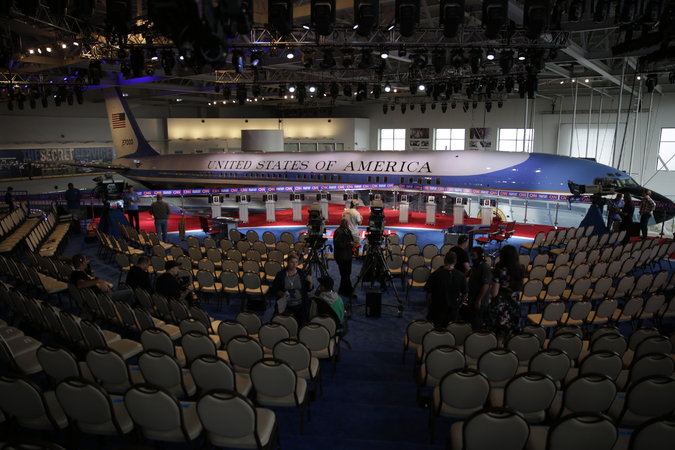
Tonight, in California, the  candidates seeking the Republican nomination for president will participate in a debate. In reality, they will be answering interview questions posed by journalists. What question would you ask?

If you don’t know where to begin, Adam Bryant’s weekly executive interviews column in The New York Times is a good place to start. In an interview last month, Greg Schott of software company, MuleSoft shared his hiring philosophy.

“First off, we’re looking for someone who’s a good human. That is defined by high integrity, being a great team player, and they want to win as a company first, team second, individually third. The next thing we look for is people who are whip-smart. The third thing we look for is a clear track record of achievement.

And I also work hard to understand the decisions they’ve made along the way, like why they left a certain job to take the next one. You learn all kinds of things from why they made those job transitions. I’ll also ask what they’ve done that changed things for their organization as opposed to just doing the job that they were asked to do. What did they do that nobody asked them to do?”

We definitely want someone who’s a good human to be president. I would like to know why they left their current job to take the next one. Why have some not left their current job yet? What have they done above and beyond the job description? Integrity, smarts, record of achievement all good.

Maybe I’d add a question about flexibility, dealing with ambiguity. Describe a belief you held for a long time that with some education and experience you changed? Being president requires leading the folks you don’t agree with along with those who voted for you.

Starbucks CEO Howard Schultz shared his opinion on the election process and the responsibility of those elected to represent us to act differently, and posed his questions for the candidates.

“Every one of the candidates offers grand promises about new leadership and new solutions. But where do they stand on working with their rivals? Regardless of who wins the presidency, the odds of the same party controlling a filibuster-proof Senate are slim. If we want to turn the nation around, we have to act differently. Save for the most rabid partisans, most people don’t want one-party rule. They want Democrats and Republicans to work together.

Americans who are tired of politics as usual should demand a clear answer to a simple question from every candidate: What will you do to unite all of us?”

Stewart Butterfield of communications service company Slack discussed his interview process with Adam Bryant.

“I used to always ask three short questions — one math, one geography and one history. I didn’t expect people to get the answers right, but I just want them to be curious about the world. The first is what’s three times seventeen. Then name three countries in Africa. You’d be astonished by the number of people who can’t do that. And what century was the French Revolution in, give or take 200 years.

I don’t do that anymore, but I do ask everyone what they want to be when they grow up. Good answers are usually about areas in which they want to grow, things they want to learn, things that they feel like they haven’t had a chance to accomplish yet but want to accomplish.”

This is what I want to know. What did these folks on the stage at the Reagan Library want to be when they grew up? Ok, they wanted to be president. But it’s not enough to want. What do they still wish to learn, to accomplish? What does their world look like at the end of a successful presidency? The answers will give me the information I need to make a decision.

And, I would like them to name three countries in Africa.

The week@work – VP Biden on leadership, Serena@US Open and #NeverForget

This week@work captured snapshots of genuine human moments: a vp expressing emotion in a late night talk show conversation, a tennis champion’s loss to an unseeded and 43rd world ranked competitor and commemorations of a day 14 years ago that we will #NeverForget.

In the U.S. we are in the midst of a presidential selection process that accentuates the loud and outrageous vs. the rational and purposeful. So it was refreshing to read an article by David Zweig, ‘The Myth of the Larger Than Life Leader’.

“The reality, as many professionals who tend to fall more on the quiet end of the spectrum can attest to, is that many of the best workers—be they at the top of the pyramid or somewhere in the middle—go about their business, achieving great results without fanfare. And while it may feel as though the whole world is beguiled by those who make the most noise in conference rooms and boardrooms, it’s encouraging and, critically, worth noting that that’s not actually the case.”

Which brings me to the extraordinary interview by Steven Colbert with Vice President Biden on Thursday evening. In a conversation that ranged from the personal to the professional, the vice president shared his perspective on the interview process for president.

Unknown-1

He began by posing a question to the audience, that’s relevant to each of us when we are looking for work. “Would you want a job, that in fact, every day you had to get up and you had to modulate what you said and believed?”

He continued with more career advice. “If you can’t state why you want the job, then there’s a lot more lucrative opportunities in other places.”

He then talked in specifics about the requirements to interview for the top job. “I don’t think any man or woman should run for president unless, number one, they know exactly why they would want to be president, and two, they can look at the folks out there and say, “I promise you, you have my whole heart, my whole soul, my energy and my passion to do this.”

On Friday, one of tennis’ greatest players, Serena Williams, lost her semi-final match at the US Open and ended her quest for the calendar Grand Slam. It’s a reminder to all of us that there are no guarantees. In any competitive situation, there is always the chance we will fail. This week it was an unseeded, 33 year old player from Taranto, Italy, Roberta Vinci who prevailed in three sets.

Unknown-2

The stage was set for a women’s final between two former Italian tennis academy roommates, Flavia Pennetta and Roberta Vinci. Cue the author, Elena Ferrante to script this story worthy of her heroines Elena and Lila of the Neopolitan novels.

In front of a sold out crowd, including Italian Prime Minister, Matteo Renzi, Flavia won in straight sets on Saturday, announcing her retirement as she accepted the US Open Championship trophy. Just as we met her, she shared a career lesson and  stepped away to reinvent her life.

13OPENWOMENshow-slide-DQRY-jumbo

So we #NeverForget, a poem written for the 43 members of Hotel Employees and Restaurant Employees Local l00, working at the Windows on the World restaurant, who lost their lives in the attack on the World Trade Center

Martín Espada’s “Alabanza: In Praise of Local 100″

Alabanza. Praise the cook with a shaven head
and a tattoo on his shoulder that said Oye,
a blue-eyed Puerto Rican with people from Fajardo,
the harbor of pirates centuries ago.
Praise the lighthouse in Fajardo, candle
glimmering white to worship the dark saint of the sea.
Alabanza. Praise the cook’s yellow Pirates cap
worn in the name of Roberto Clemente, his plane
that flamed into the ocean loaded with cans for Nicaragua,
for all the mouths chewing the ash of earthquakes.
Alabanza. Praise the kitchen radio, dial clicked
even before the dial on the oven, so that music and Spanish
rose before bread. Praise the bread. Alabanza.

Praise Manhattan from a hundred and seven flights up,
like Atlantis glimpsed through the windows of an ancient aquarium.
Praise the great windows where immigrants from the kitchen
could squint and almost see their world, hear the chant of nations:
Ecuador, México, Republica Dominicana,
Haiti, Yemen, Ghana, Bangladesh.
Alabanza. Praise the kitchen in the morning,
where the gas burned blue on every stove
and exhaust fans fired their diminutive propellers,
hands cracked eggs with quick thumbs
or sliced open cartons to build an altar of cans.
Alabanza. Praise the busboy’s music, the chime-chime
of his dishes and silverware in the tub.

Alabanza. Praise the dish-dog, the dishwasher
who worked that morning because another dishwasher
could not stop coughing, or because he needed overtime
to pile the sacks of rice and beans for a family
floating away on some Caribbean island plagued by frogs.
Alabanza. Praise the waitress who heard the radio in the kitchen
and sang to herself about a man gone. Alabanza.

After the thunder wilder than thunder,
after the shudder deep in the glass of the great windows,
after the radio stopped singing like a tree full of terrified frogs,
after night burst the dam of day and flooded the kitchen,
for a time the stoves glowed in darkness like the lighthouse in Fajardo,
like a cook’s soul. Soul I say, even if the dead cannot tell us
about the bristles of God’s beard because God has no face,
soul I say, to name the smoke-beings flung in constellations
across the night sky of this city and cities to come.
Alabanza I say, even if God has no face.

Alabanza. When the war began, from Manhattan and Kabul
two constellations of smoke rose and drifted to each other,
mingling in icy air, and one said with an Afghan tongue:
Teach me to dance. We have no music here.
And the other said with a Spanish tongue:
I will teach you. Music is all we have.

Unknown