Can ‘YouTube’ be a mentor?

If YouTube videos can teach us how to wire a smoke detector, can they also teach us how to lead? That may seem like a ridiculous question, but in our evolving ‘conversation adverse’ culture, are we turning to videos to provide guidance in the workplace?

Think about your first job, your first day at work. Aside from the anticipation, you might as well have been visiting another planet. Perceptions collided with reality as you navigated your way through the first days; an amateur anthropologist alert to  any clue to success in this new society you had joined. Who could you trust to advise you on your journey?

That is the question we all ask at some point in our first weeks at work. All is new and colleagues seem equal. Then the sorting begins as you filter conversations and observe interactions among colleagues and the leadership team. A picture begins to emerge of the culture, the influencers and the business problems to be solved. For most of us, we wing it. We take our experience, as limited as it may be, and experiment. We offer solutions. Find they are not well constructed. Go back and revise and then venture back with the edited proposal. It’s a process of trial and error as we independently craft an answer.

We find ourselves at a turning point. We need help. Where do we go to find it?

There are thousands of articles that define the role of mentors, how to find one, how to manage the relationship, but it was the first paragraph of an article I read a few weeks ago that introduced a significant hybrid approach to how we learn to work.

In early August, Starbucks CEO Howard Schultz wrote an opinion piece in The New York Times on the topic of servant leadership, putting others first and leading from the heart.

“From the earliest days of Starbucks, I’ve been captivated by the art of leadership. I was mentored over three decades by Warren G. Bennis, the eminent professor and scholar on leadership. I’ve gathered insights from peers, and I’ve drawn inspiration from our 300,000 employees. But nothing I’ve read or heard in the past few years has rivaled the power of the image I viewed on my cellphone a few years ago: Pope Francis, shortly after his election, kneeling and washing the feet of a dozen prisoners in Rome, one of them a young Muslim woman, in a pre-Easter ritual.”

In one short paragraph, the CEO describes a combination of activities that build upon each other to form his leadership style. He relies on a mentor from outside his business, gathers insights from peers and employees and in the end it’s an image from the internet that provides the inspiration for his leadership view.

Can YouTube be a mentor? There is no substitute for human interaction and advice. Learning to work is a lifetime quest and hard work. But the ability to access online courses, TED Talks and podcasts provide an essential element in our professional development.

The week@work – Why everyone should take a geography class, Angela Merkel’s humanity, and the legacy of Oliver Sachs

The week@work was one of stories that urge us to open our minds and hearts to what we may not at first understand.

If you don’t understand geography you won’t comprehend the on-going global political struggles. If you live in Europe, you are overwhelmed imagining the impact of the vast number of immigrants arriving daily. German Chancellor Angela Merkel has taken on the role of champion for the dignity of common humanity and is guiding the discussion of the consequences if Europe fails on the question of refugees. Closer to home, Dr. Oliver Sachs has left us a legacy of writings and research that helps us understand ourselves, our brains, and appreciate the interconnectedness of life.

Joshua Keating writing for Slate, asks ‘Where In The World?’ While enrollment in university geography classes is increasing, many departments have been eliminated and courses are no longer available. Digital literacy without geographical literacy is not a good thing.

“Geographical literacy remains vital—particularly for those of us who live in (for the time being at least) the world’s preeminent military and economic superpower. Geography is necessary for understanding why the overthrow of a government in Libya contributed to an unprecedented surge of migrants into Europe, why Ukraine has been split between East and West amid its conflict with Russia, and why China’s neighbors are alarmed at the new islands under construction in the South China Sea. And as we learned during last year’s Ebola panic, an understanding of African geography could have helped explain why an outbreak in West Africa should not lead to the quarantining of people from Kenya or Tanzania. In the years to come, as the effects of climate change on everything from sea level rise to deforestation to drought quite literally reshape the world we live in, an understanding of geography will be necessary for mitigating and adapting to the consequences.”

If you have been wondering when the U.S. media would begin leading the news with the story of the immigrant crisis in Europe, this was the week and the focus was on the Keleti train station in Budapest, Hungary. As the route of immigrants shift toward the Balkans anti-immigrant sentiment is growing. Germany expects to receive 800,000 refugees and asylum seekers this year.

In an editorial on Tuesday, ‘The Guardian view on Europe’s refugee crisis: a little leadership, at last’, the staff praised the courage of the German Chancellor.

“There can be no tolerance of those who question the dignity of other people,” she said, standing in front of placards accusing her of being the people’s traitor. “There is no tolerance of those who are not ready to help, where, for legal and humanitarian reasons, help is due.”

Confronted by forces that would overwhelm British leaders, the woman the Greek left (and many on the British left who should know better) mistakenly accuse of being the leading advocate of conservative neoliberalism has stood up to be counted. Being the country to which so many want to migrate should be a source of pride, she says. She wants to keep Germany and Europe open, to welcome legitimate asylum seekers in common humanity, while doing her very best to stop abuse and keep the movement to manageable proportions. Which demands a European-wide response. So far, her electorate and her press back her.”

Dr. Oliver Sachs died this week. There have been countless obituaries and remembrances, but my favorite is from The New York Times’ Michiko Kakutani, the Pulitzer Prize winning book critic.

“It’s no coincidence that so many of the qualities that made Oliver Sacks such a brilliant writer are the same qualities that made him an ideal doctor: keen powers of observation and a devotion to detail, deep reservoirs of sympathy, and an intuitive understanding of the fathomless mysteries of the human brain and the intricate connections between the body and the mind.

Dr. Sacks, who died on Sunday at 82, was a polymath and an ardent humanist, and whether he was writing about his patients, or his love of chemistry or the power of music, he leapfrogged among disciplines, shedding light on the strange and wonderful interconnectedness of life — the connections between science and art, physiology and psychology, the beauty and economy of the natural world and the magic of the human imagination.”

Other articles of interest this week@work offered advice on choice of college major, how to eliminate interruptions in the office and quitting your job before you have another.

‘Major Choice Shouldn’t Define a Career’ Jordan Holman – Sage advice from a senior writing in the student newspaper of the University of Southern California. “In this job economy it matters more about how you can apply the skills you acquired from the classes taken and lessons learned than just the titles on your resumé. It’s about taking that difficult class that you’re frightened of, but which could also serve as the perfect anecdote during an interview.”

‘5 Strategies to Eliminate Constant Interruptions’ Lisa Evans – “Did you know that the average manager gets interrupted approximately once every eight minutes? That’s about seven interruptions each hour. What’s worse, after every interruption, it takes an average of 25 minutes to fully regain cognitive focus. No wonder at the end of an eight-hour day, you still feel like you haven’t accomplished anything.”

Should You Quit Your Job Before You Have Another One? –  Stephanie Vozza – Multiple news outlets covered the release of ‘Leap: Leaving a Job With No Plan B to Find the Career and Life You Really Want’ by former Public Radio Marketplace reporter Tess Vigeland“When I left, one of the biggest questions I got was, ‘What the hell are you doing?’ and there are plenty of times I miss it,” she admits. “I miss being in a newsroom. I miss the microphone and the audience. Those are the times when I beat myself about the head, but they’re becoming rarer and rarer. You have to go through the process. I feel it was absolutely the right thing to do. I used to spend a chunk of day miserable. If it’s Sunday and you never look forward to Monday, you need to make a change. Life is too short to live for Friday afternoon.”

And one more time, The New York Times reported on the continuing trend of wage and salary lag as corporate profits continue to surge.

Take this class: Quarterbacks and Leadership

What does it take to win a national championship in college football? One key differentiator might be leadership training. Look at the success of any college football team and there are three key players: the coach, the quarterback and the mentor. If any one of the three lacks the fundamental traits of a leader, you are looking at more losses than wins.

If football is your career, your leadership skills are your business card. If you don’t have the confidence of your players and lack the ability to inspire, the feedback will be quick and you will be unemployed.

The head coach, like the leader of any organization, sets the vision. If he cannot paint a picture of what success looks like, there will be 105 folks coming up with ideas of their own.

A position coach is expected to have the technical knowledge to coach players. They also serve as mentors to student-athletes balancing the dual responsibilities of academics and sports.  What sets them apart from the competition is their ability to gain the trust of their players utilizing all the elements of ’emotional intelligence’.

The majority of folks who have chosen coaching as their career learn leadership by osmosis. They build a skill set from experience and observation. Most coaches may never have heard the term ’emotional intelligence’, but the best lead from self-confidence, integrity, empathy, social skills and the drive to achieve.

The success of a team and the job security of the coach rests on the performance of folks between the ages of 17 and 22.

These folks who play football in Division I schools have been living separate lives from us mere mortals since elementary school. They have followed a career trajectory that parallels their peers in some ways, but diverges at key decision points, the most visible being the college admissions process.

Where along the way does the quarterback learn the foundations of leadership?

The ‘student’ part of student-athlete is the perfect portal to leadership development that will serve in the present on the field, and provide the foundation for success after football.

I was listening to sports radio on a nine hour drive through the Mid Atlantic states on Monday. On one program analysts were dissecting the quarterback selection decisions of a number of teams, both college and pro. Each decision considered physical ability, football ‘smarts’, but most importantly confidence and trust. If a player did not have the confidence and trust to their coach and team, they were benched.

How many of those folks sitting on the bench this season would be on the field if a mentor or professor had introduced them to the fundamentals of leadership? I’m not suggesting a complete turnaround, but if a player understood how to communicate more effectively, lose a bit of the arrogance and build support among his teammates, would the playing field be a bit more level?

Recently a court ruled that college athletes cannot be considered as employees. That does not exempt the adults in the athletic building from ensuring their student-athletes have access to the faculty expertise available on every college campus. Time for coaches to recognize the value of the academy, draw upon that wisdom and encourage their players to develop key leadership and life competencies.

The week@work – The time we spend @work, unpaid interns@the UN, no union for college football and the value of one good friend

Sarah Boseley reported on Wednesday on the health risks of working long hours for The Guardian newspaper in the UK.

“The largest study conducted on the issue, carried out in three continents and led by scientists at University College London, found that those who work more than 55 hours a week have a 33% increased risk of stroke compared with those who work a 35- to 40-hour week. They also have a 13% increased risk of coronary heart disease.

The findings will confirm the assumptions of many that a long-hours culture, in which people work from early in the morning until well into the evening, with work also intruding into weekends, is potentially harmful to health.”

During a discussion of these findings on CBS This Morning, co-anchor Charlie Rose turned the conversation to a discussion of how we define work.

“For some people reading a lot is play and pleasure. For others it’s work. It’s part of what they do and how they spend their time. It’s one thing to be on an assembly line, I think, and another thing to be reading a novel in preparation to interview someone. 

Where do we draw the line? Is there a line? That is the topic of the next article this week@work.

The New Yorker writer, Tim Wu thinks ‘You Really Don’t Need To Work So Much’. He questions why we have allowed ourselves to become players in “a football game where the whistle is never blown”. His solution, work should fulfill society’s needs with minimal effort. Let the workaholics have their fun, but not at the expense of the rest of us.

“The past fifty years have seen massive gains in productivity, the invention of countless labor-saving devices, and the mass entry of women into the formal workforce. If we assume that there is, to a certain degree, a fixed amount of work necessary for society to function, how can we at once be more productive, have more workers, and yet still be working more hours? Something else must be going on.”

“…in white-collar jobs, the amount of work can expand infinitely through the generation of false necessities—that is, reasons for driving people as hard as possible that have nothing to do with real social or economic needs.”

“The antidote is simple to prescribe but hard to achieve: it is a return to the goal of efficiency in work—fulfilling whatever needs we have, as a society, with the minimal effort required, while leaving the option of more work as a hobby for those who happen to love it.”

Does society need more unpaid interns? Apparently the United Nations thinks so and has grown their ‘volunteer workforce’ from 131 in 1996 to over 4,000 worldwide this year. ‘The Economist Explains why the UN doesn’t pay it’s interns’.

“The story of an unpaid intern living in a tent in Geneva did not make the United Nations look good. David Hyde, a fresh-faced 22-year-old from New Zealand, said he set up camp on the banks of Lake Geneva because he could not afford the Swiss city’s exorbitant rents while working for free. The news stirred up public outrage as well as sympathy from Mr Hyde’s colleagues: scores of UN interns in Geneva walked off the job on August 14th to protest against his plight. That same day a cluster of “interns’ rights” groups penned an open letter to the UN’s secretary-general, Ban Ki-moon, pointing out that the practice of not paying interns sits awkwardly with Article 23 of the organisation’s own Universal Declaration of Human Rights (“Everyone who works has the right to just and favourable remuneration ensuring for himself and his family an existence worthy of human dignity”). So why doesn’t the UN pay its interns?”

“They fear that paid internships may become a back door for recruitment and increase competition for coveted low-level “professional” positions.”

Excuse me, isn’t that why you do an internship? Isn’t this the apprenticeship that may one day lead to a full time job?

And while we are on the subject, let’s turn our attention to another group of unpaid collegians in the news this week, college football players. On Monday the U.S. National Labor Relations Board dismissed a petition from Northwestern University football players to form a union.

Ben Strauss reported on the board’s rationale in The New York Times:

“The board did not rule directly on the central question in the case — whether the players, who spend long hours on football and help generate millions of dollars for Northwestern, are university employees. Instead, it found that the novelty of the petition and its potentially wide-ranging impacts on college sports would not have promoted “stability in labor relations.”

Citing competitive balance and the potential impact on N.C.A.A. rules, the board made it clear that it harbored many reservations about the ramifications of granting college athletes, much less a single team, collective bargaining rights.”

For some college football players, their teammates are their best friends. And it may explain why many are so resilient.

Melissa Dahl described recent research in the UK for New York Magazine, ‘Having Just One Good Friend Strengthens Kids’ Resilience’.

“Let’s take a moment to praise the wonders of the true-blue best friendship, an especially powerful thing during the teenage years. A new study, published earlier this summer in the British Journal of Psychology, looked at this idea specifically among kids from low-income neighborhoods, and found that kids with just one solid, supportive friendship also tended to show signs of greater resilience when facing adversity than the kids with lower-quality friendships.

In their analysis, the researchers found an association between higher-quality friendships and greater resilience, likely, they theorize, because of the emotional support and the sounding board a real best friend provides.”

Here are a few more articles from the week@work that you may have missed.

The Future of Work and Workers – The Pacific Standard began a series this week exploring “What worries you most—and/or excites you most—about the future of work and workers? Put another way: What will be the most consequential changes in the world of work and workers, and what anxieties and possibilities will they produce?”

What the First Female Rangers ProveElizabeth Samet for Bloomberg View “Access to Ranger School, and combat units, is really about access to leadership opportunities. Of the 12 four-star Army generals currently on active duty, all are men. Eleven began their careers in the infantry or armor branch. Ten wear the Ranger tab. In other words, if you want a chance of running the Army, you would do well to go to Ranger School.”

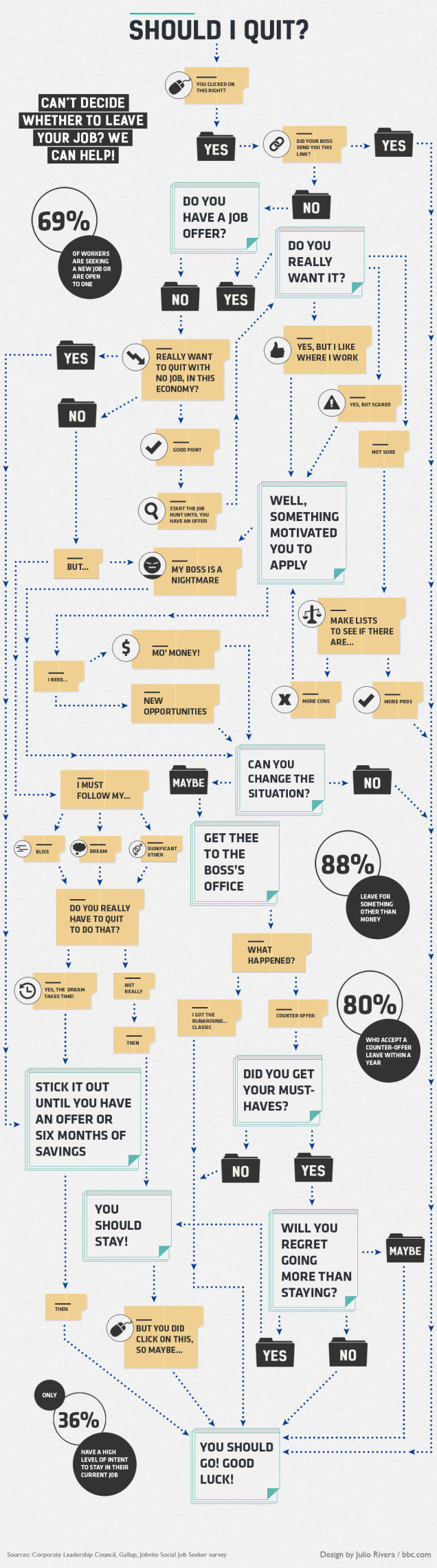
To Quit Or Not To Quit? This Flowchart Tells If It’s Time George Mortimer for Lifehack “Changing jobs or careers is something many people think about, but never seriously consider until it’s too late to change. The use of this flowchart makes it easier for you to determine if your current job satisfies your lifestyle. In basic terms, if your job isn’t making your life better you’re probably better off finding a new one.”
1372360723813364326

The Saturday Read – Brian Grazer and Charles Fishman ‘A Curious Mind: The Secret to a Bigger Life’

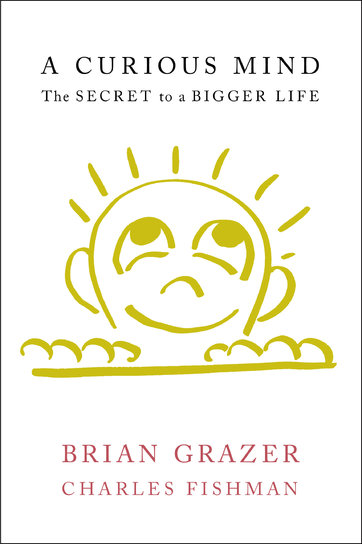
Are you curious about the people who work for you? Academy award winning producer Brian Grazer thinks you should be. He manages his organization with curiosity, by asking questions. His book, ‘A Curious Mind: The Secret to a Bigger Life’ was released earlier this year and is a memoir of his success and it’s source, listening to the answers.

“If you’re the boss, and you manage by asking questions, you’re laying the foundation for the culture of your company or group. 

You’re letting people know that the boss is willing to listen. This isn’t about being “warm” or “friendly”. It’s about understanding how complicated the modern business world is, how indispensable diversity of perspective is, and how hard creative work is.”

The initial reviews of the book focused on the ‘curiosity conversations’ Grazer has utilized throughout his career to network with a variety of folks in his unique quest for lifelong learning. But in the acknowledgements at the end of the book he addresses the reader directly on his purpose in writing ‘A Curious Mind’.

“a book not about my curiosity, but about what curiosity has enabled me to do, about what curiosity can enable anyone to do…”

“I didn’t want to write a book about all the people I’d had conversations with – I wanted to write about the impulse to have those conversations. I wanted to use the conversations to tell a story: the story of my steady discovery of the power of curiosity in my own life.”

For Grazer, it’s not just a hobby, but a commitment to intentionally integrate questioning into both his work and life outside of work.

“For it to be effective, curiosity has to be harnessed to at least two other key traits. First, the ability to pay attention to the answers to your questions – you have to actually absorb whatever it is you’re being curious about…The second trait is the willingness to act.”

In the early chapters he describes the power of curiosity to motivate, spark creativity, and build confidence. He is the ‘bard of curiosity’ sharing his career story intertwined with his capacity for discovery. But it’s in chapter five where the storytelling turns to management advice. “…the human connection that is created by curiosity…Human connection requires sincerity. It requires compassion. It requires trust.”

“Can you really have sincerity, or compassion, or trust, without curiosity?

“I don’t think so. I think when you stop to consider it – when you look at your own experiences at work and at home – what’s so clear is that authentic human connection requires curiosity.”

Here is the ‘gem’ of the book.

“To be a good boss, you have to be curious about the people who work for you.”

How many of you have a BA in business, an MBA or certificate from a prestigious executive management program? Has anyone ever suggested management by curiosity? We have all been taught to listen. And we don’t. But no one ever explained in this way, how critical the right questions are to getting to the fundamentals when decisions are being made.

“I use curiosity every day to help manage people at work…as a tool to build trust and cooperation and engagement.”

“And curiosity is the key to connecting and staying connected.”

Reading ‘A Curious Mind’ reminded me of a quote buried in dialog in the 2012 novel by Mark Helprin, ‘In Sunlight and in Shadow’:

“It’s a defining difference, curiosity. I’ve never known a stupid person who was curious, or a curious person who was stupid.”

What if you lost 25% of your organization on one day?

When we talk about corporate culture today we talk about change. What would you do if you lost 25% of your population in one day? In three months you can expect replacements for the 25% to arrive at your doorstep. The only complication is that the newbies lack the experience of the folks who left. One more thing. An increasing number in this group will never visit a physical location of the organization, communicating solely online.

Shall we have a conversation about ‘disruption’? What resources would you require to manage the scale of change?

This is the continuous management challenge for colleges and universities. And yet, those on the corporate side often discount the ‘unreality’ of the campus workplace, while those working in academia are suspicious of those in ‘the real world’.

Today is a good day to imagine this scenario as thousands of freshman arrive on campus or sign in to their first online course.

It’s time for business schools to take a look at what’s happening on their campuses and take the lead to cross-pollinate the lessons learned across the great academic – corporate divide.

When we talk about the 25% we are talking students. It doesn’t include the annual turnover in faculty and staff.

How do you manage the expectations of this diverse group that the organization (college) is hesitant to refer to as customer, many of whom have a team of consultants (parents) directing every move? How do you create a culture that is sustained through significant population shifts?

Start with the leaders?

The academic career path that leads to the university ‘C Suite’ rarely includes leadership training. The more enlightened college presidents invite the feedback of consultants, but the majority rely on the belief that they have always been the smartest person in the room and lead accordingly.

The realities of economic viability challenge the most effective leader to balance donor pressures with cultural continuity.

The job description has changed. It’s not just faculty and students anymore. The leadership portfolio may include a multi-million dollar entertainment complex (football), a multi-billion dollar health care campus, major real estate redevelopment and significant political lobbying.

College presidents once occupied a place of influence in the national conversation. They have been replaced by political voices who view universities as the sanctuary of the elite.

University presidents are running cities within cities. They are the guarantors of our civic future with their link to generational and social change.

I have worked in both corporate and academic environments. I am aware of the wall of bias that separate the two worlds. No one benefits from this insularity. Each could gain from the leadership lessons of the other.

The week@work – The pressure to succeed @school, @work and @amazon

This week@work includes articles that echo a growing concern that we are not adequately preparing our children for the future @work, millennials expectations @work, and Amazon’s culture that just may be more in line with those expectations.

Are we teaching our children to fear failure? Contributing Atlantic writer Jessica Lahey answers the question by narrating a parent – teacher conversation. The parent is expressing a concern about a child who is achieving academically but losing the desire to learn.

“The truth—for this parent and so many others—is this: Her child has sacrificed her natural curiosity and love of learning at the altar of achievement, and it’s our fault. Marianna’s parents, her teachers, society at large—we are all implicated in this crime against learning. From her first day of school, we pointed her toward that altar and trained her to measure her progress by means of points, scores, and awards. We taught Marianna that her potential is tied to her intellect, and that her intellect is more important than her character. We taught her to come home proudly bearing As, championship trophies, and college acceptances, and we inadvertently taught her that we don’t really care how she obtains them. We taught her to protect her academic and extracurricular perfection at all costs and that it’s better to quit when things get challenging rather than risk marring that perfect record. Above all else, we taught her to fear failure. That fear is what has destroyed her love of learning.”

Innovation is the product of failure. At a time when global competition is intense, there is a shortage of the curious, the questioning.

It’s time to reevaluate our priorities and help “kids rediscover their intellectual bravery, their enthusiasm for learning, and the resilience they need in order to grow into independent, competent adults.”

What happens when these adults move into the workplace? What are their expectations?

In 2007 the Gallup Management Journal published the results of a poll of job seekers asking what was important to them in their job search.

“Nearly half of job seekers say the opportunity to learn and grow, the opportunity for advancement, and earning promotions based on merit are extremely important when looking for a job”

It follows that the quality of management and the relationship with ‘the boss’ are critical factors in recruitment and retention.

“Companies know they must offer competitive compensation packages when fighting for talented employees, and they must offer the right types of work for those seeking jobs. If they don’t revise their recruiting pitch to include concrete examples of great management, and if they don’t have great managers in the first place, then job seekers will listen to companies that do.”

Hopefully great managers will allow employees to fail. But apparently not, according to the next story about the generation we continue to label as millennials.

In a post for Inc. Chis Matyszczyk gives us four reasons these folks are leaving their jobs.

“They’ve seen what corporate life did to their parents, so they’ll take it just in small doses, thanks. They see through their bosses (and their bosses hate them for it). Millennials look at the corporate world and understand how uncertain the future is. Most of their role models got rich quick.”

If the expectation is to take corporate life in small doses, perhaps a resume should include some time at the world’s biggest retailer.

Welcome to orientation at Amazon. The ‘above the fold’ story in The New York Times today describes the corporate culture at Amazon. As all things Amazon the culture reflects the values. leadership principles and vision of Jeff Bezos.

“Amazon may be singular but perhaps not quite as peculiar as it claims. It has just been quicker in responding to changes that the rest of the work world is now experiencing: data that allows individual performance to be measured continuously, come-and-go relationships between employers and employees, and global competition in which empires rise and fall overnight. Amazon is in the vanguard of where technology wants to take the modern office: more nimble and more productive, but harsher and less forgiving.”

Key to Amazon’s success is Jeff Bezos’ realistic view of the new employer-employee contract – one based on mutual utility.

“…he was able to envision a new kind of workplace: fluid but tough, with employees staying only a short time and employers demanding the maximum.”

A few additional articles from the week@work:

‘Design As Strategy’ Adi Ignatius for The Harvard Business Review, September 2015 issue: “…illustrates some of the ways design thinking is starting to power corporate strategy.”

The Perils of Ever-Changing Work Schedules Extend to Children’s Well-Being‘ Noam Scheiber for The New York Times, 8/12: “A growing body of research suggests that children’s language and problem-solving skills may suffer as a result of their parents’ problematic schedules, and that they may be more likely than other children to smoke and drink when they are older.”

‘The Makeup Tax’ Olga Khazan  The Atlantic 8/5  “Years of research has shown that attractive people earn more. Thus, the makeup tax: Good-looking men and good-looking women both get ahead, but men aren’t expected to wear makeup in order to look good.”

The week@work – How to live wisely, raise strong women, the value of a liberal arts education and more

It’s that time of year, ‘back to school’. It doesn’t matter if you are preschool or college, your local retail outlet is ready to meet every consumer need to outfit you or your dorm room. It’s also ‘back to work’ for those returning from vacation ( if you are one of the six in ten who took some leave this summer). There was a lot going on this week@work. Here are a few stories to get your Monday morning office conversations going.

Harvard professor Richard J. Light, the author of a 2001 book, ‘How to Make the Most of College’ asked New York Times readers to imagine they were dean for a day in a new article, ‘How to Live Wisely’. Before you skip to the next paragraph, stay with me. His questions have relevance for all leaders.

“Imagine you are Dean for a Day. What is one actionable change you would implement to enhance the college experience on campus?

I have asked students this question for years. The answers can be eye-opening. A few years ago, the responses began to move away from “tweak the history course” or “change the ways labs are structured.” A different commentary, about learning to live wisely, has emerged.

What does it mean to live a good life? What about a productive life? How about a happy life? How might I think about these ideas if the answers conflict with one another? And how do I use my time here at college to build on the answers to these tough questions?”

Once we leave college and begin to move ahead in our careers these questions become even more critical in our quest of life long learning.

Professor Light offers “five exercises that tackle the big questions”. Number three:

“I call this the Broad vs. Deep Exercise. If you could become extraordinarily good at one thing versus being pretty good at many things, which approach would you choose? We invite students to think about how to organize their college life to follow their chosen path in a purposeful way.”

Rephrase this one in respect to your career preparation. Have you organized your life around your choice to develop an expertise or be more of a generalist?

The next story may be too late for some struggling small colleges, but Forbes magazine reported ‘That ‘Useless’ Liberal Arts Degree Has Become Tech’s Hottest Ticket’. ( Full disclosure here, I have one of those ‘useless’ degrees and have found it extremely complementary to my career choices.)

“Engineers may still command the biggest salaries, but at disruptive juggernauts such as Facebook and Uber, the war for talent has moved to nontechnical jobs, particularly sales and marketing. The more that audacious coders dream of changing the world, the more they need to fill their companies with social alchemists who can connect with customers–and make progress seem pleasant.”

Liberal Arts = Social Alchemy? Has a six figure ring to it.

On the millennial front this week there were two stories in The New York Times. The first reported on a new Pew Research Study which found that millenials are less likely to leave the nest.

“In 2010, according to the study, 69 percent of 18- to 34-year-olds lived independently. During the first four months of this year, just 67 percent of that same age group was living independently. From 2010 to April 2015, the share of young adults living in their parents’ homes has increased to 26 percent from 24 percent, the study said.”

For those who have left the nest to build their own, another Times report found ‘Millennial Men Aren’t the Dads They Thought They’d Be’.

“Young men today have aspirations of being hands-on fathers as well as breadwinners — supportive husbands who also do dishes.

But as they enter that more responsibility-filled stage of life, something changes: Their roles often become much more traditional.

Millennial men — ages 18 to early 30s — have much more egalitarian attitudes about family, career and gender roles inside marriage than generations before them, according to a variety of research by social scientists. Yet they struggle to achieve their goals once they start families, researchers say. Some researchers think that’s because workplace policies have not caught up to changing expectations at home.”

This research and story is one to follow as this generation now makes up the largest % of the workforce. As they progress in their careers it will be interesting to see if attitudes begin to align with work/life policies.

Amy Joyce reporting in the Washington Post poses the question: ‘Are you holding your own daughter back? Here are 5 ways to raise girls to be leaders.’ This is another must read article with research backed practical suggestions for parents to avoid gender bias.

“Think you’re raising your daughter to be a strong leader? Look more closely: You, and the people around her, may unwittingly be doing just the opposite.

Teen boys, teen girls, and, yes, even parents have biases against girls and women as leaders, new research from the Harvard Graduate School of Education and its Making Caring Common project found.

Richard Weissbourd, a Harvard psychologist who runs the Making Caring Common project, said he was “surprised by the extent of it … how gendered both the boys’ and the girls’ responses were.”

Weissbourd decided to look at bias as part of the larger goal of helping children learn to be kind. “We were concerned that biases get in the way of people caring about and respecting other people, so our initial study was just looking at biases,” he said. “And one of the striking findings that emerged was gender bias.”

And the last story is related to the photo in the header. Erica Murphy, editorial assistant at Levo shared ‘7 Things I Learned About Life From Completely Unplugging’. (This one’s for you – the 4 in 10 who have not taken vacation this summer) My two favorites (you can read the rest) – “No one cares & a tech free world does exist”.

“When you live in a big city like New York, you forget that people out there do lead simple lives. And honestly? It’s not so bad. I don’t think I could deal with no running water all the time, but it’s nice to be out in the country sometimes and just relax. Maybe Potter County isn’t on your radar, but it’s the same idea as finding a nearby park and leaving your phone at home. Or maybe you go hiking for the day and really connect with nature. With our lives getting more hectic every day, it’s important to find that time for yourself to decompress.”

Hoping you find time to unplug this week@work.

Why we do science and the triumph of NASA’s ‘New Horizons’ team

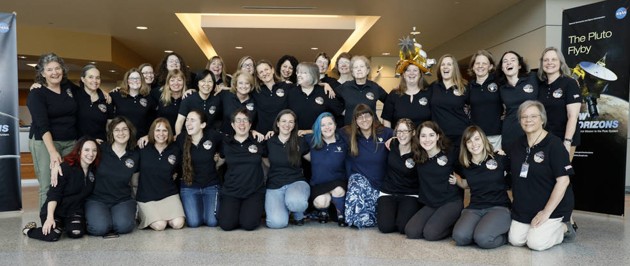
Last week we celebrated the team play of the US Women’s National Team, this week we honor NASA’s ‘New Horizons’ team for piloting a spacecraft the size of a small piano through space for 3,463 days and three billion miles.

Remember Pluto? You know, the ninth planet in order from the sun. Is there anyone who did not do a science project on the planets? Very few of us can trace our choice of career back to the grade school science fair, but some folks used those dioramas as a foundation to build a career in space exploration.

Think about what you were doing at work nine years ago. Now imagine you were part of a team that started a journey toward that ninth planet in 2006. And then your planet was demoted to dwarf status. Can you imagine sustaining a team for almost a decade?

Daniel Terdiman examined the success factors in a post for Fast Company.

“Not everyone on the original team stayed on board throughout the 14 years between proposal and today, but many have. Besides Hersman and principal investigator Stern, others who are still deeply involved include Alice Bowman, the New Horizons mission operations manager, Glen Fountain, the New Horizons project manager, Mark Holdridge, the Pluto encounter mission manager, and many other team leads and sub-leads who worked on everything from propulsion to communications.

That’s impressive stability. Of course, all these people have other tasks beyond the New Horizons project, but everyone knew it was about to be show time. “People ramped down so they weren’t working much on the project,” Hersman said, “but when the time comes to fly past Pluto, a lot of other stuff gets put on hold, or they find time.”

Terdiman found that a ‘longevity document’ provided the blueprint for the mission including requirements and contact information for every team member. “One other essential element of preparing for the nine-year mission was compiling a spreadsheet of contingencies for when things went wrong. This was useful when ground control temporarily lost communications with the New Horizons probe on July 4 of this year.” And finally, “When it’s all over, look back.”

If the shear wonder of the team’s achievement was not enough, Adrienne Lafrance, writing for the Atlantic, identified another major milestone for the ‘New Horizons’ team:

“For all the firsts coming out of the New Horizons mission—color footage of Pluto, photos of all five of its moons, and flowing datastreams about Pluto’s composition and atmosphere—there’s one milestone worth noting on Earth: This may be the mission with the most women in NASA history.”

“The New Horizons team includes about 200 people today, but there have been thousands of scientists and engineers who have contributed to the mission since it began more than a decade ago. Women make up about one-quarter of the flyby team, those responsible for the high-stakes mission taking place this month, according to NASA.”

And now, for you skeptics who either believe all of this is happening on a sound stage in Burbank or just don’t get why we do science and stretch the limits of our knowledge, I turn to Neil deGrasse Tyson.

In an interview with Lester Holt for NBC Nightly News on Tuesday, the American astrophysicist and director of New York’s Hayden Planetarium answered the question of why we do science.

“One of the greatest aspects of what it is to do science is to reach a new vista and then discover that you can now ask questions undreamt of before you got there.”

Tonight, go outside and look up. What do you see? What questions do you have? Imagine being part of a team working to find the answers to those ‘undreamt of’ questions from our new vantage point.

‘We Are The Champions’ by songwriter Freddie Mercury

On Sunday evening or Monday morning, depending where you were in the world, the US Women’s National Soccer Team defeated the women representing Japan 5-2 in the final of the Women’s World Cup in Vancouver, Canada.

At the end of the game, midfielder Carli Lloyd, who scored three goals in the first sixteen minutes of the final, commented on the victory.

“It’s been a long journey, my career. I’ve had a lot of people believe in me, in my corner, from day one,” said the midfielder, who turns 33 on July 16. “I’ve dedicated my whole life to this. Everything else comes second. But I wouldn’t want to do it any other way.”

On Tuesday, the New York Times reported on New York mayor, Bill de Blasio’s decision to recognize the women’s team:

“New York City will hold a ticker-tape parade on Friday for the United States women’s national soccer team, breaking with decades of precedent to bestow a rare honor upon a group that competes outside the metropolitan area.”

The Friday poem this week, on the day of the ticker tape parade, is the lyrics written by Freddie Mercury in 1977 and recorded by Queen. This one is for the members of the team, their families and coaches. And for all the young women and young men who have been inspired by the hard work, dedication and resilience of the US Women’s National Team.

We Are The Champions

I’ve paid my dues
Time after time
I’ve done my sentence
But committed no crime
And bad mistakes
I’ve made a few
I’ve had my share of sand
Kicked in my face
But I’ve come through

And we mean to go on and on and on and on

We are the champions – my friends
And we’ll keep on fighting
Till the end
We are the champions
No time for losers
‘Cause we are the champions of the World

I’ve taken my bows
And my curtain calls
You brought me fame and fortune
And everything that goes with it
I thank you all
But it’s been no bed of roses
No pleasure cruise
I consider it a challenge before
The whole human race
And I ain’t gonna lose

And we mean to go on and on and on and on

We are the champions – my friends
And we’ll keep on fighting
Till the end
We are the champions
No time for losers
‘Cause we are the champions of the World

We are the champions – my friends
And we’ll keep on fighting
Till the end
We are the champions
No time for losers
‘Cause we are the champions

Songwriter: Freddie Mercury, 1977