‘The World I Live In’ a poem by Mary Oliver

The Friday Poem this week is from Pulitzer Prize winning poet Mary Oliver‘s new collection, ‘Felicity’ published this fall. Merry Christmas!

The World I Live In

I have refused to live

locked in the orderly house of

reasons and proofs.

The world I live in and believe in

Is wider than that. And anyway,

what’s wrong with Maybe?


You wouldn’t believe what once or

twice I have seen. I’ll just

tell you this:

only if there are angels in your head will you

ever, possibly, see one.

Mary Oliver  ‘Felicity’  Penguin Press, 2015

Holiday Homework: Write your story

It’s the holiday season and you have one assignment to complete before the New Year begins – write your story.

During the Thanksgiving holiday I encouraged readers to participate in the Story Corps ‘Great Thanksgiving Listen’, conducting interviews  with relatives to capture the oral history narrative of America.

This week’s challenge is about you; to think about your life as it has evolved to this point, highs and lows, and write a short story, your story.

Before you craft your resume, schedule a meeting with a networking contact or head to an interview, you need a story; the narrative of how you arrived at this point in your life and career.

The end goal is to collect as much information about your past before you open your laptop and begin to browse resume formats. Most folks make the mistake of finding a template and relating their story via someone else’s outline. That doesn’t mean that there aren’t acceptable resume formats. It does mean that it’s premature to begin with the resume before you have considered the narrative you wish to convey.

Storytelling has become the latest marketing approach adopted by entrepreneurs to Fortune 500 CEOs. Google ‘storytelling’ and the initial search results will reflect current business practice vs. writers working on the great American novel or the hottest new screenplay.

Here’s the thing. If the folks you hope to work with are employing storytelling to advance their business goals, it may be time for you to practice your skill.

Buried in the list of google results is a link to an Atlantic.com video, ‘George Saunders Explains How To Tell A Good Story’. It’s one of the most viewed videos of the year, which may provide another hint to why you should take seven minutes out of your life this week and watch.

Let’s pause a minute to address all of you who have gotten to this point and are stressed because all you wanted was a few words on how to write a resume in ten seconds.

Nothing of quality results from ten seconds of effort. And this is your life, eight to ten hours of every five days of seven.

Back to George Saunders.

“A story is kind of a black box, you’re going to put the reader in there, she’s going to spend some time with this thing that you have made and when she comes out, what’s going to have happened to her in there is something kind of astonishing. It feels like the curtain’s been pulled back and she’s gotten a glimpse into a deeper truth…

As a story writer, that’s not as easy as it sounds..”

It’s not easy to tell your story. There’s a lot of stuff that in the end may have no relevance to your job search. But it’s important to conduct an annual rewrite to update and adapt your original script.

Let’s borrow a term from the screenwriters and suggest you are developing a draft ‘treatment’ before you write a resume, network and interview.

Micki Grover defines and describes how this summary of a story fits into the screenwriting process.

“All we’re talking about is a short document written in prose form and in the present tense that emphasizes, with vivid description, the major elements of a screenplay. Yes, treatments are actually written in prose! The essence of the story and the characters should be evoked through exhilarating language and imagery.

Treatments have a style of their own just as screenplays do, and they too take time to master. Writers who swear by using treatments find that it’s a fun outlet to write with a voice that screenplays and synopses sometimes constrain. The ultimate goal is simply to tell your story in an engaging way, as if you were passionately telling your best friend about a new script over coffee.”

That’s your holiday assignment. Develop a ‘treatment’ that tells your story in an engaging way, connecting the dots and inviting an audience who may be interested in promoting your talent.


‘Cruising with the Beach Boys’ a poem by Dana Gioia

Have you ever taken a ‘daydream detour’ on a business trip, driving from the airport to a client along a winding beach side road? Maybe your playlist takes a momentary shuffle to a memory inducing moment. If yes, the ‘Friday Poem’ this week is for you, from Dana Gioia, California’s new Poet Laureate.

Gioia earned both his BA and MBA from Stanford University and an MFA from Harvard University. He was a marketing executive for General Foods for 15 years before his transition to full time writer. In 2003 he was named head of the National Endowment for the Arts, a position he held until 2009.

His poetry reflects his roots in a working class suburb of Los Angeles, and often references the time before, when his place @work was in corporate America. He continues to be a new millennium model for successful career transition.

This week’s Friday Poem is his ‘Cruising with the Beach Boys’; a California poem, by a California guy, from his shared hometown with the Beach Boys, before a freeway ran through it, Hawthorne, California.

Cruising with the Beach Boys

So strange to hear that song again tonight
Travelling on business in a rented car
Miles from anywhere I’ve been before.
And now a tune I haven’t heard for years
Probably not since it last left the charts
Back in L.A. in 1969.
I can’t believe I know the words by heart
And can’t think of a girl to blame them on.

Every lovesick summer has its song,
And this one I pretended to despise,
But if I was alone when it came on,
I turned it up full-blast to sing along –
A primal scream in croaky baritone,
The notes all flat, the lyrics mostly slurred.
No wonder I spent so much time alone
Making the rounds in Dad’s old Thunderbird.

Some nights I drove down to the beach to park
And walk along the railings of the pier.
The water down below was cold and dark,
The waves monotonous against the shore.
The darkness and the mist, the midnight sea,
The flickering lights reflected from the city –
A perfect setting for a boy like me,
The Cecil B. DeMille of my self-pity.

I thought by now I’d left those nights behind,
Lost like the girls that I could never get,
Gone with the years, junked with the old T-Bird.
But one old song, a stretch of empty road,
Can open up a door and let them fall
Tumbling like boxes from a dusty shelf,
Tightening my throat for no reason at all
Bringing on tears shed only for myself.

Dana Gioia   ‘Daily Horoscope’ 1986

The Saturday Read – a selection of the best articles of 2015 from Jon Ronson, Oliver Sacks, Kathryn Schulz and Nikil Saval

This week the recommendations for ‘The Saturday Read’ come from journalists who wrote some of the most popular long form articles of the year. Instead of a book, which might seem daunting in the midst of holiday shopping and celebrating, sample the writings of these four storytellers who tackled a range of topics including internet shaming, death, earthquakes and the origins of the white collar worker.

On Wednesday, ‘The Upshot’ covered ‘The Stories That Held You The Longest in 2015’. “We measured the favorite Times articles of 2015 in a new way — by the total combined time readers have spent looking at them. It’s a mix of ambitious investigative projects, big breaking news, features and service journalism.”

Number two on the list first appeared in the February 12, 2015 New York Times Magazine. Written by Jon Ronson, ‘How One Stupid Tweet Blew Up Justine Sacco’s Life’ tells the story of the world of public ‘internet shaming’ through the experience of its victims.

15sacco1-master1050-v3

“In the early days of Twitter, I was a keen shamer. When newspaper columnists made racist or homophobic statements, I joined the pile-on. Sometimes I led it…

Still, in those early days, the collective fury felt righteous, powerful and effective. It felt as if hierarchies were being dismantled, as if justice were being democratized. As time passed, though, I watched these shame campaigns multiply, to the point that they targeted not just powerful institutions and public figures but really anyone perceived to have done something offensive. I also began to marvel at the disconnect between the severity of the crime and the gleeful savagery of the punishment. It almost felt as if shamings were now happening for their own sake, as if they were following a script.”

Number ten on the list was an Op-Ed piece by neurologist and writer, Oliver Sachs, ‘My Own Life’, on learning he had terminal cancer.

19sacks-copy-blog427-v6

“Over the last few days, I have been able to see my life as from a great altitude, as a sort of landscape, and with a deepening sense of the connection of all its parts. This does not mean I am finished with life.

On the contrary, I feel intensely alive, and I want and hope in the time that remains to deepen my friendships, to say farewell to those I love, to write more, to travel if I have the strength, to achieve new levels of understanding and insight.

This will involve audacity, clarity and plain speaking; trying to straighten my accounts with the world. But there will be time, too, for some fun (and even some silliness, as well).”

A New Yorker article received a lot of attention when it first appeared in July. ‘The Really Big One’ was researched and written by contributor, Kathryn Schulz.

150720_r26752-320

“Most people in the United States know just one fault line by name: the San Andreas, which runs nearly the length of California and is perpetually rumored to be on the verge of unleashing “the big one.” That rumor is misleading, no matter what the San Andreas ever does. Every fault line has an upper limit to its potency, determined by its length and width, and by how far it can slip. For the San Andreas, one of the most extensively studied and best understood fault lines in the world, that upper limit is roughly an 8.2—a powerful earthquake, but, because the Richter scale is logarithmic, only six per cent as strong as the 2011 event in Japan.

Just north of the San Andreas, however, lies another fault line. Known as the Cascadia subduction zone, it runs for seven hundred miles off the coast of the Pacific Northwest, beginning near Cape Mendocino, California, continuing along Oregon and Washington, and terminating around Vancouver Island, Canada. The “Cascadia” part of its name comes from the Cascade Range, a chain of volcanic mountains that follow the same course a hundred or so miles inland. The “subduction zone” part refers to a region of the planet where one tectonic plate is sliding underneath (subducting) another. Tectonic plates are those slabs of mantle and crust that, in their epochs-long drift, rearrange the earth’s continents and oceans. Most of the time, their movement is slow, harmless, and all but undetectable. Occasionally, at the borders where they meet, it is not.”

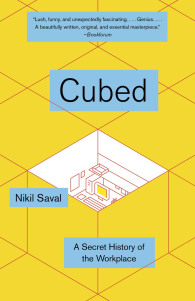
Longreads.com selected their ‘Best of 2015’ which included an excerpt from the book, ‘Cubed: A Secret History of the Workplace’. The fifth most popular article was ‘I Would Prefer Not To: The Origins of the White Collar Worker’, written by Nikil Saval.
9780345802804-1.jpg

“When does the office begin? It’s a question without an easy answer. One can associate the origins with the beginning of paperwork itself—until recently, the most common mental association with office work (think of the derogatory phrase “paper pusher”). In other words, since the invention of writing and the corresponding ability to keep records in a systematic manner, there have always been places that resemble offices: monasteries, libraries, scholars’ studies. Banking furnished an especially large amount of paperwork; the Uffizi, an incomparable gallery of Renaissance art in Florence, was also one of the first office buildings—the bookkeeping offices of the Medici family’s groundbreaking financial operations. Clerks, too, have existed for ages, many of them unclinching themselves from their desks to become quite famous: from Samuel Pepys, the British government diarist who reported on the gossipy world of seventeenth-century England, to Alexander Hamilton, who had cut his teeth as a merchants’ clerk before he became the first secretary of the Treasury of the United States; Benjamin Franklin, paragon of pecuniary restraint and bourgeois self-abnegation, started out as a dry goods clerk in 1727. Perhaps some of the tediousness of Franklin’s own writing was honed in the conditions of his first job: since clerks have had the opportunity to keep diaries, they have bemoaned the sheer boredom of their tasks—the endless copying, the awkward postures, the meaninglessness of their work. When not doing writing for the job, clerks have cultivated the habit of writing about the job—or literally around it…”



The Saturday Read ‘Patience and Fortitude’ by Scott Sherman

In times of financial crisis, you start looking around the house for things you might sell off until you realize all you have left is the real estate under your roof. For the New York Public Library in the early years of the 21st century, the fine art had been sold at auction, the staff had been ‘right sized’ and all that was left to remain solvent were the private donors and the coveted real estate footprint of branch locations.

This week’s ‘Saturday Read’ is ‘Patience and Fortitude: Power, Real Estate, And The Fight To Save A Public Library’ by Scott Sherman.

“This is a book about a world-class library that lost its way in the digital age.”

patience and fortitude

A public library is a community sanctuary that has historically offered immigrants a way to the middle class. In the Preface, author Sherman retells the story of former New York Senator, Daniel Patrick Moynihan who was working as a boot-black in 1940s Times Square, visiting the main library at 42nd Street.  “It was the first time I was taught that I was welcome in a place of education and learning. I would go into that great marble palace, and I would check my shoeshine box. A gentleman in a brown cotton jacket would take it as if I’d passed over an umbrella and bowler hat.”

This is a New York story, but one that illustrates the fate of the non-profit organization in an economic downturn. In the case of the NYPL, originally founded by bankers and corporate titans, the seismic shifts in the economy forced the influential board, of modern day financiers, to engage big name consultants in an attempt to apply “free-market solutions to complex institutional problems.”

The central narrative of the book was first reported by author Sherman in the December 2011 issue of ‘The Nation’. ‘Upheaval at the New York Public Library’ made public a four year old ‘Central Library Plan’, conceived and ratified by the NYPL’s trustees.

“The core trustees – led by the developer Marshall Rose – did what came naturally to them: they sold the NYPL’s land and took steps to shrink an institution they may have viewed as bureaucratic and inefficient…Personal enrichment was certainly not the trustees’ intention; they were sincere in their desire to assist the Library. It was hubris that drove them forward, and which ultimately led them astray: they believed that corporate logic could be effortlessly applied to a sprawling, decrepit library system.”

Consider this the first shot across the bow, as the Sherman chronicles the response from writers, researchers, NYPL employees, politicians and library patrons.

A 2012 Op-Ed piece written by Theodore Roosevelt biographer, Edmund Morris for The New York Times offers a sample of the opposition.

“I read newspaper reports about the determination of Anthony W. Marx, the president of the library, to spend $300 million to transform the main building, long devoted to reference, into what sounds like a palace of presentism. He wants to close the library system’s biggest circulating branch, the Mid-Manhattan (located just across the street) and the Science, Industry and Business Library (also in Midtown) and somehow wedge their contents into the already overstocked central research library.

For that he will need all the spatial ingenuity of his trendy architect-designate, Norman Foster. But something’s going to have to give, and you can be sure that what is new and hard and digital will prevail over what is old and papery and transportable elsewhere.”

On May 7, 2014 Robin Pogrebin reported that the NYPL has abandoned its renovation plan.

Last month, Tom Mashberg of The New York Times reported on the new plan to create a high-tech space under Bryant Park to house 2.5 million research works from the original stacks.

“This was not, of course, Plan A. That plan entailed a makeover of the flagship Fifth Avenue library that would have sent the research books to Princeton, N.J. But it set off a virtual Fahrenheit 451 of outrage among scholars and others for whom the library’s role as a research mecca seemed endangered. Critics, who hoped the old steel stacks could stay in use, remain apprehensive about the new stocking and retrieval system, which they say is impressive but has not been tested.”

To be continued…

And while you wait, catch up on the history and the cast of characters who bring ‘Patience and Fortitude’ to life.


The Saturday Read – Gift a book this holiday season

One of the best presents one can give or receive is a book. #ShopSmall today and visit your local bookseller to find the perfect gift for everyone on your holiday list.

Let’s start with a client or your boss, two challenging categories for gift giving. You could go with a bottle of wine, chocolates, fruit basket or Starbucks card. But that’s what they’ll get from your competitors and colleagues. If you want to stand out and demonstrate, in a very tangible way, that you’ve been listening when they talk about their interests outside of work, a book just may be the way to make a connection. And I’m not talking about the latest business best seller.

Former Seattle librarian and current NPR commentator, Nancy Pearl has written a series of ‘Book Lust’ books recommending current and back list titles for “every mood, moment or reason and travelers, vagabonds and dreamers”. Her suggestions sample the catalog of titles published since 1960, so you will no doubt rediscover some gems to twinkle under the tree.

Create a list of folks @work. Then make a few notes about each and their interests. Visit an independent bookseller today, #SmallBusinessSaturday, and ask for suggestions. Often the best books of the year will never make The New York Times bestseller list, so you will need a little help from someone whose life is about books.

Barnes and Noble, Amazon and Costco don’t count. For the important task of matching books with colleagues and clients, you need the expertise of someone invested in presenting a diversity of titles.

“Independent bookstores never had to answer to the dictates of public markets. Many of their proprietors understood, intuitively and from conversations with customers, that a well-curated selection—an inventory of old and new books—was their primary and maybe only competitive advantage. In the words of Oren Teicher, CEO of the American Booksellers Association, “The indie bookselling amalgam of knowledge, innovation, passion, and business sophistication has created a unique shopping experience.”

Some may think a book is a risky gifting proposition. The risk lies only in not  paying attention and failing to seek out help from experts. Take some time today to shop on Main Street and pick up a few books for the holidays.

“Books make great gifts because they have whole worlds inside them, and it’s much cheaper to buy somebody a book than it is to buy them the whole world.” Neil Gaiman


‘The Tables Turned’ a poem by William Wordsworth

Today is the day to #OptOutside, a campaign initiated by the U.S. retailer REI. In contrast to it’s competitors, their stores will remain closed today and they are encouraging all of us to join them and post our outdoor experience on social media.

“REI believes that being outside makes our lives better. That’s why this Black Friday, we’re closing all 143 of our stores and paying our employees to head outside.”

The Friday poem was written by William Wordsworth in 1798, carrying a similar message,”Up! up! my Friend…” and #OptOutside.

THE TABLES TURNED

Up! up! my Friend, and quit your books;
Or surely you’ll grow double:
Up! up! my Friend, and clear your looks;
Why all this toil and trouble?

The sun, above the mountain’s head,
A freshening lustre mellow
Through all the long green fields has spread,
His first sweet evening yellow.

Books! ’tis a dull and endless strife:
Come, hear the woodland linnet,
How sweet his music! on my life,
There’s more of wisdom in it.

And hark! how blithe the throstle sings!
He, too, is no mean preacher:
Come forth into the light of things,
Let Nature be your Teacher.

She has a world of ready wealth,
Our minds and hearts to bless—
Spontaneous wisdom breathed by health,
Truth breathed by cheerfulness.

One impulse from a vernal wood
May teach you more of man,
Of moral evil and of good,
Than all the sages can.

Sweet is the lore which Nature brings;
Our meddling intellect
Mis-shapes the beauteous forms of things:—
We murder to dissect.

Enough of Science and of Art;
Close up those barren leaves;
Come forth, and bring with you a heart
That watches and receives.

William Wordsworth 1798


#TheGreatListen 2015

What if you could capture a generation of American lives and experiences in one holiday weekend? That’s the vision of StoryCorps founder, Dave Isay, and he plans to fulfill his mission this Thanksgiving weekend through a combination of an app and an educators toolkit to enable DIY interviews to gather the wisdom of others. It’s the #GreatThanksgivingListen and you are invited to attend.

StoryCorps recently celebrated twelve years of conducting and recording oral history interviews, beginning with a booth in New York’s Grand Central Station and later taking the booth on the road to all 50 states creating the largest single collection of human voices ever gathered. The next step is to grow the archive of 100,000 to tens of thousands.

Dave Isay and his organization are the recipients of the 2015 TED Prize, and it was in his presentation to the annual conference in April that he outlined his proposal for a “national homework assignment”.

Here’s the plan. Download the app, select ‘helpful hints’ for a short tutorial. Select ‘browse’ to view previous StoryCorps recordings. Go to ‘my interviews’ to outline and record your interview. You can choose  from a list of sample questions by categories. Next step –  record!

“Who are they? What did they learn in life? How would they like to be remembered?”

And here’s the magical part. You can keep your recording for yourself or opt to upload it to the StoryCorps archive at the American Folklife Center at the Library of Congress. Imagine the story of your family intertwined with other American voices building upon a historical record of their time.

In his April TED talk, Isay described the power of “…everyday people talking about lives lived with kindness, courage, decency and dignity…it sometimes feels like you are walking on holy ground…”

If you believe that you learn from the wisdom of others, this holiday offers an opportunity to join “…a global movement to record and preserve meaningful conversations with one another that results in an ever growing digital archive of the collective wisdom of humanity.”


The Saturday Read ‘Every Time I Find the Meaning of Life, They Change It’ by Daniel Klein

A U.S. Senator, a philosophy student and a welder walk into a bar…maybe not. In a debate last week U.S. Senator Marco Rubio questioned the value of a philosophy major in a world that needs more welders.

“I don’t know why we have stigmatized vocational education, welders make more money than philosophers. We need more welders and less philosophers.”

I can understand those who seek to define college as an extended vocational school experience, given the cost and potential for significant debt, but to limit the aspirations of 18 year olds diminishes the value of higher education. I think we go to college to figure things out. Part of that is the career decision, but the larger experience incorporates learning how to think, question, listen, reflect and argue in a quest to live our best life.

In defense of philosophy majors, and the politicians and welders who might benefit from their wisdom, The Saturday Read this week is ‘Every Time I Find the Meaning of Life, They Change It: Wisdom of the Great Philosophers on How to Live’ by Daniel Klein.

Like many college students, Klein didn’t have a clue as to what I wanted to do after college; basically all I knew was that I didn’t want to be a doctor, lawyer, or businessman, eliminations that put me in a distinct minority of my classmates. I figured studying philosophy would be just the ticket to give me direction.”

His father, like Senator Rubio, let him know that “studying philosophy was simply a wast of time.”

Fortunately for the reader, Klein continued his studies, recording selected ‘Pithies’ in a notebook hoping “to find some guidance from the great philosophers on how best to live my life.” These quotes and current reflections form the structure of the book.

“I now realized that those how-to-live questions were still very much alive in my mind. Sure, time had crept on and my life, with its ups and downs, had simply happened, as lives tend to do, by my appetite for philosophical ideas about life had not diminished in the least. In fact, as I look at life from the vantage point of my eighth decade, my hankering for such ideas has only increased. Late in the game as it may be, I still want to live my final years the best way I can. But more compellingly, I find myself at that stage of life when I want to give my personal history one last look-through, and I am curious to see how it measures up to fully considered ideas of a good life.”

Why this book? Because legislating, welding and philosophy should not be mutually exclusive terms. As the Thanksgiving inter-generational conversation turns to the big ‘vocational’ questions of choice and what you are doing with your life, it’s the central question of philosophy being posed, how to live the best possible life.

‘Every Time I Find the Meaning of Life, They Change It’ is an accessible, often humorous, tutorial, presenting a pageant of philosophy’s luminaries and author commentaries.

One quote in particular, resonated with me in light of the domestic and international scene this week, from British philosopher, Bertrand Russell.

“The man who has no tincture of philosophy goes through life imprisoned in the prejudices derived from common sense, from the habitual beliefs of his age or his nation, and from convictions which have grown up in his mind without the co-operation or consent of deliberate reason. To such a man the world tends to become definite, finite, obvious; common objects rouse no questions, and unfamiliar possibilities are contemptuously rejected…(But Philosophy) keeps alive ours sense of wonder by showing familiar things in an unfamiliar aspect.”

‘A Consumer’s Report’ a poem by Peter Porter

Imagine you work for Consumer Reports, the U.S. product review and ratings service, and you are on deadline to submit an evaluation of a new product. In this week’s Friday Poem, ‘A Consumer’s Report’ from Australian born poet, Peter Porter, life is the product under review.

Porter moved to London in the early 1950s and took a job with an advertising agency publishing his first collection of poetry in 1961. Have you ever noticed how many ‘Mad Men’ moonlight as poets?

Kate Middleton, the 2012 Sydney City Poet, described the poem in her Tumblr post.

“In “A Consumer’s Report” Porter reminds us that even language that seems to have been repurposed by the corporate world can in fact be reclaimed and renewed. Often this reclamation can happen simply through the application of a set of familiar terms to a surprising new context: this is exactly what Porter does in his poem here, taking the language of marketing, and billing life itself as a commodity to be test-driven as you would a new car or skincare product. In so doing Porter wittily leads the reader both to examine the nature of the titular consumer’s report, but also prods his reader to a serious consideration of life itself.”

A Consumer’s Report

The name of the product I tested is Life,
I have completed the form you sent me
and understand that my answers are confidential.

I had it as a gift,
I didn’t feel much while using it,
in fact I think I’d have liked to be more excited.
It seemed gentle on the hands
but left an embarrassing deposit behind.
It was not economical
and I have used much more than I thought
(I suppose I have about half left
but it’s difficult to tell)—
although the instructions are fairly large
there are so many of them
I don’t know which to follow, especially
as they seem to contradict each other.
I’m not sure such a thing
should be put in the way of children—
It’s difficult to think of a purpose
for it. One of my friends says
it’s just to keep its maker in a job.
Also the price is much too high.
Things are piling up so fast,
after all, the world got by
for thousand million years
without this, do we need it now?
(Incidentally, please ask your man
to stop calling me ‘the respondent’,
I don’t like the sound of it.)
There seems to be a lot of different labels,
sizes and colours should be uniform,
the shape is awkward, it’s waterproof
but not heat resistant, it doesn’t keep
yet it’s very difficult to get rid of:
whenever they make it cheaper they tend
to put less in—if you say you don’t
want it, then it’s delivered anyway.
I’d agree it’s a popular product,
it’s got into the language; people
even say they’re on the side of it.
Personally I think it’s overdone,
a small thing people are ready
to behave badly about. I think
we should take it for granted. If its
experts are called philosophers or market
researchers or historians, we shouldn’t
care. We are the consumers and the last
law makers. So finally, I’d buy it.
But the question of a ‘best buy’
I’d like to leave until I get
the competitive product you said you’d send.

Peter Porter from ‘The Poetry of Business Life: An Anthology’ Ralph Windle 1994