What if we approached job search as an adventure?

Take a minute to search the online dictionaries for a definition of the word ‘adventure’. All will include a version of “an ​unusual, ​exciting, and ​possibly ​dangerous ​activity, ​trip, or ​experience, or the ​excitement ​produced by such ​activities”. What if we approached our job search as an adventure?

There are bookcases full of career exploration guides and a plethora of simulation exercises marketed as navigational tools for the job seeker. The industry of career consulting has depreciated the complexity of vocational discovery and led folks to believe that career mysteries can be decoded with minimal effort.

It’s a cookie cutter approach assuming that we know what jobs are out there and know the skill set required for each. What we also know is that the world @work is volatile and many job titles have been retired along with their occupants and many more have evolved with the emergence of new employers.

If you frame your job search as an adventure, your expectations adjust to prepare for the unexpected. Your time frames align with reality. The anticipation of meeting new folks, cataloging what you still need to learn and testing your ambitions @work will catapult you out of bed each morning.

Where do you start? Select an individual who is known for their sense of adventure. Focus on the excitement vs. the danger. Why are they successful?

“To me, adventure has always been the connections and bonds you create with people when you’re there. And you can have that anywhere.” Bear Grylls

Start making the connections – scheduling conversations.The adventure is in the discovery of what you don’t know about work. It’s asking questions, listening and connecting the dots. As you accumulate knowledge, various scenarios begin to emerge in the experience of others.

It’s a lifetime commitment once you open the door to adventure.

Remember what Bilbo used to say: ‘It’s a dangerous business, Frodo, going out your door. You step onto the road, and if you don’t keep your feet, there’s no knowing where you might be swept off to.”” — J.R.R. Tolkien

The ‘gig economy’ and ‘the new romantics’

The ground is shifting the foundations of our world@work. New economic models are emerging of mosaic careers where freelancing is the predominant driver of income. In order to flourish workers will have to reimagine their life@work and add skills previously delivered through full time employers. This is the conversation that should be taking place in corporate boardrooms, university classrooms, state legislatures and presidential debates.

Don’t believe me? How did you get to work? Uber? Where did you stay on vacation? Airbnb?

The initial repercussions of the new world@work are being felt in the halls of justice as folks try to fit old definitions of work and workers into new, entrepreneurial business models.

Sarah Kessler writing for Fast Company summarized the dilemma.

“What’s at stake with these lawsuits and protests? The very definition of “employee” in a tech-enabled, service-driven 21st century American economy. Gig economy companies do not own cars, hotels, or even their workers’ cleaning supplies. What they own is a marketplace with two sides. On one side are people who need a job done—a ride to the airport, a clean house, a lunchtime delivery. On the other are people who are willing to do that job. If Uber and other companies are going to be as big as some claim, a new deal has to be brokered, one that squares the legal rules governing work with new products and services. What benefits can you expect from a quasi-employer? What does it mean to be both independent and tethered to an app-based company? The social contract between gig economy workers and employers is broken. Who will fix it, and how, will determine the fate of thousands of workers and hundreds of millions of dollars.”

James Surowiecki writing in The New Yorker described just how difficult it is to define the difference between an employee and an independent contractor.

“We hear a lot these days about the gig economy, but the issue of whether a worker is an employee or an independent contractor has been the subject of intense legal battles for decades. The distinction can be surprisingly hard to make. The I.R.S. has a list of twenty factors that it takes into account, but other federal agencies have different criteria, as do most states. The fundamental issue is usually whether an employer has “control” over the work being done, but defining control isn’t always easy.”

This is where it begins in the U.S., in the court system. Meanwhile, entrepreneurs will continue to connect clients with products and hire workers who will supplement their income performing a variety of part-time professional services. Eventually the laws will catch up with the workplace reality. But in the interim, universities have to decipher the emerging skill set and prepare the next generation of workers for success.

Joseph Aoun, President of Northeastern University in Boston conducted an informal survey of the university community, tweeting the question, “What skills will graduates need for success in the gig economy?”

“…we can see five skills that will be invaluable for thriving in the gig economy:

Generativity: How to create something unique, be it a product, a service, or an idea. E.g., coming up with the idea for a widget.

Entrepreneurship: How to spot an opportunity and act on it effectively. Discovering a market for widgets.

Originality: How to view an existing subject through an unexpected lens. Realizing that the widget can be made more sustainably from recycled water bottles.

Interdisciplinary thought: How to bridge concepts from different fields to form new ideas. Combining engineering and design so that the widget is not only functional, but beautiful.

Dealing with ambiguity: How to confidently address a problem with no clear solution, often by using a blend of experience, intuition, and grasp of human nature. Faced with plunging stock prices, reinventing the company as a widget-sharing app.”

The ‘new gig workers’ will also need a basic understanding of business law and finance. Arun Sundararajan writing in The Guardian assesses the micro and macro implications of the new model.

“There’s certainly something empowering about being your own boss. With the right mindset, you can achieve a better work-life balance. But there’s also something empowering about a steady pay cheque, fixed work hours and company-provided benefits. It’s harder to plan your life longer term when you don’t know how much money you’re going to be making next year.”

In many countries, key slices of the social safety net are tied to full-time employment with a company or the government. Although the broader socioeconomic effects of the gig economy are as yet unclear, it is clear we must rethink the provision of our safety net, decoupling it from salaried jobs and making it more readily available to independent workers.”

Fundamentally, the new ‘gig worker’ will focus on human interaction vs. transactional activities. We are back to the core curriculum of a liberal arts education. The lawyers, politicians and business folk will figure out the structure and protections. The humanists will find job security in the ‘gig economy’.

David Brooks writing in The New York Times imagines the new world@work.

“What are the activities that we humans, driven by our deepest nature or by the realities of daily life, will simply insist be performed by other humans?”

“Secure workers will combine technical knowledge with social awareness — the sort of thing you get from your genes, from growing up in a certain sort of family and by widening your repertoire of emotions through reflection, literature and a capacity for intimacy.”

“I could imagine a time when young thinkers discard the strictures of the academic professionalism and try to revive the model of the intellectual as secular sage. I could see other young people tiring of résumé-building do-goodism and trying to live more radically for the poor. The romantic tries as much as possible to ground his or her life in purer love that transforms — making him or her more inspired, creative and dedicated, and therefore better able to live as a modern instantiation of some ideal.”

Gig learning is lifelong learning. We will need leaders in both education and business who will welcome the feedback of their constituencies and be nimble in their response to a world@work that is driven by human interaction in the relational and supported by technology in the transactional.

The week@work – VP Biden on leadership, Serena@US Open and #NeverForget

This week@work captured snapshots of genuine human moments: a vp expressing emotion in a late night talk show conversation, a tennis champion’s loss to an unseeded and 43rd world ranked competitor and commemorations of a day 14 years ago that we will #NeverForget.

In the U.S. we are in the midst of a presidential selection process that accentuates the loud and outrageous vs. the rational and purposeful. So it was refreshing to read an article by David Zweig, ‘The Myth of the Larger Than Life Leader’.

“The reality, as many professionals who tend to fall more on the quiet end of the spectrum can attest to, is that many of the best workers—be they at the top of the pyramid or somewhere in the middle—go about their business, achieving great results without fanfare. And while it may feel as though the whole world is beguiled by those who make the most noise in conference rooms and boardrooms, it’s encouraging and, critically, worth noting that that’s not actually the case.”

Which brings me to the extraordinary interview by Steven Colbert with Vice President Biden on Thursday evening. In a conversation that ranged from the personal to the professional, the vice president shared his perspective on the interview process for president.

Unknown-1

He began by posing a question to the audience, that’s relevant to each of us when we are looking for work. “Would you want a job, that in fact, every day you had to get up and you had to modulate what you said and believed?”

He continued with more career advice. “If you can’t state why you want the job, then there’s a lot more lucrative opportunities in other places.”

He then talked in specifics about the requirements to interview for the top job. “I don’t think any man or woman should run for president unless, number one, they know exactly why they would want to be president, and two, they can look at the folks out there and say, “I promise you, you have my whole heart, my whole soul, my energy and my passion to do this.”

On Friday, one of tennis’ greatest players, Serena Williams, lost her semi-final match at the US Open and ended her quest for the calendar Grand Slam. It’s a reminder to all of us that there are no guarantees. In any competitive situation, there is always the chance we will fail. This week it was an unseeded, 33 year old player from Taranto, Italy, Roberta Vinci who prevailed in three sets.

Unknown-2

The stage was set for a women’s final between two former Italian tennis academy roommates, Flavia Pennetta and Roberta Vinci. Cue the author, Elena Ferrante to script this story worthy of her heroines Elena and Lila of the Neopolitan novels.

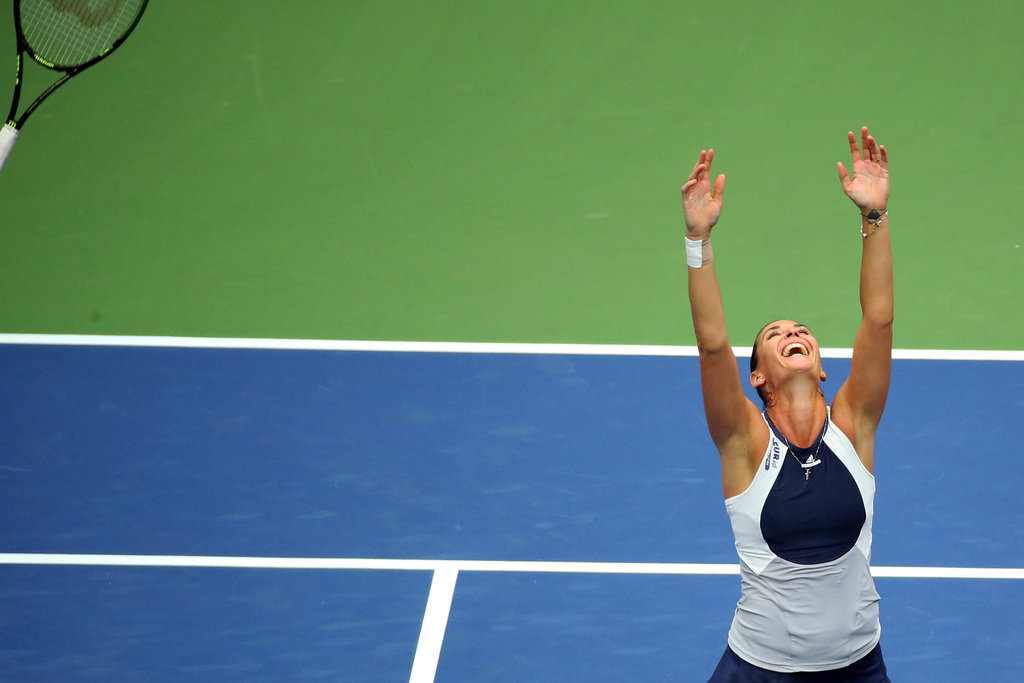
In front of a sold out crowd, including Italian Prime Minister, Matteo Renzi, Flavia won in straight sets on Saturday, announcing her retirement as she accepted the US Open Championship trophy. Just as we met her, she shared a career lesson and  stepped away to reinvent her life.

13OPENWOMENshow-slide-DQRY-jumbo

So we #NeverForget, a poem written for the 43 members of Hotel Employees and Restaurant Employees Local l00, working at the Windows on the World restaurant, who lost their lives in the attack on the World Trade Center

Martín Espada’s “Alabanza: In Praise of Local 100″

Alabanza. Praise the cook with a shaven head
and a tattoo on his shoulder that said Oye,
a blue-eyed Puerto Rican with people from Fajardo,
the harbor of pirates centuries ago.
Praise the lighthouse in Fajardo, candle
glimmering white to worship the dark saint of the sea.
Alabanza. Praise the cook’s yellow Pirates cap
worn in the name of Roberto Clemente, his plane
that flamed into the ocean loaded with cans for Nicaragua,
for all the mouths chewing the ash of earthquakes.
Alabanza. Praise the kitchen radio, dial clicked
even before the dial on the oven, so that music and Spanish
rose before bread. Praise the bread. Alabanza.

Praise Manhattan from a hundred and seven flights up,
like Atlantis glimpsed through the windows of an ancient aquarium.
Praise the great windows where immigrants from the kitchen
could squint and almost see their world, hear the chant of nations:
Ecuador, México, Republica Dominicana,
Haiti, Yemen, Ghana, Bangladesh.
Alabanza. Praise the kitchen in the morning,
where the gas burned blue on every stove
and exhaust fans fired their diminutive propellers,
hands cracked eggs with quick thumbs
or sliced open cartons to build an altar of cans.
Alabanza. Praise the busboy’s music, the chime-chime
of his dishes and silverware in the tub.

Alabanza. Praise the dish-dog, the dishwasher
who worked that morning because another dishwasher
could not stop coughing, or because he needed overtime
to pile the sacks of rice and beans for a family
floating away on some Caribbean island plagued by frogs.
Alabanza. Praise the waitress who heard the radio in the kitchen
and sang to herself about a man gone. Alabanza.

After the thunder wilder than thunder,
after the shudder deep in the glass of the great windows,
after the radio stopped singing like a tree full of terrified frogs,
after night burst the dam of day and flooded the kitchen,
for a time the stoves glowed in darkness like the lighthouse in Fajardo,
like a cook’s soul. Soul I say, even if the dead cannot tell us
about the bristles of God’s beard because God has no face,
soul I say, to name the smoke-beings flung in constellations
across the night sky of this city and cities to come.
Alabanza I say, even if God has no face.

Alabanza. When the war began, from Manhattan and Kabul
two constellations of smoke rose and drifted to each other,
mingling in icy air, and one said with an Afghan tongue:
Teach me to dance. We have no music here.
And the other said with a Spanish tongue:
I will teach you. Music is all we have.

Unknown

Can ‘YouTube’ be a mentor?

If YouTube videos can teach us how to wire a smoke detector, can they also teach us how to lead? That may seem like a ridiculous question, but in our evolving ‘conversation adverse’ culture, are we turning to videos to provide guidance in the workplace?

Think about your first job, your first day at work. Aside from the anticipation, you might as well have been visiting another planet. Perceptions collided with reality as you navigated your way through the first days; an amateur anthropologist alert to  any clue to success in this new society you had joined. Who could you trust to advise you on your journey?

That is the question we all ask at some point in our first weeks at work. All is new and colleagues seem equal. Then the sorting begins as you filter conversations and observe interactions among colleagues and the leadership team. A picture begins to emerge of the culture, the influencers and the business problems to be solved. For most of us, we wing it. We take our experience, as limited as it may be, and experiment. We offer solutions. Find they are not well constructed. Go back and revise and then venture back with the edited proposal. It’s a process of trial and error as we independently craft an answer.

We find ourselves at a turning point. We need help. Where do we go to find it?

There are thousands of articles that define the role of mentors, how to find one, how to manage the relationship, but it was the first paragraph of an article I read a few weeks ago that introduced a significant hybrid approach to how we learn to work.

In early August, Starbucks CEO Howard Schultz wrote an opinion piece in The New York Times on the topic of servant leadership, putting others first and leading from the heart.

“From the earliest days of Starbucks, I’ve been captivated by the art of leadership. I was mentored over three decades by Warren G. Bennis, the eminent professor and scholar on leadership. I’ve gathered insights from peers, and I’ve drawn inspiration from our 300,000 employees. But nothing I’ve read or heard in the past few years has rivaled the power of the image I viewed on my cellphone a few years ago: Pope Francis, shortly after his election, kneeling and washing the feet of a dozen prisoners in Rome, one of them a young Muslim woman, in a pre-Easter ritual.”

In one short paragraph, the CEO describes a combination of activities that build upon each other to form his leadership style. He relies on a mentor from outside his business, gathers insights from peers and employees and in the end it’s an image from the internet that provides the inspiration for his leadership view.

Can YouTube be a mentor? There is no substitute for human interaction and advice. Learning to work is a lifetime quest and hard work. But the ability to access online courses, TED Talks and podcasts provide an essential element in our professional development.

The Saturday Read – Best of the summer for Labor Day reading

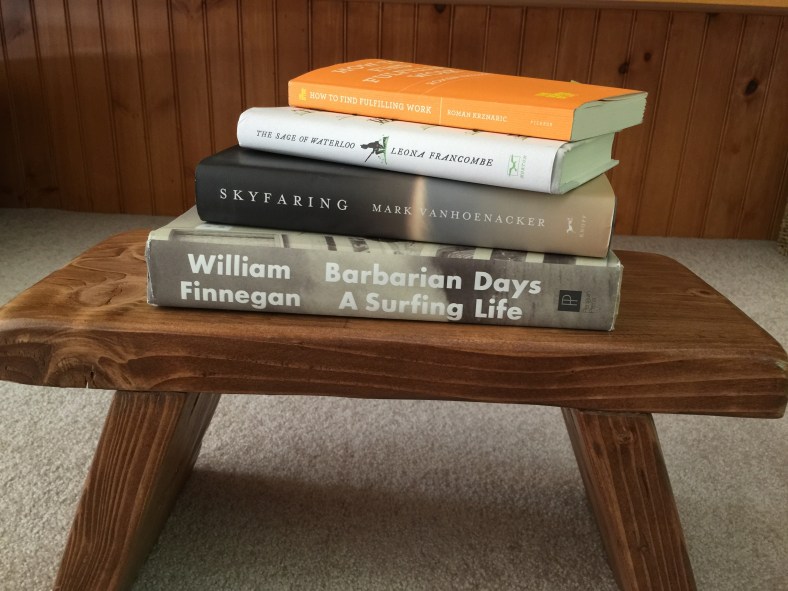
It’s the last long weekend of summer and one more opportunity to get lost in a story – in a beach chair, a park bench or your favorite comfy spot at home. I am suggesting four books from the archive of ‘The Saturday Read’. The narrators of these stories include the founder of the world’s first empathy museum, a management consultant turned pilot, a political writer and surfer and an oral historian with floppy ears. Pick the one that fits your mood or motivation.

If you’ve decided it’s time to rethink your career, ‘How to Find Fulfilling Work’ by Roman Krznaric is my pick. He suggests “We have entered a new age of fulfillment, in which the great dream is to trade up from money to meaning.” Think about that. He is proposing that meaning has more value than money.

His goal is to encourage the reader to stop thinking about taking action and actually get out and do something. The book is essentially an answer to two questions:

“What are the core elements of a fulfilling career?” and “How do we go about changing career and making the best possible decisions along the way?”

The best ‘travel’ book of the summer and best book about work is ‘Skyfaring’ by Mark Vanhoenacker.

What do we know of the work lives of pilots? These are the folks we trust to transport us across oceans, continents, cities and deserts. Our only contact through hours of flight is a welcome message, flight status update or a ‘thank you for choosing our airline’.

Turns out, pilots can be very interesting people. And, like many of us, they arrive at their ‘dream job’ after trying out other options. Mark Vanhoenacker’s career began in academia and management consulting. He started his flight training in 2001 after realizing all those plane flights were constant reminders of what he really wanted to do with his life.

“Is flying something I have always wanted to do? Have I ever seen anything “up there” that I cannot explain? And do I remember my first flight? I like these questions. They seem to have arrived, entirely intact, from a time before flying became ordinary and routine. They suggest that even now, when many of us so regularly leave one place on the earth and cross the high blue to another, we are not nearly as accustomed to flying as we think. These questions remind me that while airplanes have overturned many of our older sensibilities, a deeper part of our imagination lingers and still sparks in the former realm, among ancient, even atavistic, ideas of distance and place, migrations and the sky.”

What if your life passion is surfing, but your ‘day job’ is war reporter and international correspondent? If you wrote a memoir, would your work be taken less seriously? Apparently not, as my third pick for the upcoming weekend, ‘Barbarian Days’ by William Finnegan debuted on The New York Times hardcover non-fiction list at number five.

He first wrote about surfing in ‘Playing Doc’s Games’, profiling Mark Renneker for The New Yorker in 1992. Twenty three years later Doc returns along with a global cast of supporting characters inviting the reader to go out with them on the water.

Why should a non-surfer invest in a memoir subtitled ‘A Surfing Life’? Because it’s an everyman’s story of reconciling passions.

“Yes, I had been bewitched by surfing as a kid – trotting dreamily down a path at dawn, lit by visions of trade-blown waves, rapt even about the long paddle to Cliffs. The old spell had been broken, at times, or seemed to be. But it always lay there, under the surface, dormant but undestroyed while I knocked around the far world, living in waveless places – Montana, London, New York.”

“Here I was writing, often contentiously, about poverty, politics, race, U.S. foreign policy, criminal justice, and economic development, hoping to have my arguments taken seriously. I wasn’t sure that coming out of the closet as a surfer would be helpful. Other policy wonks might say, Oh, you’re just a dumb surfer, what do you know?”

The last recommendation is my favorite book of summer  This year marks the bicentennial of the Battle of Waterloo. A number of books have been published to coincide with the anniversary, but it’s the unique storytelling of author Leona Francombe in ‘The Sage of Waterloo’ that gives us a very different view of the conflict.

The story begins when a French drummer boy releases a white rabbit into the Hougoumont gardens during the battle on June 18, 1815. Our narrator, William, is guided on his journey by his grandmother, Old Lavender and a wise researcher, Arthur. He invites us to join him along the route the rabbits call the ‘Hollow Way’:

“There are many soft hillocks and hollows along this part of the Way on which one can rest and look back, and I suggest that you do this, too, because the view behind is as clear as the view ahead, and offers some valuable lessons besides.”

Yes, we are talking bunnies. Or, the bunny is talking to us. And along his path we join the Battle of Waterloo.

“Waterloo is small as battlefields go…the Hougoumont part of it even smaller. How extraordinary, then, that my farm – my tiny corner of Belgium, which even today people have difficulty locating on a map – should have made history in just a few hours.”

This small novel is a unique oral history of the Battle of Waterloo. Blending historical fact with fiction, author Francombe creates an unlikely ‘sage’ to carry the “collective memory…and resonance.” And reminds us to “feel what still hangs in the air” when we visit historic sites.

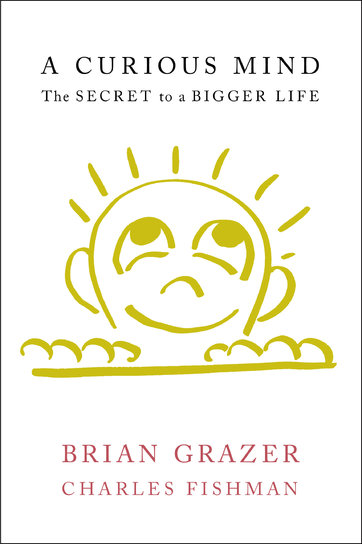
The Saturday Read – Brian Grazer and Charles Fishman ‘A Curious Mind: The Secret to a Bigger Life’

Are you curious about the people who work for you? Academy award winning producer Brian Grazer thinks you should be. He manages his organization with curiosity, by asking questions. His book, ‘A Curious Mind: The Secret to a Bigger Life’ was released earlier this year and is a memoir of his success and it’s source, listening to the answers.

“If you’re the boss, and you manage by asking questions, you’re laying the foundation for the culture of your company or group. 

You’re letting people know that the boss is willing to listen. This isn’t about being “warm” or “friendly”. It’s about understanding how complicated the modern business world is, how indispensable diversity of perspective is, and how hard creative work is.”

The initial reviews of the book focused on the ‘curiosity conversations’ Grazer has utilized throughout his career to network with a variety of folks in his unique quest for lifelong learning. But in the acknowledgements at the end of the book he addresses the reader directly on his purpose in writing ‘A Curious Mind’.

“a book not about my curiosity, but about what curiosity has enabled me to do, about what curiosity can enable anyone to do…”

“I didn’t want to write a book about all the people I’d had conversations with – I wanted to write about the impulse to have those conversations. I wanted to use the conversations to tell a story: the story of my steady discovery of the power of curiosity in my own life.”

For Grazer, it’s not just a hobby, but a commitment to intentionally integrate questioning into both his work and life outside of work.

“For it to be effective, curiosity has to be harnessed to at least two other key traits. First, the ability to pay attention to the answers to your questions – you have to actually absorb whatever it is you’re being curious about…The second trait is the willingness to act.”

In the early chapters he describes the power of curiosity to motivate, spark creativity, and build confidence. He is the ‘bard of curiosity’ sharing his career story intertwined with his capacity for discovery. But it’s in chapter five where the storytelling turns to management advice. “…the human connection that is created by curiosity…Human connection requires sincerity. It requires compassion. It requires trust.”

“Can you really have sincerity, or compassion, or trust, without curiosity?

“I don’t think so. I think when you stop to consider it – when you look at your own experiences at work and at home – what’s so clear is that authentic human connection requires curiosity.”

Here is the ‘gem’ of the book.

“To be a good boss, you have to be curious about the people who work for you.”

How many of you have a BA in business, an MBA or certificate from a prestigious executive management program? Has anyone ever suggested management by curiosity? We have all been taught to listen. And we don’t. But no one ever explained in this way, how critical the right questions are to getting to the fundamentals when decisions are being made.

“I use curiosity every day to help manage people at work…as a tool to build trust and cooperation and engagement.”

“And curiosity is the key to connecting and staying connected.”

Reading ‘A Curious Mind’ reminded me of a quote buried in dialog in the 2012 novel by Mark Helprin, ‘In Sunlight and in Shadow’:

“It’s a defining difference, curiosity. I’ve never known a stupid person who was curious, or a curious person who was stupid.”

The one thing you should bring to college

Are you getting that ‘back to school’ feeling yet? You know, the urge to go out and purchase new pens, notebooks, trapper keepers? For most of us ‘going back to school’ is another day at the office. For the Class of 2019 it’s the beginning of the college experience and they are ready with carloads of clothing, supplies, electronics, bedding and food.

There is one item missing from the checklists, and it’s an essential for the college freshman – a journal.

For six years I taught a freshman seminar at the University of Southern California. My gift to each student was a simple Moleskine classic lined notebook. There was no requirement to fill in the blanks and turn it in at the end of the semester. It was my way of suggesting that recording one’s thoughts and experiences would provide an outlet from the stress of freshman year.

The benefits of a journal extend far beyond the daily scribbles of events. As you write, your communication skills improve as you create a narrative of your days. The practice of collecting your thoughts creates structure and discipline at a time when the transition to life at college offers multiple distractions.

You are capturing memories crafted in words. What makes you unique? Who are you meeting and what are you learning as you engage with your new community?

Social networking sites provide a way to catalog your contacts, photos and portfolio. Everything you post will follow you through life in a parallel virtual universe. How do you capture the feeling of transformation as you grow at college and in your career? Online you are the public relations version of yourself. On paper, your journal is your record-keeping of reality: failure, rejection, obstacles presented and obstacles overcome.

“One advantage in keeping a diary is that you become aware with reassuring clarity of the changes which you constantly suffer and which in a general way are naturally believed, surmised, and admitted by you, but which you’ll unconsciously deny when it comes to the point of gaining hope or peace from such an admission. In the diary you find proof that in situations which today would seem unbearable, you lived, looked around and wrote down observations, that this right hand moved then as it does today, when we may be wiser because we are able to look back upon our former condition, and for that very reason have got to admit the courage of our earlier striving in which we persisted even in sheer ignorance.”  Franz Kafka ‘Diaries, 1910 – 1923’

You are writing your story in real time. Don’t edit, but do read what you write and be amazed, looking back at what you have accomplished.

Journals are not just for college. They are our personal reference library of life experience.

Fear of public speaking is #1

Tonight the cast of the musical ‘Hamilton’ will officially ‘open’ on Broadway and ten Republican candidates competing for the U.S. presidency will debate on a stage in Cleveland, Ohio. Across the globe thousands of professionals in their respective fields will stand in front of an audience and present their expertise. What do all these folks have in common? Stagefright.

Joan Acocella, the dance critic for The New Yorker magazine wrote about stagefight in this week’s issue.

“Stagefright has not been heavily studied, which is strange because, as Solovitch tells us, it is common not only among those who make their living on the stage but among the rest of us, too. In 2012, two researchers at the University of Nebraska-Omaha, Karen Dwyer and Marlina Davidson, administered a survey to eight hundred and fifteen college students, asking them to select their three greatest fears from a list that included, among other things, heights, flying, financial problems, deep water, death, and “speaking before a group.” Speaking before a group beat out all the others, even death.”

Comedian Jerry Seinfeld‘s joke about public speaking echoes the research.

“According to most studies, people’s number one fear is public speaking. Number two is death. Death is number two. Does that sound right? This means to the average person, if you go to a funeral, you’re better off in the casket than doing the eulogy.”

There are famous examples which Ms. Acocella cites in her article.

“…Barbra Streisand, singing in front of more than a hundred thousand people in Central Park, one night in 1967, repeatedly forgot her lyrics. For twenty-seven years thereafter, she refused to perform live except at charity concerts.”

“Two years ago, before undertaking a one-woman show on Broadway, Bette Midler told Patrick Healy, of the Times, that she had wanted to be a serious dramatic actress but had faltered for lack of courage. “I have that terror,” she said. “Will people like you? Will they ask you back? Did I make the cut? That’s always on my mind.” To hear the brash, funny, commanding (as far as we knew) Midler tell of worrying whether people would like her is painful. But, in every group of artists, the insiders can tell you who, among them, should have had a bigger career but, for some reason, was held back.”

For most of us, our career depends on our ability to convey our ideas credibly in a variety of public venues. It’s great to know we have something in common with Barbara Streisand and Bette Midler, but what we don’t have is an alternative to make a living.

How do you transform the fear into confidence?

Before you step up to a podium, stand in front of your local school board, or pitch an idea to a potential investor, do your research. If you know what you’re talking about, you are halfway there.

One technique that has always worked for me is to come up with three things I want people to remember when they leave the room. Structure your presentation to start with these three things, elaborate on each one and summarize the three at the end.

Avoid too many visuals. If they don’t complement your points, you create a distraction.

Rehearse, but don’t practice you personality out of your pitch. Your audience is there for you and your expertise.

Seek out opportunities to present. Public speaking is a talent that requires nurturing. Your comfort level and confidence will increase in proportion to the frequency of your speeches.

None of these suggestions eliminate the initial terror of being in the spotlight in front of strangers. Just remind yourself why you are there and what you want to accomplish before you leave the stage.

Ms. Acocella found that the fear is not always viewed as a negative.  “Sometimes, when performers speak of stagefright, one senses that they do not actually wish it gone—that, for them, it is almost a badge of honor, or, at least, proof that they’re serious about their work.”

The week@work – How to live wisely, raise strong women, the value of a liberal arts education and more

It’s that time of year, ‘back to school’. It doesn’t matter if you are preschool or college, your local retail outlet is ready to meet every consumer need to outfit you or your dorm room. It’s also ‘back to work’ for those returning from vacation ( if you are one of the six in ten who took some leave this summer). There was a lot going on this week@work. Here are a few stories to get your Monday morning office conversations going.

Harvard professor Richard J. Light, the author of a 2001 book, ‘How to Make the Most of College’ asked New York Times readers to imagine they were dean for a day in a new article, ‘How to Live Wisely’. Before you skip to the next paragraph, stay with me. His questions have relevance for all leaders.

“Imagine you are Dean for a Day. What is one actionable change you would implement to enhance the college experience on campus?

I have asked students this question for years. The answers can be eye-opening. A few years ago, the responses began to move away from “tweak the history course” or “change the ways labs are structured.” A different commentary, about learning to live wisely, has emerged.

What does it mean to live a good life? What about a productive life? How about a happy life? How might I think about these ideas if the answers conflict with one another? And how do I use my time here at college to build on the answers to these tough questions?”

Once we leave college and begin to move ahead in our careers these questions become even more critical in our quest of life long learning.

Professor Light offers “five exercises that tackle the big questions”. Number three:

“I call this the Broad vs. Deep Exercise. If you could become extraordinarily good at one thing versus being pretty good at many things, which approach would you choose? We invite students to think about how to organize their college life to follow their chosen path in a purposeful way.”

Rephrase this one in respect to your career preparation. Have you organized your life around your choice to develop an expertise or be more of a generalist?

The next story may be too late for some struggling small colleges, but Forbes magazine reported ‘That ‘Useless’ Liberal Arts Degree Has Become Tech’s Hottest Ticket’. ( Full disclosure here, I have one of those ‘useless’ degrees and have found it extremely complementary to my career choices.)

“Engineers may still command the biggest salaries, but at disruptive juggernauts such as Facebook and Uber, the war for talent has moved to nontechnical jobs, particularly sales and marketing. The more that audacious coders dream of changing the world, the more they need to fill their companies with social alchemists who can connect with customers–and make progress seem pleasant.”

Liberal Arts = Social Alchemy? Has a six figure ring to it.

On the millennial front this week there were two stories in The New York Times. The first reported on a new Pew Research Study which found that millenials are less likely to leave the nest.

“In 2010, according to the study, 69 percent of 18- to 34-year-olds lived independently. During the first four months of this year, just 67 percent of that same age group was living independently. From 2010 to April 2015, the share of young adults living in their parents’ homes has increased to 26 percent from 24 percent, the study said.”

For those who have left the nest to build their own, another Times report found ‘Millennial Men Aren’t the Dads They Thought They’d Be’.

“Young men today have aspirations of being hands-on fathers as well as breadwinners — supportive husbands who also do dishes.

But as they enter that more responsibility-filled stage of life, something changes: Their roles often become much more traditional.

Millennial men — ages 18 to early 30s — have much more egalitarian attitudes about family, career and gender roles inside marriage than generations before them, according to a variety of research by social scientists. Yet they struggle to achieve their goals once they start families, researchers say. Some researchers think that’s because workplace policies have not caught up to changing expectations at home.”

This research and story is one to follow as this generation now makes up the largest % of the workforce. As they progress in their careers it will be interesting to see if attitudes begin to align with work/life policies.

Amy Joyce reporting in the Washington Post poses the question: ‘Are you holding your own daughter back? Here are 5 ways to raise girls to be leaders.’ This is another must read article with research backed practical suggestions for parents to avoid gender bias.

“Think you’re raising your daughter to be a strong leader? Look more closely: You, and the people around her, may unwittingly be doing just the opposite.

Teen boys, teen girls, and, yes, even parents have biases against girls and women as leaders, new research from the Harvard Graduate School of Education and its Making Caring Common project found.

Richard Weissbourd, a Harvard psychologist who runs the Making Caring Common project, said he was “surprised by the extent of it … how gendered both the boys’ and the girls’ responses were.”

Weissbourd decided to look at bias as part of the larger goal of helping children learn to be kind. “We were concerned that biases get in the way of people caring about and respecting other people, so our initial study was just looking at biases,” he said. “And one of the striking findings that emerged was gender bias.”

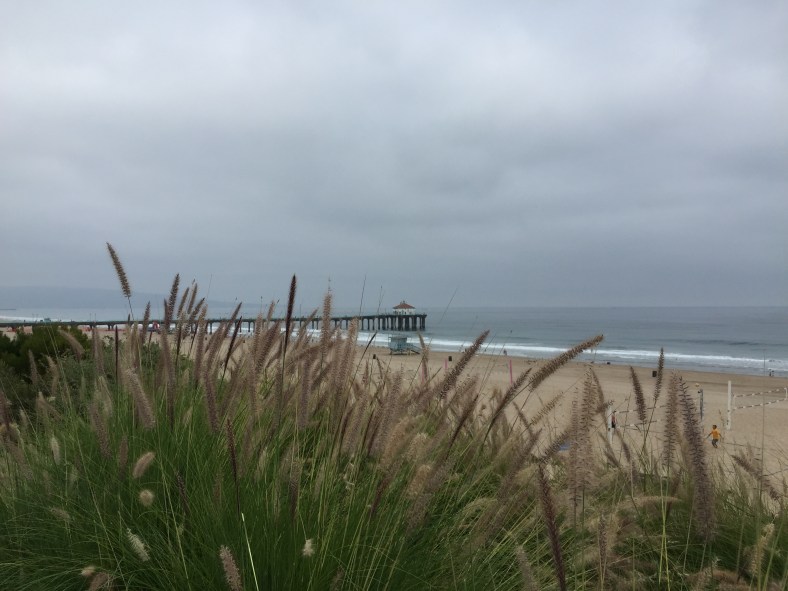
And the last story is related to the photo in the header. Erica Murphy, editorial assistant at Levo shared ‘7 Things I Learned About Life From Completely Unplugging’. (This one’s for you – the 4 in 10 who have not taken vacation this summer) My two favorites (you can read the rest) – “No one cares & a tech free world does exist”.

“When you live in a big city like New York, you forget that people out there do lead simple lives. And honestly? It’s not so bad. I don’t think I could deal with no running water all the time, but it’s nice to be out in the country sometimes and just relax. Maybe Potter County isn’t on your radar, but it’s the same idea as finding a nearby park and leaving your phone at home. Or maybe you go hiking for the day and really connect with nature. With our lives getting more hectic every day, it’s important to find that time for yourself to decompress.”

Hoping you find time to unplug this week@work.

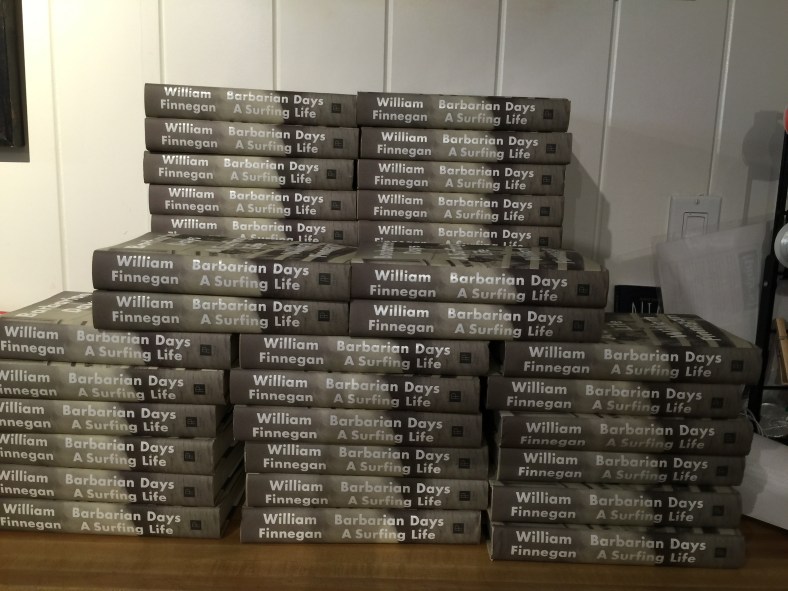
The Saturday Read – William Finnegan ‘Barbarian Days, A Surfing Life’

When you do a book reading in Manhattan Beach, California you need to use a microphone so the guys with ‘surfer’s ear’ in the back can understand you. Last night New Yorker journalist and lifetime surfer William Finnegan used a mic as he read from his well reviewed new book and this week’s ‘Saturday Read’, ‘Barbarian Days, A Surfing Life’.

The Q&A at the reading was closer to a book club discussion than a publicity event. Most of those attending had either read the book or the excerpt in the June 1 issue of the New Yorker magazine. This is not just a book about surfing. Mr. Finnegan is a well regarded journalist with a resume that includes reporting from South Africa, Somalia, the Balkans, Central America and Australia. Robert Boynton included him in his conversations with America’s best nonfiction writers in ‘The New New Journalism’.

“A self-described “specialist in the unexpected,” Finnegan writes stereotype-defying descriptions of the kinds of people—young, black, poor, foreign—mainstream journalism tends to dismiss with a pastiche of clichés and statistics.”

It’s this specialization in the unexpected that results in a memoir not just about surfing for surfers, but about life and friendship, as noted in The New York Times review:

“…a particularly remarkable feature of “Barbarian Days” is the generous yet unsparing portraits of competitive surf friendships that make up a major share of the narrative. As Finnegan writes: “Surfing is a secret garden, not easily entered. My memory of learning a spot, of coming to know and understand a wave, is usually inseparable from the friend with whom I tried to climb its walls.”

He first wrote about surfing in ‘Playing Doc’s Games’, profiling Mark Renneker for The New Yorker in 1992. Twenty three years later Doc returns along with a global cast of supporting characters inviting the reader to go out with them on the water.

Why should a non-surfer invest in a memoir subtitled ‘A Surfing Life’? Because it’s an everyman’s story of reconciling passions.

At the reading the author described surfing as “the North Pole of irresponsibility, the opposite of achievement. War reporting had a built in urgency, surfing did not.” He has spent 50 years managing the opposition between two drives: writing and chasing waves.

Surfers are our environmental ‘canaries in a coal mine’. Responding to a question on how surfing differs from other sports, the author focused on the “98% of surfing that is an absorption in the ocean, what your local spot is, how well you read the waves and ride. Surfing is not competitive, it’s an experience of beauty – an understanding and engagement with nature.”

Near the end of the book he refers to an A.J. Liebling essay, ‘Apology for Breathing’ noting that “Liebling was pretending to apologize for being from New York, a city he loved lavishly and precisely. Now I’m one of those New Yorkers incessantly on the point of going back where I came from. But with me it’s not a matter of packing up or staying on, but rather of being always half poised to flee my desk and ditch engagements in order to throw myself into some nearby patch of ocean at the moment when the waves and wind and tide might conspire to produce something ridable. That cracking, fugitive patch is where I come from.”

‘Barbarian Days’ is a beach book. It’s an ocean book. It’s a memoir to guide you to your own story and “that cracking, fugitive patch” where you come from.