The Saturday Read -‘How to Be an Explorer of the World: Portable Life Museum’ by Keri Smith

This is the first ‘Saturday Read’ that comes with a warning.

“! Warning to whomever has just picked up this book. If you find you are unable to use your imagination, you should put this book back immediately. It is not for you. In this book you will be repeatedly asked to…suspend your disbelief, complete tasks that make you feel a bit strange, look at the world in ways that make you think differently, conduct experiments on a regular basis, and see inanimate objects as alive.” 

If you need to improve your CQ (curiosity quotient), this week’s selection from author, illustrator and guerrilla artist, Keri Smith‘How to Be an Explorer of the World: Portable Life Museum’ is for you.

Author Smith invites the reader on a journey of discovery, loosely following a 13 point guide, which includes a “fieldwork section in the back of the book to record and discover findings.”

“You might want to think of this book as you metaphorical suitcase. A place to collect and document your findings. How do you see? It is also a museum. Your very own museum that will contain your unique vision of the world.”

After a couple of incredibly depressing weeks of global events, I was browsing the selection at Main Street Books in ‘downtown’ Davidson, North Carolina last weekend, when this book cover demanded I stop, open, and return to the wonder of our world; starting right where we sit. I was ready to pack my “metaphorical suitcase” and explore an alternate reality.

Here’s the other warning that should come with this book. ‘May be habit-forming.’

On page 13 ‘your mission’, if you choose to accept, is explained.

“The following pages include a variety of prompts and assignments that will help you on your travels. There is also a section on tools and techniques that will help you with documenting methods. You may use the worksheets included or create your own. Remember, all of your most important tools exist in your body! Use them. Collect as much data as you can – it may come in handing later on. Good luck on your journey.”

How to be an explorer? “Always be looking. Everything is interesting. Notice patterns, make connections. Use all of the senses in your investigations.” (and more)

Here’s an example, from the page I opened to first. “Exploration#7 World of Color”

“Collect paint chips from a paint or hardware store. Find colors you respond to in the world. Attempt to match them using the chips. ( You can also match the colors using a portable paint set.) Make notes of where you saw the colors. (Example: color #573 four leaf clover – My scarf, color #308 golden vista – Sunset 01/09/08)

Alternate: document colors from your favorite books, your dreams, your memories.”

There are 59 explorations that tease your inner Picasso or Shackleton, the last being “How to Wander Aimlessly”. This is a book for those of you on vacation, who missed the point of your break :“freedom or release from duty, business, or activity.”

How do you wander aimlessly? “Pay attention to the details. Lose all sense of time and place.” Reinhabit you inner four year old.

This book will plaster a smile on the crankiest visage.

In a month when the release of Pokemon Go has launched thousands of new adventures, ‘How to Be an Explorer of the World’ will reconnect you with a simpler time when all you needed for entertainment was a big box and an imagination to occupy yourself for hours.


‘In the Planetarium’ a poem by James Doyle

In the past couple of days we marked two events in the history of U.S. space exploration: man’s first walk on the moon and the end of the space shuttle program.

Pulitzer Prize winning journalist John Noble Wilford recalled his coverage of the moon landing for the New York Times from NASA’s Johnson Space Center.

“July 20,1969 — a date that lives in my memory as the great divide, the B.C. to A.D., in my journalism career. It was the day of the first walk on the moon by humans, Neil Armstrong and Buzz Aldrin, and I covered the event for The Times from mission control in Houston.

I began my front-page article with a sentence as simple as it was astonishing:

Men have landed and walked on the moon.

Two Americans, astronauts of Apollo 11, steered their fragile four-legged lunar module safely and smoothly to the historic landing yesterday at 4:17:40 P.M., Eastern daylight time.

Neil A. Armstrong, the 38-year-old civilian commander, radioed to earth and the mission control room here:

“Houston, Tranquility Base here. The Eagle has landed.”

On July 21, 2011 the space shuttle Atlantis landed on runway 15 at the Kennedy Space Center in Florida ending the 135th mission and 30 years of the U.S. Space Shuttle program. Today visitors can tour an exhibit at the site in Florida “displayed as only spacewalking astronauts have seen her before — rotated 43.21 degrees with payload doors open and its Canadarm (robotic arm) extended, as it has just undocked from the International Space Station.” 

Astronauts still travel into space. As I write this, the 60th woman to fly in space, Kate Rubins, orbits among the stars above us.

I wonder if this Friday’s poem was written for her by a friend who accompanied her on a school field trip to the Planetarium.

In the Planetarium

I read the palms of the other
kids on the field trip to see
which ones would grow up

to be astronauts. The lifeline
on Betty Lou’s beautiful hand
ended the day after tomorrow,

so I told her how the rest
of our lives is vastly over-rated,
even in neighboring galaxies.

When she asked me how I knew
so much, I said I watched
War of the Worlds six times

and, if she went with me to
the double-feature tomorrow,
I’d finish explaining the universe.

I smiled winningly. The Halley’s Comet
lecture by our teacher whooshed in
my one ear and out the other.

James Doyle   ‘The Long View Just Keeps Treading Water’, Accents Publishing, 2012

(Photo Scott Kelly #YearInSpace “Looking out to the Milky Way”)

“Dignify the outsider” & other lessons from Carolyn See

When we talk about mentors, we often confine ourselves within the walls of our chosen profession. Carolyn See, professor and writer, was also a ‘world class’ mentor to those who were ‘outsiders’ to the world of New York publishing, the purveyors of taste in American storytelling.

I met Carolyn after a panel at the 2003 Los Angeles Times Festival of Books, when she was signing copies of ‘Making a Literary Life: Advice for Writers and Other Dreamers’. We had a brief conversation and I followed up with an email a few days later to thank her for taking the time to chat. Her response was immediate, gracious and filled with humor.

At the time I was not a writer, but a ‘dreamer’, considering a literary life, while pursuing a passion working with college students. Carolyn encouraged me to explore the writing life, and taught me what it truly means to be a mentor.

Carolyn died last week in Santa Monica, California. Many of her students and friends have shared their memories in published obituaries and tweets. In all there is the common thread of the ‘insider’ welcoming the ‘outsider’.

“…I believe, with a patriotic sincerity that would make a Legionnaire blush, that American literature is owned by everybody in America and that world lit is owned by everyone in the world and that we all get to have a say in it, not just a comparatively few men and women in the Northeast, no matter how decent and talented they may be.”

LA Times columnist, former book critic and writer, David Ulin described his relationship with Carolyn in 2014.

“Carolyn taught me how to be a writer in California. For her, that meant a three-dimensional literary life: writing, teaching and reviewing, all of them inextricable from the whole. As a critic, I have tried to follow her model that reviews should be part of an ongoing conversation with one’s readers, and should explicate something essential — not only whether or not we like a book, but also how it connects to, or reflects, our aesthetics, our world view. Carolyn has always regarded reading as an act of engagement . . . and reviewing, too.”

What is a mentor? What can we learn from the life of a writer if we have followed a completely different career path?

A mentor teaches you to be the three-dimensional human in your workplace vision of success.

In ‘Making a Literary Life, Carolyn offers two menu items: ‘Carolyn’s 18 Minute Chili’ and ‘Carolyn’s 18 Hour Chili’.  For the writer, the two step (18 minute) is “a thousand words a day or two hours of revision” and “a charming note to a writer, editor or agent you admire – five days a week for the rest of your life”.

This is what a mentor does, unselfishly shares their recipe for success with measurable, accountable advice. And the part about ‘charming notes’? It’s universal in its application. This is not about ‘sucking up’, but genuinely expressing gratitude or professional admiration, tied to a specific circumstance.

The ’18 hour chili alternative’ includes suggestions to “take an outside excursion once a week”, “pretend- in your mind – to be…”, and “make a list of what a … like you might want”.

We need to get outside our ‘comfort zone’ to stay creative. It’s essential to visualize what you would be like in your dream job, and equally important, to hold an image of what success looks like to you.

“You can go a surprisingly long time without figuring out the kind of person you are and in what direction your life is taking you.”

It’s why I will always be grateful for my encounter with Carolyn See, and why we all, outsiders included, need a mentor who keeps us honest and on track toward success.


The week@work – “our culture is changing”, internship access, sexual harassment@Fox & the June jobs report

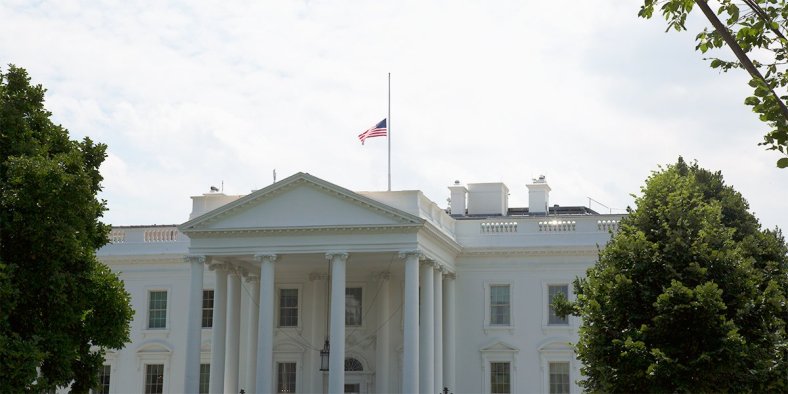
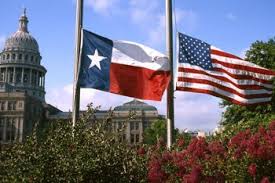
For the 67th time in his term, President Obama ordered the flag of the United States be flown at half-staff; this time in memory of the police officers in Dallas. Sixty-seven times, a record for a presidential administration.

This week@work we look at two responses to the violence, consider an opinion on internship access, examine a high profile workplace harassment lawsuit, and the implications of the June jobs report.

“As a mark of respect for the victims of the attack on police officers perpetrated on Thursday, July 7, 2016, in Dallas, Texas, by the authority vested in me as President of the United States by the Constitution and the laws of the United States of America, I hereby order that the flag of the United States shall be flown at half-staff at the White House and upon all public buildings and grounds, at all military posts and naval stations, and on all naval vessels of the Federal Government in the District of Columbia and throughout the United States and its Territories and possessions until sunset, July 12, 2016. I also direct that the flag shall be flown at half-staff for the same length of time at all United States embassies, legations, consular offices, and other facilities abroad, including all military facilities and naval vessels and stations.”
images.jpeg

On Friday morning, veteran CBS newsman, Bob Schieffer, was asked to provide context to the events of the past week, drawing on his 50 years as a journalist.

“One thing we overlook: our culture is changing…We are becoming a less patient society, we are becoming a more demanding society, for want of a better word, we are becoming a ruder society, and we see this playing out in road rage, in the way we treat one another…Nobody is satisfied with anything now…People are dissatisfied, frustrated and they act out…”

Libby Hill of the Los Angeles times reported on host of the Daily Show Trevor Noah‘s, seven-minute monologue “in the wake of the police-involved killings of Alton Sterling and Philando Castile.”

“It always feels like, in America, if you take a stand for something, you are automatically against something else…It’s either one or the other…But with police shootings it shouldn’t have to work that way.

 You can be to be pro-cop and pro-black. Which is what we should all be. It is what we should all be aiming for…The point is you shouldn’t have to choose between the police and the citizens they are sworn to protect.”

If the world is changing outside our workplace, what’s the impact on our daily work lives? Does frustration on the 405 translate into contention in the conference room? Our lives don’t fit neatly into the ‘work’ and ‘life’ box. We will need to draw on every ounce of empathy to listen, reflect, respect and respond.

Sometimes we just don’t think about how the system is ‘rigged’ and why people are angry. Skeptical? Let’s talk internships.
photo_61045_landscape_650x433

On Tuesday, Darren Walker, the president of the Ford Foundation penned an opinion for the New York Times, ‘Internships Are Not A Privilege’.

“Talent is equally distributed, but opportunity is not. And while many Americans believe fervently and faithfully in expanding opportunity, America’s internship-industrial complex does just the opposite.

And whether it’s an internship, college admission or any of the many other factors that determine a successful life, leaders who say they want to address inequality actually — and often unconsciously — reinforce the dynamics that create inequality in their own lives.

The broader implication is privilege multiplied by privilege, a compounding effect prejudiced against students who come from working-class or lower-income circumstances. By shutting out these students from entry-level experiences in certain fields, entire sectors engineer long-term deficits of much-needed talent and perspective. In other words, we’re all paying the price for unpaid internships.

For countless Americans, me among them, internships have provided a foothold on the path to the American dream. Simply by making them more accessible to all, we can narrow the inequality gap while widening the circle of opportunity, long after the summer ends.”

Another major workplace story broke on Wednesday with news that Gretchen Carlson had filed a lawsuit against Fox News chairman, Roger Ailes, exposing a culture of sexism and workplace sexual harassment.

-J3Fem6E_400x400.jpg

Gabriel Sherman covered the story for New York Magazine, reporting:

“Fox News host Gretchen Carlson may be the highest-profile woman to accuse Roger Ailes of sexual harassment, but she is not the first. In my 2014 biography of the Fox News chief, I included interviews with four women who told me Ailes had used his position of power to make either unwanted sexual advances or inappropriate sexual comments in the office.

And it appears she won’t be the last, either. In recent days, more than a dozen women have contacted Carlson’s New Jersey-based attorney, Nancy Erika Smith, and made detailed allegations of sexual harassment by Ailes over a 25-year period dating back to the 1960s when he was a producer on The Mike Douglas Show. “These are women who have never told these stories until now,” Smith told me. “Some are in lot of pain.” Taken together, these stories portray Ailes as a boss who spoke openly of expecting women to perform sexual favors in exchange for job opportunities. “He said that’s how all these men in media and politics work — everyone’s got their friend,” recalled Kellie Boyle, who says Ailes propositioned her in 1989, shortly after he helped George H.W. Bush become president, serving as his chief media strategist.”

And while we are on the topic of women@work, Andrew Das reported on the ongoing story, ‘U.S. Women’s Soccer Players Renew Their Fight for Equal Pay’.

screenshot-11.png“Beaten in federal court and rebuffed at the negotiating table, the United States women’s national soccer team is taking its fight for equal pay back to friendlier turf: the court of public opinion.

Beginning with an exhibition match this weekend in Chicago and continuing through the Olympics next month in Brazil, members of the team said on Thursday that they would embark on a campaign that they hope will increase the pressure on the United States soccer federation to pay the women compensation equal to their counterparts on the men’s national team in their next collective bargaining agreement.”

On Friday, Adam Shell of USA TODAY, analyzed the June jobs report from the U.S. Labor Department.

“After stalling briefly, the U.S. job-creation engine is again revving into high gear, rejuvenating Wall Street and sending stocks close to record highs.

The U.S. economy created 287,000 new jobs in June, which was 100,000 more than economists had forecast and the best monthly gain since October 2015.

And that is about as good a news headline as Wall Street could ask for after May’s gloomy jobs report (the initial 38,000 May jobs count was revised down to a paltry 11,000 in Friday’s report) and all the Brexit-related doom-and-gloom the past few weeks that put a scare into investors.”

cm-p12vwiaeczwd-jpg-large.jpegOn Saturday evening, for ‘one last time‘ –  “Lin-Manuel Miranda, the creator and star of the Broadway smash “Hamilton,” made a subdued final bow Saturday alongside two other departing stars — Leslie Odom Jr. and Phillipa Soo — in the show that has become a cultural phenomenon.”

Miranda’s final performance Saturday at the Richard Rodgers Theatre was also the last for Odom Jr., who won a Tony Award as Aaron Burr, and Soo, a Tony nominee who portrayed Eliza Schuyler. The three — plus an ensemble member — took their bows together but none said anything.”

Hoping for a better week@work to come.


The Saturday Read ‘The Missing of the Somme’ by Geoff Dyer

Geoff Dyer has a new book out this summer, ‘White Sands: Experiences From the Outside World’ , but it’s a book originally published in 1994 that is The Saturday Read this week – ‘The Missing of The Somme’.

Dyer may defy categorization as an author, but one constant in his writing, is a theme of travel, highlighted by his publisher in a description of the current title.

“Weaving stories about places to which he has recently traveled with images and memories that have persisted since childhood, Dyer tries “to work out what a certain place—a certain way of marking the landscape—means; what it’s trying to tell us; what we go to it for.”

‘The Missing of the Somme’ begins with the images and memory of his grandfather and continues on a road trip through the great war battlefields, pristinely kept, to ensure memory.

IMG_4961.jpg

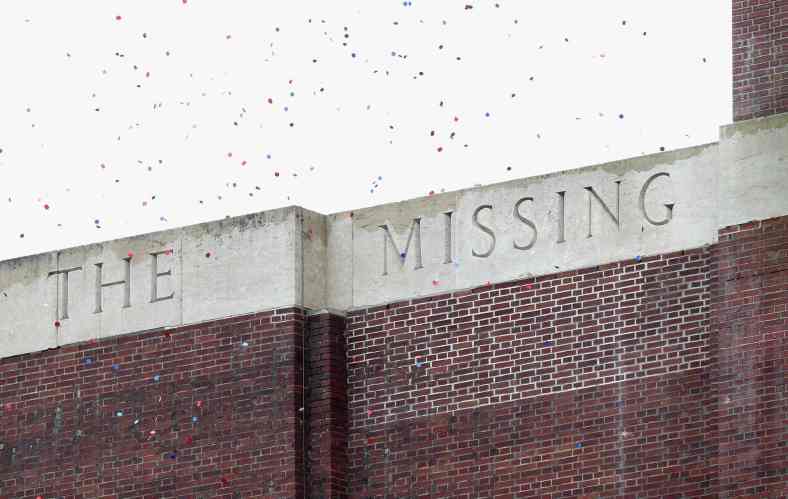
The title comes from the memorial at Thiepval, France to ‘The Missing of the Somme’. The 131 pages explore the landscape of France and Belgium in an extended essay exploring the monuments, cemeteries, and literature that materialized from a time of “fear that people would forget”. A time when ‘soldier poets’ emerged from the battlefields to create a literary narrative of events, in contrast to the propaganda of the media.

This is Dyer’s strength in storytelling. You think you have opened a ‘war book’ and you find you have signed on for an unexpected adventure. The ‘origin’ story of the book is itself a tangent. He originally moved to Paris in the early 90’s to write a novel based on Fitzgerald’s ‘Tender is the Night’, and ended up writing a book about world war one. (F. Scott does make an appearance.)

In a 2013 Paris Review interview, Dyer addressed reader’s expectations, as a function of a publisher/marketer definition.

“I think the distinction between fiction and nonfiction is less about “Did it really happen or was it made up?” than it is about form. And, more than form, it’s about the expectations that are brought to certain forms. According to how a book is presented, packaged, or identified, readers have certain expectations. Following from that they expect books within broadly identified categories to behave in certain ways. So people can find it quite disconcerting when a book isn’t doing what they think it’s meant to be doing, even if the book is completely fine on its own terms and has no desire to conform to some external set of expectations. My books are often disappointing in that regard.”

You may read Dyer for the element of surprise, but it’s in his prose that your investment in time is rewarded, as illustrated in this short excerpt.

“But history does not lie uniformly over events. Here and there it forms drifts – and these drifts are at their deepest between the years 1914 – 1918. Watching footage of the Normandy landings, we can experience D-Day as it happened. History hangs in the balance, waiting to be made. The Battle of the Somme, by contrast, is deeply buried in its own aftermath. The euphoric intoxication of the early days of the French Revolution – ‘Bliss was it in that dawn’ – remains undiminished by the terror lying in wait a few chapters on. The young men queuing up to enlist in 1914 have the look of ghosts. They are queuing up to be slaughtered: they are already dead. By (Johan) Huizinga’s terms, the great war urges us to write the opposite of history: the story of effects generating their cause.”

“Even when it was raging, the characteristic attitude of the war was to look forward to the time it would be remembered.”

When ‘The Missing of the Somme’ was published in Great Britain, there was no American interest. The first world war still competes for attention in American culture. Fortunately, we have Geoff Dyer to remind us that “the war’s true subject is remembrance”.


The generational divide – #wearehere and #Brexit

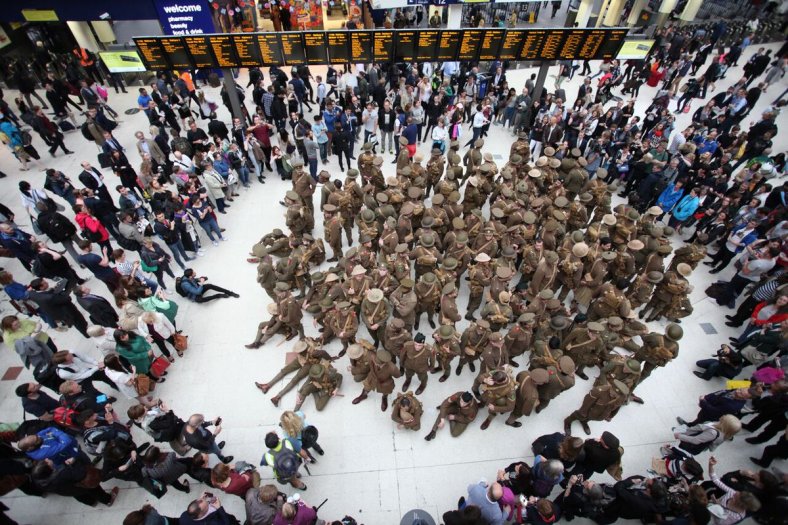
A collection of amateur photos taken by ordinary British citizens, on the 100th anniversary of the Battle of the Somme, served to bridge a century, and punctuate the generational divide that led ‘the lost generation’ to war, and ‘the millennials’ to #Brexit.

The topic #wearehere started trending early Friday morning as British citizens headed to work and encountered young men clad in the uniforms of World War I. For a few hours, in London, Aberystwyth, Birmingham, Sheffield, Salisbury, and Plymouth, the ghost soldiers of the Somme walked among their contemporaries.

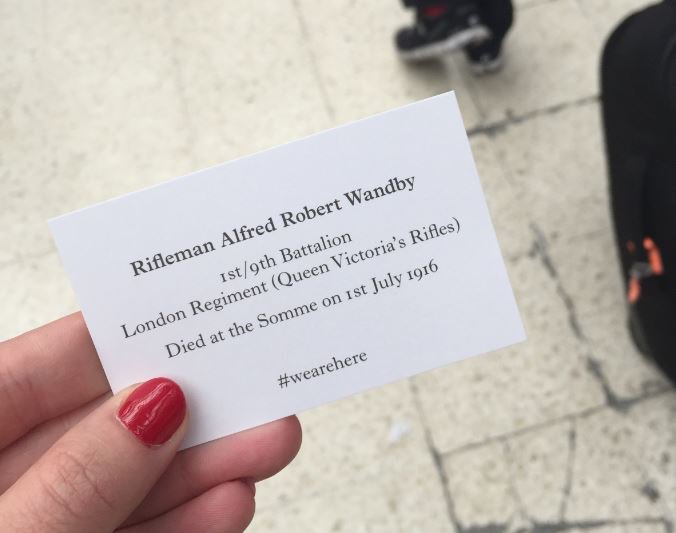
Many of those first encounters were recorded on Twitter and Instagram, as commuters received cards from these ‘soldiers’.CmRNYS-UkAUqr3d“Thousands of volunteers took part in a UK-wide event on Friday 1 July 2016, as a modern memorial to mark the centenary of the Battle of the Somme. 19,240 men were killed on the first day of the battle in 1916 – the bloodiest day in British military history.
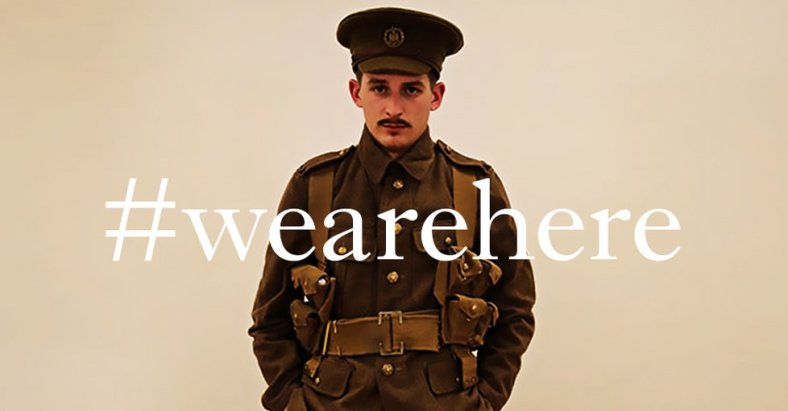
‘we’re here because we’re here’ saw around 1400 voluntary participants dressed in First World War uniform appear unexpectedly in locations across the UK. Each participant represented an individual soldier who was killed on that day one hundred years before.”

proxy.jpg

Charlotte Higgins reported on the day for The Guardian newspaper. “The event, which unfolded without advance publicity, can now be revealed as a work by Jeremy Deller, the Turner prize-winning artist…Deller worked with Rufus Norris, the artistic director of the National Theatre in London, and theatres throughout the UK to train the volunteer army.

Deller was approached to devise an artwork to mark the centenary of the first day of the Battle of the Somme by 14-18 NOW, the body responsible for art commissions commemorating the war. “I quickly realised that what I didn’t want was a static memorial that the public went to to be sad,” he said. “In the 21st century I felt we had do something different. So I thought about the memorial being human, and travelling round the country. It would take itself to the public rather than the public taking itself to the memorial.”

somme.jpg

“And also the public wouldn’t know in advance that there was this thing happening – they would encounter it in the shopping centres and carparks and outside schools and in everyday British life. And I wanted to avoid heritage places – churches, war memorials. I wanted to take it to the public.” His key idea, he said, was to “avoid sentimentality”.

Look at the photo of the finale at Waterloo Station. A group of soldiers at the center are surrounded by their contemporaries, telegraphing the moment to social media. Two generations, a century apart facing unknown fates @war, and after #Brexit.

CmcwkjWWcAAb1sy.jpgThe politics of the early 20th century led to over a million British, French and German casualties in the Battle of the Somme between July 1 and November 18, 1916.
The rhetoric of current political leaders called into question today’s younger generation’s European identity.

So what have we learned in 100 years?

Someone thought it would be a great idea to preserve the peace and form a European Union. For all its frailties, its crowning achievement was replacing nationalism with an overlay of a ‘European’ identity; a multilingual, multicultural generation that travels freely across the continent to study, work, live and love.

Francesca Barber, a self-described ‘transnational’, gave voice to this dilemma of altered identity in the wake of #Brexit.

“I was born in Washington in the late 1980s, grew up in Brussels, moved to London and then returned to the United States, where I lived in New York City; Providence, R.I.; and San Francisco.

My parents are English. My first language was French. I went to a Belgian school and the European School in Brussels, where my classmates almost always spoke at least three languages.

My childhood was defined by endless car journeys across Europe. And as an adult, I have enjoyed the benefits of cheap deals on low-cost European airlines. Most of my friends have gone to school and worked in at least two European countries. I am part of the Erasmus generation. My friends and my roots are everywhere — and only now do I realize how much I took that for granted.

The “Brexit” vote on June 23 was the most serious geopolitical event for Europe since the fall of the Berlin Wall. But lost in all the geopolitics is another important message: It was a resounding vote against globalization from a country that has for so long been a proud champion of globalization.

But this vote was also a rejection by my fellow countrymen, from my parents’ generation to mine, of everything I cherished about Europe, Britain and my own childhood: the sense that our differences were less important than our shared experiences.”

Maybe it’s time for a ‘we are here’ for the European millennials – a ‘counter Brexit’, public art project.  What if, on a Friday morning, all over Britain, young workers approached commuters with CV profile cards, each participant representing a dream lost to Brexit? Mr. Deller, Mr. Norris we could use your help here.


The week@work – Tonys, LinkedIn, Microsoft, ‘Brexit’, Orlando, and how to make a good teacher

This week@work the amazing Broadway production of Hamilton took home eleven Tony awards, Microsoft absorbed LinkedIn, young workers in Great Britain contemplated life after ‘Brexit’, journalist Anderson Cooper reported from Orlando, and we learned teaching can be taught.

Rolling Stone Magazine reporters Amy Plitt and Phoebe Reilly tallied the ’20 Best, Worst and WTF Moments at 2016 Tony Awards’.

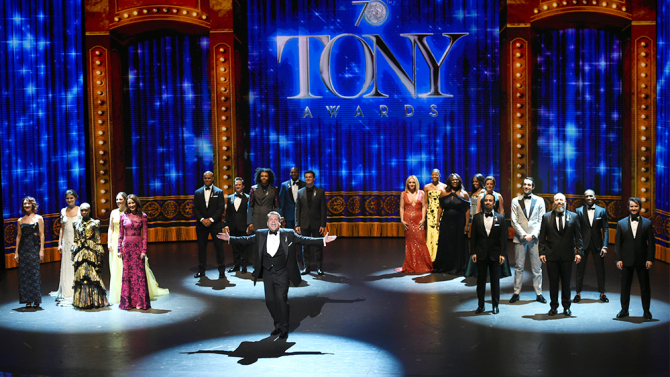
“On a night that was marked by tragedy — and occurring mere hours after news broke of the deadly mass shooting in Orlando, Florida — the Tonys provided a much-needed bit of levity. The performers and honorees didn’t shy away from speaking about the shocking events of the day, but the overall mood was one of celebration. Part of the credit goes to the master of ceremonies James Corden, best known as the goofy host CBS’s Late Late Show, yet still a dorky theater kid at heart; his charming, cheerful persona brought an upbeat mood to the proceedings. And the Hamilton effect — and the fact that it was just a strong year for Broadway in general, with plenty of wonderful productions to celebrate — surely had something to do with it as well.”

2016 Tony Awards 16-06-112 Photo: Anita & Steve Shevett

One of the best moments was James Cordon’s resume review of Tony nominated actors and their appearances on Law and Order.

“If you’ve ever thumbed through a Playbill wondering “Where have I seen that actor before?!?,” the answer is usually: Law & Order. Corden made very rewarding use of this New York actor résumé mainstay last night when he called on Claire Danes for her memorable portrayal of … L&O’s Tracy Brandt. The joke only got better as Corden showed footage of Hamilton’s Daveed Diggs and Leslie Odom Jr. (who were in the same episode!) and poor Danny Burstein — the Fiddler on the Roof star played six different roles on the series, and each time Corden flashed the photo of another character, the audience (and Burstein) laughed harder. Apparently, there is absolutely no continuity on Law & Order.”

And now you know.

The breaking business story on Monday was news of the Microsoft/LinkedIn acquisition. The New Yorker’s Nicholas Lemann examined ‘LinkedIn’s Complicated Bet on the Future of Work’.

MS-Linkedin-2016-06-12-1-c.jpg

“LinkedIn, the business-oriented social-networking company that Microsoft acquired, this week, for $26.2 billion, was founded on two premises. The first was that, even in the winner-take-all world of Internet businesses, there would still be room for a niche company (meaning, in this case, only four hundred million registered users, and a hundred million users per month). The second was that what it means to work in a business is now profoundly different from what it was in the Organization Man era. White-collar employees are highly unlikely to spend a lifetime with a single employer, and more and more are not employees at all in the traditional sense. They self-manage their careers, in part by maintaining online personal networks, rather than have them managed by a corporate human-relations department.”

Now LinkedIn will function as part of a Fortune 50 corporate structure and employees will move from an entrepreneurial culture/ stock option pay structure to an “alternative universe, where, by tech-company standards, employees stay an unusually long time—the average tenure at Microsoft is five years, versus two years at Google, according to data from the consulting firm PayScale—and are unlikely to get rich from their stock options zooming up in value, as was the case for Microsoft employees back in the twentieth century. They are going to be their world’s equivalent of corporate lifers, with generous salaries and benefits and some measure of job security, while working to promote the continued growth of a very different kind of work arrangement elsewhere in the economy.

The technology world seems to be creating a small number of extremely successful people, a larger number of well-treated corporate employees, and an even larger number of people who wish they could be employees.”

And then there are the rest of us who now face the prospect of LinkedIn ads invading our quiet space as we commit great thoughts to Word and fill in Excel spreadsheets.

Randall Stross shared his opinion, ‘Why LinkedIn Will Make You Hate Microsoft Word’.

“My version of Word, a relatively recent one, is not that different from the original, born in software’s Pleistocene epoch. It isn’t networked to my friends, family and professional contacts, and that’s the point. Writing on Word may be the only time I spend on my computer in which I can keep the endless distractions in the networked world out of sight.

Matthew G. Kirschenbaum, an associate professor of English at the University of Maryland and author of “Track Changes: A Literary History of Word Processing,” said the move reflected a failure to understand what writers need. “Most of the most innovative writing tools now on the market position themselves precisely as distraction-free platforms,” he said.

What Mr. Nadella fails to see is how extending LinkedIn’s “social fabric” to Word will kill the magic, not speed it up.”

On Thursday, voters in Great Britain will choose to leave or remain in the European Union. Kimiko De Freitas-Tamura reported ‘Brexit’ Vote Worries European Up-and-Comers Lured to Britain’.

europe_2114838b-small_trans++qVzuuqpFlyLIwiB6NTmJwZwVSIA7rSIkPn18jgFKEo0.jpg

“For years, Britain’s relatively vibrant economy has attracted a steady flow of young people fleeing a lack of opportunity in their home countries on the Continent. London in particular is full of young Europeans, who have helped give the city its dynamic, global feel. From entrepreneurs, bankers and fashion designers to artists, waiters and students, all are free to resettle in Britain and make their futures here without so much as a visa.

No one knows for sure what would happen to them if Britain voted to leave the European Union — their immigration status would have to be worked out in the negotiations that would follow — but the debate itself has left some of the young people feeling fearful, frustrated and even angry.

Journalist Anderson Cooper covered the mass shootings in Orlando this week, demonstrating empathy for the victims and tenacity in interviews with politicians. Michael M. Grynbaum profiled the CNN anchor for The New York Times.

Unknown.jpeg

“Anderson Cooper was reading the names of victims of the Orlando massacre on CNN this week when, uncharacteristically, his voice wavered and he drew up short. For moments, viewers around the country heard only silence, and then the sounds of the anchor struggling to compose himself.

As the news industry descended on Florida this week in the aftermath of a mass shooting in a gay nightclub, Mr. Cooper’s raw, activist-style coverage has stood out. He has held a prime-time vigil of sorts, reciting a list of the dead; refused to name the gunman, saying he wanted to focus on victims; and, in a widely viewed exchange, grilled Florida’s attorney general for defending a state ban on same-sex marriage.”

It was a very tough week@work. Colleagues celebrating their day off late Saturday into Sunday morning were viciously murdered in a gay nightclub in Orlando, and on Thursday, Member of Parliament Jo Cox was murdered as she went to work to meet with her constituents in West Yorkshire.

The last story, from The Economist, ‘How to Make a Good Teacher’.

20160611_LDD001_0.jpg

“Big changes are needed in schools, too, to ensure that teachers improve throughout their careers. Instructors in the best ones hone their craft through observation and coaching. They accept critical feedback—which their unions should not resist, but welcome as only proper for people doing such an important job. The best head teachers hold novices’ hands by, say, giving them high-quality lesson plans and arranging for more experienced teachers to cover for them when they need time for further study and practice.

Money is less important than you might think. Teachers in top-of-the-class Finland, for example, earn about the OECD average. But ensuring that the best stay in the classroom will probably, in most places, mean paying more. People who thrive in front of pupils should not have to become managers to earn a pay rise. And more flexibility on salaries would make it easier to attract the best teachers to the worst schools.

Improving the quality of the average teacher would raise the profession’s prestige, setting up a virtuous cycle in which more talented graduates clamoured to join it. But the biggest gains will come from preparing new teachers better, and upgrading the ones already in classrooms.”

Here’s what I think. Improving the quality of teachers will improve the quality of content taught. It will ensure a ‘safe space’ to openly discuss the issues facing our neighborhoods, counties, countries and continents. Good teachers remove the blinders of hate and discrimination. A courageous teacher at the front of the classroom cautions the young against the errors of the past, and is the best antidote to history repeating itself.

A good teacher reminds us that we are all teachers.

paris


The Saturday Read – Revisiting ‘The Sage of Waterloo’ by Leona Francombe

Two hundred and one years ago, on June 18, 1815, Napoleon Bonaparte led his troops in battle against those of the Duke of Wellington on a farm three miles south of Waterloo in Belgium. At the end of the day, close to 50,000 soldiers were dead and French domination of the continent came to an end.

A number of books were published last spring to commemorate the 200th anniversary of the bloodshed. One, ‘The Sage of Waterloo’ by Leona Francombe, recalls events through a very different form of ‘oral history’. For this ‘Saturday Read’ we return to Hougoumont.

“Hougoumont is…dear me, where are the words? It’s a mute place, you see, but with such startling eloquence. Perhaps the fact that few visitors to the battlefield even know it exists fosters the air of an unopened message. Physically speaking, it’s a ruin: a decaying farmstead of brick and sandstone in perfect complicity with the land. The other, less tangible things are far more difficult to describe. Go there yourself and you’ll feel it: the knowing wind; the trees scarred as leviathans; and a strange sort of peace that isn’t peaceful at all but alert with memory and other, less palatable phenomena. Sometimes, when the wind comes off the eastern fields, it’s as if a worn curtain is shifting, and through a tear in the fabric you can see something unimaginable for such a sleepy backwater.”

I reviewed this exquisite story last year, and after this week of tragedy in Orlando and Birstall, West Yorkshire, ‘The Sage’ seemed to beckon from the bookshelf, inviting a return to the wisdom of Old Lavender.

“”Nature never truly recovers from human cataclysms,” Grandmother said one day, to me alone. “Never.” She was using that tone: two parts old sage, one part female warrior, scant affection and no salt… Every creature who was anywhere near Waterloo sensed what was going to happen,” she explained. “If they could get out, they got out. Those who stayed and survived passed the experience on through collective memory, right down through the generations until the present day. Collective memory… and resonance.””

Author Francombe is a pianist and composer whose lyrical interpretation of history, through a narrator at ‘ground level’, delivers a timely reminder –

“There are sometimes no explanations, William. So don’t try to find them, or pretend that they’re there. They aren’t. But there’s always a way forward.”


The Friday Poem ‘A sonnet’ by Lin-Manuel Miranda

At a moment of career recognition, ‘Hamilton’ creator, Lin Manuel-Miranda shared a sonnet for his wife and the world about family, tragedy and love. At it’s center was his response to the terrorist, hate crime in Orlando.

The New York Times Sunday Styles reporter, Katie Rosman, shared the ‘back story’ of the sonnet from creation to delivery on the Beacon Theater stage Sunday evening.

“…as the first grim reports out of Orlando, Fla., were circulating, Mr. Miranda took out his phone and began to tap out the sonnet he would read aloud that night while accepting the Tony for best score. In 14 lines he paid tribute to his wife, his son and the victims of the massacre.

Back at the Mandarin Oriental before curtain time, he realized he would need a printout of the verse he had written. He called the suite where his father was staying and asked him if he wouldn’t mind taking care of it. Luis, 61, said yes, and traveled down a flight, where his son handed him a thumb drive. Lin-Manuel had one stipulation: “He said, ‘Can you please not read it?’”

He went down the elevator, thumb drive in hand, toward the concierge desk. There, employees of the Mandarin Oriental sprang into action.

Back in the elevator, with the printout, the father did the very thing his son had asked him not to do: He read the sonnet.

“That’s like asking me not to drink water when it’s 90 degrees out,” Luis said. “I thought it was very moving and pretty and important for the moment.”

Back in the suite, Luis listened as Lin-Manuel read it aloud, practicing for the big moment.”

Yesterday Mr. Miranda announced a fundraising effort, for Equality Florida. Revenue will be generated by the sale of a T shirt with words from the sonnet. “Here’s a thing that speaks for itself. I’m very excited about it and it’s a way you can help.” 

x2837DC2CA-99AA-9001-BE24B99096BFFE8E.jpg.pagespeed.ic.v2WAbmnIPw.jpg

The sonnet has been published in a variety of outlets since the awards ceremony. After the horror of this past week, there was no other choice for The Friday Poem.

My wife’s the reason anything gets done
She nudges me towards promise by degrees
She is a perfect symphony of one
Our son is her most beautiful reprise
We chase the melodies that seem to find us until they’re finished songs and start to play
When senseless acts of tragedy remind us that nothing here is promised, not one day
The show is proof that history remembers
We live through times when hate and fear seem stronger
We rise and fall and light from dying embers
Remembrances that hope and love last longer
And love is love is love is love is love is love is love is love
Cannot be killed or swept aside
I sing Vanessa’s symphony
Eliza tells her story
Now fill the world with music, love, and pride

Lin Manuel-Miranda   June 12, 2016


The Friday Poem @ the intersection of Maya Angelou, Hillary Clinton and Muhammad Ali

Maya, Muhammad and Hillary. Not three names you would intuitively link together, but that’s what history claimed this week, as a ‘political poet’ passed, and a deceased poet’s 2008 words echoed in the background of a rally at the Brooklyn Navy Yard.

The news of the death of Muhammad Ali literally stopped the presses at the New York Times early Saturday morning. On Wednesday, newspapers across the country led with the history making headline reporting “Hillary Clinton‘s nomination: A win 96 years in the making”.

It will not be an easy road to November for Secretary Clinton as reported by Patrick Healy and Sheryl Gay Stolberg.

“When Hillary Clinton swept onto the stage at her victory rally Tuesday night, the thunderbolt of history struck many Americans, no matter their love or loathing for her: A woman could be the next president of the United States.

But like so much about Mrs. Clinton, her speech, which lit up televisions and smartphones and social media all day Wednesday, produced conflicting emotions.

For some, it was an inspiring moment that brought home in a visceral way that Mrs. Clinton is the first woman to become the presumptive nominee of a major party. For others, there were chills and discomfort that this next step forward in our national story was unfolding with this particular woman.”

IMG_4810.jpg

The candidate might take heart from the poem Maya Angelou submitted to The Observer in 2008, with the backstory told by Vanessa Thorpe for The Guardian.

“She is supporting Clinton despite her close friendship with television personality and philanthropist Oprah Winfrey, a prominent backer of rival Democrat Barack Obama, the first black presidential hopeful with a real chance of reaching the White House.

Angelou is steadfast in her loyalty to Clinton. She said recently: ‘I made up my mind 15 years ago that if she ever ran for office I’d be on her wagon. My only difficulty with Senator Obama is that I believe in going out with who I went in with.’

Andrew Motion, the Poet Laureate, said of the poem: ‘This is a great thing for The Observer to have.’ He favourably compared it with the ‘vivid flourishes’ of Angelou’s recent work. ‘With this kind of poem Angelou has decided to interpret public writing as a verbal equivalent of making a poster, and there’s nothing wrong with this. The rhetoric is full of big gestures that make a direct appeal to our feelings, rather than getting to it by the little winding ways more personal poetry might use.'”

The poem:

State Package for Hillary Clinton

You may write me down in history

With your bitter, twisted lies,

You may tread me in the very dirt

But still, like dust, I’ll rise.

This is not the first time you have seen Hillary Clinton seemingly at her wits’ end, but she has always risen, always risen, don’t forget she has always risen, much to the dismay of her adversaries and the delight of her friends.

Hillary Clinton will not give up on you and all she asks of you is that you do not give up on her.

There is a world of difference between being a woman and being an old female. If you’re born a girl, grow up, and live long enough, you can become an old female. But to become a woman is a serious matter. A woman takes responsibility for the time she takes up and the space she occupies. Hillary Clinton is a woman. She has been there and done that and has still risen. She is in this race for the long haul. She intends to make a difference in our country. Hillary Clinton intends to help our country to be what it can become.

She declares she wants to see more smiles in the family, more courtesies between men and women, more honesty in the marketplace. She is the prayer of every woman and man who longs for fair play, healthy families, good schools, and a balanced economy.

She means to rise.

Don’t give up on Hillary. In fact, if you help her to rise, you will rise with her and help her make this country the wonderful, wonderful place where every man and every woman can live freely without sanctimonious piety and without crippling fear.

Rise, Hillary.

Rise.

Maya Angelou, 2008

20131006_dn_0mu24lap.jpg

On Thursday, Henry Louis Gates Jr. recalled ‘Muhammad Ali, the Political Poet’. In the essay he linked Angelou and Ali by their poetry, often labeled ‘doggerel’.

“Perhaps Maya Angelou, whose own poetry is sometimes labeled doggerel, said it best: “It wasn’t only what he said and it wasn’t only how he said it; it was both of those things, and maybe there was a third thing in it, the spirit of Muhammad Ali, saying his poesies — ‘Float like a butterfly, sting like a bee.’ I mean, as a poet, I like that! If he hadn’t put his name on it, I might have chosen to use that!”

“It would be a mistake to say that Ali made black oral poetry more sophisticated or complex, but he did make it more political. After learning his local draft board had declared him eligible for induction into the Army in 1966, Ali recited this poem:

Keep asking me, no matter how long,
On the war in Vietnam,
I sing this song:
I ain’t got no quarrel with no Viet Cong.

On this Friday, we pause to remember the athlete, humanitarian and role model who was Muhammad Ali, we celebrate a milestone for women, and reflect on the words of two American poets who significantly influenced our culture.