The mysteries of networking #6

Does networking really take place in a galaxy far, far away? I think that’s the way some of us approach it – a great excuse for not engaging in the process. And then, there’s the whole ‘mentoring thing’ – Do I need one? How do I find one? Then what do I do?

It’s pretty simple. It’s hard work. Actually, once you start the work doesn’t end. You just need to recalculate the equation. It’s not a chore, it’s an amazing, fun exploration. And you can start today, with the folks in a college classroom, colleagues at work, members of your book club or athletic training group.

“There’s a Chinese saying: “Explore what’s best in the others and follow.” Among my friends, I always learn the best from them.”  Lee Shau Kee

Think about that. “Explore the best in others and follow.” Who are the ‘best’ in your world or the one you want to join? What are the qualities/values that align to win your vote as best@what they do? If you could have a few minutes with them, what would you ask?

The ‘networking’ thing is the exploration. Think about how you might go about planning for a hike, or travel. Why are you going? What do you hope to find? What research have you conducted to prepare? And, you’re planning to have fun, right?

Apply the same process to networking. “Explore the best in others…”

“…and follow.” Once you have started a conversation, it’s time to examine the next layer of career success. What has been the path to success? What were the failures, trade-offs, and recovery? How many detours came along the way? What do they look for in folks they hire?

Ask questions unique to your career aspirations. Your goal is to spark a longer conversation, one that may lead to a continuing professional relationship – a mentor.

“Among my friends, I always learn the best from them.”


The week@work: 100 greatest business minds, inequality & activism@work

Have you noticed how little time we have to catch our breath between ‘breaking news’ stories? We seem to be suffering from group attention span disorder. This week@work the focus is on narratives with a thread longer than 140 characters; important stories that dim when the next shiny object distracts: leadership, inequality and activism@work.

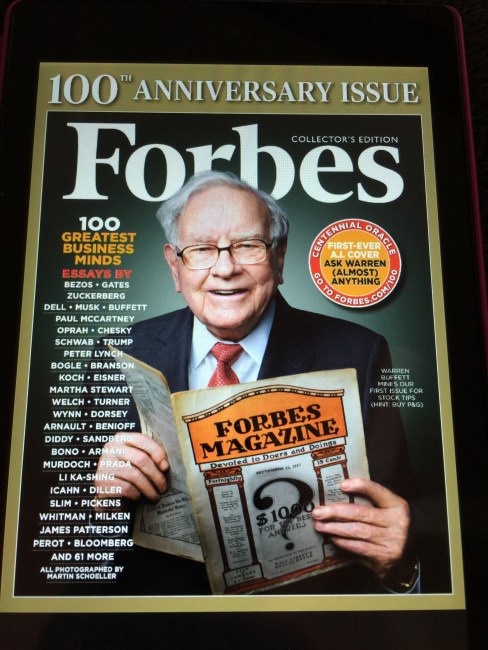
Forbes Magazine is celebrating 100 years in publication with essays by the 100 Greatest Living Business Minds. “To celebrate Forbes’ centennial, we amassed an A-to-Z encyclopedia of ideas from 100 entrepreneurs, visionaries and prophets of capitalism—the greatest ever collection of business essayists and greatest ever portrait portfolio in business history.”

forbes cover

Here’s a sample of thoughts shared by global leaders:
Georgio Armani: “I always try to maintain a sense of reality and ensure that I surround myself with the right people, who understand the times in which we live. In this line of work, my team is crucial. I’m the one who decides, but I like having lots of other people with whom I can discuss ideas, as this helps with the creative process. In the world of fashion, five years is already a hundred, so going forward, the challenge will be to capture the attention of a public that is increasingly stimulated by countless offers and new forms of communication.”

Lee Shau Kee: “There’s a Chinese saying: “Explore what’s best in the others and follow.” Among my friends, I always learn the best from them.”

Jacqueline Novogratz: “In our connected era, word spreads. People know when you are being true to your values. Don’t worry about reputation but about character. You build character by practicing empathy, practicing moral courage, practicing determination. Those traits are like muscles. When you are known for that, you don’t have to worry about guarding your reputation — others will do it for you.”

What’s the common thread here? Common sense.

Patricia Cohen reports on the historical trend toward income inequality this week@work, ‘Why the Pain Persists Even as Incomes Rise’. “The disconnect between positive statistics and people’s day-to-day lives is one of the great economic and social puzzles of recent years.

“…the forces undermining the middle class may reach back farther than many economists have thought. The latest evidence comes from a group of researchers at universities and the Social Security Administration who have been tracking the earnings of hundreds of millions of individuals over their careers.”

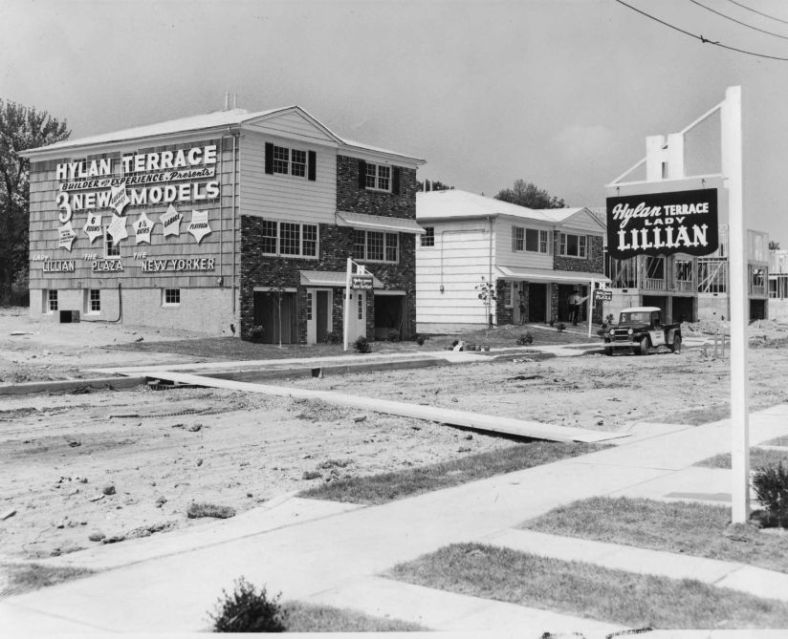
staten island.jpg

In the late 1960s “instead of increasing, lifetime earnings for men made an about-face and began to decline. They have been dropping pretty much ever since. The result was that a 25-year-old man who entered the work force in 1967 and worked for the next three decades earned as much as $250,000 more, after taking inflation into account, than a man who had the same type of career but was 15 years younger…since the 1950s, three-quarters of working Americans have seen no change in lifetime income.”

Negotiating issues of gender and race form another aspect of inequality@work.

The ongoing argument around gender discrimination in Silicon Valley continued with the publication of Ellen Pao‘s book ‘Reset’ and Nellie Bowles‘ article ‘As Inequality Roils Tech World, A Group Wants More Say: Men”.


images.jpeg

Jessi Hempel examined Ms. Pao’s career exploring ‘The Pao Effect is What Happens After Lean In’. “Pao’s story is, in part, her own attempt to discern just where reality diverged from her expectations. With clear-eyed hindsight, Pao reflects on her earliest career choices—where to apply to college and whether to go to law school, where to work and when to leave a job. She pauses to examine the things her college counselor told her, and the early sexism she encountered at Harvard Business School. “Honestly, I just thought there were a few men who were really immature, with lousy senses of humor, and I avoided them,” she writes of that time.”

Ellen Pao’s story is a cautionary tale for the intrepid women who ‘lean in’ to a career in tech.

Nellie Bowles’ ‘must read’ provides an up-to-the-minute update on the tech workplace. “a fringe element of men who say women are ruining the tech world…While many in the tech industry had previously dismissed the fringe men’s rights arguments, some investors, executives and engineers are now listening. Though studies and surveys show there is no denying the travails women face in the male-dominated industry, some said that the line for what counted as harassment had become too easy to cross and that the push for gender parity was too extreme a goal.”

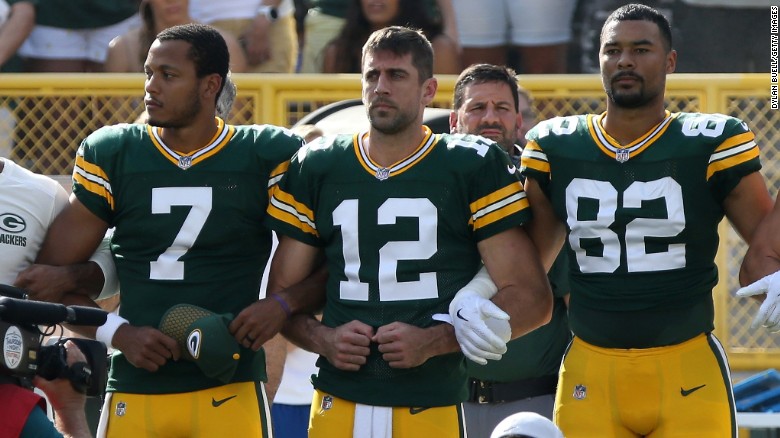
The week@work ended with a demonstration of workplace activism reported by Nancy Armour, ‘In protests, NFL comes together for one of its most powerful days’.

170924164325-23-nfl-kneeling-0924-exlarge-169.jpg“The NFL had one of its finest moments before the games even began Sunday, coming together from every corner – players, coaches, owners and league office – in forceful rebuke of the latest torrent of hate from President Donald Trump. Whether black, white or brown, on bended knee or with locked arms, the NFL’s rare show of unity was both a dignified condemnation of the wrongs we still must right and a reminder that, for all of our differences, America remains our common ground.”

Where in the group of Fortune100 greatest business minds do we find the answer to the ongoing challenge of inequality@work?

John Paul Dejoria, founder of John Paul Mitchell Systems and co-founder of Patron Tequila shared his philosophy. “It’s a basic thing that goes back to the law to do unto others as you would have others do unto you. Treat and pay your staff exactly the way you’d want to be treated if you were in their place…In all the businesses we’re involved in it’s the exact same way. If you love your people and let them know you’re giving back, not just hoarding all the money for yourself, they want to join in.”


Photo credit: Staten Island homes – Tom Maguire/Newsday July 7,1965, Green Bay Packers/Dylan Buell/CNN September 24, 2017


You can’t go home again – keeping a journal to tell your story

“If you don’t turn your life into a story, you just become a part of someone else’s story.”             Terry Pratchett*

How do you turn your life into a story? A timeline of your social media posts might provide a hint to your narrative’s trajectory, but the best way is to begin recording what’s happening in your life on a daily basis; on paper, in a journal.

One of the best jobs I ever had was leading a freshman seminar, ‘You Can’t Go Home Again, Now What?’. At the beginning of the fall semester I gave each first year student a blank Moleskine notebook.  The direction was simple – “record your observations of people and place… keep your memories the old fashioned way – on paper. This is your personal space for your personal thoughts.”

Keeping a journal is way to establish a routine in a new environment and at the same time reflect on the unique experience of joining a new community. It’s a practice where you take ownership of your story.

“When  you leave college, there are thousands of people out there with the same degree you have; when you get a job, there will be thousands of people doing what you want to do for a living.

But you are the only person alive who has sole custody of your life. Your particular life. Your entire life. Not just your life at a desk, or your life on the bus, or in the car, or at the computer. Not just the life of your mind, but the life of your heart. Not just your bank account, but your soul.”
Anna Quindlen**

College is just one catalyst to begin the process of recording  and reflecting. The ‘Back to School’ aisles in your local Target are full of notebooks in every imaginable shape and size, just waiting to capture your creativity.

Why a notebook and not an online journal? It’s important to disconnect and avoid distraction when you’re talking to yourself about your day. And then there’s the apocalyptic view: when we are all off the grid, we’ll still have our journals.

When we scribble a few words, we are compiling a record that simply makes sense of the day. And on those days when things have not worked out as planned, it’s the perfect place to vent, in the privacy of the lined (or unlined) page.

What happened to all those first year students and their Moleskine journals? I think some may still be in a storage bin, blank. But for many, they contain the treasure of a story of transition and change, a template for continuous, lifelong learning.

String a few years of journal entries together and you begin to see career patterns emerge: choices, consequences and course corrections.

Your journal is your story. There are no rules. You’re writing your story in real time. Don’t edit, but do read what you write.

Take care of the life of your mind while paying attention to the life of your heart.

*Terry Pratchett   ‘The Amazing Maurice and His Educated Rodents’ 2001
**Anna Quindlen   ‘A Short Guide to a Happy Life’ 2000


The Friday Poem ‘The Good Life’ by Tracy K. Smith

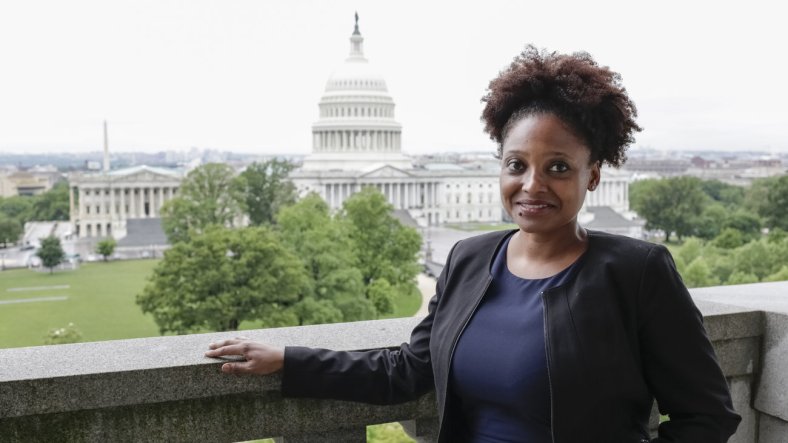
The new U.S. poet laureate, Tracy K. Smith, considers the writing of poetry “a superpower.” 

“A good poem teaches you to look at the ordinary world and see something completely new within it.”

On Thursday she was interviewed by Charlie Rose on the CBS Morning News. He asked, “Why did you become a poet?”

“I loved what poems did for me as a reader. Even as a child I loved the sound of language and the sense of surprise that poems could inspire.”

The Friday poem this week is ‘The Good Life’ from the 2012 Pulitzer Prize winning collection, ‘Life On Mars: Poems’.

The Good Life

When some people talk about money
They speak as if it were a mysterious lover
Who went out to buy milk and never
Came back, and it makes me nostalgic
For the years I lived on coffee and bread,
Hungry all the time, walking to work on payday
Like a woman journeying for water
From a village without a well, then living
One or two nights like everyone else
On roast chicken and red wine.

Tracy K. Smith    ‘Life on Mars: Poems’ 2011

9781555975845.png

Photo credit: Shawn Miller/Library of Congress


The week@work – gender gap @ the BBC, on Broadway & the C-Suite, plus four work/life questions while staring @ the ocean

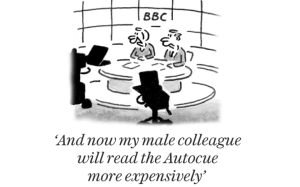
This week@work the BBC published the salaries of top earners, and the gender pay gap at the broadcaster became the latest global headline news on the topic. Turns out the folks who work in theater and aspire to the corporate C-suite are finding the same barriers. Maybe it’s time to review your work/life view ‘from the beach’.

Sophie Walker, leader of the Women’s Equality party in the UK shared her opinion ‘It’s not just the BBC that must come clean about underpaying women’.

“When the BBC published the salaries of its top earners, the results were not surprising, but they were shocking. They even managed, momentarily, to silence the gender pay gap myth-busters: the trolls who daily patrol social media challenging any mention of a pay gap with supposedly hard facts about the “choices” women make.

Here is the real hard fact: women are paid less because we are considered to be worth less. The gender pay gap is a symptom of the structural barriers that women face, which can be seen at every level of working life and across every industry. It thrives on the unconscious bias that goes unchallenged by the surplus of white men in decision-making roles, and is magnified by occupational segregation, unequal caring responsibilities and pervasive stereotypes that intersect with class, race, age, sexuality and disability.”
matt-gallery-19072017-large_trans_NvBQzQNjv4BqoVt7GQuuMH9EImpLJinmFFVse9JsN00kzbUr3IXHaGo.png

In an open letter to BBC director general Tony Hall, over 40 high profile presenters made a case for immediate action to remedy the inequality.

“The pay details released in the annual report showed what many of us have suspected for many years … that women at the BBC are being paid less than men for the same work.

Compared to many women and men, we are very well compensated and fortunate. However, this is an age of equality and the BBC is an organisation that prides itself on its values.

You have said that you will “sort” the gender pay gap by 2020, but the BBC has known about the pay disparity for years. We all want to go on the record to call upon you to act now.

Beyond the list, there are so many other areas including production, engineering and support services and global, regional and local media where a pay gap has languished for too long.

This is an opportunity for those of us with strong and loud voices to use them on behalf of all, and for an organisation that had to be pushed into transparency to do the right thing.”

Mr. Hall responded “…that the move to close the gender pay gap at the public broadcaster will be “accelerated” and that there would be a “marked difference” when salaries were published next year.”

The BBC story was not unique last week as Laura Collins-Hughes reported ‘When Women Won’t Accept Theatrical Manspreading’.

times sq“In theater as in life, there is a lot of manspreading: Men get more jobs, more money, more prizes, more stories told about them onstage than women do. The numbers are grim nearly everywhere, but especially on Broadway, where an Actors’ Equity study released last month showed female and minority actors and stage managers at a gross disadvantage to white men.

A recent tally on HowlRound, a theater industry website, documented the staggering lead men have over women as designers, directors and artistic directors in American regional theaters. Men dominate every area but costume design, where women traditionally hold sway.”

The third story on women@work this week was Susan Chira’s exploration of ‘Why Women Aren’t C.E.O.s, According to Women Who Almost Were’.

IMG_9129.jpg“More than 40 years after women began pouring into the workplace, only a handful have made it all the way to the top of corporate America. The percentage of chief executives of Fortune 500 companies who are women just passed 6 percent, creeping up (and occasionally dropping back) at a glacial pace.

The impact of gender is hard to pin down decisively. But after years of biting their tongues, believing their ranks would swell if they simply worked hard, many senior women in business are concluding that the barriers are more deeply rooted and persistent than they wanted to believe, according to interviews with nearly two dozen chief executives, would-be chief executives, headhunters, business school deans and human resources professionals.

What they say: Women are often seen as dependable, less often as visionary. Women tend to be less comfortable with self-promotion — and more likely to be criticized when they do grab the spotlight. Men remain threatened by assertive women. Most women are not socialized to be unapologetically competitive. Some women get discouraged and drop out along the way. And many are disproportionately penalized for stumbles.”

Which brings me to a constructive response from Art Markman, ‘Four Work-Life Questions to Ponder on Vacation This Summer’.

mb fog.jpg“It’s true that vacationing can hold some unexpected career benefits, in addition to letting you recharge your batteries and do some self-reflection about your working life, your personal life, and your overall goals. But musing on these big-ticket themes isn’t something many of us have a lot of practice doing. When you finally get a chance to do it, you might find your thoughts a little unfocused. That’s fine—mind-wandering is sort of the point here. But in case you need a little more structure, these are four questions to let your mind wander over.”

“Am I happy at work?”, “Where am I headed?”, “Who don’t I know?”, and “What’s Missing?”

This week@work consider your answers and once you have a sense of your ‘work identity’, use your voice@work to advocate on behalf of all and equality@work.

Photo credit: Cartoon – The Telegraph, MattCartoon July 20, 2017

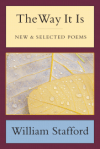
The Friday Poem ‘The Way It Is’ by William Stafford

“There’s a thread you follow.” opens this week’s Friday Poem, ‘The Way It Is’, from poet, writer, and photographer William Stafford.

As a conscientious objector during the second World War, Stafford worked in civilian public service camps for the U.S. Forest Service in Arkansas and California. In 1948 he moved to Oregon to teach at Lewis and Clark College.

In 1963 he was selected to receive the National Book Award from a group of nominees including William Carlos Williams and Robert Frost. He served as Consultant in Poetry to the Library of Congress in 1970, a position that today carries the title of Poet Laureate.

In addition to his 65 volumes of poetry and prose, he left a collection of 16,000 photographic negatives to the archive at Lewis and Clark College. In a 2014 interview for Oregon Public Broadcasting, his son, Kim Stafford commented on his father’s discomfort with the spotlight. “When he became famous, the camera allowed him to leave the center of the circle and document the other writers.”

His lifetime spanned decades of dramatic change, and yet he stayed true to his values. His accomplishments and awards did not distract. “…You don’t ever let go of the thread”.

The Way It Is

There’s a thread you follow. It goes among
things that change. But it doesn’t change.
People wonder about what you are pursuing.
You have to explain about the thread.
But it is hard for others to see.
While you hold it you can’t get lost.
Tragedies happen; people get hurt
or die; and you suffer and get old.
Nothing you do can stop time’s unfolding.
You don’t ever let go of the thread.

William Stafford   ‘The Way It Is’   Graywolf Press, 1999

9781555972844

Photo credit: Kim Stafford

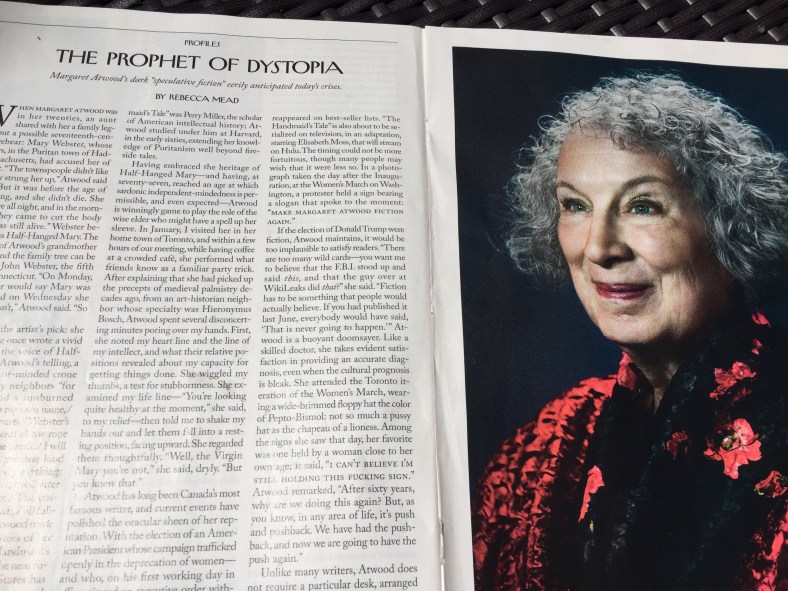
The Saturday Read ‘The Prophet of Dystopia’ by Rebecca Mead

What if you had reached the “Gold Watch and Goodbye” phase of your career only to be catapulted back into the spotlight by current events?

That seems to be what’s happening to Canadian author Margaret Atwood as her ‘new’ literary sensation, ‘The Handmaid’s Tale’, originally published in 1985, leads the literary fiction category on Amazon and is number ten on The New York Times Paperback Trade Fiction list. A film version of the book will begin streaming on Hulu next week. And earlier this week Ms. Atwood was included in the list of  Time Magazine’s 100 Most Influential People.

The Saturday Read is Rebecca Mead‘s multi-dimensional profile ‘The Prophet of Dystopia’.

The ‘Gold Watch and Goodbye’ career reference is evident as Ms. Mead brings us along on a March evening when Ms. Atwood received the National Book Critics Circle lifetime-achievement award. In her closing remarks the author asked, “Why do I only get one lifetime? Where did this lifetime go?”

The profile offers a panoramic view of this one lifetime; from one writers beginnings to mentor and evangelist for new writers.

“Atwood was born in Ottawa, but she spent formative stretches of her early years in the wilderness—first in northern Quebec, and then north of Lake Superior. Her father, Carl Atwood, was an entomologist, and, until Atwood was almost out of elementary school, the family passed all but the coldest months in virtually complete isolation at insect-research stations; at one point, they lived in a log cabin that her father had helped construct.”

In college she switched majors from philosophy to literature. She challenged the traditional canons of British and American literature with an argument for Canadian literature and its dominant theme of survival.

“Our stories are likely to be tales not of those who made it but of those who made it back from the awful experience—the North, the snowstorm, the sinking ship—that killed everyone else.”

She was an established writer before “the sometimes divisive years of second-wave feminism” and wrote an essay giving voice to colleagues.

“It’s not finally all that comforting to have a phalanx of women . . . come breezing up now to tell them they were right all along,” she wrote. “It’s like being judged innocent after you’ve been hanged: the satisfaction, if any, is grim.”

“Her feminism assumes women’s rights to be human rights, and is born of having been raised with a presumption of absolute equality between the sexes…

Atwood’s early years in the forest endowed her with a sense of self-determination, and with a critical distance on codes of femininity—an ability to see those codes as cultural practices worthy of investigation, not as necessary conditions to be accepted unthinkingly. This capacity for quizzical scrutiny underlies much of her fiction: not accepting the world as it is permits Atwood to imagine the world as it might be.”

It’s the fearless questioning that has resonated over time and reintroduced readers to the classic ‘The Handmaid’s Tale’ this spring.

Rebecca Mead’s profile of the thoroughly modern, septuagenarian writer is required reading as a companion to the novel.

“In a photograph taken the day after the Inauguration, at the Women’s March on Washington, a protester held a sign bearing a slogan that spoke to the moment: “make margaret atwood fiction again.”


7xlhqgc4_200x200.jpg

@latimesfob this weekend:

The Handmaid’s Tale from Page to Screen: Margaret Atwood & Bruce Miller in Conversation with Mary McNamara, Conversation 2063 Sunday, April 23 @2:30PM in Bovard Auditorium on the University of Southern California campus

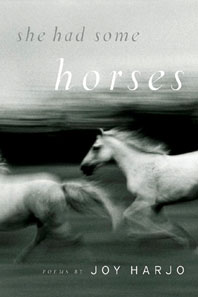
The Friday Poem ‘Remember’ by Joy Harjo

April is National Poetry Month and next Thursday, April 27 is ‘poem in your pocket day’. Download your favorite poem or one from the Academy of American poets site, carry it around with you for the day and share it with friends and colleagues.

The Friday Poem this week comes from the Academy’s selection, ‘Remember’ by Joy Harjo.

Remember

Remember the sky that you were born under,
know each of the star’s stories.
Remember the moon, know who she is.
Remember the sun’s birth at dawn, that is the
strongest point of time. Remember sundown
and the giving away to night.
Remember your birth, how your mother struggled
to give you form and breath. You are evidence of
her life, and her mother’s, and hers.
Remember your father. He is your life, also.
Remember the earth whose skin you are:
red earth, black earth, yellow earth, white earth
brown earth, we are earth.
Remember the plants, trees, animal life who all have their
tribes, their families, their histories, too. Talk to them,
listen to them. They are alive poems.
Remember the wind. Remember her voice. She knows the
origin of this universe.
Remember you are all people and all people
are you.
Remember you are this universe and this
universe is you.
Remember all is in motion, is growing, is you.
Remember language comes from this.
Remember the dance language is, that life is.
Remember.
9780393334210_198.jpg


Want to improve your communication skills? Spend the weekend at #bookfest

Want to improve your communication skills? I have two items to add to your ‘to do’ list: The Los Angeles Times Festival of Books and the ‘How I Got Here’ podcast.

How do these dots connect? Pulitzer prize winning author, Jon Meacham put it simply as a guest on the April 4th podcast:

“There is a direct connection between the number of great books you read and your own capacity to express yourself.”

Think about it. Now consider your catalog of reading materials over the past month. Could there be a connection with the difficulty you are encountering coming up with a business proposal in more than 140 characters/no emoji?

Time for a cultural intervention this weekend to jump start your personal ‘communication improvement project’.

Step one: Come to Los Angeles for the LA Times Festival of Books on the campus of the University of Southern California. Step two: Maintain the momentum with a subscription to the weekly ‘How I Got Here’ podcast.

The book festival is a two day event hosting authors, poets, and musicians discussing their work at moderated panels and outdoor stages. All the events are free and provide amazing access to those creating art in these interesting times.

As an example, my itinerary for the weekend includes a two panels on biography and epic history, four ‘indoor’ conversations with George Saunders, Roxanne Gay, Chris Hayes and Margaret Atwood, and an a cappella performance by the SoCal VoCals.

I doubt you will leave the venue without at least one new book (perhaps bearing an author signature) to continue your adventure in reading and improved communication.

howigothere.jpg

Next week on your commute or morning run listen to ‘How I Got Here’. The podcast, hosted by Georgetown University grads Tim Barnicle and Harry Hill, is a weekly exploration of the diverse career trajectories of various luminaries.

Imagine sitting for an hour with your career idol as they describe their path to success.

If you believe we learn from the wisdom of others, events and podcasts are a treasure trove of accumulated knowledge.

What are you waiting for?


The Friday Poem ‘Baseball’ by Gail Mazur

The Friday Poem this week is for those whose workplace is the ballpark. It’s the first week of April and the dream of a World Series Championship is possible for each of Major League Baseball’s thirty franchises and their fans.

Our ‘national pastime’ has often been used as a metaphor for life. Poet Gail Mazur shared her connection to the diamond with her poem ‘Baseball’.

“Well, of course, baseball, to the ardent fan, IS a metaphor and more. I couldn’t write that poem until I thought of denying baseball was a metaphor, then I could go all out. Everything about the game and the park seemed like metaphor. And a fan’s sense of loss—or exhilaration—no matter how intense, is more bearable than the real losses in our lives. But still, but still, one feels one lives and dies, as the saying goes, with one’s team! After the first line, I wrote it in a few minutes, one of those gifts”

Baseball
for John Limon

The game of baseball is not a metaphor
and I know it’s not really life.
The chalky green diamond, the lovely
dusty brown lanes I see from airplanes
multiplying around the cities
are only neat playing fields.
Their structure is not the frame
of history carved out of forest,
that is not what I see on my ascent.

And down in the stadium,
the veteran catcher guiding the young
pitcher through the innings, the line
of concentration between them,
that delicate filament is not
like the way you are helping me,
only it reminds me when I strain
for analogies, the way a rookie strains
for perfection, and the veteran,
in his wisdom, seems to promise it,
it glows from his upheld glove,

and the man in front of me
in the grandstand, drinking banana
daiquiris from a thermos,
continuing through a whole dinner
to the aromatic cigar even as our team
is shut out, nearly hitless, he is
not like the farmer that Auden speaks
of in Breughel’s Icarus,
or the four inevitable woman-hating
drunkards, yelling, hugging
each other and moving up and down
continuously for more beer

and the young wife trying to understand
what a full count could be
to please her husband happy in
his old dreams, or the little boy
in the Yankees cap already nodding
off to sleep against his father,
program and popcorn memories
sliding into the future,
and the old woman from Lincoln, Maine,
screaming at the Yankee slugger
with wounded knees to break his leg

this is not a microcosm,
not even a slice of life

and the terrible slumps,
when the greatest hitter mysteriously
goes hitless for weeks, or
the pitcher’s stuff is all junk
who threw like a magician all last month,
or the days when our guys look
like Sennett cops, slipping, bumping
each other, then suddenly, the play
that wasn’t humanly possible, the Kid
we know isn’t ready for the big leagues,
leaps into the air to catch a ball
that should have gone downtown,
and coming off the field is hugged
and bottom-slapped by the sudden
sorcerers, the winning team

the question of what makes a man
slump when his form, his eye,
his power aren’t to blame, this isn’t
like the bad luck that hounds us,
and his frustration in the games
not like our deep rage
for disappointing ourselves

the ball park is an artifact,
manicured, safe, “scene in an Easter egg”,
and the order of the ball game,
the firm structure with the mystery
of accidents always contained,
not the wild field we wander in,
where I’m trying to recite the rules,
to repeat the statistics of the game,
and the wind keeps carrying my words away

Gail Mazur  ‘Zeppo’s First Wife: New and Selected Poems’ 1978

41SVK0y1lOL._SX359_BO1,204,203,200_