The week@work – A vacancy on the Supreme Court, the power of creative cross training, deciding to ‘jump ship’ and targeting teachers

The headline story of the week@work came with the late Saturday evening announcement of the death of U.S. Supreme Court Justice Antonin Scalia. The theme of transition was echoed in other stories this week, on creative cross-training and deciding when to make your next career move. If you are a teacher, you may be considering both, as educational reform efforts seem to be targeting those leading the classroom vs. students.

A few hours before the Republican candidates were to take the stage in their on-going interview process for the job of U.S. president, news broke that conservative Supreme Court Justice Antonin Scalia had died. Within seconds, it seemed, politicians were redefining the rules on the naming of a successor. In terms of job openings, it’s one of the most coveted appointments in government. The vacancy in the judicial branch will be added to the open position of President and 469 seats in Congress on November 8. It’s enough to overwhelm your average Human Resources manager. Oh, wait, we are the human resources manager here. Time to start paying attention to resumes and experience.

Most of us hope to find meaning in our work, and make some impact on our community with our efforts. For Justice Scalia, his impact was described by Jeffrey Toobin for The New Yorker.

“The loss of Justice Antonin Scalia is immensely significant on two levels. First, Scalia himself ranks among the most influential Justices in American history, alongside such figures as John Marshall, Oliver Wendell Holmes, Jr., and William Brennan. Second, Scalia was the linchpin of the Supreme Court’s five-justice conservative majority. His departure gives President Obama—or a Democratic successor—the opportunity to reshape the ideological balance among the Justices.

When Scalia joined the court, in 1986, the leading school of constitutional interpretation was the “living Constitution”—the claim that the meaning of the document evolves with changes in American society. Scalia brought with him the concept of “originalism”—that the Constitution should be interpreted as its eighteenth-century framers understood it. In practical terms, originalism gives constitutional sanction to conservative politics.

In interpreting laws, he was the leading spokesperson for “textualism,” the idea that, when interpreting laws, courts should look not to legislative history, or congressional “intent,” but rather only to the words of the law itself. While originalism remains controversial within the legal community, textualism won support from nearly all his colleagues (all except Stephen Breyer). This means that the Justices will limit the reach of laws to their precise terms, expanding the court’s power over Congress.”

Srinivas Rao writes about ‘The Power of Creative Cross Training: How Experimentation Creates Possibility’.

Although he is describing the careers of creative professionals, his suggestions to immerse  yourself in tangential activities to broaden your thinking and portfolio, has broad application across career disciplines.

“For most creative professionals, we have a tendency to live within the limitations of our labels: copywriter, web designer, filmmaker, illustrator, and author. Those are the things we do and we get paid for.

The point of creative cross training is to immerse yourself for a short period of time in an art form that is not your primary one. For a writer that could mean designing or drawing something. For a visual artist, that could mean learning to write code.”

An entrepreneur doesn’t have the luxury of labels, and must continually cross train to develop a suite of skills in marketing, finance, customer relations and communication. If you have the mindset of an entrepreneur, creative cross training will become your mandatory daily ritual to stay competitive irrespective of profession.

Creative cross training allows you to take ownership of your career and be prepared for changes @work. Paul Sullivan explored the risks for folks who have ‘jumped ship’, leaving  a stable career to pursue a passion.

“…a Gallup Poll in October found that when American workers make a career change, they almost always do so by leaving their employer instead of taking a new job within the company. Some 93 percent said they took a new role elsewhere. The survey found this was true whether the job change occurred 30 years ago or within the last year.

…consider the tale of DeJuan Stroud, a former Wall Street broker and compliance officer…he gave up his well-paid job and put their modest savings at risk to turn a hobby — floral design, which he had learned from his grandmother growing up in Alabama — into a business.

Now, two decades later, Mr. Stroud is one of the most sought-after floral and event designers in New York City.

His is a success story. But there are big risks in following a similar path — giving up a regular salary and losing your savings for one; throwing away the security of a career is another. For those who go forward, the payoff may be more psychic than monetary, and they need to feel comfortable that the chance of a more modest lifestyle is worth it.”

For some reason, its become ok in our society to devalue the folks who inspire, encourage and transfer knowledge to each generation. Well, it’s not ok and David Denby urges us to ‘Stop Humiliating Teachers’.

“A necessary commonplace: Almost everyone we know has been turned around, or at least seriously shaken, by a teacher—in college, maybe, but often in high school, often by a man or a woman who drove home a point or two about physics, literature, or ethics, and looked at us sternly and said, in effect, You could be more than what you are. At their best, teachers are everyday gods, standing at the entryway to the world. If they are fair and good, they are possibly the most morally impressive adults that their students will ever know. For a while, they are the law, they are knowledge, they are justice.

Our view of American public education in general has been warped by our knowledge of these failing kids in inner-city and rural schools. In particular, the system as a whole has been described by “reformers” as approaching breakdown. But this is nonsense. There are actually many good schools in the United States—in cities, in suburbs, in rural areas. Pathologizing the system as a whole, reformers insist on drastic reorganization, on drastic methods of teacher accountability. In the past dozen or so years, we’ve seen the efforts, often led by billionaires and hedge-fund managers and supported by elected officials, to infuse K-12 education with models and methods derived from the business world—for instance, the drive to privatize education as much as possible with charter schools, which receive public money but are independently run and often financed by entrepreneurs. This drive is accompanied by a stream of venom aimed at unions, as if they were the problem in American education. (Most charter schools hire non-union teachers.) In the real world, however, highly unionized areas of the country, such as the Northeast, produce students with scores higher than the national average in standardized tests; the Deep South, where union teachers are more scarce, produces scores that are lower. So unions alone can hardly be the problem.”

Many recent college graduates, and career changers consider teaching as a career. In reality, our society values the profession at 70% of what peers in other professions earn.  Teachers may not be motivated by money, but that doesn’t allow the rest of us to abdicate our responsibility. It’s time to place a higher premium on those who significantly influence our future.

Two additional articles of interest to consider this week@work:

‘Women in Company Leadership Tied to Stronger Profits, Study Says’ by Daniel Victor “Having women in the highest corporate offices is correlated with increased profitability, according to a new study of nearly 22,000 publicly traded companies in 91 countries.”

‘Why do my co-workers keep confusing me with other people? Because I’m Asian.’ by Iris Kuo   “All my life I’ve been mistaken for other people of my race. It’s a degrading and thoughtless error that boils away my identity and simplifies me as one thing: “that Asian.”


The week@work – Davos, Sundance, transparency and the benefits of procrastination

This week@work world leaders and policy gurus headed to Davos, Switzerland for the annual World Economic Forum, actors and directors arrived in Park City, Utah for the Sundance Film Festival and the rest of us enjoyed a snow day without the airfare. Transparency was suggested as a way to close the pay gap and provide a fair balloting process for the Oscars. And finally, for you procrastinators, research finds your approach to problem solving is more creative.

Of all the tweets emanating from the World Economic Forum, the most stunning came from Sharan Burrow, participating on ‘The New Climate and Development Imperative’ panel. Ms. Burrow is General Secretary of the International Trade Union Confederation. In discussing the drivers of action for development and climate targets she stated, “For workers, there are no jobs on a dead planet.” If that doesn’t bring home the reality of climate change to each global citizen, I’m not sure what will.

One of the ten major global challenges identified by the WEF poses the question, What does the world of work look like today and what will it look like in the future?

x_XWsHJRi2iKmV_VfOn05Y-3m7PnuCjow9VbC0kvDgc

“The scale of the employment challenge is vast. The International Labour Organization estimates that more than 61 million jobs have been lost since the start of the global economic crisis in 2008, leaving more than 200 million people unemployed globally.

Nearly 500 million new jobs will need to be created by 2020 to provide opportunities to those currently unemployed and to the young people who are projected to join the workforce over the next few years.

At the same time, many industries are facing difficulty hiring qualified staff. One 2015 survey found that, globally, 38% of all employers are reporting difficulty filling jobs, a two-percentage point rise from 2014.

Put simply, we need jobs for the hundreds of millions of unemployed people around the world, and we need the skilled employees that businesses are struggling to find.”

Two additional perspectives of the Davos conference were provided by Alexandra Stevenson for The New York Times, ‘Glass Ceilings at Davos, Now on the Agenda’, and Anne Marie Slaughter‘s ‘A Tale of Two Feminisms at Davos’.

Several time zones west, the Sundance Film Festival began its ten day run in Park City, Utah. Since 1978, it has been the place for independent film makers to show their dramatic and documentary films. A number of these films eventually became Oscar nominees, which brings us to a conversation on transparency.

For the past two weeks, since the announcement of the Academy Awards, the major recognition for those who work in film, the conversation has centered on the lack of progress in diversifying the industry and its major export, films. How many of us even knew how the voting was done as we mindlessly watch red carpet arrivals and comment on fashion, performances and our bets to win?

Glenn Whipp of the LA Times shared ‘Here’s How Oscar Voting Is Done’.

“Who nominates the actors for the Oscars? And how does the voting process work? Here’s a step-by-step primer:

The Motion Picture Academy of Arts and Sciences has 6,261 voting members. The entire body votes for best picture.

Nominations for most of the remaining categories are determined by the balloting of the academy’s various branches. A committee selects the foreign-language film nominees.”

The full article, though short, will definitely make your hair hurt, and prompt the question, why the delay in reform?

Film mogul, actor and producer, Tyler Perry offered his solution “If the Academy – I think all this would go away if they revealed the votes,” Perry said. “If you look at a movie like ‘Straight Outta Compton’ right and just say it got 1,000 votes and ‘The Revenant’ got 1, 001 votes, is that racism or is it just this is the way the votes went?”

We might all benefit from transparency and a clear set of rules beyond the intersection of Hollywood and Vine. Claire Cain Miller proposes we “publish everyone’s pay” as one answer to ‘What We Can Do to Close the Pay Gap’.

“When the comedian Ricky Gervais joked that he was paid the same to host the Golden Globes as the actresses Tina Fey and Amy Poehler — combined — his barbed humor most likely resonated in many workplaces.

When employers publish people’s salaries, the pay gap shrinks.

Jake Rosenfeld, a sociologist at Washington University, has found that salary transparency raises wages, in part by lending legitimacy to employees’ arguments in wage bargaining. “Even being cognizant of gender pay disparity being an issue can change norms,” he said.

That has been true in the public sector, where disclosing pay information is often required. Alexandre Mas, an economist at Princeton, studied the effects of a 2010 California law that required cities to publish municipal salaries. It prompted pay cuts, but only among men.

Women might have been spurred to negotiate after seeing that their salaries were lower, he theorized, or cities might have made salaries more equitable to avoid lawsuits.”

Bottom line, there are a lot of global and domestic problems to be solved and they require serious thought, teamwork and creativity.

Wharton professor Adam Grant shared the benefits of re-thinking his pre-crastination habit in ‘Why I Taught Myself to Procrastinate’, and found “..while procrastination is a vice for productivity, I’ve learned — against my natural inclinations — that it’s a virtue for creativity. It turns out postponement can encourage divergent thinking.

A few years ago, though, one of my most creative students, Jihae Shin, questioned my expeditious habits. She told me her most original ideas came to her after she procrastinated. I challenged her to prove it. She got access to a couple of companies, surveyed people on how often they procrastinated, and asked their supervisors to rate their creativity. Procrastinators earned significantly higher creativity scores than pre-crastinators like me.”


The Saturday Read ‘My Life on the Road’ by Gloria Steinem

The Saturday Read this week comes from an author who describes herself as “an entrepreneur of social change”.  It’s a work identity that encompasses writer. lecturer, political activist and feminist organizer. For this book, ‘My Life on the Road’, Gloria Steinem shares “the most important, longest-running, yet least visible part of my life”.

In the introduction, Ms. Steinem expresses her hope that her example of life on the road will tempt readers to explore the country – to have “an on the road state of mind and be present with all five senses.” 

“After I joined the ranks of traveling organizers – which just means being an entrepreneur of social change – I discovered the magic of people telling their own stories to groups of strangers. It’s as if attentive people create a magnetic force field for stories the tellers themselves didn’t know they had within them. Also, one of the simplest paths to deep change is for the less powerful to speak as much as they listen, and for the more powerful to listen as much as they speak.

One of these stories opens the book and involves a group of women arriving in South Dakota for a Lakota Sioux powwow, and a subsequent encounter at breakfast, with a couple attending one of the largest annual biker rallies in the country.

“I tell you this story because it’s the kind of lesson that can be learned only on the road. And also because I’ve come to believe that, inside, each of us has a purple motorcycle.

We only have to discover it and ride.”

The book is best read as a series of short stories, with each chapter offering a clue to Ms. Steinem’s own ‘purple motorcycle’ adventure.

In the chapter, ‘One Big Campus’ she describes the places where she has spent “the single largest slice of my traveling pie..”, from the early days of draft protests through through efforts to diversify curricula.

“How do I love campuses? Let me count the ways. I love the coffee shops and reading rooms where one can sit and talk or browse forever. I love the buildings with no addresses that only the initiated can find, and the idiosyncratic clothes that would never make it in the outside world. I love the flash parties that start in some odd spot and can’t be moved , and the flash seminars that any discussion can turn into. I love the bulletin boards that are an education in themselves, the friendships between people who would never have otherwise met, and the time for inventiveness that produces say, an exercise bike that powers a computer. Most of all I love graduations. They are individual and communal, an end and a beginning, more permanent than weddings, more inclusive than religions and possibly the most moving ceremonies on earth.”

She closes the chapter with an affirmation that the Internet is not enough and offers an argument for the value of college.

“…we need to keep creating the temporary world of meetings, small and large, on campuses and everywhere else. In them, we discover we are not alone, we learn from one another, and so we keep going toward shared goals.”

This is the narrative of a traveler who has discovered that home and the road are equally important.

“I can go on the road – because I can come home. I come home – because I am free to leave. Each way of being is more valued in the presence of the other. This balance between making camp and following the seasons is both very ancient and very new. We all need both.”  

And I believe she would like us all to venture beyond our address, be it physical or virtual.

“What seems to be one thing from a distance is very different close up.”  In reading ‘My Life on the Road’ what we might have perceived of Ms. Steinem in our rear view mirror, may appear a bit different, close-up.

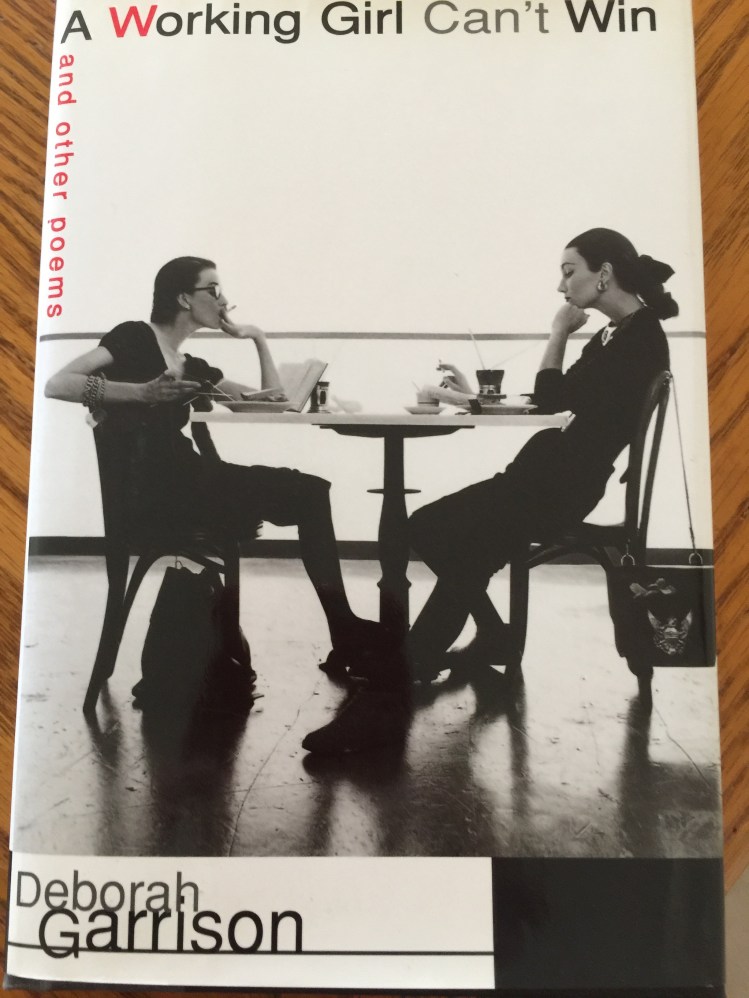
‘Worked Late on a Tuesday Night’ a poem by Deborah Garrison

Have you ever read a poem and realized that the poet has somehow snatched your body and experience, and transcribed both into a lyrical expression of your reality? There was a time, in the late 90s, working in New York, when the poetry of Deborah Garrison gave voice to those who believed you could have it all.

The Friday poem this week is ‘Worked Late on a Tuesday Night’, with Garrison’s words still relevant, even if Uber robs us of the experience of standing in the freezing rain trying to hail a cab.

Worked Late on a Tuesday Night

Again.
Midtown is blasted out and silent,
drained of the crowd and its doggy day.
I trample the scraps of deli lunches
some ate outdoors as they stared dumbly
or hooted at us career girls—the haggard
beauties, the vivid can-dos, open raincoats aflap
in the March wind as we crossed to and fro
in front of the Public Library.

Never thought you’d be one of them,
did you, little Lady?
Little Miss Phi Beta Kappa,
with your closetful of pleated
skirts, twenty-nine till death do us
part! Don’t you see?
The good schoolgirl turns thirty,
forty, singing the song of time management
all day long, lugging the briefcase

home. So at 10:00 PM
you’re standing here
with your hand in the air,
cold but too stubborn to reach
into your pocket for a glove, cursing
the freezing rain as though it were
your difficulty. It’s pathetic,
and nobody’s fault but
your own. Now

the tears,
down into the collar.
Cabs, cabs, but none for hire.
I haven’t had dinner; I’m not half
of what I meant to be.
Among other things, the mother
of three. Too tired, tonight,
to seduce the father.

Deborah Garrison   ‘A Working Girl Can’t Win: and other poems’ 1998

The year @work – equal pay, organization culture, Mark Zuckerberg’s books, the widening class divide, space exploration & Hamilton

Topics of work and the workplace often captured the headlines in 2015. And some of those headlines seemed to echo the 1970’s. As the economy improved, the wage gap between rich and poor increased. And we are still talking about equal pay for equal work.

One flashback was posted on the NPR website on January 2 in tribute to former New York governor, Mario Cuomo, who died on New Year’s Day. The post included the text and video of his speech to the Democratic National Convention in 1984, two years after the Equal Rights Amendment  failed to gain support from the 38 states required to pass.

“We speak for women who are indignant that this nation refuses to etch into its governmental commandments the simple rule “thou shalt not sin against equality,” a rule so simple —

I was going to say, and I perhaps dare not but I will. It’s a commandment so simple it can be spelled in three letters: E.R.A.”

Even though this year’s slate of Presidential candidates includes two women, the legacy of Cuomo’s passion is largely ignored.

Two stories in the past year served to visibly illustrate the continuing inequity.

In Hollywood, major studio, Sony was hacked, revealing, among other things, the disparity between the compensation of lead actress Jennifer Lawrence and her male co-stars. Madeline Berg covered the story for Forbes

“More frequent are anecdotes of discrimination like those recently related by Selma Hayek, Gwyneth Paltrow and even Streep.

All of these women have echoed the sentiment of Patricia Arquette, who brought the issue to the world’s attention at last year’s Oscars when she said in her acceptance speech for Best Supporting Actress, “It’s our time to have wage equality for once and for all.”

But it is not only the number on the paycheck that is the problem: Women are also greatly underrepresented on the big screen, leading to fewer opportunities to make money, an issue that Reese Witherspoon brought up at the American Cinematheque Awards in October: “Women make up 50% of the population, and we should be playing 50% of the roles on the screen.”

That is a dream that is far from a reality. According to a report by the Annenberg School at USC’s Media, Diversity & Social Change Initiative released in August, only 28.1% of characters in 2014’s top 100 films were female and of that percent, only 21 had a female lead or co-lead.”

The misrepresentation is even worse behind the camera: Of the same films, women made up only 1.9% of directors, 11.2% of writers and 18.9% of producers. This only aggravates the problem. The report found that in productions where women held key positions off-screen—as directors, writers and producers—the films featured women more often, and in less sexualized roles.”

We may find it hard to garner sympathy for those who earn millions @work for acting or competing in sport. But those are the visible workers who set the bar for the rest of us on the lower rungs of the career ladder.

The year in sport was dominated by the FIFA scandal, but women who work in sport created the memorable moments of the year. Christopher Clarey, summarizing the year in sport for women noted ‘Women Surge On Playing Field but Fall Behind in Boardroom’.

“As visible as female athletes were in 2015, women lost prominence and power in another key domain in the sports world: the boardroom.

Stacey Allaster, chief executive of the WTA Tour, stepped down citing burnout and the desire to spend more time with her young children. Debbie Jevans, a Briton who was perhaps Europe’s leading women’s sports executive, also cited personal reasons for resigning as chief executive of England Rugby 2015 less than six months before the start of the Rugby World Cup that she had been instrumental in organizing.

Another industry leader, Mary Wittenberg, who oversaw the New York City marathon as chief executive of New York Road Runners, resigned to lead a start-up lifestyle company, Virgin Sport.

Allaster, Jevans and Wittenberg were all replaced by men, and by year’s end there was no woman leading a major professional sport, not even one for women. Steve Simon is in charge of the WTA, Michael Whan is in charge of the L.P.G.A., Jeff Plush runs the National Women’s Soccer League in the United States and Mark Tatum oversees the W.N.B.A., the most prominent women’s professional basketball league, on an interim basis after Laurel J. Richie stepped down after five seasons in 2015.

Considering the scandals and governance crises that enveloped leading male-dominated federations like FIFA and the I.A.A.F. in 2015, more women in power looked very much like part of the solution. The men could clearly benefit from new perspectives.

“For me, the most important thing about diversity in a workplace is definitely making everyone feel included,” Wittenberg said. “But the diversity that comes from diversity of thinking is also invaluable, and if you don’t have diversity around your executive table or any table, I think you really run a risk today. Organizations, and especially political organizations that lack diversity in any number of ways, including gender — you’re not coming close to representing a world view. Leadership today should be challenged at every turn.”

The topic of work/life balance continues to dominate the water cooler conversations from Silicon Valley to Wall Street. And the conversation is at the heart of defining organizational culture.

In mid-August The New York Times published a story, ‘Inside Amazon: Wrestling Big Ideas in a Bruising Workplace’ with the following sub-heading: “The company is conducting an experiment in how far it can push
white-collar workers to get them to achieve its ever-expanding ambitions.” 

Definitely not a ‘puff piece’, but an important piece of journalism that ignited a dialog not only between the Amazon PR machine and the editors of The NY Times, but among workers in a variety of work settings about organizational values and personal tradeoffs. How an individual’s values mesh with those of their employer will determine ultimate success or failure. Who will you become? is a far more important question to ask than   What is the salary offer?

This was also the year that Mark Zuckerberg encouraged others to follow his example, and read a recommended book every two weeks. The final recommendation in  ‘A Year of Books’ was announced today, number 23, ‘The Beginning of Infinity’ by David Deutsch.

Richard Feloni compiled a list of the first 20 recommendations.

“Facebook CEO Mark Zuckerberg has made a tradition of dramatic New Year’s resolutions, and this year he decided that he’d read a book every two weeks.

He wanted his selections to focus on “different cultures, beliefs, histories, and technologies.”

“Books allow you to fully explore a topic and immerse yourself in a deeper way than most media today,” Zuckerberg wrote on his personal Facebook page. “I’m looking forward to shifting more of my media diet towards reading books.”

Hopefully, we have all met our resolutions from January and shifted our media diet to include some ‘long reads’ outside our comfort zone.

As the economy continued to improve, the gap between rich and poor widened. Claire Cain Miller examined the impact of differences in child rearing on growing class divisions.

“Children were not always raised so differently. The achievement gap between children from high- and low-income families is 30 percent to 40 percent larger among children born in 2001 than those born 25 years earlier, according to Mr. Reardon’s research.

People used to live near people of different income levels; neighborhoods are now more segregated by income. More than a quarter of children live in single-parent households — a historic high, according to Pew – and these children are three times as likely to live in poverty as those who live with married parents. Meanwhile, growing income inequality has coincided with the increasing importance of a college degree for earning a middle-class wage.”

And for awhile, a movie about space, not that one, the other one – ‘The Martian’, seemed to re-energize NASA’s plan to restart manned space exploration beyond the International Space Station.

Doug Bolton of The Independent reported on last week’s suspension of a proposed mission to the red planet.

“NASA has decided to suspend a mission to Mars scheduled for March 2016, due to the lander springing a leak.

The InSight Mission, which would have seen a rover analysing seismic activity and the interior structure of the red planet, was called off by Nasa bosses after technical staff failed to repair a leak in one of the rover’s prime instruments.

John Grunsfeld, the associate administrator for Nasa’s Science Mission Directorate in Washington, said: “We push the boundaries of space technology with our missions to enable science, but space exploration is unforgiving, and the bottom line is that we’re not ready to launch in the 2016 window.”

Which leaves our space efforts to two remarkable American entrepreneurs, Elon Musk and Jeff Bezos. In May, Jessica Orwig expressed optimism in the future of private space exploration.

“This year is shaping up to be an extremely exciting time for the future of commercial spaceflight, which will be built upon the backbone of revolutionary 21st-century rockets. The private American space companies Blue Origin and SpaceX are paving the way.

Blue Origin, which was founded by Amazon CEO Jeff Bezos in 2000, successfully launched its “New Shepard” space vehicle for the first time on April 29. The vehicle was named after Alan Shepard, who became the second human and first American to enter space 44 years ago. It is designed to eventually boost six people to space, where they can experience weightlessness for 10 minutes before returning to Earth. The ride is for entertainment and therefore not exclusively for astronauts, but these kinds of temporary spaceflights could become a new way for astronauts to train for coming space missions.

Two weeks earlier, on April 14, Elon Musk’s SpaceX, founded in 2002, attempted to land one of its Falcon 9 rockets on a floating platform in the Atlantic Ocean. SpaceX’s Falcon 9 rockets are designed to boost spacecraft to greater heights than Blue Origin’s and are therefore involved in other missions outside of commercial spaceflight, including supplying the International Space Station, launching satellites into orbit, and aspirations to reach Mars.”

On December 22, NBC News reported “SpaceX completed an historic vertical landing of its Falcon 9 rocket on Monday night — the first time such a feat had been achieved.

The launch and landing in Cape Canaveral, Florida, were the first from the private U.S. spaceflight company since its rocket exploded on liftoff in June.

SpaceX has come close to landing a rocket but until now, never actually pulled the feat off. Blue Origin, founded by Amazon CEO Jeff Bezos, stuck a landing last month — but Musk pointed out that was a suborbital trip, the requirements for which are considerably different.”

And then there was ‘Hamilton’ the musical. Just as the founding father was about to be replaced on the U.S. ten dollar bill, his story took center stage this summer on Broadway. In a 2015 recap article, ‘Surprises from 2015 and Reasons for Hope’, Gina Bellafante examined the ‘Hamilton effect’ on five year olds.

“As if it weren’t surprise enough that a hip-hop musical about the life of the country’s first Treasury secretary would become a Broadway sensation, finding impassioned fans in both President Obama and Dick Cheney, “Hamilton” has found an unlikely cohort of obsessives among 5-year-olds in New York, thanks to the cast album and scenes available on YouTube. At least one kindergartner in Brooklyn is regularly going to school with white socks pulled up over his pants. Some children are demanding quill pens, and many are singing the songs at home over and over and over.

“This is the new ‘Frozen,’” one already fatigued mother observed. Expect heated arguments about the limitations of Federalism among first graders next year.”


The week@work – Mark Zuckerberg’s parental leave, Ruth Bader Ginsburg and Gloria Steinem have lunch, and 29 words to avoid in an interview

The stories selected from this week@work include Mark Zuckerberg’s decision to take two months of parental leave, a conversation between Supreme Court Justice Ruth Bader Ginsburg and Gloria Steinem, and advice on words to avoid in an interview.

Mark Zuckerberg’s choice to ‘lead by example’ and step away from work to care for family may signal to Facebook employees and other CEOs that the world is finally changing for dual career parents.

Covering the story for Wired, journalist Julia Greenberg wrote:

“Zuckerberg is perhaps the most prominent chief executive of a major public tech company to take this much time off following the birth of his child. That’s important, because executives set the tone for a company (and, in some ways, the country) when it comes to balancing work and family.

Like some other major tech companies, Facebook already offers new parents a parental leave plan considered very generous by US standards. New parents at Facebook can take four paid months off. They receive benefits such as $4,000 for each child born or adopted. As we’ve written before, however, employees may feel reluctant to take advantage of such plans if their companies don’t have a culture that encourages taking time off. And company culture typically comes from the top.

 Let’s hope more companies will offer new parents more leave, and that dads will be able to follow his lead.”

One of the highlights of The New York Times Sunday Style section is the ‘Table for Three’ feature. This past week, Philip Galanes shared the conversation between Supreme Court Justice Ruth Bader Ginsburg and Gloria Steinem.

I recommend reading the complete interview, if for no other reason than to provide a historical context for the current conversation on gender discrimination in the workplace. Here is a short excerpt.

PG: One of the cleverest things you did as a litigator was demonstrate how rigid gender roles harm men as much as women.

RBG: There was an interesting case this court decided in the first year Justice O’Connor was on the bench, about a man who wanted to go to the best nursing school in his area, but it was women-only. You could read between the lines what she understood: There was no better way to raise pay for women in nursing than to get men to do it.

GS: Equal pay for women would be the biggest economic stimulus this country could ever have. Big-time profits are being made from gender roles as they exist. It would also be win-win because female-headed households are where children are most likely to be poor.

PG: Last subject: You are both bridge builders. Justice Ginsburg on the court; and Gloria, with a sea of men and women over the years. Any advice for getting along with people who disagree with us to the core — like Justice Scalia?

RBG: Last night, my daughter and I got a prize from a women’s intellectual property group, and Nino [Scalia] was in the video, saying his nice things about me. He’s a very funny man. We both love opera. And we care about writing. His style is spicy, but we care about how we say it.

GS: I think Ruth is better at getting along with people with whom we profoundly disagree. I feel invisible in their presence because I’m being treated as invisible. But what we want in the future will only happen if we do it every day. So, kindness matters enormously. And empathy. Finding some point of connection.

Moving to the job search, Jacquelyn Smith writing for Business Insider provides us with a list of ’29 words you should never say in a job interview’. Drawing on tips from Michael Kerr, here’s a sample:

“‘Money,’ ‘salary,’ ‘pay,’ ‘compensation,’ etc.  Never discuss salary in the early stages of the interview process, Kerr says. “Focusing on the salary can raise a red flag with potential employers that you are only there for the money and not for any deeper reasons,” he says. “More and more, employers are looking for people who align with their mission and values.”Negotiations can and should be done after — or at the end of — the interview phase.

‘Weaknesses’ or ‘mistakes’   Never voluntarily talk about your weaknesses unless they ask you with the standard interview question, ‘What’s your biggest weakness?'” says Kerr. And don’t bring up mistakes you’ve made at work, unless you’re talking about them to show how you’ve made significant improvements.”

Two other articles of interest were published on the Fast Company site this week:

‘Where Google, Apple and Amazon employees want to work next’Lydia Dishman

‘The World’s Five Biggest Employers Aren’t Who You Think’Charlie Sorrel

One more thing…

This past summer I celebrated July 4th in Brussels. It’s one of my most favorite cities in the world. The people I met in shops and restaurants are in my thoughts this weekend. Be safe.

Restarting the global conversation about women

Sixty-two million girls across the globe are not attending school today. Sixty-two million dreams will never be realized. Those who advocate for access to schooling do so at a significant risk to themselves and their families. It’s not just about education, but values, attitudes and beliefs.

Last weekend the movie ‘Suffragette’ was released in theaters in the U.S. It’s a fictionalized story of the fight for women’s right to vote in Great Britain in the years between 1911 and 1913.

In a ‘CBS This Morning’ interview, actress Carey Mulligan discussed her role and how little she knew of the historical facts, prior to filming, with co-anchor Nora O’Donnell.

“I knew a sort of really basic school version which is a little paragraph in our history book saying, you know, ‘Women got the vote eventually,”‘ Mulligan said, laughing. “Somehow. It was a couple of lines and, you know, lots of images of women with flowers looking very peaceful.”

“I left school and I voted because my parents voted. But I didn’t really understand the weight of what I had with my vote,” she said.

This past Tuesday was election day and I was tempted to opt out, thinking there were no major initiatives on the ballot. But then I remembered the Carey Mulligan interview and the history of women who sacrificed so much so that I could have the opportunity to vote.

Along with suffrage, women have a right to education. The absence of one or both, excludes women from the global conversation.

On Wednesday First Lady Michele Obama addressed the World Innovation Summit for Education in Doha, Qatar and introduced her initiative, ‘Let Girls Learn’.

“If we truly want to get girls into our classrooms, then we need to have an honest conversation about how we view and treat women in our societies,” she told an international education conference. “And this conversation needs to happen in every country on this planet, including my own.”

“I don’t think it’s an accident” that girls who want to attend secondary school are threatened. When girls are young, she said, “they are often seen simply as children. But when they hit adolescence and they start to develop into women and are suddenly subject to all of their society’s biases around gender, that is precisely when they start to fall behind in their education.”

“It’s about whether parents think their daughters are as worthy of an education as their sons. It’s about whether our societies cling to outdated laws and traditions that oppress and exclude women, or whether their views of women are as full citizens entitled to equal rights.”

I live in a country that failed to pass an equal rights amendment for women in the seventies. The amendment was written in 1923 by Alice Paul, a suffragist leader, after U.S. women won the right to vote in 1920.

“The ERA was introduced into every Congress between 1923 and 1972, when it was passed and sent to the states for ratification. The original seven-year time limit in the ERA’s proposing clause was extended by Congress to June 30, 1982, but at that deadline, the ERA had been ratified by 35 states, three states short of the 38 required to put it into the Constitution.”

It’s time to restart the global conversation about women. Let’s begin at home and honor the suffragettes of the early 20th century, and the global heroines of the 21st.

The week@work – College choice & future earnings, friends@work, ‘ambition’ and a networking mindset

This week@work we learned that future earnings @work is affected by where you attended college. In the workplace, it’s not so easy to make friends@work, ‘ambition’ can be an insult and a networking mindset is about authenticity and generosity.

The New York Times contributor Kevin Carey reported on ‘Gaps in Earnings Stand Out in Release of College Data’. Analyzing the data from the federal government’s ‘College Scorecard’ he found not only a disparity in earnings between elite college grads and second tier universities, but also a gender gap in earnings among alumni of those elite colleges.

“The data reveals how much money students are borrowing in exchange for earnings after graduation. While U.C.L.A. and Penn State are both prestigious public research universities, recent U.C.L.A. grads leave with about 30 percent less debt, even as their predecessors are earning about 30 percent more money than counterparts at Penn State. Harvard students borrow barely a quarter of what Brandeis students take on, and earn nearly twice as much.

The return is unequal in other ways. There is an earnings gender gap at every top university. The size of the difference varies a great deal. At Duke, for example, women earned $93,100 per year on average, compared with $123,000 for men, a difference of $29,900. At Princeton, men earned more and women earned less, for a difference of $47,700. Women who enrolled at Cornell earned more than women who enrolled at Yale.”

Let’s imagine you have landed a great job, what are your expectations of the workplace? Do you want to socialize with colleagues?

University of Pennsylvania professor Adam Grant asked the question, ‘can work colleagues be friends?’

“Once, work was a major source of friendships. We took our families to company picnics and invited our colleagues over for dinner. Now, work is a more transactional place. We go to the office to be efficient, not to form bonds. We have plenty of productive conversations but fewer meaningful relationships. 

It’s not that Americans are less concerned with relationships overall. We’re social creatures outside work, yet the office interaction norm tends to be polite but impersonal. Some people think pleasantries have no place in professional meetings.

Why are Americans so determined to get down to business?

The economic explanation is that long-term employment has essentially vanished: Instead of spending our careers at one organization, we expect to jump ship every few years. Since we don’t plan to stick around, we don’t invest in the same way. We view co-workers as transitory ties, greeting them with arms-length civility while reserving real camaraderie for outside work.

Some observers blame the rise of flextime and virtual work. When more people are working remotely, we have fewer chances for the face-to-face encounters that are so critical to companionship. But a comprehensive analysis of 46 studies of over 12,000 employees demonstrated that as long as people were in the office for at least two and a half days per week, “telecommuting had no generally detrimental effects on the quality of workplace relationships.”

If you don’t build relationships @work, how will you navigate the corporate culture? How will you understand how to motivate a diverse workforce? How will you learn that the word ‘ambition’ is one of those code words with different meaning for men and women?

Kristin van Ogtrop, editor of Real Simple magazine reported on the results of a poll conducted by Real Simple and Time magazine exploring how men and women define success and ambition.

“When it comes to success in corporate America, context trumps competence. Lisa Shalett, now the chief marketing officer of The Odyssey, a social content platform, recently concluded a 20-year career at Goldman Sachs with both a highly sought-after partner title and the wisdom of experience regarding what women must do to thrive in a male environment. “Ambition,” says Shalett, “needs care and feeding, having the kind of informal relationships where you understand ‘How do I navigate this path, what do I need to know, how can I get there?’ Men tend to be ambitious for things, for positions, for titles, for results. Women tend to be ambitious to be recognized for performance, to be valued, to be included, and maybe expect that good things will come from that.”

“Barnard president Debora Spar believes entrepreneurial has replaced ambitious for a new generation. “I don’t think anyone has ever come in my office and said, ‘I’m ambitious.’ Everyone I know is ‘entrepreneurial.’” And now a number of ambitious women are simply channeling their dissatisfaction with traditional corporate life into fast-growing new businesses.”

The key to building and sustaining relationships in the workplace is networking. Our attempts to reach out may fail and it may be because we are a bit too focused on our side of the equation.

CEO and co-founder of Alumnify, AJ Agrawal shared his thoughts on ‘How to Develop a Networking Mindset’.

“Over and over again, we hear about the importance of having connections to get ahead in business and in life. “It’s not what you know, it’s who know” as the famous saying goes. While people repeat this all the time, it questions the meaning behind relationships. Do we make connections because we like the person’s work and ideals, or because we think they can help us?

To build a strong network, as (Sar) Haribhakti puts it, your mindset should be focused on initiating relationships with authenticity and generosity. People always tend to capitalize on what they think the other person might be offer them for achieving their personal goals, growing their businesses, or get an introduction to an influential person. He thinks what most people fail to realize is that every human has an innate desire of being appreciated and valued.”

One additional article of interest on the topic of professional development:

‘Teaching Tech Skills to Millions, And Fast’ – on-line degree provider,Udacity partnered with technology companies to create online courses geared toward teaching a set of discrete, highly prized technical skills — including mobile programming, data analysis and web development. Students who complete these courses are awarded the nanodegree, a credential that Udacity has worked with Google, AT&T and other companies to turn into a new form of workplace certification.”

Marissa Mayer – Tag Team Parent?

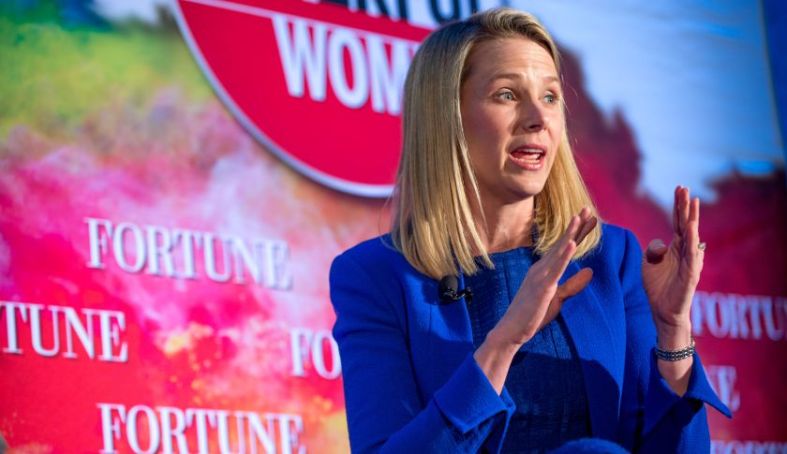
On Tuesday, Yahoo CEO Marissa Mayer announced via Tumblr that she is expecting twin girls. On the same day New York Magazine writer, Oz Spies described her life, as a mother of three, as a ‘tag-team parent’. These two distinct narratives provide a vivid illustration of how folks cope with balancing work and life in a world of income inequality.

Ms. Mayer became one of the highest profile working mothers three years ago, not long after her appointment as head of the global internet service. A 2013 profile in Vogue described her strategy to balance work and child care.

“She set up a nursery next to her office, and for several months after Macallister was born, he and his nanny came to work with her.”

In her announcement this week, she implied she would utilize a similar approach with the birth of the twins.

“Since my pregnancy has been healthy and uncomplicated and since this is a unique time in Yahoo’s transformation, I plan to approach the pregnancy and delivery as I did with my son three years ago, taking limited time away and working throughout. I’ve shared the news and my plans with Yahoo’s Board of Directors and my executive team, and they are incredibly supportive and happy for me. I want to thank them for all of their encouragement as well as their offers of help and continued support.”

What is the message to the employees at Yahoo who might be planning family leave when the CEO opts out?

Writers Claire Cain Miller and David Streitfeld explored the issue in their NYT article, ‘Big Leaps for Parental Leave, if Workers Actually Take It’.

“Such contradictory signaling from Yahoo, which lengthened its parental leave in 2013, is typical and ambiguous, said Joan Williams, director of the Center for WorkLife Law at the University of California, Hastings. “The underlying work culture sends the message that if you’re really committed, you’re here all the time,” she said.”

On the other side of the spectrum, meet a Colorado couple, parents of three. One is a firefighter and the other a writer and consultant in the non-profit sector.

“We’re tag-team parents. It’s a term coined by the Center for Economic and Policy Research for parents who work alternating schedules, taking turns at both paid employment and child care, and it’s a work-parenting setup that’s on the rise. More than one-fourth of two-income couples include an adult working a nonstandard schedule (other than nine to five with evening or weekend hours).

Shift work is nothing new, but traditionally, many men who worked overnight, including firefighters, had wives who were stay-at-home moms. Now, more of these couples trade off work and kid duties. On my husband’s crew (all married fathers), the wives are all in the workforce, most of us fitting that work in around our husbands’ 48-hour shift blocks and our children’s school schedules. As a nonprofit consultant and writer, my job often gets done from a computer in our basement late at night, and I fit in the rest on the days when my husband is home with the kids. It’s yet another way that families today don’t look like the breadwinner father and stay-at-home mother ones of the past.”

While the media focuses on the birth announcements of business rockstars, it ignores the larger issue facing middle class families today. The average parent cannot bring their child and nanny to work. The cost of child care for two or more children exceeds the additional revenue of most second incomes. In the majority of families there is only one solution, alternating schedules with frequent handoffs of toddlers in parking lots when the best plans fail and shifts overlap.

This is our new American dream.

“Single parents, deployed parents, grandparents who are raising the children of their children — there are all kinds of complexities with which to wrestle. We figure it out as we go and we keep going.”

For the majority, including Oz Spies and her family this is the new normal.

“For us, tag-team parenting is the best way to see the kids we adore, do work we love, and still pay the bills. We’ll never have a standing Friday date night or every weekend together, but all this tag-team parenting has made us appreciate that we’re a team.”

Maybe Marissa Mayer’s strategy for blending family and work is a version of ‘tag team parenting’. It’s just hard to visualize a pre-dawn Silicon Valley McDonalds parking lot where a CEO and venture capitalist husband exchange toddlers, diaper bags and car seats.

Why has it been so hard to shatter the glass ceiling?

Forbes Magazine’s most powerful woman, German Chancellor Angela Merkel was caught in conversation with President Obama yesterday at the G7 Summit. She was not, as the media suggested, auditioning for the lead role in the Sound of Music.

The G7 leaders are dealing with serious economic and political issues that will eventually trickle down to effect us all. But the media focus was on a photograph and a caricature that diminished the accomplishments of the German leader.

The Washington Post headlined “A remarkable photo of President Obama and Angela Merkel” and continued:

“The backdrop to the 41st G7 Summit held in Germany is breathtaking, with its green trees and towering mountains. It makes for great image of German Chancellor Angela Merkel talking and gesturing with a seated President Obama.

It’s made all the better with Merkel’s shruggie pose ¯\_(ツ)_/¯, which also just so happens to look like that one scene from “The Sound of Music.”

Really? Is this journalism? Here is a woman whose leadership skills have kept the European Union together, maintained a dialog with the Russian president in a difficult political climate and has transformed her country since her election in 2005.

And, American journalists covering the summit have likened the German Chancellor to a singing nun.

Bryce Covert, writing in The New York Times on Friday, chronicled “our problem with powerful women”. She described Hillary Clinton being “optimistic about the path of progress toward gender equality. She called the presidency the “highest, hardest glass ceiling.” But she also said that it had “about 18 million cracks in it, and the light is shining through like never before, filling us all with the hope and the sure knowledge that the path will be a little easier next time.”

In reality, Ms. Covert’s research shows, “Too few women make it into corporate leadership.”

“Progress is not inevitable, though, nor is it fixed. The country has a complicated relationship with powerful women: They have to keep proving themselves over and over again, being twice as good, and dragging one woman through the process doesn’t make it easier for those who follow.

Individual women might hope that their struggles blaze trails for everyone else. Mrs. Clinton must feel optimistic about her chances to win the presidency a second time around. But the reality is that the country hasn’t gotten used to women in charge. A crack in the glass ceiling in one place could very well just reinforce it for everyone else.”

Maybe it was Angela Merkel’s crack in the glass ceiling that has made it so hard for Mrs. Clinton. I might also suggest to the female journalists who enthusiastically broadcast ‘the sound of music photo’ on air last night, you’re not helping. You’re like the Safelight Auto Glass repair guy, making sure you seal up all those cracks and fortify glass ceiling.

Take another look at the photo. I think Chancellor Merkel is asking President Obama, “What’s wrong with you people? What is your problem with powerful women leaders?”