‘The little blue dress’ – Christian Siriano finds success in ‘designing’ a career of inclusion

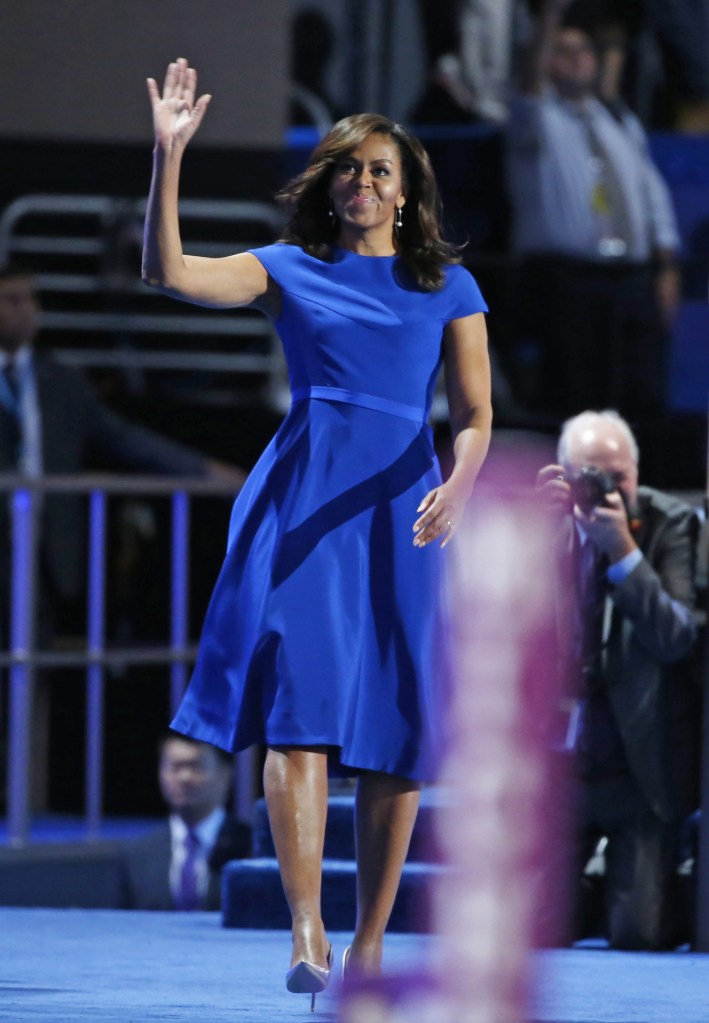
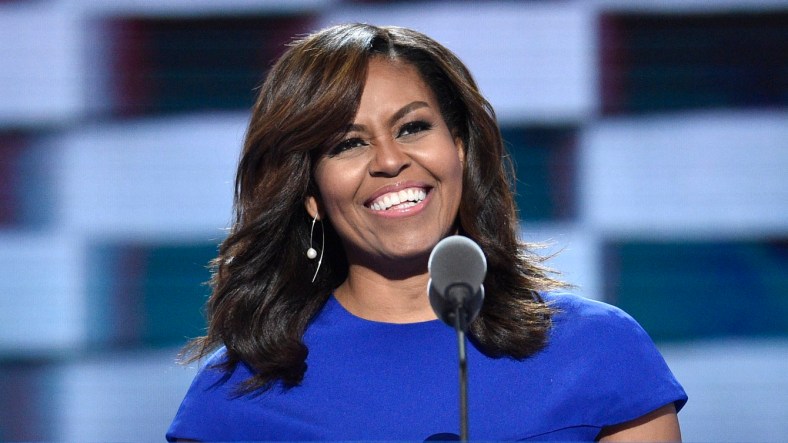
Clothes make the woman. Forget the ‘little black dress’. Last night at the Democratic National Convention, designer Christian Siriano created a new fashion statement in his dress for First Lady Michelle Obama – the ‘little blue dress’.

Mr. Siriano, winner of season four of Project Runway, has become the ‘go to’ wizard of real women’s clothing design.

On June 28  ‘Ghostbusters’ actress and Saturday Night Live cast member, Leslie Jones tweeted“It’s so funny how there are no designers wanting to help me with a premiere dress for movie. Hmmm that will change and I remember everything.”

Mr. Soriano responded within an hour “@Lesdoggg ✋🏼👋🏼”

In a follow-up tweet he expressed his long held work values.

“It shouldn’t be exceptional to work with brilliant people just because they’re not sample size. Congrats aren’t in order, a change is.”

One could guess it’s this attitude of inclusion that put him on the First Lady’s radar.

The New York Times ‘On the Runway’ columnist, Vanessa Friedman noted the link.

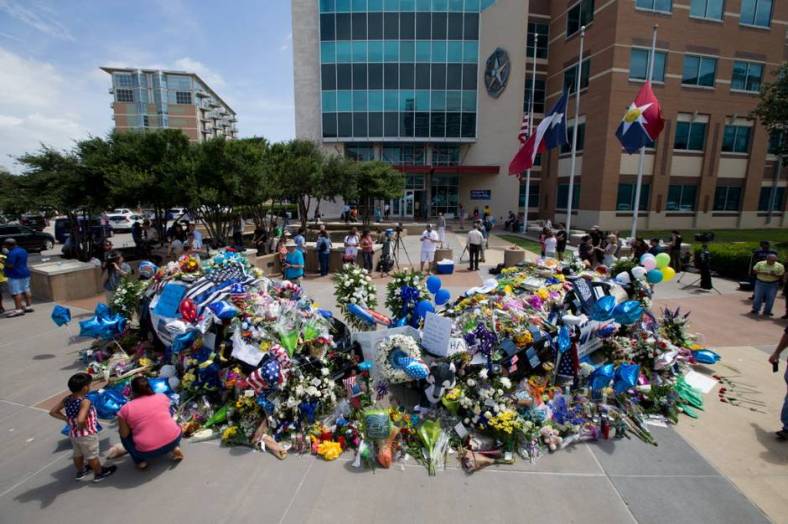
“Lest you think Mrs. Obama’s wardrobe choice was just happenstance, however, know that the convention appearance was only the second time she has worn Mr. Siriano; the first time was this month, at the funeral for the police officers killed in Dallas.

Throughout her time in the White House, the first lady has made something of a secondary cause out of supporting new, independent American designers, and choosing her clothes not only because she likes them but because their back story has a certain resonance that goes beyond the aesthetic. Monday night was no different. Fashion is not known for its embrace of togetherness (more for its exclusion). But Mr. Siriano is.

Think that’s just a coincidence?”

michele obama

We make an impression with how we dress. For those in the public eye, where you are one wardrobe malfunction away from a twitter storm, what you wear communicates who you are.

For the rest of us, not a size 2, figuring out what to wear to work is more than dress selection, it’s choosing the ‘costume of the day’ that will enhance our confidence and  communicate our individuality and work ethic.

You never know who may be paying attention.

I look forward to following Mr. Soriano’s career and hope others will follow his leadership to create contemporary fashion for today’s diverse workplace reality.


Photo credit: Mrs. Obama – Reuters


The week@work – heat dome, plagiarism, ‘Pokemon Go’, Yahoo, life/work coaches, and classical music

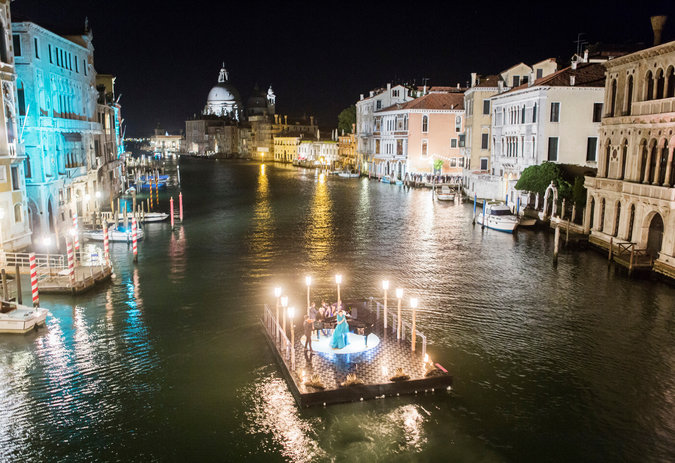
This week@work was hot, with a meteorological ‘heat dome’ encasing most of the continental United States. When I saw the photo above in The New York Times on Wednesday, I just wanted to be transported to a barge in Venice where the cast of Amazon’s ‘Mozart in the Jungle’ were filming. (Enjoy the view from Gianni Cipriano for The New York Times)

In other stories this week, the Republican Party chose their candidate for president and initiated a valuable conversation about plagiarism. The ‘Pokemon Go’ app provided a much needed diversion as thousands engaged in this new high tech sport of creature collection. Vindu Goel took a stroll down memory lane to a time when Yahoo reigned over Silicon Valley. Life/work coaches are the new workplace perk, and classical musicians are returning to the small screen.

ap_16204054986884-c933b07c211cf5f4ee5010ad00bc31a208284ae1-s1400-c85.jpg

No that is not a photo of Zeus expressing displeasure with politicians in Cleveland. It’s Port Washington, Wisconsin photographed by AP photographer Jeffrey Phelps.

Rebecca Herscher reported on the weather for NPR.

“A heat dome occurs when high pressure in the upper atmosphere acts as a lid, preventing hot air from escaping. The air is forced to sink back to the surface, warming even further on the way. This phenomenon will result in dangerously hot temperatures that will envelop the nation throughout the week.”

NASA reported on Tuesday that ‘2016 Climate Trends Continue to Break Records’.

“Each of the first six months of 2016 set a record as the warmest respective month globally in the modern temperature record, which dates to 1880, according to scientists at NASA’s Goddard Institute for Space Studies (GISS) in New York. The six-month period from January to June was also the planet’s warmest half-year on record, with an average temperature 1.3 degrees Celsius (2.4 degrees Fahrenheit) warmer than the late nineteenth century.”

We are hot. We are busy. We live in a time of ‘short-cuts’. Workplace deadlines force creativity into ‘cut and paste’ document creation. Original thought becomes a casualty of increased workload. Sometimes we forget to give credit to other’s ideas and find ourselves on the slippery slope of plagiarism.

Last week the Republican National Convention became the unexpected catalyst for a discussion of this topic, an essential component of every college new student orientation program.
IMG_5066.jpg

Writing on huffingtonpost.com, Karen Topham offered ‘An English Teacher’s View Of The Trump Plagiarism Issue’.

“Plagiarism is any unattributed content. It’s kind of like pregnancy: you can’t plagiarize just a little because even a little is plagiarism.

I had my last case of plagiarism late last winter. A girl was under the gun and copied an essay from the internet. I explained to her (as I’d done so often before) that she was probably lucky in the long run that I had caught her. Anyone who gets away with this stuff is likely to try it again. In high school, it’s a zero and maybe a chance to do it over. But in most colleges, it’s a violation of academic honesty that can get you expelled. And this is my point: we hold college students to this very high standard.”

You have been warned.

On the lighter side, David Streitfeld gave a first person account of ‘Chasing Pokemon In Search of Reality In a Game’: downloading the app, setting out to capture a few creatures, and meeting fellow gamers along the way.

hero-970-80

“In this season of random assassinations and political uproar, who could resist the temptation to supplement a high-strung and frightening reality with some gentle make-believe?

Fifty years ago, the F.B.I., worried that the youth of America might foment revolution, would infiltrate San Francisco demonstrations. Now the tech companies are doing the monitoring, wondering if games like Pokémon represent a threat that must be neutralized or an opportunity to be exploited. That’s progress for you.”

In other Silicon Valley News, Wall Street Journal reporters Ryan Knutson and Deepa Seetharaman confirmed the Verizon acquisition of Yahoo.

Unknown.jpeg

“Verizon Communications Inc. has agreed to pay $4.8 billion to acquire Yahoo Inc., according to a person familiar with the matter, ending a drawn-out auction process for the beleaguered internet company.

The price tag, which includes Yahoo’s core internet business and some real estate, is a remarkable fall for the Silicon Valley web pioneer that once had a market capitalization of more than $125 billion at the height of the dot-com boom.

For New York-based Verizon, the deal simply adds another piece to the digital media and advertising business it is trying to build.

The deal is expected to be announced early Monday. The news was earlier reported by Recode and Bloomberg.”

In an article earlier in the week, Vindu Goel revisited a time ‘When Yahoo Ruled the Valley’.

“Back in the mid-1990s, before Google even existed, the world’s best guides to the internet sat in Silicon Valley cubicles, visiting websites and carefully categorizing them by hand.

They were called surfers, and they were a collection of mostly 20-somethings — including a yoga lover, an ex-banker, a divinity student, a recent college grad from Ohio hungry for adventure — all hired by a start-up called Yahoo to build a directory of the world’s most interesting websites.

Today, with more than one billion websites across the globe, the very notion seems mad. Even then, there was a hint of insanity about the enterprise.”

Two additional articles of interest from the week@work cover a new benefit for employees transitioning back to work after a leave and a TV series providing classical music performers with visibility not seen since the days of Ed Sullivan.

‘A New Perk For Parents: Life-Work Coaches’ by Tara Siegel Bernard

“At a time when new parents may find themselves overwhelmed — even sobbing late at night as they deal with their new at-home responsibilities while trying to hold down a full-time job — a growing number of companies are making efforts to soften the blow. They are providing employees with coaching sessions, either in person, over the phone or through small group sessions that may be broadcast over the web. The services are often available to new fathers, too.”

‘Classical Stars Seek TV’s Elusive Spotlight’ by Michael Cooper

“It was after midnight on the Grand Canal here, and Plácido Domingo was standing on a floating stage slowly motoring toward the Accademia Bridge, singing the opening lines of a duet from “Don Giovanni.”

With this operatically over-the-top spectacle last week — which drew squeals and flurries of smartphone photos as people passed on a vaporetto, or water bus — Mr. Domingo became the latest classical star to shoot a cameo for “Mozart in the Jungle,” the Amazon comedy about a fictional New York orchestra.

Paul Weitz, who was directing the episode with Mr. Domingo and is an executive producer of the show with Roman Coppola and Mr. Schwartzman, said that the possibility of reaching those viewers was especially enticing to the musicians who have appeared.

“Obviously, it’s a huge issue, and it’s something that is dealt with in the show a lot, about whether classical music is going to be passed on to a new generation,” Mr. Weitz said between shots in his director’s chair. “And all these artists, the reasons that they’re doing this show is because they feel like it’s good for that aspect of the art — that it can bring the music to different people. And anecdotally, I think that’s actually the case.”

Stay cool this week@work with a favorite piece of classical music.


The Saturday Read -‘How to Be an Explorer of the World: Portable Life Museum’ by Keri Smith

This is the first ‘Saturday Read’ that comes with a warning.

“! Warning to whomever has just picked up this book. If you find you are unable to use your imagination, you should put this book back immediately. It is not for you. In this book you will be repeatedly asked to…suspend your disbelief, complete tasks that make you feel a bit strange, look at the world in ways that make you think differently, conduct experiments on a regular basis, and see inanimate objects as alive.” 

If you need to improve your CQ (curiosity quotient), this week’s selection from author, illustrator and guerrilla artist, Keri Smith‘How to Be an Explorer of the World: Portable Life Museum’ is for you.

Author Smith invites the reader on a journey of discovery, loosely following a 13 point guide, which includes a “fieldwork section in the back of the book to record and discover findings.”

“You might want to think of this book as you metaphorical suitcase. A place to collect and document your findings. How do you see? It is also a museum. Your very own museum that will contain your unique vision of the world.”

After a couple of incredibly depressing weeks of global events, I was browsing the selection at Main Street Books in ‘downtown’ Davidson, North Carolina last weekend, when this book cover demanded I stop, open, and return to the wonder of our world; starting right where we sit. I was ready to pack my “metaphorical suitcase” and explore an alternate reality.

Here’s the other warning that should come with this book. ‘May be habit-forming.’

On page 13 ‘your mission’, if you choose to accept, is explained.

“The following pages include a variety of prompts and assignments that will help you on your travels. There is also a section on tools and techniques that will help you with documenting methods. You may use the worksheets included or create your own. Remember, all of your most important tools exist in your body! Use them. Collect as much data as you can – it may come in handing later on. Good luck on your journey.”

How to be an explorer? “Always be looking. Everything is interesting. Notice patterns, make connections. Use all of the senses in your investigations.” (and more)

Here’s an example, from the page I opened to first. “Exploration#7 World of Color”

“Collect paint chips from a paint or hardware store. Find colors you respond to in the world. Attempt to match them using the chips. ( You can also match the colors using a portable paint set.) Make notes of where you saw the colors. (Example: color #573 four leaf clover – My scarf, color #308 golden vista – Sunset 01/09/08)

Alternate: document colors from your favorite books, your dreams, your memories.”

There are 59 explorations that tease your inner Picasso or Shackleton, the last being “How to Wander Aimlessly”. This is a book for those of you on vacation, who missed the point of your break :“freedom or release from duty, business, or activity.”

How do you wander aimlessly? “Pay attention to the details. Lose all sense of time and place.” Reinhabit you inner four year old.

This book will plaster a smile on the crankiest visage.

In a month when the release of Pokemon Go has launched thousands of new adventures, ‘How to Be an Explorer of the World’ will reconnect you with a simpler time when all you needed for entertainment was a big box and an imagination to occupy yourself for hours.


‘In the Planetarium’ a poem by James Doyle

In the past couple of days we marked two events in the history of U.S. space exploration: man’s first walk on the moon and the end of the space shuttle program.

Pulitzer Prize winning journalist John Noble Wilford recalled his coverage of the moon landing for the New York Times from NASA’s Johnson Space Center.

“July 20,1969 — a date that lives in my memory as the great divide, the B.C. to A.D., in my journalism career. It was the day of the first walk on the moon by humans, Neil Armstrong and Buzz Aldrin, and I covered the event for The Times from mission control in Houston.

I began my front-page article with a sentence as simple as it was astonishing:

Men have landed and walked on the moon.

Two Americans, astronauts of Apollo 11, steered their fragile four-legged lunar module safely and smoothly to the historic landing yesterday at 4:17:40 P.M., Eastern daylight time.

Neil A. Armstrong, the 38-year-old civilian commander, radioed to earth and the mission control room here:

“Houston, Tranquility Base here. The Eagle has landed.”

On July 21, 2011 the space shuttle Atlantis landed on runway 15 at the Kennedy Space Center in Florida ending the 135th mission and 30 years of the U.S. Space Shuttle program. Today visitors can tour an exhibit at the site in Florida “displayed as only spacewalking astronauts have seen her before — rotated 43.21 degrees with payload doors open and its Canadarm (robotic arm) extended, as it has just undocked from the International Space Station.” 

Astronauts still travel into space. As I write this, the 60th woman to fly in space, Kate Rubins, orbits among the stars above us.

I wonder if this Friday’s poem was written for her by a friend who accompanied her on a school field trip to the Planetarium.

In the Planetarium

I read the palms of the other
kids on the field trip to see
which ones would grow up

to be astronauts. The lifeline
on Betty Lou’s beautiful hand
ended the day after tomorrow,

so I told her how the rest
of our lives is vastly over-rated,
even in neighboring galaxies.

When she asked me how I knew
so much, I said I watched
War of the Worlds six times

and, if she went with me to
the double-feature tomorrow,
I’d finish explaining the universe.

I smiled winningly. The Halley’s Comet
lecture by our teacher whooshed in
my one ear and out the other.

James Doyle   ‘The Long View Just Keeps Treading Water’, Accents Publishing, 2012

(Photo Scott Kelly #YearInSpace “Looking out to the Milky Way”)

“Dignify the outsider” & other lessons from Carolyn See

When we talk about mentors, we often confine ourselves within the walls of our chosen profession. Carolyn See, professor and writer, was also a ‘world class’ mentor to those who were ‘outsiders’ to the world of New York publishing, the purveyors of taste in American storytelling.

I met Carolyn after a panel at the 2003 Los Angeles Times Festival of Books, when she was signing copies of ‘Making a Literary Life: Advice for Writers and Other Dreamers’. We had a brief conversation and I followed up with an email a few days later to thank her for taking the time to chat. Her response was immediate, gracious and filled with humor.

At the time I was not a writer, but a ‘dreamer’, considering a literary life, while pursuing a passion working with college students. Carolyn encouraged me to explore the writing life, and taught me what it truly means to be a mentor.

Carolyn died last week in Santa Monica, California. Many of her students and friends have shared their memories in published obituaries and tweets. In all there is the common thread of the ‘insider’ welcoming the ‘outsider’.

“…I believe, with a patriotic sincerity that would make a Legionnaire blush, that American literature is owned by everybody in America and that world lit is owned by everyone in the world and that we all get to have a say in it, not just a comparatively few men and women in the Northeast, no matter how decent and talented they may be.”

LA Times columnist, former book critic and writer, David Ulin described his relationship with Carolyn in 2014.

“Carolyn taught me how to be a writer in California. For her, that meant a three-dimensional literary life: writing, teaching and reviewing, all of them inextricable from the whole. As a critic, I have tried to follow her model that reviews should be part of an ongoing conversation with one’s readers, and should explicate something essential — not only whether or not we like a book, but also how it connects to, or reflects, our aesthetics, our world view. Carolyn has always regarded reading as an act of engagement . . . and reviewing, too.”

What is a mentor? What can we learn from the life of a writer if we have followed a completely different career path?

A mentor teaches you to be the three-dimensional human in your workplace vision of success.

In ‘Making a Literary Life, Carolyn offers two menu items: ‘Carolyn’s 18 Minute Chili’ and ‘Carolyn’s 18 Hour Chili’.  For the writer, the two step (18 minute) is “a thousand words a day or two hours of revision” and “a charming note to a writer, editor or agent you admire – five days a week for the rest of your life”.

This is what a mentor does, unselfishly shares their recipe for success with measurable, accountable advice. And the part about ‘charming notes’? It’s universal in its application. This is not about ‘sucking up’, but genuinely expressing gratitude or professional admiration, tied to a specific circumstance.

The ’18 hour chili alternative’ includes suggestions to “take an outside excursion once a week”, “pretend- in your mind – to be…”, and “make a list of what a … like you might want”.

We need to get outside our ‘comfort zone’ to stay creative. It’s essential to visualize what you would be like in your dream job, and equally important, to hold an image of what success looks like to you.

“You can go a surprisingly long time without figuring out the kind of person you are and in what direction your life is taking you.”

It’s why I will always be grateful for my encounter with Carolyn See, and why we all, outsiders included, need a mentor who keeps us honest and on track toward success.


@ the Crossroads – A Sudden American Poem by Juan Felipe Herrera

The Friday Poem this week was posted on Sunday by U.S. Poet Laureate, Juan Felipe Herrera.

“The Poet Laureate Consultant in Poetry to the Library of Congress serves as the nation’s official lightning rod for the poetic impulse of Americans. During his or her term, the Poet Laureate seeks to raise the national consciousness to a greater appreciation of the reading and writing of poetry.”

With ‘@ the Crossroads – A Sudden American Poem’, Mr. Herrera fulfills his national role in memorializing and celebrating the lives of all…as a first step.

@ the Crossroads—A Sudden American Poem

RIP Philando Castile, Alton Sterling, Dallas police
officers Lorne Ahrens, Michael Krol, Michael J. Smith,
Brent Thompson, and Patrick Zamarripa—and all their families. And to all those injured.

Let us celebrate the lives of all

As we reflect & pray & meditate on their brutal deaths

Let us celebrate those who marched at night who spoke of peace

& chanted Black Lives Matter

Let us celebrate the officers dressed in Blues ready to protect

Let us know the departed as we did not know them before—their faces,

Bodies, names—what they loved, their words, the stories they often spoke

Before we return to the usual business of our days, let us know their lives intimately

Let us take this moment & impossible as this may sound—let us find

The beauty in their lives in the midst of their sudden & never imagined vanishing
Let us consider the Dallas shooter—what made him

what happened in Afghanistan

what

flames burned inside
(Who was that man in Baton Rouge with a red shirt selling CDs in the parking lot

Who was that man in Minnesota toppled on the car seat with a perforated arm

& a continent-shaped flood of blood on his white T who was

That man prone & gone by the night pillar of El Centro College in Dallas)
This could be the first step

in the new evaluation of our society This could be

the first step of all of our lives

Juan Felipe Herrera,  July 8, 2016  (originally published on Poets.org)

The Saturday Read ‘The Missing of the Somme’ by Geoff Dyer

Geoff Dyer has a new book out this summer, ‘White Sands: Experiences From the Outside World’ , but it’s a book originally published in 1994 that is The Saturday Read this week – ‘The Missing of The Somme’.

Dyer may defy categorization as an author, but one constant in his writing, is a theme of travel, highlighted by his publisher in a description of the current title.

“Weaving stories about places to which he has recently traveled with images and memories that have persisted since childhood, Dyer tries “to work out what a certain place—a certain way of marking the landscape—means; what it’s trying to tell us; what we go to it for.”

‘The Missing of the Somme’ begins with the images and memory of his grandfather and continues on a road trip through the great war battlefields, pristinely kept, to ensure memory.

IMG_4961.jpg

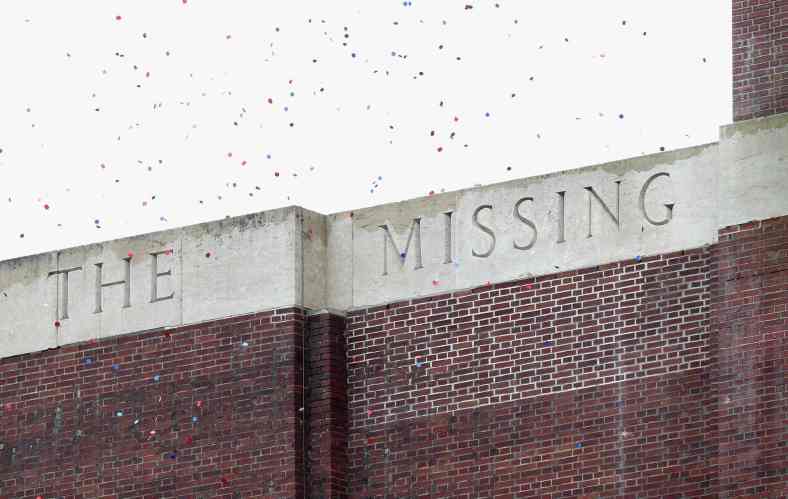
The title comes from the memorial at Thiepval, France to ‘The Missing of the Somme’. The 131 pages explore the landscape of France and Belgium in an extended essay exploring the monuments, cemeteries, and literature that materialized from a time of “fear that people would forget”. A time when ‘soldier poets’ emerged from the battlefields to create a literary narrative of events, in contrast to the propaganda of the media.

This is Dyer’s strength in storytelling. You think you have opened a ‘war book’ and you find you have signed on for an unexpected adventure. The ‘origin’ story of the book is itself a tangent. He originally moved to Paris in the early 90’s to write a novel based on Fitzgerald’s ‘Tender is the Night’, and ended up writing a book about world war one. (F. Scott does make an appearance.)

In a 2013 Paris Review interview, Dyer addressed reader’s expectations, as a function of a publisher/marketer definition.

“I think the distinction between fiction and nonfiction is less about “Did it really happen or was it made up?” than it is about form. And, more than form, it’s about the expectations that are brought to certain forms. According to how a book is presented, packaged, or identified, readers have certain expectations. Following from that they expect books within broadly identified categories to behave in certain ways. So people can find it quite disconcerting when a book isn’t doing what they think it’s meant to be doing, even if the book is completely fine on its own terms and has no desire to conform to some external set of expectations. My books are often disappointing in that regard.”

You may read Dyer for the element of surprise, but it’s in his prose that your investment in time is rewarded, as illustrated in this short excerpt.

“But history does not lie uniformly over events. Here and there it forms drifts – and these drifts are at their deepest between the years 1914 – 1918. Watching footage of the Normandy landings, we can experience D-Day as it happened. History hangs in the balance, waiting to be made. The Battle of the Somme, by contrast, is deeply buried in its own aftermath. The euphoric intoxication of the early days of the French Revolution – ‘Bliss was it in that dawn’ – remains undiminished by the terror lying in wait a few chapters on. The young men queuing up to enlist in 1914 have the look of ghosts. They are queuing up to be slaughtered: they are already dead. By (Johan) Huizinga’s terms, the great war urges us to write the opposite of history: the story of effects generating their cause.”

“Even when it was raging, the characteristic attitude of the war was to look forward to the time it would be remembered.”

When ‘The Missing of the Somme’ was published in Great Britain, there was no American interest. The first world war still competes for attention in American culture. Fortunately, we have Geoff Dyer to remind us that “the war’s true subject is remembrance”.


‘From the Somme’ a poem by Leslie Coulson

The Friday Poem this week is ‘From the Somme’, by journalist, poet and soldier of the first world war, Leslie Coulson. The poem was included in a collection of poetry, ‘first world war  poems’, published in 2014.

“Leslie Coulson fought in Malta, Egypt and Gallipoli, where he was wounded. He recovered in hospital in Egypt, was sent to France and was killed in action at the Battle of the Somme. Shortly before he died, he wrote in a letter, ‘If I should fall do not grieve for me. I shall be one with the wind and the sun and the flowers.'”

In remembrance of the Battle of the Somme, one of the lesser known poets of the great war reflects on the impact of the battle on his worldview. His voice carries through the century to speak to all who are transformed by tragedy.

From the Somme

In other days I sang of simple things,
Of summer dawn, and summer noon and night,
The dewy grass, the dew-wet fairy rings,
The larks long golden flight.

Deep in the forest I made melody
While squirrels cracked their hazel nuts on high,
Or I would cross the wet sand to the sea
And sing to sea and sky.

When came the silvered silence of the night
I stole to casements over scented lawns,
And softly sang of love and love’s delight
To mute white marble fauns.

Oft in the tavern parlour I would sing
Of morning sun upon the mountain vine,
And, calling for a chorus, sweep the string
In praise of good red wine.

I played with all the toys the gods provide,
I sang my songs and made glad holiday
Now I have cast my broken toys aside
And flung my lute away.

A singer once, I now am fain to weep,
Within my soul I feel strange music swell,
Vast chants of tragedy too deep – too deep
For my poor lips to tell.

Leslie Coulson (1889-1916)  ‘first world war poems’ edited by Jane McMorland Hunter, 2014

The generational divide – #wearehere and #Brexit

A collection of amateur photos taken by ordinary British citizens, on the 100th anniversary of the Battle of the Somme, served to bridge a century, and punctuate the generational divide that led ‘the lost generation’ to war, and ‘the millennials’ to #Brexit.

The topic #wearehere started trending early Friday morning as British citizens headed to work and encountered young men clad in the uniforms of World War I. For a few hours, in London, Aberystwyth, Birmingham, Sheffield, Salisbury, and Plymouth, the ghost soldiers of the Somme walked among their contemporaries.

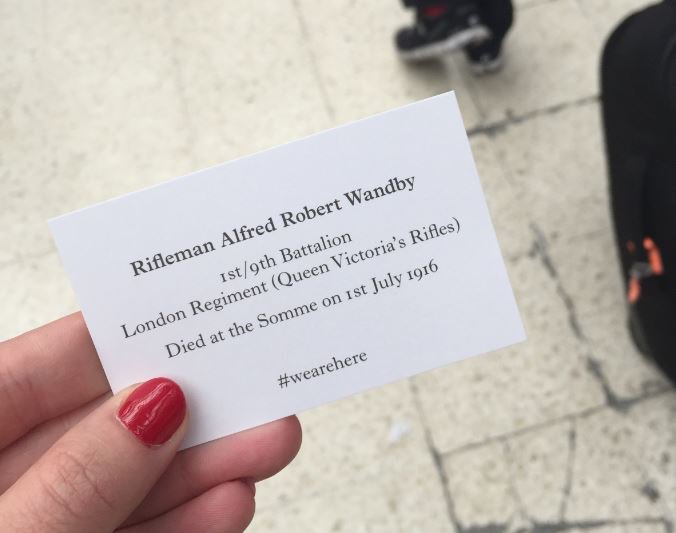
Many of those first encounters were recorded on Twitter and Instagram, as commuters received cards from these ‘soldiers’.CmRNYS-UkAUqr3d“Thousands of volunteers took part in a UK-wide event on Friday 1 July 2016, as a modern memorial to mark the centenary of the Battle of the Somme. 19,240 men were killed on the first day of the battle in 1916 – the bloodiest day in British military history.
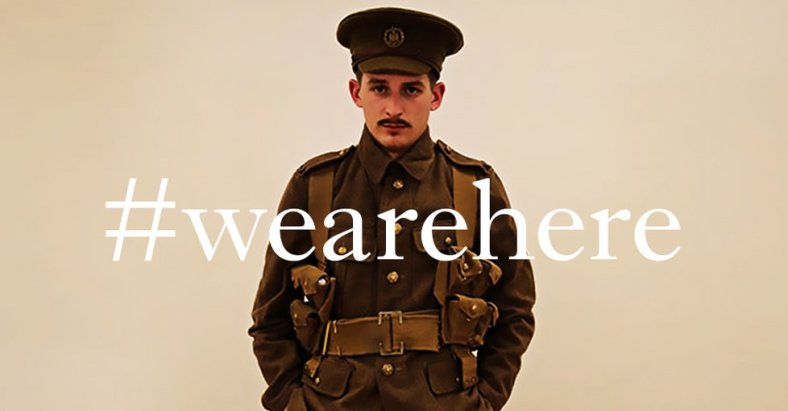
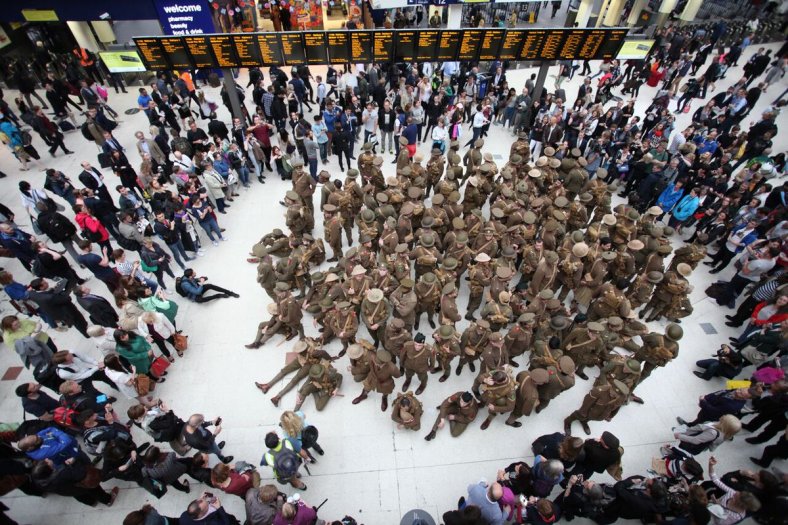
‘we’re here because we’re here’ saw around 1400 voluntary participants dressed in First World War uniform appear unexpectedly in locations across the UK. Each participant represented an individual soldier who was killed on that day one hundred years before.”

proxy.jpg

Charlotte Higgins reported on the day for The Guardian newspaper. “The event, which unfolded without advance publicity, can now be revealed as a work by Jeremy Deller, the Turner prize-winning artist…Deller worked with Rufus Norris, the artistic director of the National Theatre in London, and theatres throughout the UK to train the volunteer army.

Deller was approached to devise an artwork to mark the centenary of the first day of the Battle of the Somme by 14-18 NOW, the body responsible for art commissions commemorating the war. “I quickly realised that what I didn’t want was a static memorial that the public went to to be sad,” he said. “In the 21st century I felt we had do something different. So I thought about the memorial being human, and travelling round the country. It would take itself to the public rather than the public taking itself to the memorial.”

somme.jpg

“And also the public wouldn’t know in advance that there was this thing happening – they would encounter it in the shopping centres and carparks and outside schools and in everyday British life. And I wanted to avoid heritage places – churches, war memorials. I wanted to take it to the public.” His key idea, he said, was to “avoid sentimentality”.

Look at the photo of the finale at Waterloo Station. A group of soldiers at the center are surrounded by their contemporaries, telegraphing the moment to social media. Two generations, a century apart facing unknown fates @war, and after #Brexit.

CmcwkjWWcAAb1sy.jpgThe politics of the early 20th century led to over a million British, French and German casualties in the Battle of the Somme between July 1 and November 18, 1916.

The rhetoric of current political leaders called into question today’s younger generation’s European identity.

So what have we learned in 100 years?

Someone thought it would be a great idea to preserve the peace and form a European Union. For all its frailties, its crowning achievement was replacing nationalism with an overlay of a ‘European’ identity; a multilingual, multicultural generation that travels freely across the continent to study, work, live and love.

Francesca Barber, a self-described ‘transnational’, gave voice to this dilemma of altered identity in the wake of #Brexit.

“I was born in Washington in the late 1980s, grew up in Brussels, moved to London and then returned to the United States, where I lived in New York City; Providence, R.I.; and San Francisco.

My parents are English. My first language was French. I went to a Belgian school and the European School in Brussels, where my classmates almost always spoke at least three languages.

My childhood was defined by endless car journeys across Europe. And as an adult, I have enjoyed the benefits of cheap deals on low-cost European airlines. Most of my friends have gone to school and worked in at least two European countries. I am part of the Erasmus generation. My friends and my roots are everywhere — and only now do I realize how much I took that for granted.

The “Brexit” vote on June 23 was the most serious geopolitical event for Europe since the fall of the Berlin Wall. But lost in all the geopolitics is another important message: It was a resounding vote against globalization from a country that has for so long been a proud champion of globalization.

But this vote was also a rejection by my fellow countrymen, from my parents’ generation to mine, of everything I cherished about Europe, Britain and my own childhood: the sense that our differences were less important than our shared experiences.”

Maybe it’s time for a ‘we are here’ for the European millennials – a ‘counter Brexit’, public art project.  What if, on a Friday morning, all over Britain, young workers approached commuters with CV profile cards, each participant representing a dream lost to Brexit? Mr. Deller, Mr. Norris we could use your help here.


The Saturday Read ‘I Was Amelia Earhart’ by Jane Mendelsohn

Sometimes the stories behind what we read are as interesting as the books themselves. We now know that the musical Hamilton had its inception when creator Lin-Manuel Miranda picked up a book in an airport on the way to vacation.

Jane Mendelsohn, the author of this week’s Saturday Read, ‘I Was Amelia Earhart’ found her inspiration reading a newspaper article about the aviator while riding a train into New York .

“I didn’t know much about Amelia Earhart, but the idea of her surviving on a desert island, even if only for a little while, appealed to me, sang to me, waved furiously to me from a great distance. Perhaps this was because I felt at the time as if I were flying hopelessly around the world and searching for land, longing for one of those islands of stability some of us keep looking for in our 20s, a braceleted wrist held up to the face, hand shielding our eyes from the harsh sun of adulthood, not realizing that we will have to build that island for ourselves. Whatever the reason, I was certainly not the first person to be fascinated by Earhart’s disappearance. Nor the last.”

Where will you find inspiration this holiday weekend?

On this 79th anniversary of Earhart’s disappearance, go back in time as newspapers around the world reported the news:

ClF9pAOXIAESRPy.jpg

“Coast Guard headquarters was advised tonight that Amelia Earhart was believed to have alighted on the Pacific Ocean near Howland Island shortly after 5 P.M. Eastern daylight time today.

A message from the cutter Itasca, stationed in the vicinity of the island in the mid-Pacific, said:

“Earhart unreported at Howland at 7 P.M. [E.D.T.]. Believe down shortly after 5 P.M. Am searching probable area and will continue.”

Author Mendelsohn imagines the other side of story, as Amelia Earhart and navigator Fred Noonan transition from pioneers of the sky, to survivors on a tiny Pacific atoll.

“It went very quickly, those first few days. They got out of the plane, and together looked around and tried to make sense of their surroundings. Then all of a sudden, as if part of the choreography of a dream, they set about performing the necessary rituals of survival.

They check the radio, which picks up nothing, and the fuel tank, which is low but not empty, and they confirm their worst suspicions – that they have no idea where they are…They build a fire on the beach to attract attention. They know that a search will have already begun.”

It’s not too long before Earhart spots a plane.

“In the morning I see a speck appear on the horizon, a black spot the size of an insect.

The point of blackness, which at first appears to be nothing more than a gnat, keeps coming closer, heading directly toward the island, and I tell myself that it must be a figment of my imagination. But after two minutes, it assumes the form of a plane to such perfection that I need a moment to recognize what it is…At first I take off my scarf and gesticulate furiously, but as the plane appears to lose altitude, I begin to relax and wave it calmly, welcoming it ashore. Everything about this plane conveys purpose and assurance, as if it had been designed solely to rescue us. I find the promise of its shape more beautiful than anything I have ever seen, but strangely lost to me, although I don’t understand why until it comes closer and I am able to determine that despite my wish it is not coming toward the island at all. It looked as if it were heading directly at me, but as I watch it grow larger I see it pass overhead, high above, too far to see me as I desperately shake my scarf. It circles once – for an instant I image that it is heading toward the water and I think I can make out black pontoons for landing – and then it makes a wide turn, points back to the mysterious place from whence it has come, and flies away. It hasn’t seen me at all.”

The mystery of Earhart’s disappearance continues to arouse interest as researchers continue to search for a remnant of the missing plane. Mendelsohn’s narrative offers the reader an alternative history, employing beautiful prose to recreate a time when “Planes used to be vehicles for dreaming…As soon as you saw a plane, you started dreaming. It was a thrill just to catch a glimpse of one. “

In 2012 Jane Mendelsohn revisited the subject of her 1996 novel in an Op-Ed for The New York Times.

“We still wonder what happened to Amelia Earhart — perhaps soon we may even find out — but do we know what to do with her? Do we know how to make not just her mysterious disappearance but also her miraculous life relevant and inspiring to our global society? And could she matter across the globe, that ball around which she tried to fly that feels so much smaller today but is in fact exactly the same size it was then?

Historically, one thing America has been good at is offering inspiration. We haven’t been doing a brilliant job of it lately, but in Amelia Earhart we have something, someone, to offer the 21st century: a heroine. She was a leader, not a passive bystander. She was strong, not a victim. And she was not born into a rich family, as were many other women pilots of her day, but was lifted up by her own accomplishments. In other words, she gives us good shoes to fill.”

On this weekend, when we celebrate our nation’s independence, read ‘I Was Amelia Earhart’ and discover why her life still inspires.

“Amelia Earhart can be a beacon for our country and for women and men around the globe because everyone, each of us, needs to be “aware of the hazards” and accept “the inevitable risks.”… Earhart’s mystery endures because of who she was as a person, the pilot of her own destiny, mistakes, failures and dreams, reachable and unreachable. She still beckons.”