‘Big Dreams’ a poem by April Halprin Wayland

Time to add a bit of whimsy to the end of the week with ‘Big Dreams’.

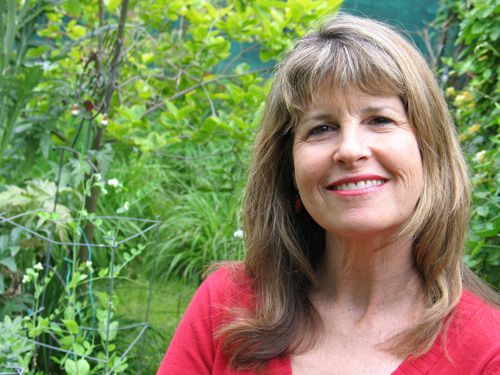
We discover our first dreams in the magic of children’s literature: the poetry of great writers, and the illustrations of great artists. The Friday Poem this week encourages us to revisit those dreams through the words of April Halprin Wayland.

“For four and a half years I worked in the marketing department of Pacific Bell, which became AT&T. I knew that world was not for me. To keep my sanity, I took a class at UCLA Extension called Writing for Children, taught by Terry Dunnahoo. Terry’s class changed my life. It was as if I had fallen madly, deeply in love. When I walked to lunch with my corporate buddies, the men at construction sites whistled at me. They hadn’t whistled at me before I was in Terry’s class. Something huge had shifted in me; I was electric. I knew I had to take the leap. In one of my last meetings at AT&T, I pretended to take notes, but was actually writing a poem about a child who runs away to live with rabbits and slowly turns into one. I don’t know if I was writing about me, turning into a corporate bunny…or if I was writing about my desperate need to run away from the corporate life.”

Big Dreams

The scruffy house cat
aches to fly—
she dreams all day of
wings and sky!

So tonight
she climbs the ladder,
mounts a platform,
nothing matters

except to catch
a thin trapeze
then hold on tight
with grace and ease.

She swings herself
by both front paws
then somesaults
to wild applause

of kitchen mice,
who, though dizzy,
encourage Cat,
to keep her busy.

April Halprin Wayland

What do you do? Crafting an answer of identity @work

It’s the icebreaker question, ‘What do you do?’ It seems like a simple question, but it’s often difficult to explain our life’s work to strangers. Our workplace is defined by acronyms, our comfort zone is among our peers who share a common language.

It was the dilemma writer Elizabeth McCracken expressed in a 2014 tweet.

“21 years into a publishing career & I still have no idea what to say when someone says, “A writer? Have I heard of anything you’ve written?”

Maybe it’s not just the question, but the response we get when we attempt an answer. It’s the incorrect assumptions folks hold when they have a passing familiarity with a career.

Lincoln Michel used the query to imagine ‘If Strangers Talked to Everybody Like They Talk to Writers’.

“There is something unique about the way people talk to writers. Strangers seem very willing to offer career advice — “self-publishing is where the money is!” — literary advice — “People love vampires!” — or to oddly ask you to guess what work they’ve read in their life and if any of yours is among it. It got me thinking about what it would be like it people talked about other professions in this way.”

“Huh. A chef. Do people still eat food?”

“An accountant? Wow, I haven’t even looked at a number since high school.”

“Software programmer? Like, for actual computers sold in stores or just as a hobby?”

It’s not just writers. Most of us have embarked on career paths that carry with them a variety of inaccurate stereotypes.

Is it possible to craft an answer that informs, clarifies and avoids unsolicited advice?

Yes, and it’s storytelling without revealing the ending.

First, decide what you want to share about your work. Then imagine you are describing what you do to aliens. Finally, think function, product, audience and benefit.

Let’s go back to the writer, who may want to keep their work confidential, and avoid unsolicited feedback.

Authors are familiar with providing ‘soundbite’ summaries of their work to ‘sell’ a book proposal, and can employ the same technique to describe their work. For example: “I’m a writer and I recently completed a memoir that will be released in the fall. My next project is a profile for a weekly magazine which involves travel to Austin, Texas next week. Have you been to Austin? Can you suggest any good restaurants in the area?”

This sample response answers the question without divulging confidences, describes the work in familiar terms and redirects the conversation to connect on another, recognizable topic, food.

Who knew writers accumulate frequent flyer miles, get stuck in long TSA lines and patronize fashionable restaurants?

In crafting your response, consider your audience. How likely are they to be aware of your work? This is not about ‘dumbing down’ an answer, but about connecting through shared language and experience.


The week@work: Inequality on stage, Apple@40, ‘job crafting’ & odd interview questions

As the economy continues to improve, and include workers who had given up, playwrights are staging works that reflect the continued struggle and inequity in the workplace. This week@work we celebrate Apple@40, take a look at ‘job crafting’ as a way to reimagine work and pose a few interview questions.

Nelson D. Schwartz and Neil Irwin reported ‘Jobs and Wages Notching Gains Long In Coming’ for the New York Times.

“Companies have been hiring in recent months at a pace not seen before in this century. Wages are rising faster than inflation. Joblessness is hovering near the low levels last reached in 2007 before the economy’s downturn.

And perhaps most significantly, the army of unemployed people who gave up and dropped out of the job market is not only looking for work, but actually finding it.

“Wages and participation are where the rubber meets the road,” said Michael Gapen, chief United States economist at Barclays. “We will take our cue about the overall strength of the economy based on that.”

At the same time, the chasm widens between the average worker, still trying to recover with modest wage gains, and the quantum leaps in compensation for the wealthy.

It’s this divergence that is reflected in several theater productions, under the heading ‘Haves and have-nots: Putting America’s financial inequality on the stage’. The Economist article reviews ‘The Humans’, ‘Hungry’, ‘Hold On To Me Darling’, ‘The Way West’, ‘Dry Powder’, and ‘Red Speedo’ to illustrate how the economy and work are inspiring a generation of playwrights.

“There is something familiar about the Blakes, the American family at the centre of “The Humans”, a new play by Stephen Karam that is now on Broadway. Anyone who has navigated the emotional minefield of a family meal will recognise the affectionate way they bicker, their barbs softened with tenderness. But something else about this family will also resonate with a growing group of Americans: each member is struggling financially.

This conversation resembles countless others across the country, as Americans try to make sense of an economy in which working hard is no longer enough to afford a comfortable life. Parents who assumed that their children would surpass their own accomplishments are now startled to find so many of them sweating over rent and saddled with college debt. What does it take to get ahead? Why does the system create so few haves and so many have- nots?”

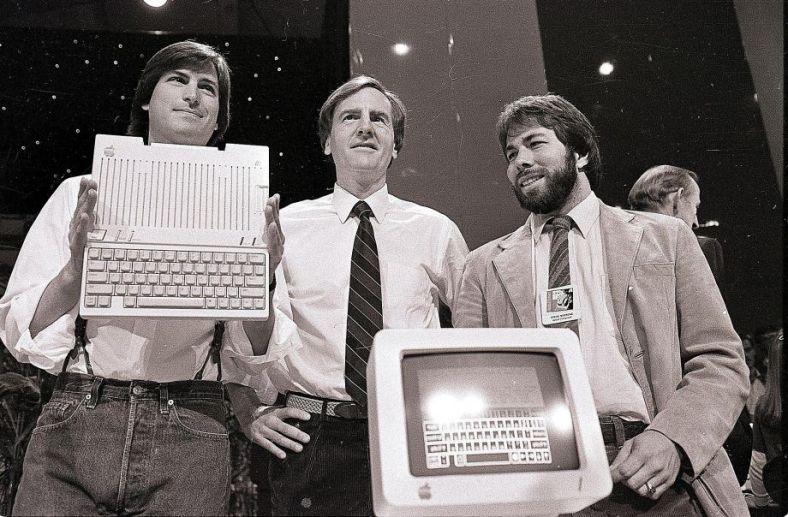
This past week marked the 40th anniversary of Apple. In his commencement speech to the Stanford class of 2005, co-founder Steve Jobs recalled the journey from start-up to his firing by the Board of Directors.

920x1240.jpg

“I was lucky — I found what I loved to do early in life. Woz and I started Apple in my parents’ garage when I was 20. We worked hard, and in 10 years Apple had grown from just the two of us in a garage into a $2 billion company with over 4,000 employees. We had just released our finest creation — the Macintosh — a year earlier, and I had just turned 30. And then I got fired. How can you get fired from a company you started? Well, as Apple grew we hired someone who I thought was very talented to run the company with me, and for the first year or so things went well. But then our visions of the future began to diverge and eventually we had a falling out. When we did, our Board of Directors sided with him. So at 30 I was out. And very publicly out. What had been the focus of my entire adult life was gone, and it was devastating.

We know the rest of the story. Jobs returned to Apple in 1997. David Pierce and Michael Calore identify ‘Fifteen Products That Defined Apple’s First 40 Years’.

iPhone-SE-gaming.jpg

#1 the iPhone

“If you want to understand the iPhone’s importance to Apple, just look at its earnings. But it’s not just that: Without it, our phones might still look like BlackBerries. We might never have learned to pinch to zoom. We might all carry point-and-shoots. It’s almost impossible to overstate the revolution the iPhone started in 2007, which has touched and connected billions of people around the world.”

hiddenbrain_deepbluereverse2_sq-d4dc2bc0fb94c4fa0074fb7ab2e1b681e6245d7a-s400-c85

If you prefer to digest ideas via podcast, add NPR’s Hidden Brain to your subscription list. Last week’s installment featured host Shankar Vedanta in conversation with Yale’s Amy Wrzesniewski on finding meaning in our work.

“Why do you work? Are you just in it for the money or do you do it for a greater purpose? Popular wisdom says your answer depends on what your job is. But psychologist Amy Wrzesniewski at Yale University finds it may have more to do with how we think about our work. Across groups such as secretaries and custodians and computer programmers, Wrzesniewski finds people about equally split in whether they say they have a “job,” a “career” or a “calling.” 

According to Wrzesniewski’s research “people who see work as a calling are more satisfied, engaged, and better performers”. These are folks who “go beyond notice” to craft the boundaries of their job to make work more meaningful.

The last story from this week@work is about interview questions. File it under the query, ‘What was the oddest question you were asked in an interview?’, from recruiting site, glassdoor.com.

Here’s a sample:

“What would the name of your debut album be?” (Urban Outfitters)

“What would you do if you found a penguin in your freezer?” (Trader Joe’s)

And here’s one that we should all be prepared to answer.

“If you were a brand, what would be your motto?” (BCG)

Think about it, and have a great week@work.


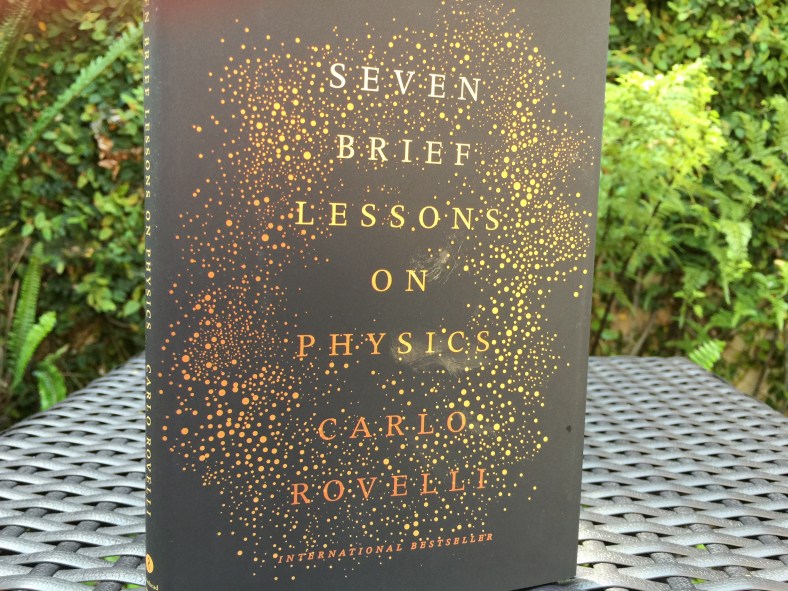
The Saturday Read ‘Seven Brief Lessons On Physics’ by Carlo Rovelli

It was the ‘chirp’ heard around the world. In February scientists announced the discovery of gravitational waves formed by two black holes colliding, confirming the century old predictions of Albert Einstein.

If you’re not a physicist or a physics major, you may have only a passing familiarity with the terms used in the previous sentence. And yet, we just experienced, in a ‘galaxy far far away’, what the New York Times science reporter Dennis Overbye described as a moment “destined to take its place among the great sound bites of science, ranking with Alexander Graham Bell’s “Mr. Watson — come here” and Sputnik’s first beeps from orbit.” 

The Saturday Read this week is ‘Seven Brief Lessons on Physics’ by physicist Carlo Rovelli of Aix-Marseille University and the Intitut Universitaire de France. Spend some time with this exquisite book and become a bit more fluent in the language of physics.

“These lessons were written for those who know little or nothing about modern science. Together they provide a rapid overview of the most fascinating aspects of the great revolution that has occurred in physics in the twentieth and twenty-first centuries, and of the questions and mysteries that this revolution has opened up. Because science shows us how to better understand the world, but it also reveals to us just how vast is the extent of what is still not known.”

Beginning with Einstein’s ‘beautiful theory’ of relativity, Rovelli follows the science beyond gravity to quantum mechanics and quantum gravity.

Is your hair is hurting? Hang in there.

“Physics opens windows through which we see far into the distance. What we see does not cease to astonish us. We realize that we are full of prejudices and that our intuitive image of the world is partial, parochial, inadequate. Earth is not flat; it is not stationary. The world continues to change before our eyes as we gradually see it more extensively and more clearly.”

Are we still talking about science? The magic of Rovelli’s prose is its simplicity in conveying painfully complex theories.

We learn the value of ‘wasting’ time.

“In his youth Albert Einstein spent a year loafing aimlessly. You don’t get anywhere by not ‘wasting’ time – something, unfortunately, that the parents of teenagers tend frequently to forget.”

And that we live in “A world of happenings, not of things.”

Rovelli describes concepts visually.

“…before experiments, measurements, mathematics, and rigorous deductions, science is about all about visions. Science begins with a vision. Scientific thought is fed by the capacity to ‘see’ things differently than they have been previously seen.”

And reminds us that “Genius hesitates.”

The essays originally appeared as a series for the culture section of  Il Sole 24 Ore, the Italian newspaper. Released last month in the U.S., the book is ranked third on the New York Times combined print & e-book nonfiction list.

Why read ‘Seven Brief Lessons on Physics’? Because it will take you on an adventure beyond your comfort zone in the time it takes you to commute to work.

“We are made of the same stardust of which all things are made, and when we are immersed in suffering or when we are experiencing intense joy, we are nothing other than what we can’t help but be: a part of our world.”


‘Fear of Happiness’ a poem by A.E. Stallings

Facebook Chief Operating Officer, Sheryl Sandberg posed a question to the Barnard Class of 2011. “What would you do if your weren’t afraid?” It seems like a good query to revisit this week as high school seniors consider college choice, college seniors compare job offers, and the rest of us plan our next career move.

“She described a poster on the wall at Facebook: “What would you do if you weren’t afraid?” She said that it echoed something the writer Anna Quindlen once said, which was that “she majored in unafraid” at Barnard. Sandberg went on, “Don’t let your fears overwhelm your desire. Let the barriers you face—and there will be barriers—be external, not internal. Fortune does favor the bold. I promise that you will never know what you’re capable of unless you try. You’re going to walk off this stage today and you’re going to start your adult life. Start out by aiming high. . . . Go home tonight and ask yourselves, What would I do if I weren’t afraid? And then go do it! Congratulations.”

As you consider your answer, enjoy this week’s Friday Poem from A.E. Stallings.

Fear of Happiness

Looking back, it’s something I’ve always had:
As a kid, it was a glass-floored elevator
I crouched at the bottom of, my eyes squinched tight,
Or staircase whose gaps I was afraid I’d slip through,
Though someone always said I’d be all right—
Just don’t look down or See, it’s not so bad
(The nothing rising underfoot). Then later
The high-dive at the pool, the tree-house perch,
Ferris wheels, balconies, cliffs, a penthouse view,
The merest thought of airplanes. You can call
It a fear of heights, a horror of the deep;
But it isn’t the unfathomable fall
That makes me giddy, makes my stomach lurch,
It’s that the ledge itself invents the leap.

A.E. Stallings   Poetry, 2010

195-6.jpg

How many people have a job @graduation?

On college campuses across the country it’s ‘conversion’ time; next level marketing to the chosen to turn them into the enrolled. How do you differentiate between alternatives? If you take the commodity approach, it’s all about guaranteed employment. Here’s the thing – there are no guarantees.

It’s reasonable to consider post-grad employment when you’re investing a significant amount of money in a college degree. But that’s what it is, an investment, not a purchase. For the student, ‘attending’ college is not a passive act, it’s a full-time commitment. The ROI is a direct result of the effort, not dollars expended.

Former Cornell University president and current AAU president, Hunter Rawlings weighed in on the value of college debate last spring.

“A college education, then, if it is a commodity, is no car. The courses the student decides to take (and not take), the amount of work the student does, the intellectual curiosity the student exhibits, her participation in class, his focus and determination — all contribute far more to her educational “outcome” than the college’s overall curriculum, much less its amenities and social life. Yet most public discussion of higher ed today pretends that students simply receive their education from colleges the way a person walks out of Best Buy with a television.”  

When you ask the question ‘How many students are employed at graduation?’ you’re asking about the resale value of the car.

No one in today’s job market is guaranteed work. Any individual who believes their institutional pedigree will stand alone to open career doors is delusional.

The level of student engagement in internships, research, community service and extra-curricular activities, combined with faculty, staff and alumni connections, are far better predictors of post-grad success than destination survey statistics.

The question to ask is ‘What are the resources available to assist students seeking work?’ The ‘support’ assets are the constant in a volatile job market. Access to this ‘capital’ is the true measure of a university’s commitment to post-grad employment.


When choosing a college, ask ‘Who will I become?’

The questions we ask when selecting an undergraduate or graduate program focus on the financial and vocational. What will it cost? Will I get a job when I graduate? What we miss is the critical question. Who will I become?

It’s not a question just for philosophy majors.

Each university community is a micro culture defined by traditions, behaviors and beliefs. Even the most jaded will be transformed by the experience. That’s why imagining your selfie in four years is as important as financial and career planning.

The Atlantic’s senior editor, Derek Thompson acknowledged this developmental progression when he examined the impact of college choice on future success.

“While hundreds of thousands of 17- and 18-year-olds sit around worrying that a decision by a room of strangers is about to change their lives forever, the truer thing is that their lives have already been shaped decisively by the sum of their own past decisions—the habits developed, the friends made, and the challenges overcome. Where you go to college does matter, because it’s often an accurate measure of the person you’re becoming.”

If you accept that college is a point on the developmental continuum, your challenge is to find a place where your past intersects with your optimal opportunity for continued growth.

If place defines you, it’s a campus where you’ll discover the gaps in your experience and explore every possible resource to fill in the blanks. Networking will not be an abstract process for job search, but a four year active engagement with faculty, administrators and colleagues.

Your future is not determined by the decision of an admissions committee, but by the sum of your individual decisions over time, and who you will become.


The week@work: terror on the way to work, a factory fire anniversary, values-based leadership@Starbucks, a millennial workplace, & a new job benefit


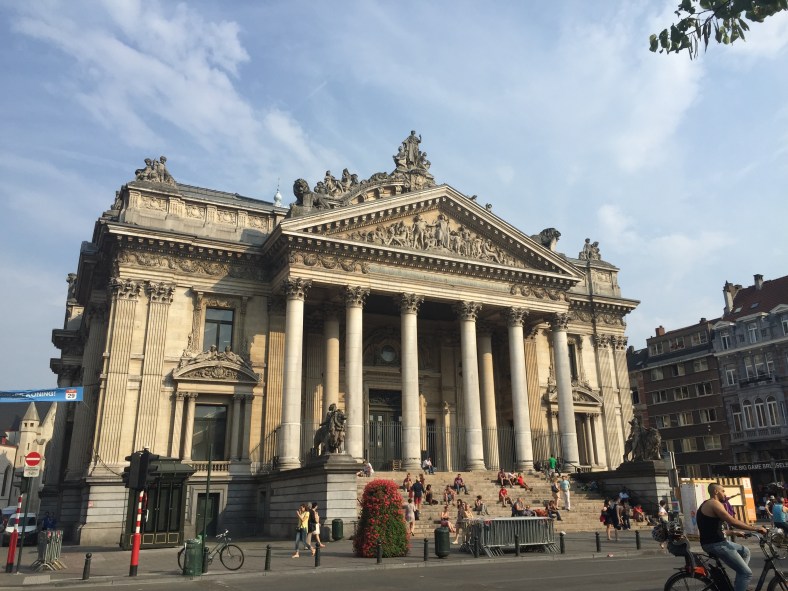
How do you share work thoughts when so many were killed and injured on their way to work on Tuesday morning? Apparently, we go on. I have to agree with the sentiment expressed by writer Pamela Druckerman in today’s New York Times ‘Je Suis Sick of This’.

“To Europeans, Brussels was supposed to be a dull place that you didn’t have to think much about until you had to change planes there. There’s a parlor game in which you stump people by asking them to name 10 famous Belgians. “Brussels, the anti-fanatic attacked by the fanatics,” French journalist Laurent Joffrin wrote in Wednesday’s Libération. “Brussels, a cousin whom one is content to know is there.”

Right after an attack it’s easy to say that everything feels different. People are horrified. Parents keep their kids home from school. Newspapers run headlines like “Europe at War.” There is the sad, familiar search for a slogan: This time, I prefer the Belgian frites arranged to make a rude gesture resembling a finger, and the banner reading, “Je suis sick of this” followed by an expletive.”

We don’t stop working. Maybe we are a bit more vigilant, the slogan ‘If you see something, say something’, temporarily gets more attention.

Journalist Druckerman continued, “Despite the inevitable false positives, it’s hard not to be on guard. I’m constantly making a series of mundane existential calculations: Is it worth it to risk going to a movie? Should I let my kids ride the metro to soccer practice? Daily life has a chiaroscuro quality: One minute you’re riding a bus and enjoying a view of the river; the next you’re wondering about the fellow with an unusually large backpack.”

There were other stories this week@work.

Friday was the 105th anniversary of the Triangle Shirtwaist Factory fire. It resonates with workers today because it was a story of immigrant workers, and led to changes in U.S. factory regulations and safety.

triangle fire.jpeg

Joseph Berger summarized the events in a 2011 article.

“A block east of Washington Square, not far from the neighborhood’s boutiques and chic restaurants, was the site of one of the nation’s worst industrial disasters. Many New Yorkers might be unaware of this.

Some labor advocates are trying hard to change that. They have organized an effort to build a memorial to the infamous Triangle Shirtwaist Factory fire of 1911, in which 146 workers died. Most of them were young immigrant women from Eastern Europe and Italy, and more than 50 jumped to their deaths from the factory’s ninth floor.

Two years ago, Tom Marshall posed the question, “Can disasters make life better for future generations?”  He went on to draw a parallel between the Triangle Shirtwaist factory fire and the 2013 garment factory collapse in Dhaka, Bangladesh.

“In both cases, inspectors visited and filed critical safety reports, but scores of people still died while making clothes for others. The American disaster is now hailed as a turning point that led to safer workplaces and broad support for a minimum standard of workers’ rights, while the Bangladeshi disaster’s impact is less certain.”

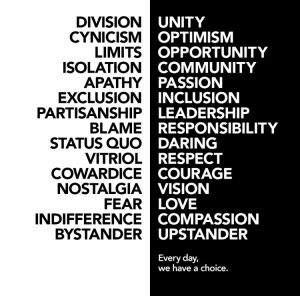
This week@work Starbucks chairman and CEO, Howard Schultz spoke at the annual shareholders meeting, and expanded on a conversation begun two years ago on the role and responsibility of a for-profit corporation. “What is the role and responsibility of all of us, as citizens?”
K9sMR38U-1650-1650

“Viewing the American Dream as a “reservoir” that is replenished with the values, work ethic and integrity of the American people, Schultz said, “Sadly, our reservoir is running dry, depleted by cynicism, despair, division, exclusion, fear and indifference.”

He suggested citizens fill the reservoir of the American Dream back up, “not with cynicism, but with optimism. Not with despair, but with possibility. Not with division, but with unity. Not with exclusion, but with inclusion. Not with fear, but with compassion. Not with indifference, but with love.”

“It’s not about the choice we make every four years,” Schultz said. “This is about the choices we make every day.”

One of the ‘most read’ articles last week, ‘What Happens When Millennials Run the Workplace?’, provided one more illustration that work issues are people issues, and it really doesn’t matter how you generationally identify.

“Joel Pavelski, 27, isn’t the first person who has lied to his boss to scam some time off work.

But inventing a friend’s funeral, when in fact he was building a treehouse — then blogging and tweeting about it to be sure everyone at the office noticed? That feels new.

Such was a recent management challenge at Mic, a five-year-old website in New York that is vying to become a leading news source created by and for millennials.”

The workplace is changing and the 80 million millennials @work will make a significant impact on work/life and the global economy. As a group, the 40 million with college degrees enter the workforce taxed with student loans that are the equivalent of a mortgage. Fidelity Investments announced a new employee benefit last week to address student loan repayment.  Tara Siegel Bernard provided the details.

“Fidelity will apply up to $2,000 annually to the principal of its employees’ student debts.

Fidelity is one of the more prominent employers to announce the student loan repayment benefit in recent months, a policy that seems likely to gain traction. The benefit helps address what some employers describe as a challenge attracting and retaining younger workers, many of whom can’t see beyond the burden of their student debt. Most employers that are offering the new perk also cap their costs at, say, $10,000 total per employee.”

At the end of a difficult week, spring wishes and Happy Easter!

IMG_4148


‘Choose’ a poem by Carl Sandburg

On Tuesday morning folks living in the beautiful, Belgian capital city of Brussels boarded a train that reliably conveyed them to work each day. Others made one of those unconscious daily decisions to grab a cup of coffee at the airport before boarding a flight.

Researchers estimate we make over 200 decisions a day. Now, one of those individual decisions will aggregate to the global; how do we respond to acts of terror?

America’s ‘working man’s poet’, Carl Sandburg, plainly sets out the alternatives in The Friday Poem, ‘Choose’, from his 1916 collection, Chicago Poems.

Choose

The single clenched fist lifted and ready,
Or the open asking hand held out and waiting.
Choose:
For we meet by one or the other.