“If you just focus on the work…” A leadership lesson from Taylor Swift

While the annual TED conference is taking place 1,300 miles north, the event at the Staples Center in Los Angeles last night provided a valuable soundbite of career advice from an industry leader. Perhaps the folks at TED might think about an invite for 2017.

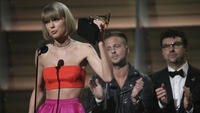
You had to wait for it. After two hours and 20 minutes, the woman who opened the 58th Grammy Award telecast returned to the stage to accept the iconic statuette for Album of the Year. Taylor Swift took her moment of recognition to encourage those in dysfunctional workplaces keep going and avoid the distractions of toxic coworkers.

“I want to say to all the young women out there – they’re going to be people along the way who will try to undercut your success, or take credit for your accomplishments or your fame. But if you just focus on the work and you don’t let those people sidetrack you, someday, when you get where you’re going, you’ll look around and you will know that it was you and the people who love you who put you there, and that will be the greatest feeling in the world.”

la-et-ms-taylor-swift-shames-kanye-west-empowering-grammys-acceptance-speech-20160215.jpeg

You may read in the tabloids that the speech was all about an on-going feud with a member of the Kardashian family, but that would trivialize the weight of the words, and devalue the message.

Ms. Swift is a hero to many young women and last night she became the first woman to receive the Album of the Year Award twice. She is an industry leader who has kept her focus on the work and become a major influence on how music is produced and distributed, and artists compensated. Don’t let the fashion distract, it’s a strategic piece of product packaging.

Still skeptical that a 26 year old performer should be taken seriously as a leader?

Last year, writer and magazine contributor Chuck Klosterman profiled Ms. Swift for GQ. Here she describes a key to her success that comes right out of all the research on emotional intelligence.

“I used to watch Behind the Music every day,” she says. (Her favorite episode was the one about the Bangles.) “When other kids were watching normal shows, I’d watch Behind the Music. And I would see these bands that were doing so well, and I’d wonder what went wrong. I thought about this a lot. And what I established in my brain was that a lack of self-awareness was always the downfall. That was always the catalyst for the loss of relevance and the loss of ambition and the loss of great art. So self-awareness has been such a huge part of what I try to achieve on a daily basis. It’s less about reputation management and strategy and vanity than it is about trying to desperately preserve self-awareness, since that seems to be the first thing to go out the door when people find success.”

Last night Taylor Swift spoke from her workplace experience, and shared an essential leadership lesson for us all…”just focus on the work”.

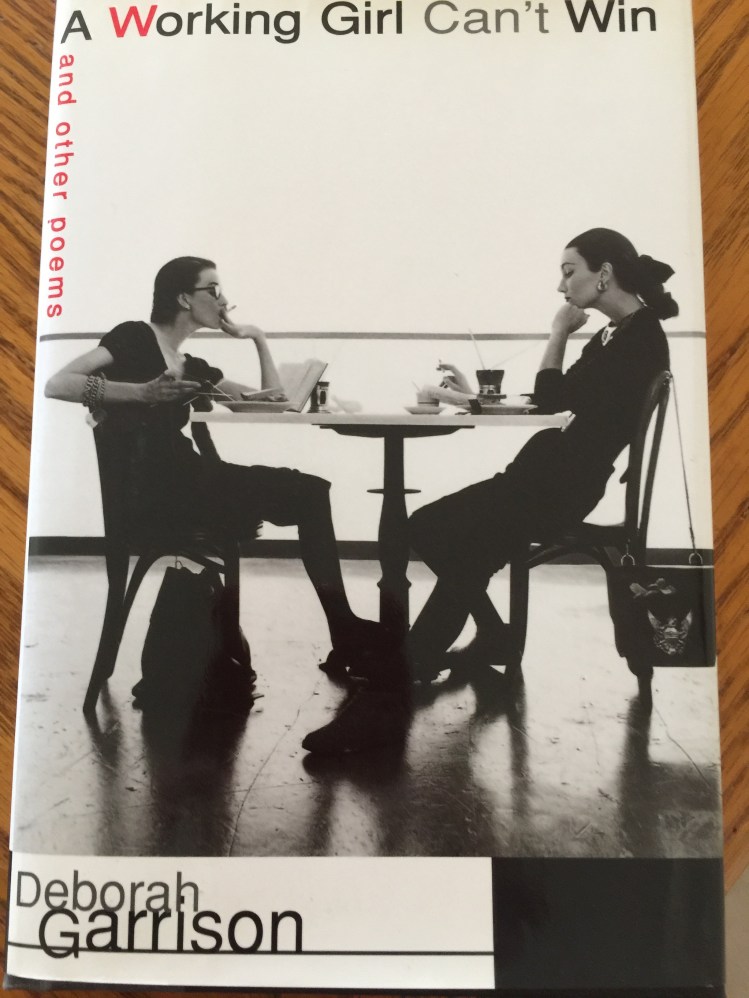
‘Worked Late on a Tuesday Night’ a poem by Deborah Garrison

Have you ever read a poem and realized that the poet has somehow snatched your body and experience, and transcribed both into a lyrical expression of your reality? There was a time, in the late 90s, working in New York, when the poetry of Deborah Garrison gave voice to those who believed you could have it all.

The Friday poem this week is ‘Worked Late on a Tuesday Night’, with Garrison’s words still relevant, even if Uber robs us of the experience of standing in the freezing rain trying to hail a cab.

Worked Late on a Tuesday Night

Again.
Midtown is blasted out and silent,
drained of the crowd and its doggy day.
I trample the scraps of deli lunches
some ate outdoors as they stared dumbly
or hooted at us career girls—the haggard
beauties, the vivid can-dos, open raincoats aflap
in the March wind as we crossed to and fro
in front of the Public Library.

Never thought you’d be one of them,
did you, little Lady?
Little Miss Phi Beta Kappa,
with your closetful of pleated
skirts, twenty-nine till death do us
part! Don’t you see?
The good schoolgirl turns thirty,
forty, singing the song of time management
all day long, lugging the briefcase

home. So at 10:00 PM
you’re standing here
with your hand in the air,
cold but too stubborn to reach
into your pocket for a glove, cursing
the freezing rain as though it were
your difficulty. It’s pathetic,
and nobody’s fault but
your own. Now

the tears,
down into the collar.
Cabs, cabs, but none for hire.
I haven’t had dinner; I’m not half
of what I meant to be.
Among other things, the mother
of three. Too tired, tonight,
to seduce the father.

Deborah Garrison   ‘A Working Girl Can’t Win: and other poems’ 1998

After a 50 year absence, the humanities return to medicine

Medicine remains one of the fields that is defined by a hierarchy that would rival the world of Downton Abbey at its pinnacle. Over fifty years ago medical training lost track of the humanities and with it the ability to effectively connect with colleagues and patients as fellow humans.

The intensity of preparation for acceptance to a top medical school only deepens with competition for internships and residencies. Doctors in training represent the best and the brightest, but often not the top of the class when it comes to emotional intelligence.

At a time when college is increasingly defined as vocational prep, with students choosing majors based on perceived guarantees of post-grad employment, medicine is stepping back from its singular focus on the sciences and reintroducing the humanities to remove barriers created by hospital hierarchy, promote teamwork and improve patient communication.

Dr. Tara Narula, a medical contributor for CBS This Morning, reported Thursday on a program in Boston that “teaches physicians in training to use their eyes and ears to connect with patients and enhance the practice of medicine.”

“At the Brigham and Women’s Hospital, doctors, nurses and Harvard medical students are helping reshape medical education. By day, members of the integrated teaching unit, or ITU, focus on treating patients. But at night, they fix their sights on works of art.

At the Museum of Fine Arts in Boston, art becomes a catalyst to strengthen clinical and interpersonal skills, softening the hard science of medicine with creative expression.

Dr. Joel Katz designed the art curriculum at Brigham and Women’s, which has become a model for other hospitals.

Katz chose the art museum because it “allows everybody to focus on an external object in a way that I would say takes the personal aspects out and lets them solve problems together.”

Activities are carefully designed to enhance team-building, and to break down the hospital hierarchy, junior staff members are paired with more senior colleagues. Observing and describing art is used to promote problem solving, communication, thinking outside the box and appreciating other perspectives.”

Increasingly, schools of medicine are recognizing the need to ‘humanize’ medical practitioners, including Columbia University’s program in Narrative Medicine and Stanford University’s Medicine and the Muse program. And a quick review of the best seller lists over the past decade, will reveal an impressive list of physicians who have exercised their talents in the humanities: Adam Verghese, Atul Gawande, Oliver Sachs, Siddhartha Mukherjee, and this month, Paul Kalanithi.

“With this program, Dr. Joel Katz hopes to find some of the human interaction that has been lost in medicine.

In fact, as recently as 50 years ago, humanities were at the core of medical practice. While research into this program’s effects is still ongoing, there is strong anecdotal evidence that both patients and practitioners benefit.”


The week@work – agents of change, NY values and imagining a windfall

The week@work was dominated by stories of the small group of workers in entertainment, sports and politics. It was also the week that everyone had the opportunity to imagine entry into the world of celebrity via the purchase of a single $2 lottery ticket.

On Sunday evening the Hollywood Foreign Press Association handed out their annual Golden Globes, with the surprise winner being Mexican actor, Gael Garcia Bernal for his role as conductor of the fictional ‘New York Symphony’ in Amazon’s Golden Globe winning ‘Mozart in the Jungle’. “I want to dedicate this to music, to all the people that find the music and common ground for communication, for justice for happiness.”

As Huell Howser might say, “This is amazing!”, that a series about classical musicians led by a talented Mexican actor, wins an award in a year of political polarization and classical music’s declining prominence in our culture.

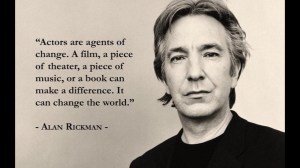
On Thursday, the actor who played Severus Snape in the Harry Potter series, Alan Rickman died. “With the last film it was very cathartic because you were finally able to see who he was,” Mr. Rickman said “It was strange, in a way, to play stuff that was so emotional. A lot of the time you’re working in two dimensions, not three.”
CYs2JjqWkAAWSqZ

Agents of change in theater, music, and the workplace challenge our thinking. On Monday we learned of the death of another transformational icon, David Bowie.

“In his dazzling artistry, daring style, unabashed intelligence, intensity of emotion, cultivation of magic, mystery and imagination, Bowie was a figure who bridged high and low culture, reverberating on so many different levels.”

On Monday morning, NPR replayed his 2002 interview with ‘Fresh Air’ host Terry Gross.

“I’m not actually a very keen performer. I like putting shows together. I like putting events together. In fact, everything I do is about the conceptualizing and realization of a piece of work, whether it’s the recording or the performance side. And kind of when I put the thing together, I don’t mind doing it for a few weeks, but then, quite frankly, I get incredibly, incredibly bored because I don’t see myself so much as a – I mean, I don’t live for the stage. I don’t live for an audience.”

David Bowie event planner? When we think of careers, we make assumptions about success, only to realize that each of us holds a unique definition which sculpts our approach to a calling.

“People often forgot, but up until his death, on Sunday at age 69, Mr. Bowie was a New Yorker

And though Mr. Bowie was enormously wealthy, he wasn’t one of those rich guys who kept an apartment in the city, along with a portfolio of global real estate holdings, and flew in. Aside from a mountain retreat in Ulster County, N.Y., his Manhattan apartment was his only home.

You may not have considered all this because Mr. Bowie was an apparition in the city, rarely glimpsed. You heard it mentioned that he lived here. Somewhere downtown, someone thought. But seeing him out? Good luck.”

Which brings us to the political discourse on ‘New York values’ and its relevance to job search. Relocation is a major consideration for many seeking career advancement. Understanding the character of the community you join outside of your workplace is equally, if not more important to understanding the values of your workplace community.

How many folks have decided to take a job in New York or LA only to later realize a major disconnect? This is not a value judgement, just a realization that we all need to find a place where we can be successful. Unfortunately, the job perks sometimes outweigh the geographical/cultural component in the decision making mix and it’s only when we are fully committed to our workplace that we begin to realize our success is being eroded by deficiencies in our neighborhood.

On to the world of sports. On Monday evening, two college football teams competed in the College Football National Championship game in Arizona. The University of Alabama’s team won by a score of 45-40 over Clemson. A few days later at the NCAA’s annual meeting, “NCAA president Mark Emmert praised student-athlete activism during his annual speech Thursday at the NCAA convention.”

During his 20-minute address at the NCAA’s opening business session, Emmert urged schools to continue to emphasize academics, fairness and the health and well-being of student-athletes.”

And yet, actions speak louder than words. Inside Higher Education reported“While the time demands on college athletes ­became the central focus of the National Collegiate Athletic Association’s annual meeting here this week, several proposals to deal with the issue were seemingly tabled the day before the NCAA’s five wealthiest conferences were scheduled to vote on them.”

Here’s the thing. With the exception of college coaches, everyone is in agreement that the ‘student’ in the ‘student-athlete’ equation takes priority. ‘Official’ time demands don’t begin to reflect the ‘unofficial’ time requirements of competing in Division I sports. And with only a select few moving on to compete in their sport as professionals, these students need the flexibility to explore career opportunities and participate in internships.

“Roderick McDavis, president of Ohio University, said it would be a mistake for colleges to wait for NCAA policy changes to prompt that shift. “Policies don’t change behavior,” he said. “People change behavior. We can hope that the NCAA catches up with us all one day, but what I know I can control is I can go home tomorrow and make a difference on my campus.”

And then there were the omnipresent billboards advertising the Powerball Jackpot at $999 million. Except the amount had grown to over $1.5 billion, which gave us all an opportunity to contemplate what we would do with that amount of money.

On a CNN broadcast the night before the drawing, international anchor Richard Quest asked anchor Anderson Cooper what he would do with the winnings if he had the lucky set of numbers. (You may know that Mr. Cooper is a Vanderbilt by ancestry.) His response, “I would buy a watch.” And he would be back at work the next day.

Here are a few additional articles that you may have missed from the past week.

‘Why I Always Wanted to Be a Secretary’ by Bryn Greenwood – Does your work define you? What if your dream job is central to an organization, but society’s definition is demeaning?

‘At Work And Feeling All Alone’ by Phyllis Korkki – In the world of telecommuting, new research indicates those left behind in the office have ended up feeling lonely and disconnected.

‘60% of Women in Silicon Valley Have Been Sexually Harassed’ by Lydia Dishman – Results of a survey of 200 women demonstrates a serious level of dysfunction in the tech giants’ workplace.

‘Yahoo’s Brain Drain Shows a Loss of Faith Inside the Company’ by Vindu Goel – “More than a third of the company’s work force has left in the last year, say people familiar with the data. Worried about the brain drain, Ms. Mayer has been approving hefty retention packages — in some cases, millions of dollars — to persuade people to reject job offers from other companies. But those bonuses have had the side effect of creating resentment among other Yahoo employees who have stayed loyal and not sought jobs elsewhere.”



‘Poetry and Prose’ a poem by Jeffrey Brown

The Friday Poem this week comes from the 2015 collection, ‘The News: Poems’ by PBS Newshour chief correspondent for arts, culture and society, Jeffrey Brown.

In an interview with guest host, Susan Page on the Diane Rehm show, Mr. Brown shared the passion that has existed in parallel with his day job.

“Well, I wrote poetry long ago, you know, in my 20s and I had a brief period of writing quite a bit at that time. And then, I wrote off and on with a lot of offs, you know, for many years at a time over the next 30-some years. There were periods where I would get into it and write poems and periods where I’d just simply stopped. This all came in quite a rush, actually. It was collecting things that had been out there and then putting a lot of them together in a fairly quick period, but, you know, I don’t want to say I wrote it all quickly ’cause a lot of it was written over decades.”

There are times in your career when the most important thing you can do is say no to a job offer. In ‘Poetry and Prose’, Mr. Brown offers us a gracious way to say no.

Poetry and Prose

After much

reflection

I have decided

to respectfully

decline

your offer.

I am grateful

you were willing

to put your

confidence in me.

And there was

a big part

of me ready

and eager

to take on

the challenge.

But I am

unable

to meet your

requirements.

Jeffrey Brown   ‘The News: Poems’ 2015


‘A Song for New Year’s Eve’ a poem by William Cullen Bryant

As revelers welcome the New Year in New York’s Times Square, a few blocks away, skaters will circle a temporary ice rink in Bryant Park, named for the editor and poet William Cullen Bryant. The Friday Poem this week is ‘A Song for New Year’s Eve’ written in New York and first published in Harpers Magazine in January 1859.

“In 1884, Reservoir Square was renamed Bryant Park, to honor recently deceased Romantic poet, longtime editor of the New York Evening Post, and civic reformer, William Cullen Bryant (1794-1878). Around this time, the city approved designs for the New York Public Library, submitted by architects John Merven Carrére and Thomas Hastings. The Beaux-Arts building was completed in 1911, with a raised terrace at the rear of the library and two comfort stations at the east end of Bryant Park.”

Bryant began his career studying and practicing law. He wrote poetry from an early age and continued this passion in parallel with his legal career. Later, as editor-in-chief of the New York Evening Post, he exerted considerable influence in local, state, and national politics.

“When Bryant appraised his prospects after leaving Williams College in 1811, his passion for writing poetry appeared to be utterly without promise of a remunerative career. Except for Benjamin Franklin, no American writer had managed to support himself and his family with his pen, however meanly, and verse was patently an occupation for idlers. But in 1836, when the Harper brothers took Bryant into their publishing house, he was a most valuable asset. Numerous reprintings of his books spread his popularity still further, and the firm’s generous royalty made him the richest poet in American history.”

“No line of his poetry survives in the consciousness of his nation, and none of his editorial pronouncements still resonates from his five decades with the New-York Evening Post, yet William Cullen Bryant stood among the most celebrated figures in the frieze of nineteenth-century America. The fame he won as a poet while in his youth remained with him as he entered his eighties; only Longfellow and Emerson were his rivals in popularity over the course of his life.

On this final day of 2015 let’s revisit a once revered national figure and his poem for New Year’s Eve.

A Song for New Year’s Eve

Stay yet, my friends, a moment stay—

Stay till the good old year,

So long companion of our way,

Shakes hands, and leaves us here.

Oh stay, oh stay,

One little hour, and then away.


The year, whose hopes were high and strong,

Has now no hopes to wake;

Yet one hour more of jest and song

For his familiar sake.

Oh stay, oh stay,

One mirthful hour, and then away.


The kindly year, his liberal hands

 Have lavished all his store.

And shall we turn from where he stands,

 Because he gives no more?

Oh stay, oh stay,

One grateful hour, and then away.


Days brightly came and calmly went,

While yet he was our guest;

How cheerfully the week was spent!

How sweet the seventh day’s rest!

Oh stay, oh stay,

One golden hour, and then away.


Dear friends were with us, some who sleep

Beneath the coffin-lid:

What pleasant memories we keep

Of all they said and did!

Oh stay, oh stay,

One tender hour, and then away.


Even while we sing, he smiles his last,

And leaves our sphere behind.

The good old year is with the past;

Oh be the new as kind!

Oh stay, oh stay,

One parting strain, and then away.

William Cullen Bryant   1794-1878


The Saturday Read – a selection of the best articles of 2015 from Jon Ronson, Oliver Sacks, Kathryn Schulz and Nikil Saval

This week the recommendations for ‘The Saturday Read’ come from journalists who wrote some of the most popular long form articles of the year. Instead of a book, which might seem daunting in the midst of holiday shopping and celebrating, sample the writings of these four storytellers who tackled a range of topics including internet shaming, death, earthquakes and the origins of the white collar worker.

On Wednesday, ‘The Upshot’ covered ‘The Stories That Held You The Longest in 2015’. “We measured the favorite Times articles of 2015 in a new way — by the total combined time readers have spent looking at them. It’s a mix of ambitious investigative projects, big breaking news, features and service journalism.”

Number two on the list first appeared in the February 12, 2015 New York Times Magazine. Written by Jon Ronson, ‘How One Stupid Tweet Blew Up Justine Sacco’s Life’ tells the story of the world of public ‘internet shaming’ through the experience of its victims.

15sacco1-master1050-v3

“In the early days of Twitter, I was a keen shamer. When newspaper columnists made racist or homophobic statements, I joined the pile-on. Sometimes I led it…

Still, in those early days, the collective fury felt righteous, powerful and effective. It felt as if hierarchies were being dismantled, as if justice were being democratized. As time passed, though, I watched these shame campaigns multiply, to the point that they targeted not just powerful institutions and public figures but really anyone perceived to have done something offensive. I also began to marvel at the disconnect between the severity of the crime and the gleeful savagery of the punishment. It almost felt as if shamings were now happening for their own sake, as if they were following a script.”

Number ten on the list was an Op-Ed piece by neurologist and writer, Oliver Sachs, ‘My Own Life’, on learning he had terminal cancer.

19sacks-copy-blog427-v6

“Over the last few days, I have been able to see my life as from a great altitude, as a sort of landscape, and with a deepening sense of the connection of all its parts. This does not mean I am finished with life.

On the contrary, I feel intensely alive, and I want and hope in the time that remains to deepen my friendships, to say farewell to those I love, to write more, to travel if I have the strength, to achieve new levels of understanding and insight.

This will involve audacity, clarity and plain speaking; trying to straighten my accounts with the world. But there will be time, too, for some fun (and even some silliness, as well).”

A New Yorker article received a lot of attention when it first appeared in July. ‘The Really Big One’ was researched and written by contributor, Kathryn Schulz.

150720_r26752-320

“Most people in the United States know just one fault line by name: the San Andreas, which runs nearly the length of California and is perpetually rumored to be on the verge of unleashing “the big one.” That rumor is misleading, no matter what the San Andreas ever does. Every fault line has an upper limit to its potency, determined by its length and width, and by how far it can slip. For the San Andreas, one of the most extensively studied and best understood fault lines in the world, that upper limit is roughly an 8.2—a powerful earthquake, but, because the Richter scale is logarithmic, only six per cent as strong as the 2011 event in Japan.

Just north of the San Andreas, however, lies another fault line. Known as the Cascadia subduction zone, it runs for seven hundred miles off the coast of the Pacific Northwest, beginning near Cape Mendocino, California, continuing along Oregon and Washington, and terminating around Vancouver Island, Canada. The “Cascadia” part of its name comes from the Cascade Range, a chain of volcanic mountains that follow the same course a hundred or so miles inland. The “subduction zone” part refers to a region of the planet where one tectonic plate is sliding underneath (subducting) another. Tectonic plates are those slabs of mantle and crust that, in their epochs-long drift, rearrange the earth’s continents and oceans. Most of the time, their movement is slow, harmless, and all but undetectable. Occasionally, at the borders where they meet, it is not.”

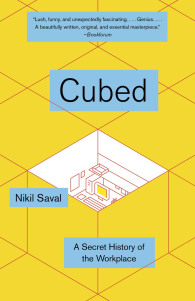
Longreads.com selected their ‘Best of 2015’ which included an excerpt from the book, ‘Cubed: A Secret History of the Workplace’. The fifth most popular article was ‘I Would Prefer Not To: The Origins of the White Collar Worker’, written by Nikil Saval.

9780345802804-1.jpg

“When does the office begin? It’s a question without an easy answer. One can associate the origins with the beginning of paperwork itself—until recently, the most common mental association with office work (think of the derogatory phrase “paper pusher”). In other words, since the invention of writing and the corresponding ability to keep records in a systematic manner, there have always been places that resemble offices: monasteries, libraries, scholars’ studies. Banking furnished an especially large amount of paperwork; the Uffizi, an incomparable gallery of Renaissance art in Florence, was also one of the first office buildings—the bookkeeping offices of the Medici family’s groundbreaking financial operations. Clerks, too, have existed for ages, many of them unclinching themselves from their desks to become quite famous: from Samuel Pepys, the British government diarist who reported on the gossipy world of seventeenth-century England, to Alexander Hamilton, who had cut his teeth as a merchants’ clerk before he became the first secretary of the Treasury of the United States; Benjamin Franklin, paragon of pecuniary restraint and bourgeois self-abnegation, started out as a dry goods clerk in 1727. Perhaps some of the tediousness of Franklin’s own writing was honed in the conditions of his first job: since clerks have had the opportunity to keep diaries, they have bemoaned the sheer boredom of their tasks—the endless copying, the awkward postures, the meaninglessness of their work. When not doing writing for the job, clerks have cultivated the habit of writing about the job—or literally around it…”


‘Chicago and December’ a poem by W.S. Di Piero

The Friday Poem this week is ‘Chicago and December’ by Stanford University Professor of English, Emeritus W.S. Di Piero.

In an interview with ‘McSweeney’s Internet Tendency’, the poet described the early influences in his writing.

“Writers are schooled by whatever they read. I took what was available. (Discovering the Philadelphia Free Library was enormous.) All writing occupied the same bandwidth—Freddy the Pig books, Kidnapped, Poe’s and Conan Doyle’s stories, and in particular, when I was very small, the Sears catalogs I studied on Sunday visits to relatives’ houses. I came to love reading about the old west—no kid in South Philadelphia knew more about Wyatt Earp, Kit Carson, Doc Holliday. In high school I read Whitman—he was, still is, so strange, exasperatingly friendly, formidable. By the time I turned twenty-one, it was “sweet sounds together” that mattered. Sound is still important. Subject matter was (still is) whatever piece of life’s procession pauses in front of me (or behind my back).”

On this first Friday in December, take a break from work and visit Chicago as we accompany poet W. S. Di Piero on a walk from the Art Institute, across the river to Michigan Avenue.

Chicago and December

Trying to find my roost
one lidded, late afternoon,
the consolation of color
worked up like neediness,
like craving chocolate,
I’m at Art Institute favorites:
Velasquez’s “Servant,”
her bashful attention fixed
to place things just right,
Beckmann’s “Self-Portrait,”
whose fishy fingers seem
never to do a day’s work,
the great stone lions outside
monumentally pissed
by jumbo wreaths and ribbons
municipal good cheer
yoked around their heads.
Mealy mist. Furred air.
I walk north across
the river, Christmas lights
crushed on skyscraper glass,
bling stringing Michigan Ave.,
sunlight’s last-gasp sighing
through the artless fog.
Vague fatigued promise hangs
in the low darkened sky
when bunched scrawny starlings
rattle up from trees,
switchback and snag
like tossed rags dressing
the bare wintering branches,
black-on-black shining,
and I’m in a moment
more like a fore-moment:
from the sidewalk, watching them
poised without purpose,
I feel lifted inside the common
hazards and orders of things
when from their stillness,
the formal, aimless, not-waiting birds
erupt again, clap, elated weather-
making wing-clouds changing,
smithereened back and forth,
now already gone to follow
the river’s running course.

W.S. Di Piero  Poetry Magazine, June 2006

188-3.jpg

A Simple Thanksgiving Recipe

A simple Thanksgiving recipe:

Ingredients: Friends, family, food

Directions: Mix equal parts of all ingredients, taking 8 hours to rest between servings. Add 12 – 15 hugs per 12-hour period until warm. Early in the day take a long walk to clear the mind and spirit. Be careful not to watch any news programming it may spoil the mixture. Take deep breaths and short naps as needed. For seasoning: share stories, laughter and tears. For a dessert variation on this recipe add music and dance. Keep warm and repeat for leftovers. I find that a loose interpretation of this recipe will result in a slightly undercooked, but refreshed mind and body.

Planning for the Thanksgiving Career Conversation

It’s the annual celebration of Thanksgiving, that time of year when families get together and complain about dissatisfaction with work. What if we approached the holiday season as an opportunity for taking action on shelved career plans?

We tend to think of the holidays as a time to get away from our workplace. And yet, it can be a time to reconsider career choices and solicit input from family and friends.

Let’s reimagine the pre or post-dinner conversation that has previously been a competition to demonstrate who has the worst boss, longest hours, deadest of dead end jobs. Consider a conversation where you identify your spot on your career timeline, articulate your goals and ask for guidance on next steps.

Your friends and family are your most trusted advisors. They’re the folks who know all your faults and are still there. Don’t waste their time with a whining session. Respect their abilities to listen and share feedback.

Start with the past year and what you have accomplished. Even in the worst job situation we can salvage a few learning experiences, from both failure and success. Come up with a way to communicate your skills, leaving out acronyms, to enable folks to envision how your strengths apply across fields.

Next, recall that dream job that has been tantalizing you, but disappears in the fog of the everyday demands of the workplace. Got it? Now you have your baseline and end goal. Don’t be shy about sharing it.

What’s missing? The interim steps to get you from point A to point B.

And this is where those negative conversations turn into positive and productive discussions. Now that you have shared your goals, folks are empowered to help: adding to your list of skills based on a long term view of your career, providing input on strategy and offering connections to keep the conversation going after the holidays.

It’s not just the folks who are contemplating career transition that can benefit from these holiday interactions. If you think all is well in your career, a close confidant can often detect warning signs you may be missing in your optimism.

The real value of your family/friends ‘board of advisors’ is their ability to hold you accountable to your dream. You will see them, same time next year, and they will ask you how far you’ve travelled on the road to your destination.