The year @work – equal pay, organization culture, Mark Zuckerberg’s books, the widening class divide, space exploration & Hamilton

Topics of work and the workplace often captured the headlines in 2015. And some of those headlines seemed to echo the 1970’s. As the economy improved, the wage gap between rich and poor increased. And we are still talking about equal pay for equal work.

One flashback was posted on the NPR website on January 2 in tribute to former New York governor, Mario Cuomo, who died on New Year’s Day. The post included the text and video of his speech to the Democratic National Convention in 1984, two years after the Equal Rights Amendment  failed to gain support from the 38 states required to pass.

“We speak for women who are indignant that this nation refuses to etch into its governmental commandments the simple rule “thou shalt not sin against equality,” a rule so simple —

I was going to say, and I perhaps dare not but I will. It’s a commandment so simple it can be spelled in three letters: E.R.A.”

Even though this year’s slate of Presidential candidates includes two women, the legacy of Cuomo’s passion is largely ignored.

Two stories in the past year served to visibly illustrate the continuing inequity.

In Hollywood, major studio, Sony was hacked, revealing, among other things, the disparity between the compensation of lead actress Jennifer Lawrence and her male co-stars. Madeline Berg covered the story for Forbes

“More frequent are anecdotes of discrimination like those recently related by Selma Hayek, Gwyneth Paltrow and even Streep.

All of these women have echoed the sentiment of Patricia Arquette, who brought the issue to the world’s attention at last year’s Oscars when she said in her acceptance speech for Best Supporting Actress, “It’s our time to have wage equality for once and for all.”

But it is not only the number on the paycheck that is the problem: Women are also greatly underrepresented on the big screen, leading to fewer opportunities to make money, an issue that Reese Witherspoon brought up at the American Cinematheque Awards in October: “Women make up 50% of the population, and we should be playing 50% of the roles on the screen.”

That is a dream that is far from a reality. According to a report by the Annenberg School at USC’s Media, Diversity & Social Change Initiative released in August, only 28.1% of characters in 2014’s top 100 films were female and of that percent, only 21 had a female lead or co-lead.”

The misrepresentation is even worse behind the camera: Of the same films, women made up only 1.9% of directors, 11.2% of writers and 18.9% of producers. This only aggravates the problem. The report found that in productions where women held key positions off-screen—as directors, writers and producers—the films featured women more often, and in less sexualized roles.”

We may find it hard to garner sympathy for those who earn millions @work for acting or competing in sport. But those are the visible workers who set the bar for the rest of us on the lower rungs of the career ladder.

The year in sport was dominated by the FIFA scandal, but women who work in sport created the memorable moments of the year. Christopher Clarey, summarizing the year in sport for women noted ‘Women Surge On Playing Field but Fall Behind in Boardroom’.

“As visible as female athletes were in 2015, women lost prominence and power in another key domain in the sports world: the boardroom.

Stacey Allaster, chief executive of the WTA Tour, stepped down citing burnout and the desire to spend more time with her young children. Debbie Jevans, a Briton who was perhaps Europe’s leading women’s sports executive, also cited personal reasons for resigning as chief executive of England Rugby 2015 less than six months before the start of the Rugby World Cup that she had been instrumental in organizing.

Another industry leader, Mary Wittenberg, who oversaw the New York City marathon as chief executive of New York Road Runners, resigned to lead a start-up lifestyle company, Virgin Sport.

Allaster, Jevans and Wittenberg were all replaced by men, and by year’s end there was no woman leading a major professional sport, not even one for women. Steve Simon is in charge of the WTA, Michael Whan is in charge of the L.P.G.A., Jeff Plush runs the National Women’s Soccer League in the United States and Mark Tatum oversees the W.N.B.A., the most prominent women’s professional basketball league, on an interim basis after Laurel J. Richie stepped down after five seasons in 2015.

Considering the scandals and governance crises that enveloped leading male-dominated federations like FIFA and the I.A.A.F. in 2015, more women in power looked very much like part of the solution. The men could clearly benefit from new perspectives.

“For me, the most important thing about diversity in a workplace is definitely making everyone feel included,” Wittenberg said. “But the diversity that comes from diversity of thinking is also invaluable, and if you don’t have diversity around your executive table or any table, I think you really run a risk today. Organizations, and especially political organizations that lack diversity in any number of ways, including gender — you’re not coming close to representing a world view. Leadership today should be challenged at every turn.”

The topic of work/life balance continues to dominate the water cooler conversations from Silicon Valley to Wall Street. And the conversation is at the heart of defining organizational culture.

In mid-August The New York Times published a story, ‘Inside Amazon: Wrestling Big Ideas in a Bruising Workplace’ with the following sub-heading: “The company is conducting an experiment in how far it can push
white-collar workers to get them to achieve its ever-expanding ambitions.” 

Definitely not a ‘puff piece’, but an important piece of journalism that ignited a dialog not only between the Amazon PR machine and the editors of The NY Times, but among workers in a variety of work settings about organizational values and personal tradeoffs. How an individual’s values mesh with those of their employer will determine ultimate success or failure. Who will you become? is a far more important question to ask than   What is the salary offer?

This was also the year that Mark Zuckerberg encouraged others to follow his example, and read a recommended book every two weeks. The final recommendation in  ‘A Year of Books’ was announced today, number 23, ‘The Beginning of Infinity’ by David Deutsch.

Richard Feloni compiled a list of the first 20 recommendations.

“Facebook CEO Mark Zuckerberg has made a tradition of dramatic New Year’s resolutions, and this year he decided that he’d read a book every two weeks.

He wanted his selections to focus on “different cultures, beliefs, histories, and technologies.”

“Books allow you to fully explore a topic and immerse yourself in a deeper way than most media today,” Zuckerberg wrote on his personal Facebook page. “I’m looking forward to shifting more of my media diet towards reading books.”

Hopefully, we have all met our resolutions from January and shifted our media diet to include some ‘long reads’ outside our comfort zone.

As the economy continued to improve, the gap between rich and poor widened. Claire Cain Miller examined the impact of differences in child rearing on growing class divisions.

“Children were not always raised so differently. The achievement gap between children from high- and low-income families is 30 percent to 40 percent larger among children born in 2001 than those born 25 years earlier, according to Mr. Reardon’s research.

People used to live near people of different income levels; neighborhoods are now more segregated by income. More than a quarter of children live in single-parent households — a historic high, according to Pew – and these children are three times as likely to live in poverty as those who live with married parents. Meanwhile, growing income inequality has coincided with the increasing importance of a college degree for earning a middle-class wage.”

And for awhile, a movie about space, not that one, the other one – ‘The Martian’, seemed to re-energize NASA’s plan to restart manned space exploration beyond the International Space Station.

Doug Bolton of The Independent reported on last week’s suspension of a proposed mission to the red planet.

“NASA has decided to suspend a mission to Mars scheduled for March 2016, due to the lander springing a leak.

The InSight Mission, which would have seen a rover analysing seismic activity and the interior structure of the red planet, was called off by Nasa bosses after technical staff failed to repair a leak in one of the rover’s prime instruments.

John Grunsfeld, the associate administrator for Nasa’s Science Mission Directorate in Washington, said: “We push the boundaries of space technology with our missions to enable science, but space exploration is unforgiving, and the bottom line is that we’re not ready to launch in the 2016 window.”

Which leaves our space efforts to two remarkable American entrepreneurs, Elon Musk and Jeff Bezos. In May, Jessica Orwig expressed optimism in the future of private space exploration.

“This year is shaping up to be an extremely exciting time for the future of commercial spaceflight, which will be built upon the backbone of revolutionary 21st-century rockets. The private American space companies Blue Origin and SpaceX are paving the way.

Blue Origin, which was founded by Amazon CEO Jeff Bezos in 2000, successfully launched its “New Shepard” space vehicle for the first time on April 29. The vehicle was named after Alan Shepard, who became the second human and first American to enter space 44 years ago. It is designed to eventually boost six people to space, where they can experience weightlessness for 10 minutes before returning to Earth. The ride is for entertainment and therefore not exclusively for astronauts, but these kinds of temporary spaceflights could become a new way for astronauts to train for coming space missions.

Two weeks earlier, on April 14, Elon Musk’s SpaceX, founded in 2002, attempted to land one of its Falcon 9 rockets on a floating platform in the Atlantic Ocean. SpaceX’s Falcon 9 rockets are designed to boost spacecraft to greater heights than Blue Origin’s and are therefore involved in other missions outside of commercial spaceflight, including supplying the International Space Station, launching satellites into orbit, and aspirations to reach Mars.”

On December 22, NBC News reported “SpaceX completed an historic vertical landing of its Falcon 9 rocket on Monday night — the first time such a feat had been achieved.

The launch and landing in Cape Canaveral, Florida, were the first from the private U.S. spaceflight company since its rocket exploded on liftoff in June.

SpaceX has come close to landing a rocket but until now, never actually pulled the feat off. Blue Origin, founded by Amazon CEO Jeff Bezos, stuck a landing last month — but Musk pointed out that was a suborbital trip, the requirements for which are considerably different.”

And then there was ‘Hamilton’ the musical. Just as the founding father was about to be replaced on the U.S. ten dollar bill, his story took center stage this summer on Broadway. In a 2015 recap article, ‘Surprises from 2015 and Reasons for Hope’, Gina Bellafante examined the ‘Hamilton effect’ on five year olds.

“As if it weren’t surprise enough that a hip-hop musical about the life of the country’s first Treasury secretary would become a Broadway sensation, finding impassioned fans in both President Obama and Dick Cheney, “Hamilton” has found an unlikely cohort of obsessives among 5-year-olds in New York, thanks to the cast album and scenes available on YouTube. At least one kindergartner in Brooklyn is regularly going to school with white socks pulled up over his pants. Some children are demanding quill pens, and many are singing the songs at home over and over and over.

“This is the new ‘Frozen,’” one already fatigued mother observed. Expect heated arguments about the limitations of Federalism among first graders next year.”


 

The week@work – Mark Zuckerberg writes a letter, equality comes to combat, 20 predictions/20 years, the November jobs report and terrorism@work

This week@work was dominated, until mid-week, by the story of the ‘Chan Zuckerberg initiative’ to set aside 99% of their Facebook wealth, and overshadowed a major shift in policy within the Pentagon, opening all combat jobs to women, without exception. The November jobs report continued the positive trajectory of the economy with the revision upward of September and October numbers. And the editor of Fast Company Magazine offered ‘Twenty Predictions for the Next Twenty Years’.

All of those stories pale in comparison to the return of terrorism to the workplace at a holiday party at 11 AM on Wednesday in San Bernardino, California.

Mark Zuckerberg wrote a letter to his new daughter and lots of attention was paid to the section on sharing his wealth.  Carmine Gallo of Forbes took closer look and noted that the letter read like a great speech.

“As you’ve probably read by now Facebook founder Mark Zuckerberg and his wife Priscilla Chan welcomed a daughter into the world in a very big way – with the creation of a new initiative to donate 99% of their Facebook shares ($45 billion currently) to philanthropy. That’s the headline. I was struck, however, by how the open letter to their daughter read more like a speech than a letter. It was meant for the eye…and the ear. It was meant to inspire a generation to commit itself to giving and to making the world a better place.

“Like all parents, we want you to grow up in a world better than ours today,” the letter begins. Read aloud at an average speaking pace, the 2,200-word letter takes about twelve minutes to recite, the ideal amount of time for a good speech (many of the most notable speeches in recent history clock in at 15 minutes or less).

Zuckerberg’s hope for his daughter’s generation provides the theme of the letter, a headline that fits into one short sentence. In bold letters, Zuckerberg writes:

“Advancing human potential and promoting equality.”

Amanda Platell of The Daily Mail offered an alternate version.

“Let’s start with the ‘friends’ you may have on Facebook. Do not confuse them with the friends you should trust in the real world. Many will barely know you, plenty may be jealous, others will be insincere and spiteful…

If I have learned anything from running Facebook, it’s that there is no such thing as privacy any more. After all, that’s how I made our billions!

Come to think of it, perhaps we won’t give you a computer until you’re 18, just to be safe. Love, Dad.”

On Thursday the Dan Lamothe reported on the groundbreaking change in staffing policy at the Pentagon.

“Defense Secretary Ashton B. Carter said Thursday that he is opening all jobs in combat units to women, a landmark decision that would for the first time allow female service members to join the country’s most elite military forces.

Women will now be eligible to join the Navy SEALs, Army Special Forces and other Special Operations Units. It also opens the Marine Corps infantry, a battle-hardened force that many service officials had openly advocated keeping closed to female service members.

“There will be no exceptions,” Carter said. “This means that, as long as they qualify and meet the standards, women will now be able to contribute to our mission in ways they could not before.”

Robert Safian, the editor-in-chief of Fast Company magazine marked the twentieth anniversary of the publication with ‘Twenty Predictions for the Next Twenty Years’.

“We celebrate birthdays to remember all that has gone before, and also what is to come. This month, with issue No. 201, we recognize Fast Company’s 20th anniversary by looking toward the future. The dynamic change of the past two decades is just a warm-up for what is still to come.

I have used the phrase Generation Flux to describe this era of transition. Because the changes are coming so fast, there is a rising premium on our ability to adjust, to be adaptable in new ways. This can be scary for some, but it is also undeniably exciting, and for those prepared to embrace this emerging reality, the possibilities are tantalizing.

What follows are 20 observations that we believe will hold fast in the years ahead. They are predictions and, as such, are fraught with limitation and supposition. None of them, on their own, is shocking. That is by design. In combination, though, they outline a world of tomorrow where work is still personal, computing is still social, and knowledge is still power. And where the rules for success will be ever-changing.”

Bouree Lam covered the optimistic economic report from the Labor Department on Friday.

“The November jobs report is out, and it’s meeting what were moderately high expectations. The figures from the Labor Department show that the unemployment rate remained at 5 percent and the economy added 211,000 jobs in November. Jobs were added in construction, health care, and “professional and technical services”—the Labor Department’s term for an assortment of white-collar jobs. Among those, the construction sector showing particularly strong growth, adding 46,000 jobs.”

On Wednesday morning a group of colleagues went to work at the Inland Regional Center in San Bernardino, California. As they were taking a break, preparing for a holiday celebration, one of their team and his wife, both heavily armed, entered the room and changed lives forever.

In 2014 there were 404 workplace homicides, 80% were shootings. The ‘mass shooting’ in San Bernardino was the fourth of this year.

Yesterday the editors of The New York Times published an editorial on the front page of the paper, ‘End the Gun Epidemic in America’.

I’m done with the retailers who give away guns to the first 200 customers on Black Friday. And I’m not comfortable with my cubicle mates carrying weapons to work. The workplace is a place to create, engage and perhaps follow a dream. Fear and hostility have never been a productive part of life @work. The last time leading by fear worked was in the mid-20th century Catholic grammar school classroom.

“It is a moral outrage and a national disgrace that civilians can legally purchase weapons designed specifically to kill people with brutal speed and efficiency. These are weapons of war, barely modified and deliberately marketed as tools of macho vigilantism and even insurrection. America’s elected leaders offer prayers for gun victims and then, callously and without fear of consequence, reject the most basic restrictions on weapons of mass killing, as they did on Thursday. They distract us with arguments about the word terrorism. Let’s be clear: These spree killings are all, in their own ways, acts of terrorism.”

On March 4, 1933 newly elected President Franklin Roosevelt delivered his inaugural address. The familiar phrase, “…the only thing we have to fear is fear itself..” has been whispering from the back of my mind since Wednesday and I think it’s particularly relevant to our political conversation today.

“This is preeminently the time to speak the truth, the whole truth, frankly and boldly. Nor need we shrink from honestly facing conditions in our country today. This great Nation will endure as it has endured, will revive and will prosper. So, first of all, let me assert my firm belief that the only thing we have to fear is fear itself—nameless, unreasoning, unjustified terror which paralyzes needed efforts to convert retreat into advance. In every dark hour of our national life a leadership of frankness and vigor has met with that understanding and support of the people themselves which is essential to victory. I am convinced that you will again give that support to leadership in these critical days.”


The Saturday Read – Gift a book this holiday season

One of the best presents one can give or receive is a book. #ShopSmall today and visit your local bookseller to find the perfect gift for everyone on your holiday list.

Let’s start with a client or your boss, two challenging categories for gift giving. You could go with a bottle of wine, chocolates, fruit basket or Starbucks card. But that’s what they’ll get from your competitors and colleagues. If you want to stand out and demonstrate, in a very tangible way, that you’ve been listening when they talk about their interests outside of work, a book just may be the way to make a connection. And I’m not talking about the latest business best seller.

Former Seattle librarian and current NPR commentator, Nancy Pearl has written a series of ‘Book Lust’ books recommending current and back list titles for “every mood, moment or reason and travelers, vagabonds and dreamers”. Her suggestions sample the catalog of titles published since 1960, so you will no doubt rediscover some gems to twinkle under the tree.

Create a list of folks @work. Then make a few notes about each and their interests. Visit an independent bookseller today, #SmallBusinessSaturday, and ask for suggestions. Often the best books of the year will never make The New York Times bestseller list, so you will need a little help from someone whose life is about books.

Barnes and Noble, Amazon and Costco don’t count. For the important task of matching books with colleagues and clients, you need the expertise of someone invested in presenting a diversity of titles.

“Independent bookstores never had to answer to the dictates of public markets. Many of their proprietors understood, intuitively and from conversations with customers, that a well-curated selection—an inventory of old and new books—was their primary and maybe only competitive advantage. In the words of Oren Teicher, CEO of the American Booksellers Association, “The indie bookselling amalgam of knowledge, innovation, passion, and business sophistication has created a unique shopping experience.”

Some may think a book is a risky gifting proposition. The risk lies only in not  paying attention and failing to seek out help from experts. Take some time today to shop on Main Street and pick up a few books for the holidays.

“Books make great gifts because they have whole worlds inside them, and it’s much cheaper to buy somebody a book than it is to buy them the whole world.” Neil Gaiman


‘The Tables Turned’ a poem by William Wordsworth

Today is the day to #OptOutside, a campaign initiated by the U.S. retailer REI. In contrast to it’s competitors, their stores will remain closed today and they are encouraging all of us to join them and post our outdoor experience on social media.

“REI believes that being outside makes our lives better. That’s why this Black Friday, we’re closing all 143 of our stores and paying our employees to head outside.”

The Friday poem was written by William Wordsworth in 1798, carrying a similar message,”Up! up! my Friend…” and #OptOutside.

THE TABLES TURNED

Up! up! my Friend, and quit your books;
Or surely you’ll grow double:
Up! up! my Friend, and clear your looks;
Why all this toil and trouble?

The sun, above the mountain’s head,
A freshening lustre mellow
Through all the long green fields has spread,
His first sweet evening yellow.

Books! ’tis a dull and endless strife:
Come, hear the woodland linnet,
How sweet his music! on my life,
There’s more of wisdom in it.

And hark! how blithe the throstle sings!
He, too, is no mean preacher:
Come forth into the light of things,
Let Nature be your Teacher.

She has a world of ready wealth,
Our minds and hearts to bless—
Spontaneous wisdom breathed by health,
Truth breathed by cheerfulness.

One impulse from a vernal wood
May teach you more of man,
Of moral evil and of good,
Than all the sages can.

Sweet is the lore which Nature brings;
Our meddling intellect
Mis-shapes the beauteous forms of things:—
We murder to dissect.

Enough of Science and of Art;
Close up those barren leaves;
Come forth, and bring with you a heart
That watches and receives.

William Wordsworth 1798


The week@work – Mark Zuckerberg’s parental leave, Ruth Bader Ginsburg and Gloria Steinem have lunch, and 29 words to avoid in an interview

The stories selected from this week@work include Mark Zuckerberg’s decision to take two months of parental leave, a conversation between Supreme Court Justice Ruth Bader Ginsburg and Gloria Steinem, and advice on words to avoid in an interview.

Mark Zuckerberg’s choice to ‘lead by example’ and step away from work to care for family may signal to Facebook employees and other CEOs that the world is finally changing for dual career parents.

Covering the story for Wired, journalist Julia Greenberg wrote:

“Zuckerberg is perhaps the most prominent chief executive of a major public tech company to take this much time off following the birth of his child. That’s important, because executives set the tone for a company (and, in some ways, the country) when it comes to balancing work and family.

Like some other major tech companies, Facebook already offers new parents a parental leave plan considered very generous by US standards. New parents at Facebook can take four paid months off. They receive benefits such as $4,000 for each child born or adopted. As we’ve written before, however, employees may feel reluctant to take advantage of such plans if their companies don’t have a culture that encourages taking time off. And company culture typically comes from the top.

 Let’s hope more companies will offer new parents more leave, and that dads will be able to follow his lead.”

One of the highlights of The New York Times Sunday Style section is the ‘Table for Three’ feature. This past week, Philip Galanes shared the conversation between Supreme Court Justice Ruth Bader Ginsburg and Gloria Steinem.

I recommend reading the complete interview, if for no other reason than to provide a historical context for the current conversation on gender discrimination in the workplace. Here is a short excerpt.

PG: One of the cleverest things you did as a litigator was demonstrate how rigid gender roles harm men as much as women.

RBG: There was an interesting case this court decided in the first year Justice O’Connor was on the bench, about a man who wanted to go to the best nursing school in his area, but it was women-only. You could read between the lines what she understood: There was no better way to raise pay for women in nursing than to get men to do it.

GS: Equal pay for women would be the biggest economic stimulus this country could ever have. Big-time profits are being made from gender roles as they exist. It would also be win-win because female-headed households are where children are most likely to be poor.

PG: Last subject: You are both bridge builders. Justice Ginsburg on the court; and Gloria, with a sea of men and women over the years. Any advice for getting along with people who disagree with us to the core — like Justice Scalia?

RBG: Last night, my daughter and I got a prize from a women’s intellectual property group, and Nino [Scalia] was in the video, saying his nice things about me. He’s a very funny man. We both love opera. And we care about writing. His style is spicy, but we care about how we say it.

GS: I think Ruth is better at getting along with people with whom we profoundly disagree. I feel invisible in their presence because I’m being treated as invisible. But what we want in the future will only happen if we do it every day. So, kindness matters enormously. And empathy. Finding some point of connection.

Moving to the job search, Jacquelyn Smith writing for Business Insider provides us with a list of ’29 words you should never say in a job interview’. Drawing on tips from Michael Kerr, here’s a sample:

“‘Money,’ ‘salary,’ ‘pay,’ ‘compensation,’ etc.  Never discuss salary in the early stages of the interview process, Kerr says. “Focusing on the salary can raise a red flag with potential employers that you are only there for the money and not for any deeper reasons,” he says. “More and more, employers are looking for people who align with their mission and values.”Negotiations can and should be done after — or at the end of — the interview phase.

‘Weaknesses’ or ‘mistakes’   Never voluntarily talk about your weaknesses unless they ask you with the standard interview question, ‘What’s your biggest weakness?'” says Kerr. And don’t bring up mistakes you’ve made at work, unless you’re talking about them to show how you’ve made significant improvements.”

Two other articles of interest were published on the Fast Company site this week:

‘Where Google, Apple and Amazon employees want to work next’Lydia Dishman

‘The World’s Five Biggest Employers Aren’t Who You Think’Charlie Sorrel

One more thing…

This past summer I celebrated July 4th in Brussels. It’s one of my most favorite cities in the world. The people I met in shops and restaurants are in my thoughts this weekend. Be safe.

The week@work – work/life balance in Sweden & @Amazon, the truth about being an entrepreneur, & the value of an arts education

While the most powerful folks in the world were ranked in the annual Forbes list, the rest of the working class spent the week@work managing the challenges of work/life balance. Journalists covered a variety of topics influencing our lives @work ranging from the reality of being an entrepreneur to the value of arts education in translating tech to human practice. And there was good news from the U.S. Labor Department.

As U.S. organizations continue to experiment with innovative work/life balance policies to attract talent, Swedish companies have been implementing trials over the past 20 years.

Maddy Savage examined a six hour workday model being tested in Falun, Sweden.

“Jimmy Nilsson, who co-owns digital production company Background AB, launched the initiative in September as part of efforts to create a more productive workforce.

“It’s difficult to concentrate at work for eight hours, but with six hours you can be more focused and get things done more quickly,” he says.

His staff are at their desks between 8.30am and 11.30am, take a full hour off for lunch and then put in another three hours before heading back to their homes in the Swedish mountains.

They’re asked to stay away from social media in the office and leave any personal calls or emails until the end of the day. Salaries have not changed since the initiative started in September.

“We’re going to try it for nine months and see if it’s economical first of all, and secondly if it works for our customers and our staff,” Mr Nilsson says.”

In Sweden only 1% of employees work more than 50 hours a week. All are eligible for a minimum of 25 vacation days annually with 480 days of paid parental leave to split between a working couple. Contrast that to the new leave policy announced this week by Amazon.

Bloomberg Business reported “Amazon.com Inc. will give new fathers paid parental leave and extend paid maternity leave for mothers, as the online retailer seeks to enhance its benefits as a way to attract and retain talent.

Women who have a child can now take as much as 20 weeks of paid leave, up from eight weeks. New parents can take six weeks of paid parental leave. The Seattle-based company previously didn’t offer paternity leave. The new benefits apply to all births or adoptions on or after Oct. 1, according to a memo distributed to employees Monday.”

As the conversation on work/life balance continues in the U.S., with ‘band aid’ approaches to a significant cultural issue, our European counterparts are experiencing results in health and profitability. The next challenge: managing the stress of what to do with time away from work.

Entrepreneur and founder of IWearYourShirt.com, Jason Zook revealed ‘The Truth About Entrepreneurship’ for Inc.

“The problem with the majority of entrepreneurship is that it sucks and no one wants to just read about the struggles, the constant ups and downs, the risks that don’t pay off, the tiny lessons learned and the small victories that keep entrepreneurs going. Unfortunately, people don’t realize that’s what happens when you work for yourself or start your own company. They’re only thinking about becoming “the next Instagram” or what their incredibly lucrative exit strategy is going look like.”

He continues to share five ‘truths’, including “The truth about being an entrepreneur is that it’s downright hard and lots of people are going to doubt you along the way.”

It’s not just entrepreneurs. Anything that is worth pursuing is downright hard and people will doubt you along the way.

Wired Magazine published an interview with the new president of the Rhode Island School of Design, Rosanne Somerson. At a time when we are mesmerized by advances in technology, it’s the artists who translate innovation into human applications.

“One way our artists and designers help make sense of the tech world is by putting human beings first. They can design new things while really thinking about the user experience and the cultural impact that technology is instigating. A lot of initial research in tech is done by engineers and programmers who may not be as connected to how we perceive and experience things. Artists have a window into that that is highly developed.

Engineers are very gifted at what they do, but they don’t have this piece. I think in the future there will be these collaborations of the best IT and software engineers, along with people who can translate that into a meaningful human experience that is central to the concept as a whole, instead of an add-on. Those days are behind us. It’s really much more seminal than that.” 

The U.S. Labor Department released the latest jobs report on Friday. Journalist Don Lee analyzed the significance of the numbers for the Los Angeles Times.

“Hiring and wages surged last month as the unemployment rate dropped to 5%, a symbolic threshold with potential significance both for the economy and the 2016 election.

The latest jobless figure is the lowest since April 2008 and exactly half the rate from its peak in 2009 during the Great Recession. Moreover, the labor force expanded last month, unlike some previous months when the unemployment rate dropped because large numbers of people had stopped looking for work.

The combination of solid job growth, lower unemployment and higher wages comes at a crucial time politically as the country moves toward an election year. If historical patterns hold, economic conditions in the next nine months will be among the strongest factors in determining which party wins next November’s election.”

In other news this week@work, Forbes Magazine published its annual list of the ‘Most Powerful People’, Fast Company shared ‘What the Gender Pay Gap Looks Like by Industry’ and The New York Times reported on the latest study from the Pew Research Center in ‘Stressed, Tired, Rushed: Portrait of the Modern Family’.

Representative Paul Ryan negotiates for work/life balance

I have always considered it a bonus to work for a leader who has children. Why? At any point in the day, someone out of their control can force the most organized professional to recalibrate their priorities to honor their values. For them, work/life balance is not an option and a sense of perspective is a requirement.

This week, Republican Representative Paul Ryan joined the conversation about work/life balance and provided a tutorial in job offer negotiation. He responded to requests to become a candidate for House Speaker with a vision for what he believes success looks like. Prior to accepting the offer, he outlined his non-negotiables.

“I cannot and will not give up my family time. I may not be able to be on the road as much as previous speakers, but I pledged to make up for it with more time communicating our message.”

His message was to create party unity, but his ‘personal’ requirement of family time attracted the most media attention. Many questioned his ability to perform the duties of the office if he stepped away for weekends at home. One tweet wondered how the congressman would respond to an employee making the same request. Others felt a congresswoman with the same demand would be discounted immediately.

If Paul Ryan can reimagine the role of speaker, consider the ripple effect among lawmakers. Perhaps a serious effort to address the everyday worker’s challenges with balance @work?

We are at a turning point in the work/life balance conversation. Although still in the majority, those who value work at the expense of life are retiring in record numbers and their replacements have no interest in maintaining a legacy that forces a choice between work and life. Yes, we are connected 24×7, but technology can also offer both the freedom to meet our work commitments and disconnect for family, friends, lifelong learning and fun.

Before you head into you boss’ office this afternoon and demand time away for family, consider the elements of Paul Ryan’s negotiation and decide if your situation fits.

He didn’t want the job. He was heavily recruited. He is negotiating from a position of strength.

He has no competition. There are no other candidates.

If his conditions are not met, he will walk away. He has a job he loves and can be successful without being Speaker.

If you meet all of the above, you might be at the peak of your demand @work and it may be time to ask. If not, develop a strategy to move you to a place of strength and time your ask.

There will always be a place @work for those whose work is their life. It may just be a bit lonelier for the workaholic of the future.

‘The Saturday Read’ Pope Francis’ Speech to the Congress of the United States of America

On Thursday morning Pope Francis addressed the a joint session of the 114th US Congress. He challenged his audience to address issues of immigration, climate change, poverty, family and to abolish the death penalty. Throughout his delivery he demonstrated his quiet but firm leadership style and structured his remarks to reflect American values in the stories of four American careers.

‘The Saturday Read’ this week is the text of Pope Francis’ congressional speech.

“My visit takes place at a time when men and women of good will are marking the anniversaries of several great Americans. The complexities of history and the reality of human weakness notwithstanding, these men and women, for all their many differences and limitations, were able by hard work and self-sacrifice — some at the cost of their lives — to build a better future. They shaped fundamental values which will endure forever in the spirit of the American people. A people with this spirit can live through many crises, tensions and conflicts, while always finding the resources to move forward, and to do so with dignity. These men and women offer us a way of seeing and interpreting reality. In honoring their memory, we are inspired, even amid conflicts, and in the here and now of each day, to draw upon our deepest cultural reserves.

I would like to mention four of these Americans: Abraham Lincoln, Martin Luther King, Dorothy Day and Thomas Merton.”

“Three sons and a daughter of this land, four individuals and four dreams: Lincoln, liberty; Martin Luther King, liberty in plurality and non-exclusion; Dorothy Day, social justice and the rights of persons; and Thomas Merton, the capacity for dialogue and openness to God.”

He included remarks that provided insight to his view of leadership.

“It is my duty to build bridges and to help all men and women, in any way possible, to do the same. When countries which have been at odds resume the path of dialogue — a dialogue which may have been interrupted for the most legitimate of reasons — new opportunities open up for all. This has required, and requires, courage and daring, which is not the same as irresponsibility. A good political leader is one who, with the interests of all in mind, seizes the moment in a spirit of openness and pragmatism. A good political leader always opts to initiate processes rather than possessing spaces.”

But, as noted by NPR, the pope omitted a section in the text challenging the influence of money in American politics.

“A potentially controversial sentence in the prepared text of Pope Francis’ address went unspoken when he delivered the speech to Congress.

The line appears to challenge the dominant role of money in American politics.

A paragraph in the prepared text quotes briefly from the Declaration of Independence — the passage on self-evident truths — and then says, “If politics must truly be at the service of the human person, it follows that it cannot be a slave to the economy and finance.”

The paragraph defines politics in terms of the “compelling need to live as one” and building a common good that “sacrifices particular interests in order to share, in justice and peace, its goods, its interests, its social life.”

The text is written to be read. It is a model of how to craft a message: connect with an audience, employ storytelling to illustrate that message, and insure individuality shines through.

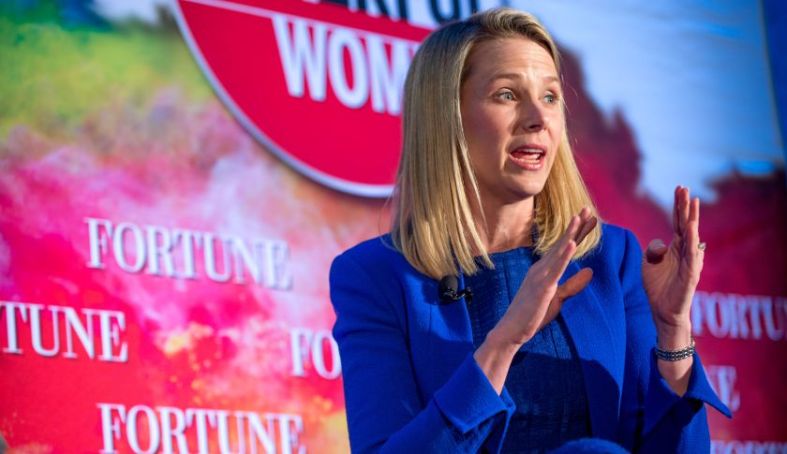
Marissa Mayer – Tag Team Parent?

On Tuesday, Yahoo CEO Marissa Mayer announced via Tumblr that she is expecting twin girls. On the same day New York Magazine writer, Oz Spies described her life, as a mother of three, as a ‘tag-team parent’. These two distinct narratives provide a vivid illustration of how folks cope with balancing work and life in a world of income inequality.

Ms. Mayer became one of the highest profile working mothers three years ago, not long after her appointment as head of the global internet service. A 2013 profile in Vogue described her strategy to balance work and child care.

“She set up a nursery next to her office, and for several months after Macallister was born, he and his nanny came to work with her.”

In her announcement this week, she implied she would utilize a similar approach with the birth of the twins.

“Since my pregnancy has been healthy and uncomplicated and since this is a unique time in Yahoo’s transformation, I plan to approach the pregnancy and delivery as I did with my son three years ago, taking limited time away and working throughout. I’ve shared the news and my plans with Yahoo’s Board of Directors and my executive team, and they are incredibly supportive and happy for me. I want to thank them for all of their encouragement as well as their offers of help and continued support.”

What is the message to the employees at Yahoo who might be planning family leave when the CEO opts out?

Writers Claire Cain Miller and David Streitfeld explored the issue in their NYT article, ‘Big Leaps for Parental Leave, if Workers Actually Take It’.

“Such contradictory signaling from Yahoo, which lengthened its parental leave in 2013, is typical and ambiguous, said Joan Williams, director of the Center for WorkLife Law at the University of California, Hastings. “The underlying work culture sends the message that if you’re really committed, you’re here all the time,” she said.”

On the other side of the spectrum, meet a Colorado couple, parents of three. One is a firefighter and the other a writer and consultant in the non-profit sector.

“We’re tag-team parents. It’s a term coined by the Center for Economic and Policy Research for parents who work alternating schedules, taking turns at both paid employment and child care, and it’s a work-parenting setup that’s on the rise. More than one-fourth of two-income couples include an adult working a nonstandard schedule (other than nine to five with evening or weekend hours).

Shift work is nothing new, but traditionally, many men who worked overnight, including firefighters, had wives who were stay-at-home moms. Now, more of these couples trade off work and kid duties. On my husband’s crew (all married fathers), the wives are all in the workforce, most of us fitting that work in around our husbands’ 48-hour shift blocks and our children’s school schedules. As a nonprofit consultant and writer, my job often gets done from a computer in our basement late at night, and I fit in the rest on the days when my husband is home with the kids. It’s yet another way that families today don’t look like the breadwinner father and stay-at-home mother ones of the past.”

While the media focuses on the birth announcements of business rockstars, it ignores the larger issue facing middle class families today. The average parent cannot bring their child and nanny to work. The cost of child care for two or more children exceeds the additional revenue of most second incomes. In the majority of families there is only one solution, alternating schedules with frequent handoffs of toddlers in parking lots when the best plans fail and shifts overlap.

This is our new American dream.

“Single parents, deployed parents, grandparents who are raising the children of their children — there are all kinds of complexities with which to wrestle. We figure it out as we go and we keep going.”

For the majority, including Oz Spies and her family this is the new normal.

“For us, tag-team parenting is the best way to see the kids we adore, do work we love, and still pay the bills. We’ll never have a standing Friday date night or every weekend together, but all this tag-team parenting has made us appreciate that we’re a team.”

Maybe Marissa Mayer’s strategy for blending family and work is a version of ‘tag team parenting’. It’s just hard to visualize a pre-dawn Silicon Valley McDonalds parking lot where a CEO and venture capitalist husband exchange toddlers, diaper bags and car seats.

‘Summer Wind’ a poem by William Cullen Bryant

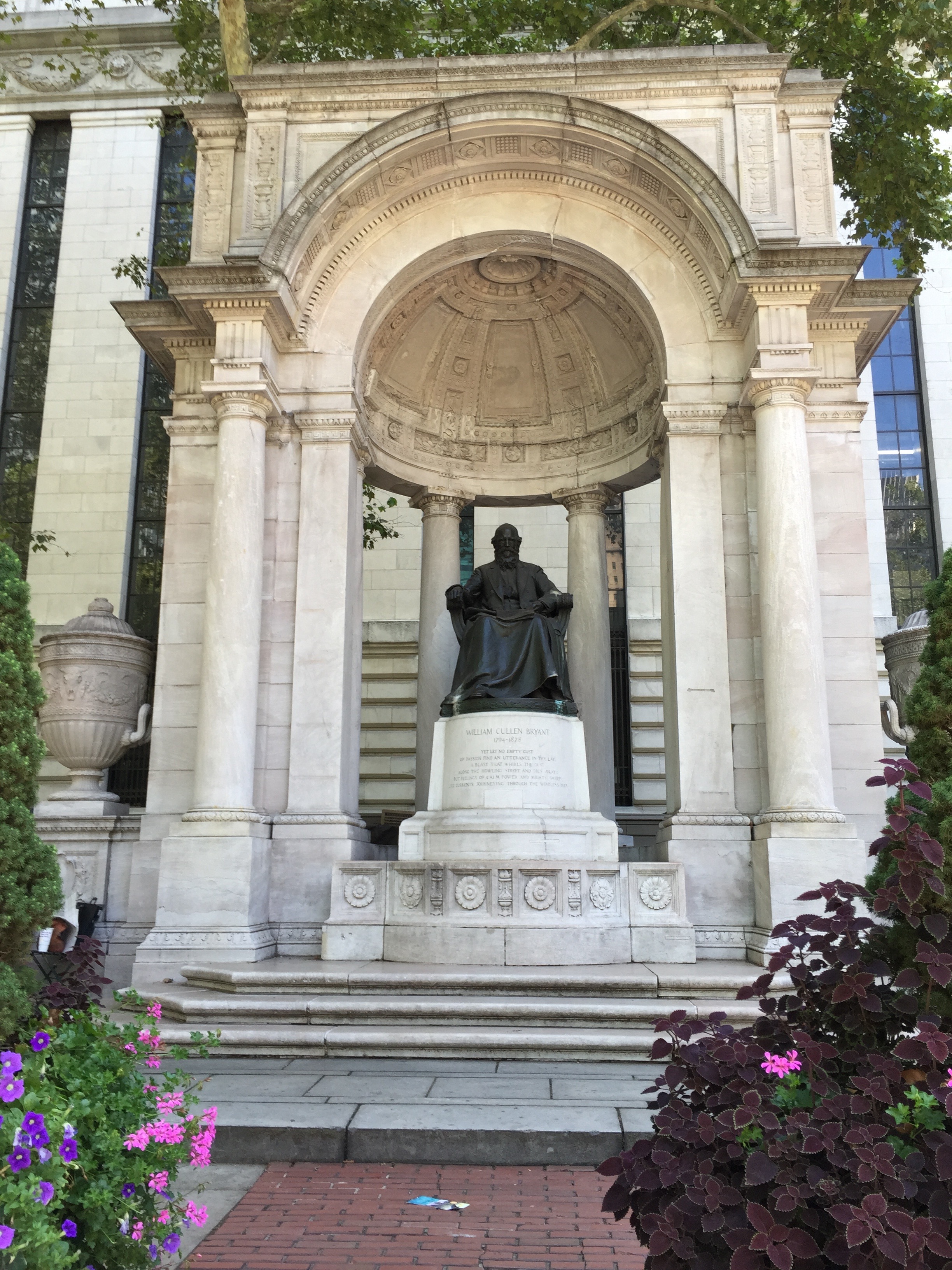
If you are in midtown Manhattan on a summer afternoon you may want to take a break from work in Bryant Park. The park’s namesake is honored in a bronze memorial sculpted by Herbert Adams. From his pedestal on the rear terrace of the New York Public Library William Cullen Bryant presides over generations of fellow New Yorkers.

Bryant arrived in New York in 1826 to become assistant editor of the New York Evening Post, founded in 1801 by Alexander Hamilton. He his tenure with the paper would last five decades. He became one of America’s most popular poets, a civic leader and led the effort to create Central Park.

“No line of his poetry survives in the consciousness of his nation, and none of his editorial pronouncements still resonates from his five decades with the New-York Evening Post, yet William Cullen Bryant stood among the most celebrated figures in the frieze of nineteenth-century America. The fame he won as a poet while in his youth remained with him as he entered his eighties; only Longfellow and Emerson were his rivals in popularity over the course of his life.” (Poetry Foundation)

His memorial was dedicated in 1911, coinciding with completion of construction on the library.

bryant

The Friday poem this week is ‘Summer Wind’ by William Cullen Bryant.

The poem was one of a series of 23 he submitted for publication in the Literary Gazette in 1824 while he was practicing law in Massachusetts. The image created by his verse recalls his memory of the landscape in the Berkshires.

Take a seat on one of those less than comfortable folding green chairs in Bryant Park and enjoy the Friday poem.

Summer Wind

It is a sultry day; the sun has drunk
The dew that lay upon the morning grass;
There is no rustling in the lofty elm
That canopies my dwelling, and its shade
Scarce cools me. All is silent, save the faint
And interrupted murmur of the bee,
Settling on the sick flowers, and then again
Instantly on the wing. The plants around
Feel the too potent fervors: the tall maize
Rolls up its long green leaves; the clover droops
Its tender foliage, and declines its blooms.
But far in the fierce sunshine tower the hills,
With all their growth of woods, silent and stern,
As if the scorching heat and dazzling light
Were but an element they loved. Bright clouds,
Motionless pillars of the brazen heaven–
Their bases on the mountains–their white tops
Shining in the far ether–fire the air
With a reflected radiance, and make turn
The gazer’s eye away. For me, I lie
Languidly in the shade, where the thick turf,
Yet virgin from the kisses of the sun,
Retains some freshness, and I woo the wind
That still delays his coming. Why so slow,
Gentle and voluble spirit of the air?
Oh, come and breathe upon the fainting earth
Coolness and life! Is it that in his caves
He hears me? See, on yonder woody ridge,
The pine is bending his proud top, and now
Among the nearer groves, chestnut and oak
Are tossing their green boughs about. He comes;
Lo, where the grassy meadow runs in waves!
The deep distressful silence of the scene
Breaks up with mingling of unnumbered sounds
And universal motion. He is come,
Shaking a shower of blossoms from the shrubs,
And bearing on their fragrance; and he brings
Music of birds, and rustling of young boughs,
And sound of swaying branches, and the voice
Of distant waterfalls. All the green herbs
Are stirring in his breath; a thousand flowers,
By the road-side and the borders of the brook,
Nod gayly to each other; glossy leaves
Are twinkling in the sun, as if the dew
Were on them yet, and silver waters break
Into small waves and sparkle as he comes.

William Cullen Bryant  1824