‘The End of Summer’ a poem by Rachel Hadas

It’s only a week until the ‘unofficial’ end of summer, the Labor Day holiday, celebrated in parades and barbecues. As the gravitational pull of work strengthens, resist for one more moment in the poetry of translator, professor and essayist Rachel Hadas

The Friday Poem this week is ‘The End of Summer’ from her collection ‘Halfway Down the Hall: New & Selected Poems’.

The End of Summer

Sweet smell of phlox drifting across the lawn—
an early warning of the end of summer.
August is fading fast, and by September
the little purple flowers will all be gone.

Season, project, and vacation done.
One more year in everybody’s life.
Add a notch to the old hunting knife
Time keeps testing with a horny thumb.

Over the summer months hung an unspoken
aura of urgency. In late July
galactic pulsings filled the midnight sky
like silent screaming, so that, strangely woken,

we looked at one another in the dark,
then at the milky magical debris
arcing across, dwarfing our meek mortality.
There were two ways to live: get on with work,

redeem the time, ignore the imminence
of cataclysm; or else take it slow,
be as tranquil as the neighbors’ cow
we love to tickle through the barbed wire fence
(she paces through her days in massive innocence,
or, seeing green pastures, we imagine so).

In fact, not being cows, we have no choice.
Summer or winter, country, city, we
are prisoners from the start and automatically,
hemmed in, harangued by the one clamorous voice.

Not light but language shocks us out of sleep
ideas of doom transformed to meteors
we translate back to portents of the wars
looming above the nervous watch we keep.

Rachel Hadas, “The End of Summer” from Halfway Down the Hall: New and Selected Poems, 1998

Workthoughts from outside the margins

Was anyone working yesterday? As social media and cable news forecast the financial apocalypse, I escaped to my ‘go to’ twitter account of Tony winning composer, lyricist and actor, Lin-Manuel Miranda. (For those of you who have been living under a rock for the past year, he is the leader of the merry band of actors who have been recreating the life of Alexander Hamilton on Broadway in nine performances per week this summer.)

And for those of you who think Twitter is an intellectual wasteland, time to get on board. You are missing out on at least one connection with an innovator who is truly transforming the American musical.

Innovation is one of our most overused words, but John Kander, composer of ‘Cabaret’ and ‘Chicago’ used that exact word to describe Mr. Miranda earlier this month in a New York Times profile.

“Innovators are usually synthesizers — they synthesize everything they know and add their own personal talents, and out comes something new,” Mr. Kander said. “What Lin is is a refreshing and healthy contemporary synthesist of everything he’s known before.”

But I digress. Back to Monday and Twitter and @Lin_Manuel. Let’s just say he has a high level of interaction with his followers. And one of those followers, @jjaxtweets, posted ‘My annual back to school post’, which #YayHamlet retweeted. And here is the message.

“Keep an eye out for that kid in the back of your classroom, scribbling in the margins. He or she is dreaming of worlds we haven’t yet imagined, scribbling toward a place we haven’t yet seen. Engage those kids, get them out of the margins, and there’s no telling where they may lead you.”

This is where a career begins. A parent, a teacher taking time to engage the child scribbling in the margins.

How do you get to Broadway or whatever your dream might be? You really, really need to love what you are doing. Check out the YouTube videos of the Ham4Ham performances between shows for those in the ticket lottery line and you get the idea.

Infuse your dream with the essence of those first scribbles, and the relationships you build over time.

Connect the dots and synthesize everything you know. Constantly nurture your talent. Lifelong learning has no expiration date.

Work really, really hard and have fun.

I think the ‘kid in the back of the classroom’ was Lin-Manuel Miranda. Or was it you?

The week@work – The time we spend @work, unpaid interns@the UN, no union for college football and the value of one good friend

Sarah Boseley reported on Wednesday on the health risks of working long hours for The Guardian newspaper in the UK.

“The largest study conducted on the issue, carried out in three continents and led by scientists at University College London, found that those who work more than 55 hours a week have a 33% increased risk of stroke compared with those who work a 35- to 40-hour week. They also have a 13% increased risk of coronary heart disease.

The findings will confirm the assumptions of many that a long-hours culture, in which people work from early in the morning until well into the evening, with work also intruding into weekends, is potentially harmful to health.”

During a discussion of these findings on CBS This Morning, co-anchor Charlie Rose turned the conversation to a discussion of how we define work.

“For some people reading a lot is play and pleasure. For others it’s work. It’s part of what they do and how they spend their time. It’s one thing to be on an assembly line, I think, and another thing to be reading a novel in preparation to interview someone. 

Where do we draw the line? Is there a line? That is the topic of the next article this week@work.

The New Yorker writer, Tim Wu thinks ‘You Really Don’t Need To Work So Much’. He questions why we have allowed ourselves to become players in “a football game where the whistle is never blown”. His solution, work should fulfill society’s needs with minimal effort. Let the workaholics have their fun, but not at the expense of the rest of us.

“The past fifty years have seen massive gains in productivity, the invention of countless labor-saving devices, and the mass entry of women into the formal workforce. If we assume that there is, to a certain degree, a fixed amount of work necessary for society to function, how can we at once be more productive, have more workers, and yet still be working more hours? Something else must be going on.”

“…in white-collar jobs, the amount of work can expand infinitely through the generation of false necessities—that is, reasons for driving people as hard as possible that have nothing to do with real social or economic needs.”

“The antidote is simple to prescribe but hard to achieve: it is a return to the goal of efficiency in work—fulfilling whatever needs we have, as a society, with the minimal effort required, while leaving the option of more work as a hobby for those who happen to love it.”

Does society need more unpaid interns? Apparently the United Nations thinks so and has grown their ‘volunteer workforce’ from 131 in 1996 to over 4,000 worldwide this year. ‘The Economist Explains why the UN doesn’t pay it’s interns’.

“The story of an unpaid intern living in a tent in Geneva did not make the United Nations look good. David Hyde, a fresh-faced 22-year-old from New Zealand, said he set up camp on the banks of Lake Geneva because he could not afford the Swiss city’s exorbitant rents while working for free. The news stirred up public outrage as well as sympathy from Mr Hyde’s colleagues: scores of UN interns in Geneva walked off the job on August 14th to protest against his plight. That same day a cluster of “interns’ rights” groups penned an open letter to the UN’s secretary-general, Ban Ki-moon, pointing out that the practice of not paying interns sits awkwardly with Article 23 of the organisation’s own Universal Declaration of Human Rights (“Everyone who works has the right to just and favourable remuneration ensuring for himself and his family an existence worthy of human dignity”). So why doesn’t the UN pay its interns?”

“They fear that paid internships may become a back door for recruitment and increase competition for coveted low-level “professional” positions.”

Excuse me, isn’t that why you do an internship? Isn’t this the apprenticeship that may one day lead to a full time job?

And while we are on the subject, let’s turn our attention to another group of unpaid collegians in the news this week, college football players. On Monday the U.S. National Labor Relations Board dismissed a petition from Northwestern University football players to form a union.

Ben Strauss reported on the board’s rationale in The New York Times:

“The board did not rule directly on the central question in the case — whether the players, who spend long hours on football and help generate millions of dollars for Northwestern, are university employees. Instead, it found that the novelty of the petition and its potentially wide-ranging impacts on college sports would not have promoted “stability in labor relations.”

Citing competitive balance and the potential impact on N.C.A.A. rules, the board made it clear that it harbored many reservations about the ramifications of granting college athletes, much less a single team, collective bargaining rights.”

For some college football players, their teammates are their best friends. And it may explain why many are so resilient.

Melissa Dahl described recent research in the UK for New York Magazine, ‘Having Just One Good Friend Strengthens Kids’ Resilience’.

“Let’s take a moment to praise the wonders of the true-blue best friendship, an especially powerful thing during the teenage years. A new study, published earlier this summer in the British Journal of Psychology, looked at this idea specifically among kids from low-income neighborhoods, and found that kids with just one solid, supportive friendship also tended to show signs of greater resilience when facing adversity than the kids with lower-quality friendships.

In their analysis, the researchers found an association between higher-quality friendships and greater resilience, likely, they theorize, because of the emotional support and the sounding board a real best friend provides.”

Here are a few more articles from the week@work that you may have missed.

The Future of Work and Workers – The Pacific Standard began a series this week exploring “What worries you most—and/or excites you most—about the future of work and workers? Put another way: What will be the most consequential changes in the world of work and workers, and what anxieties and possibilities will they produce?”

What the First Female Rangers ProveElizabeth Samet for Bloomberg View “Access to Ranger School, and combat units, is really about access to leadership opportunities. Of the 12 four-star Army generals currently on active duty, all are men. Eleven began their careers in the infantry or armor branch. Ten wear the Ranger tab. In other words, if you want a chance of running the Army, you would do well to go to Ranger School.”

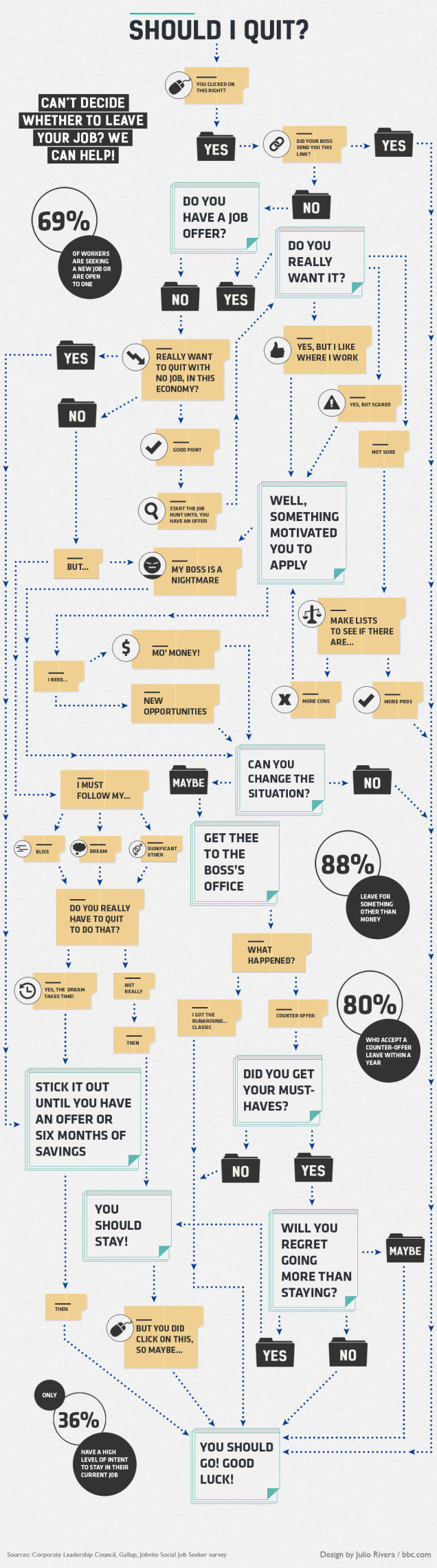
To Quit Or Not To Quit? This Flowchart Tells If It’s Time George Mortimer for Lifehack “Changing jobs or careers is something many people think about, but never seriously consider until it’s too late to change. The use of this flowchart makes it easier for you to determine if your current job satisfies your lifestyle. In basic terms, if your job isn’t making your life better you’re probably better off finding a new one.”
1372360723813364326

The Saturday Read – Brian Grazer and Charles Fishman ‘A Curious Mind: The Secret to a Bigger Life’

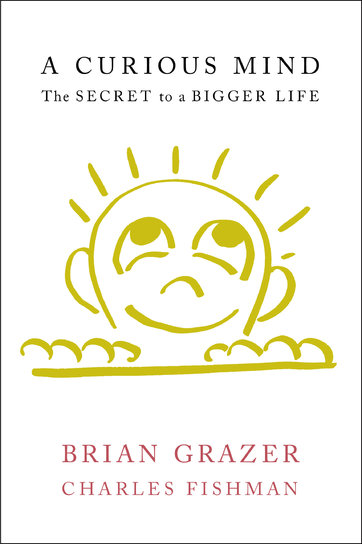
Are you curious about the people who work for you? Academy award winning producer Brian Grazer thinks you should be. He manages his organization with curiosity, by asking questions. His book, ‘A Curious Mind: The Secret to a Bigger Life’ was released earlier this year and is a memoir of his success and it’s source, listening to the answers.

“If you’re the boss, and you manage by asking questions, you’re laying the foundation for the culture of your company or group. 

You’re letting people know that the boss is willing to listen. This isn’t about being “warm” or “friendly”. It’s about understanding how complicated the modern business world is, how indispensable diversity of perspective is, and how hard creative work is.”

The initial reviews of the book focused on the ‘curiosity conversations’ Grazer has utilized throughout his career to network with a variety of folks in his unique quest for lifelong learning. But in the acknowledgements at the end of the book he addresses the reader directly on his purpose in writing ‘A Curious Mind’.

“a book not about my curiosity, but about what curiosity has enabled me to do, about what curiosity can enable anyone to do…”

“I didn’t want to write a book about all the people I’d had conversations with – I wanted to write about the impulse to have those conversations. I wanted to use the conversations to tell a story: the story of my steady discovery of the power of curiosity in my own life.”

For Grazer, it’s not just a hobby, but a commitment to intentionally integrate questioning into both his work and life outside of work.

“For it to be effective, curiosity has to be harnessed to at least two other key traits. First, the ability to pay attention to the answers to your questions – you have to actually absorb whatever it is you’re being curious about…The second trait is the willingness to act.”

In the early chapters he describes the power of curiosity to motivate, spark creativity, and build confidence. He is the ‘bard of curiosity’ sharing his career story intertwined with his capacity for discovery. But it’s in chapter five where the storytelling turns to management advice. “…the human connection that is created by curiosity…Human connection requires sincerity. It requires compassion. It requires trust.”

“Can you really have sincerity, or compassion, or trust, without curiosity?

“I don’t think so. I think when you stop to consider it – when you look at your own experiences at work and at home – what’s so clear is that authentic human connection requires curiosity.”

Here is the ‘gem’ of the book.

“To be a good boss, you have to be curious about the people who work for you.”

How many of you have a BA in business, an MBA or certificate from a prestigious executive management program? Has anyone ever suggested management by curiosity? We have all been taught to listen. And we don’t. But no one ever explained in this way, how critical the right questions are to getting to the fundamentals when decisions are being made.

“I use curiosity every day to help manage people at work…as a tool to build trust and cooperation and engagement.”

“And curiosity is the key to connecting and staying connected.”

Reading ‘A Curious Mind’ reminded me of a quote buried in dialog in the 2012 novel by Mark Helprin, ‘In Sunlight and in Shadow’:

“It’s a defining difference, curiosity. I’ve never known a stupid person who was curious, or a curious person who was stupid.”

‘To David, About His Education’ a poem by Howard Nemerov

As students return to school, the conversation once again turns to the value of education. Sitting at your desk you may look back and wonder why you had to take courses that seemed to have no relevance to your current position. Or you may have figured out that all disciplines are linked, even if those connections lie just beneath the surface.

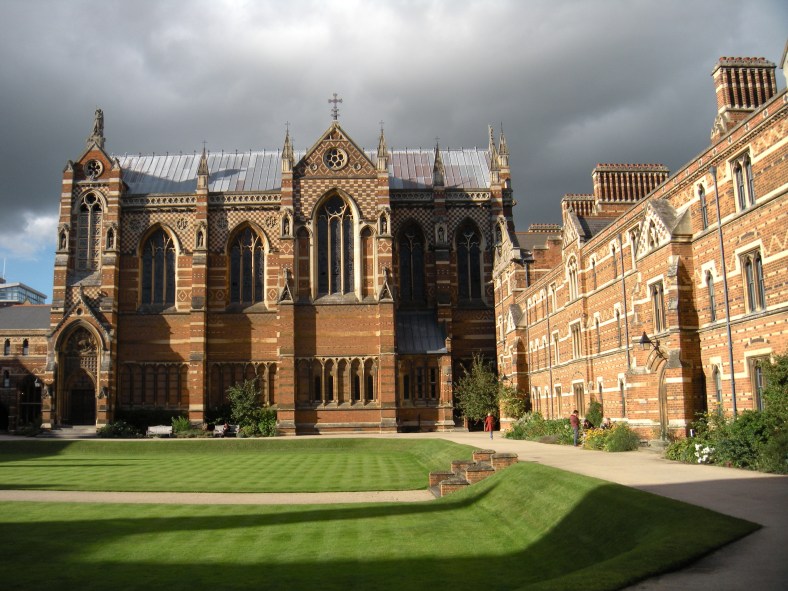
This week’s ‘Friday Poem’ comes from Harvard alum, poet laureate, and photographer, Diane Arbus‘ big brother, Howard Nemerov. It answers the question, what will you have to learn to become one of the grownups?

To David, About His Education

The world is full of mostly invisible things,
And there is no way but putting the mind’s eye,
Or its nose, in a book, to find them out,
Things like the square root of Everest
Or how many times Byron goes into Texas,
Or whether the law of the excluded middle
Applies west of the Rockies. For these
And the like reasons, you have to go to school
And study books and listen to what you are told,
And sometimes try to remember. Though I don’t know
What you will do with the mean annual rainfall
On Plato’s Republic, or the calorie content
Of the Diet of Worms, such things are said to be
Good for you, and you will have to learn them
In order to become one of the grown-ups
Who sees invisible things neither steadily nor whole,
But keeps gravely the grand confusion of the world
Under his hat, which is where it belongs,
And teaches small children to do this in their turn.

Howard Nemerov, “To David, About His Education” from ‘War Stories: Poems About Long Ago and Now’.

What if you lost 25% of your organization on one day?

When we talk about corporate culture today we talk about change. What would you do if you lost 25% of your population in one day? In three months you can expect replacements for the 25% to arrive at your doorstep. The only complication is that the newbies lack the experience of the folks who left. One more thing. An increasing number in this group will never visit a physical location of the organization, communicating solely online.

Shall we have a conversation about ‘disruption’? What resources would you require to manage the scale of change?

This is the continuous management challenge for colleges and universities. And yet, those on the corporate side often discount the ‘unreality’ of the campus workplace, while those working in academia are suspicious of those in ‘the real world’.

Today is a good day to imagine this scenario as thousands of freshman arrive on campus or sign in to their first online course.

It’s time for business schools to take a look at what’s happening on their campuses and take the lead to cross-pollinate the lessons learned across the great academic – corporate divide.

When we talk about the 25% we are talking students. It doesn’t include the annual turnover in faculty and staff.

How do you manage the expectations of this diverse group that the organization (college) is hesitant to refer to as customer, many of whom have a team of consultants (parents) directing every move? How do you create a culture that is sustained through significant population shifts?

Start with the leaders?

The academic career path that leads to the university ‘C Suite’ rarely includes leadership training. The more enlightened college presidents invite the feedback of consultants, but the majority rely on the belief that they have always been the smartest person in the room and lead accordingly.

The realities of economic viability challenge the most effective leader to balance donor pressures with cultural continuity.

The job description has changed. It’s not just faculty and students anymore. The leadership portfolio may include a multi-million dollar entertainment complex (football), a multi-billion dollar health care campus, major real estate redevelopment and significant political lobbying.

College presidents once occupied a place of influence in the national conversation. They have been replaced by political voices who view universities as the sanctuary of the elite.

University presidents are running cities within cities. They are the guarantors of our civic future with their link to generational and social change.

I have worked in both corporate and academic environments. I am aware of the wall of bias that separate the two worlds. No one benefits from this insularity. Each could gain from the leadership lessons of the other.

The week@work – The pressure to succeed @school, @work and @amazon

This week@work includes articles that echo a growing concern that we are not adequately preparing our children for the future @work, millennials expectations @work, and Amazon’s culture that just may be more in line with those expectations.

Are we teaching our children to fear failure? Contributing Atlantic writer Jessica Lahey answers the question by narrating a parent – teacher conversation. The parent is expressing a concern about a child who is achieving academically but losing the desire to learn.

“The truth—for this parent and so many others—is this: Her child has sacrificed her natural curiosity and love of learning at the altar of achievement, and it’s our fault. Marianna’s parents, her teachers, society at large—we are all implicated in this crime against learning. From her first day of school, we pointed her toward that altar and trained her to measure her progress by means of points, scores, and awards. We taught Marianna that her potential is tied to her intellect, and that her intellect is more important than her character. We taught her to come home proudly bearing As, championship trophies, and college acceptances, and we inadvertently taught her that we don’t really care how she obtains them. We taught her to protect her academic and extracurricular perfection at all costs and that it’s better to quit when things get challenging rather than risk marring that perfect record. Above all else, we taught her to fear failure. That fear is what has destroyed her love of learning.”

Innovation is the product of failure. At a time when global competition is intense, there is a shortage of the curious, the questioning.

It’s time to reevaluate our priorities and help “kids rediscover their intellectual bravery, their enthusiasm for learning, and the resilience they need in order to grow into independent, competent adults.”

What happens when these adults move into the workplace? What are their expectations?

In 2007 the Gallup Management Journal published the results of a poll of job seekers asking what was important to them in their job search.

“Nearly half of job seekers say the opportunity to learn and grow, the opportunity for advancement, and earning promotions based on merit are extremely important when looking for a job”

It follows that the quality of management and the relationship with ‘the boss’ are critical factors in recruitment and retention.

“Companies know they must offer competitive compensation packages when fighting for talented employees, and they must offer the right types of work for those seeking jobs. If they don’t revise their recruiting pitch to include concrete examples of great management, and if they don’t have great managers in the first place, then job seekers will listen to companies that do.”

Hopefully great managers will allow employees to fail. But apparently not, according to the next story about the generation we continue to label as millennials.

In a post for Inc. Chis Matyszczyk gives us four reasons these folks are leaving their jobs.

“They’ve seen what corporate life did to their parents, so they’ll take it just in small doses, thanks. They see through their bosses (and their bosses hate them for it). Millennials look at the corporate world and understand how uncertain the future is. Most of their role models got rich quick.”

If the expectation is to take corporate life in small doses, perhaps a resume should include some time at the world’s biggest retailer.

Welcome to orientation at Amazon. The ‘above the fold’ story in The New York Times today describes the corporate culture at Amazon. As all things Amazon the culture reflects the values. leadership principles and vision of Jeff Bezos.

“Amazon may be singular but perhaps not quite as peculiar as it claims. It has just been quicker in responding to changes that the rest of the work world is now experiencing: data that allows individual performance to be measured continuously, come-and-go relationships between employers and employees, and global competition in which empires rise and fall overnight. Amazon is in the vanguard of where technology wants to take the modern office: more nimble and more productive, but harsher and less forgiving.”

Key to Amazon’s success is Jeff Bezos’ realistic view of the new employer-employee contract – one based on mutual utility.

“…he was able to envision a new kind of workplace: fluid but tough, with employees staying only a short time and employers demanding the maximum.”

A few additional articles from the week@work:

‘Design As Strategy’ Adi Ignatius for The Harvard Business Review, September 2015 issue: “…illustrates some of the ways design thinking is starting to power corporate strategy.”

The Perils of Ever-Changing Work Schedules Extend to Children’s Well-Being‘ Noam Scheiber for The New York Times, 8/12: “A growing body of research suggests that children’s language and problem-solving skills may suffer as a result of their parents’ problematic schedules, and that they may be more likely than other children to smoke and drink when they are older.”

‘The Makeup Tax’ Olga Khazan  The Atlantic 8/5  “Years of research has shown that attractive people earn more. Thus, the makeup tax: Good-looking men and good-looking women both get ahead, but men aren’t expected to wear makeup in order to look good.”

The Saturday Read – Tom Wolfe, ‘I Am Charlotte Simmons’

When this week’s selection for ‘The Saturday Read’ was released in 2004 the reviews were brutal and unusual for a writer with the reputation of Tom Wolfe. In hindsight, with the headlines from college campuses in the past year, the author might have been more in tune with campus life 11 years ago than reviewers acknowledged.

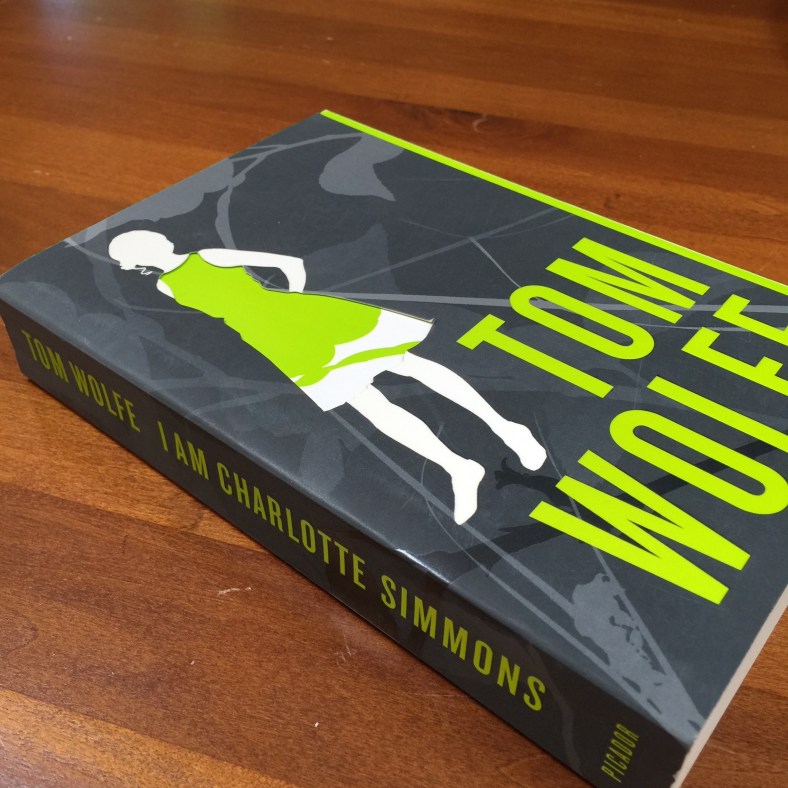
‘The Saturday Read’ this week is ‘I Am Charlotte Simmons’.

I recommend this novel for both students heading off to college and the parents left behind. In his dedication, author Wolfe acknowledged the contribution of his then college age children who provided input on authenticity throughout his writing process.

“You have been a joy, a surprise, a source of wonderment for me at every stage of your young lives. So I suppose I shouldn’t be astonished by what you have done for me and this book; but I am, and dedicating it to you is a mere whisper of my gratitude.”

“What I never imagined you could do – I couldn’t have done it at your age – was to step back in the most detached way and point out the workings of human nature in general and the esoteric workings of social status in particular.  I say “esoteric”, because in many cases these were areas of life one would not ordinarily think of as social at all. Given your powers of abstraction, you father had only to reassemble the material he had accumulated visiting campuses across the country. What I feel about you both I can say best with a long embrace.”

I include the dedication to remind parents that their children will return home surprisingly different, but recognizable. They may even amaze with their insight. And they will always welcome a long parental embrace.

Now back to Charlotte. She comes from a small Appalachian town in western North Carolina and arrives as a scholarship student at the elite Dupont University. Her acceptance was reported as the lead story in her hometown Allegheny News.

Charlotte is seeking a life of the mind but ends up with popularity and prestige linked to her relationship to a star basketball player. Her journey registered with a number of readers in college at the time of the book release.

The Yale Alumni magazine published comments from undergraduates to find out if alumnus Wolfe’s fictionalized view aligned with the student experience. Here is a sampling from three respondents.

“It’s possible! I certainly identified with Charlotte through much of the book. I came to Yale, I’d led a very sheltered life in a little suburb and couldn’t fathom what I’d find here, and it was shocking to me. In high school, none of my friends drank or smoked, so I was wide-eyed at the party scene here. While I think at times Wolfe took it too far, there were times when he was spot on. The other characters were somewhat stereotypical, but I did think that Charlotte was really complex, especially towards the beginning of the book.”

“I’m from a very small town in Ohio and though by no means was I as naïve as Charlotte, I identified with some of the class issues. There was definitely a difference between my life and the lives of my roommates, who were mostly from New York. I never felt the kind of shame that I think Charlotte does about her family, but it was definitely kind of funny when my dad, who’s a farmer, was hanging out with my friend’s father, who was a VP at Goldman Sachs. I do think that that’s an element that was portrayed very well in the book, when Charlotte’s father suggests to her rich roommate’s parents that they all go to the Sizzlin’ Skillet for dinner.”

“It’s almost like it was hard reading the book because it’s about us. I think he’s dead on with some of the observations.”

For Charlotte the college experience was transformational. And that’s why you go to college; not to get a job in the short term, not to be the same person you were on the first day of class, but to engage in the experience and grow into an ever curious, contributing member of society who will cause continual ‘surprise and wonderment’ in your parents.

Why read the book if you are not a college student or parent? ‘Charlotte’ is a narrative of change and sometimes startling interactions with a new environment. Our global workplace is one characterized by volatility and often unwelcome transition. Spending time in a fictionalized version of our reality provides an alternate narrative to explore. And it’s a good story, with good writing.

‘Summer Wind’ a poem by William Cullen Bryant

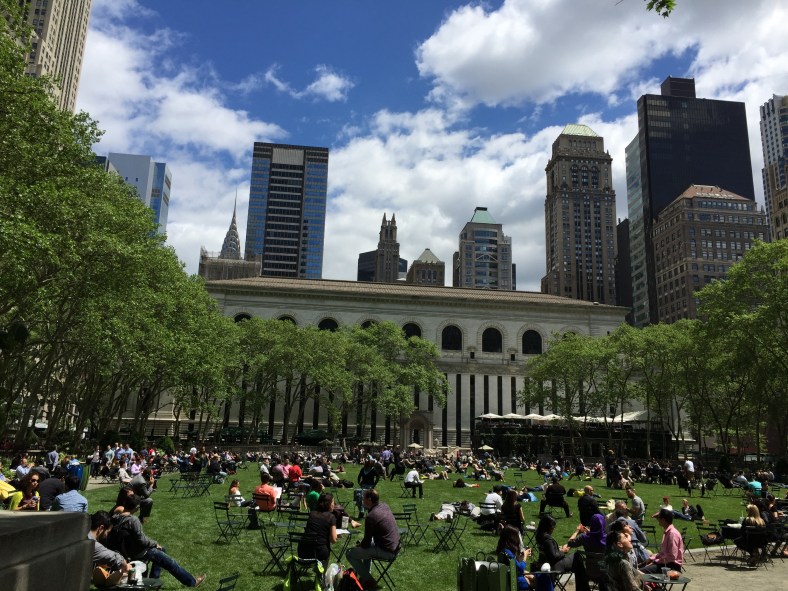
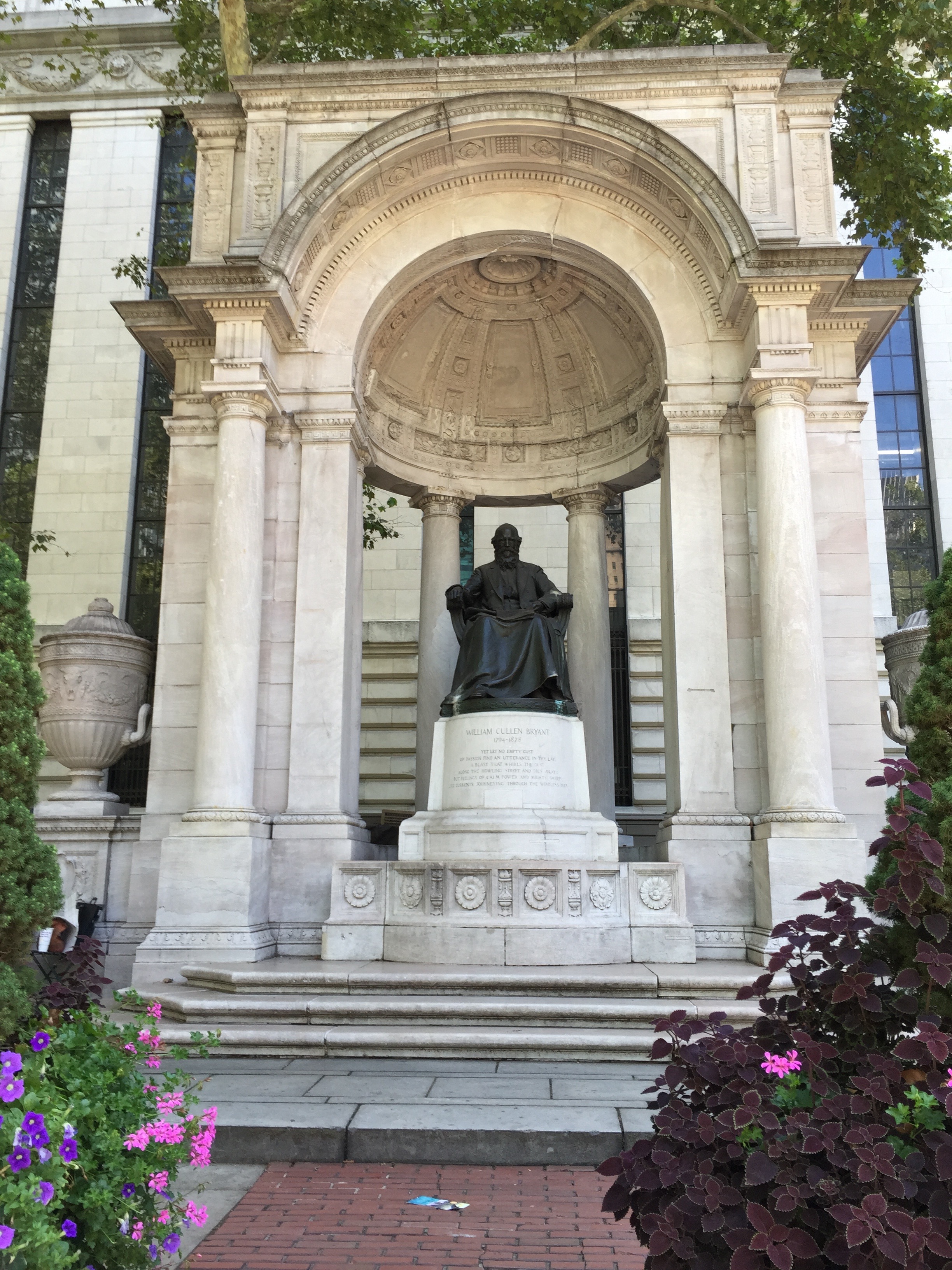
If you are in midtown Manhattan on a summer afternoon you may want to take a break from work in Bryant Park. The park’s namesake is honored in a bronze memorial sculpted by Herbert Adams. From his pedestal on the rear terrace of the New York Public Library William Cullen Bryant presides over generations of fellow New Yorkers.

Bryant arrived in New York in 1826 to become assistant editor of the New York Evening Post, founded in 1801 by Alexander Hamilton. He his tenure with the paper would last five decades. He became one of America’s most popular poets, a civic leader and led the effort to create Central Park.

“No line of his poetry survives in the consciousness of his nation, and none of his editorial pronouncements still resonates from his five decades with the New-York Evening Post, yet William Cullen Bryant stood among the most celebrated figures in the frieze of nineteenth-century America. The fame he won as a poet while in his youth remained with him as he entered his eighties; only Longfellow and Emerson were his rivals in popularity over the course of his life.” (Poetry Foundation)

His memorial was dedicated in 1911, coinciding with completion of construction on the library.

bryant

The Friday poem this week is ‘Summer Wind’ by William Cullen Bryant.

The poem was one of a series of 23 he submitted for publication in the Literary Gazette in 1824 while he was practicing law in Massachusetts. The image created by his verse recalls his memory of the landscape in the Berkshires.

Take a seat on one of those less than comfortable folding green chairs in Bryant Park and enjoy the Friday poem.

Summer Wind

It is a sultry day; the sun has drunk
The dew that lay upon the morning grass;
There is no rustling in the lofty elm
That canopies my dwelling, and its shade
Scarce cools me. All is silent, save the faint
And interrupted murmur of the bee,
Settling on the sick flowers, and then again
Instantly on the wing. The plants around
Feel the too potent fervors: the tall maize
Rolls up its long green leaves; the clover droops
Its tender foliage, and declines its blooms.
But far in the fierce sunshine tower the hills,
With all their growth of woods, silent and stern,
As if the scorching heat and dazzling light
Were but an element they loved. Bright clouds,
Motionless pillars of the brazen heaven–
Their bases on the mountains–their white tops
Shining in the far ether–fire the air
With a reflected radiance, and make turn
The gazer’s eye away. For me, I lie
Languidly in the shade, where the thick turf,
Yet virgin from the kisses of the sun,
Retains some freshness, and I woo the wind
That still delays his coming. Why so slow,
Gentle and voluble spirit of the air?
Oh, come and breathe upon the fainting earth
Coolness and life! Is it that in his caves
He hears me? See, on yonder woody ridge,
The pine is bending his proud top, and now
Among the nearer groves, chestnut and oak
Are tossing their green boughs about. He comes;
Lo, where the grassy meadow runs in waves!
The deep distressful silence of the scene
Breaks up with mingling of unnumbered sounds
And universal motion. He is come,
Shaking a shower of blossoms from the shrubs,
And bearing on their fragrance; and he brings
Music of birds, and rustling of young boughs,
And sound of swaying branches, and the voice
Of distant waterfalls. All the green herbs
Are stirring in his breath; a thousand flowers,
By the road-side and the borders of the brook,
Nod gayly to each other; glossy leaves
Are twinkling in the sun, as if the dew
Were on them yet, and silver waters break
Into small waves and sparkle as he comes.

William Cullen Bryant  1824

The one thing you should bring to college

Are you getting that ‘back to school’ feeling yet? You know, the urge to go out and purchase new pens, notebooks, trapper keepers? For most of us ‘going back to school’ is another day at the office. For the Class of 2019 it’s the beginning of the college experience and they are ready with carloads of clothing, supplies, electronics, bedding and food.

There is one item missing from the checklists, and it’s an essential for the college freshman – a journal.

For six years I taught a freshman seminar at the University of Southern California. My gift to each student was a simple Moleskine classic lined notebook. There was no requirement to fill in the blanks and turn it in at the end of the semester. It was my way of suggesting that recording one’s thoughts and experiences would provide an outlet from the stress of freshman year.

The benefits of a journal extend far beyond the daily scribbles of events. As you write, your communication skills improve as you create a narrative of your days. The practice of collecting your thoughts creates structure and discipline at a time when the transition to life at college offers multiple distractions.

You are capturing memories crafted in words. What makes you unique? Who are you meeting and what are you learning as you engage with your new community?

Social networking sites provide a way to catalog your contacts, photos and portfolio. Everything you post will follow you through life in a parallel virtual universe. How do you capture the feeling of transformation as you grow at college and in your career? Online you are the public relations version of yourself. On paper, your journal is your record-keeping of reality: failure, rejection, obstacles presented and obstacles overcome.

“One advantage in keeping a diary is that you become aware with reassuring clarity of the changes which you constantly suffer and which in a general way are naturally believed, surmised, and admitted by you, but which you’ll unconsciously deny when it comes to the point of gaining hope or peace from such an admission. In the diary you find proof that in situations which today would seem unbearable, you lived, looked around and wrote down observations, that this right hand moved then as it does today, when we may be wiser because we are able to look back upon our former condition, and for that very reason have got to admit the courage of our earlier striving in which we persisted even in sheer ignorance.”  Franz Kafka ‘Diaries, 1910 – 1923’

You are writing your story in real time. Don’t edit, but do read what you write and be amazed, looking back at what you have accomplished.

Journals are not just for college. They are our personal reference library of life experience.