The Saturday Read ‘A Sense of Where You Are’ by John McPhee

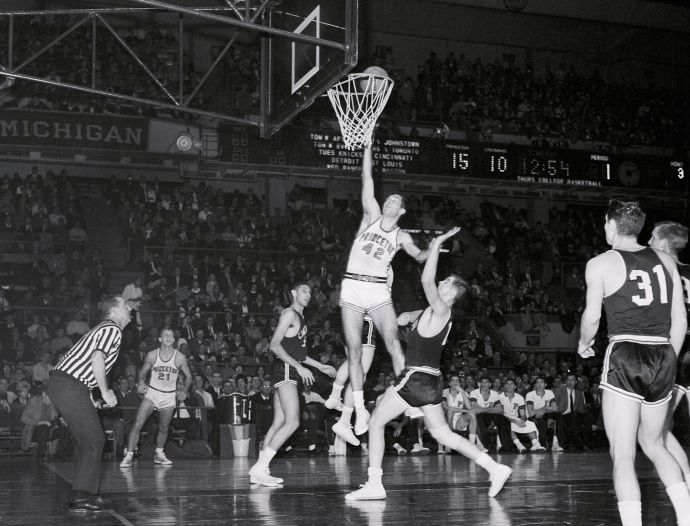
In 1964 Bill Bradley was a senior at Princeton University, and a star player on the basketball team. John McPhee was just beginning his career as a writer. In a moment to make networking history, McPhee’s dad, the athletic department physician, suggested John visit campus and profile the Ivy League phenom.

The Saturday Read this week is ‘A Sense of Where You Are’, the original New Yorker article, published in the January 23, 1965 issue.
images.jpeg

As the NCAA tournament narrows the field from 64 to 16 this weekend, let John McPhee be  your ‘throwback Saturday’ guide to Princeton University in the fall of 1964.

“The basketball locker room in the gymnasium at Princeton has no blackboard, no water fountain, and, in fact, no lockers. Up on the main floor, things go along in the same vein. Collapsible grandstands pull out of the walls and crowd up to the edge of the court. Jolly alumni sometimes wander in just before a game begins, sit down on the players’ bench, and are permitted to stay there. The players themselves are a little slow getting started each year, because if they try to do some practicing on their own during the autumn they find the gymnasium full of graduate students who know their rights and won’t move over. When a fellow does get some action, it can be dangerous. The gym is so poorly designed that a scrimmaging player can be knocked down one of two flights of concrete stairs. It hardly seems possible, but at the moment this scandalous milieu includes William Warren Bradley, who is the best amateur basketball player in the United States and among the best players, amateur or professional, in the history of the sport.”

McPhee introduces us to Bradley, his work ethic, and a time when basketball competition provided “a real period of relief from the academic load”.

Stay with me, fellow time traveller. This is not fiction. This is the future Pulitzer Prize winner, and pioneer of creative non-fiction, John McPhee, painting a picture of college life and basketball in the early 1960s.

In September of his senior year, Bradley competed on the U.S. Olympic basketball team in Tokyo, defeating Russia for the gold medal. In December, he was elected a Rhodes Scholar. He opted out of an opportunity to play for the NY Knicks to study at Oxford.

“Bradley says that when he was seventeen he came to realize that life was much longer than a few winters of basketball. He is quite serious in his application to the game, but he has wider interests and, particularly, bigger ambitions.”

Last year Marc Tracy revisited McPhee, the profile that began his career at The New Yorker, and Bradley’s last NCAA tournament.

“Fifty years earlier, McPhee had good reason to be at the Palestra for a basketball game, and for looking more than simply interested. He was covering an N.C.A.A. tournament game between Princeton and Penn State. Princeton won and then, at College Park, Md., defeated North Carolina State (whose zone press had just handled Duke) and Providence to advance to the Final Four in Portland, Ore. There, it lost to Michigan and, in the consolation game, devastated Wichita State, 118-82.”

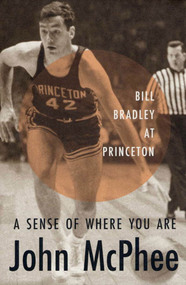
The profile, which was later expanded into a book of the same title, provides a tutorial on basketball, and the life of one true ‘student-athlete’, as he balances his academics, sport, and community involvement.
9780374526894.jpg

About that title:

“I asked him what he called his over-the-shoulder shot. He said that he had never heard a name for it, but that he had seen Oscar Robertson, of the Cincinnati Royals, and Jerry West, of the Los Angeles Lakers, do it, and had worked it out for himself. He went on to say that it is a much simpler shot than it appears to be, and, to illustrate, he tossed a ball over his shoulder and into the basket while he was talking and looking me in the eye. I retrieved the ball and handed it back to him. “When you have played basketball for a while, you don’t need to look at the basket when you are in close like this,” he said, throwing it over his shoulder again and right through the hoop. “You develop a sense of where you are.”

In 1964 his classmates predicted Bradley might run for governor in his home state of Missouri, and one day run for president.

With Bradley off to Oxford, McPhee closed his profile with this sentence.

“And like Hank Luisetti, of Stanford, who never played professional basketball, he will have the almost unique distinction of taking only the name of his college with him into the chronicles of the sport.”

That was not the end of the story.

Bradley returned after earning a masters degree at Oxford to play ten seasons with the NY Knicks, and was inducted into the Basketball Hall of Fame in 1983. He served as the U.S. Senator from New Jersey (not Missouri) from 1979-1997. And he ran for president in 2000.

In the 2015, NY Times article,“Bradley explained what the book’s title means to him”.

“You have a sense of where you are in life,” he said. “You don’t get carried away. You know who you are. You understand the environment, the context in which you’re living, and you make decisions based upon the centeredness.”

He added, “You’re also always working on who you are.”


‘Today’ a poem by Billy Collins


The signs of spring are around us. On Sunday we move the clocks ahead an hour and begin to fill in our NCAA tournament brackets. In the world beyond our workplace windows, nature quietly launches her ‘trickster season’.

“Spring has never been a reliable season. Some years it includes too much summer, some years too much winter, and some years too much of both.”

The Friday Poem this week comes from two time U.S. Poet Laureate, Billy Collins, who invites us to “throw open all the windows in the house” and enjoy the perfect spring day.

Today

If ever there were a spring day so perfect,
so uplifted by a warm intermittent breeze

that it made you want to throw
open all the windows in the house

and unlatch the door to the canary’s cage,
indeed, rip the little door from its jamb,

a day when the cool brick paths
and the garden bursting with peonies

seemed so etched in sunlight
that you felt like taking

a hammer to the glass paperweight
on the living room end table,

releasing the inhabitants
from their snow-covered cottage

so they could walk out,
holding hands and squinting

into this larger dome of blue and white,
well, today is just that kind of day.

Billy Collins   Poetry Magazine,  April 2000

176-1

“Accessibility is not a word often associated with great poetry. Yet Billy Collins has managed to create a legacy from what he calls being poetically “hospitable.” Preferring lyrical simplicity to abstruse intellectualism, Collins combines humility and depth of perception, undercutting light and digestible topics with dark and at times biting humor.”  (TED 2012)


The week@work – It’s in the stars: Hollywood stories, #YearInSpace & 18,300 applications

The stories behind the headlines this week@work originate in Hollywood, Geneva, Washington D.C., and on the International Space Station.

The careers of a U.S. deputy trade ambassador and an executive editor for the Washington Post converge in Hollywood, astronaut Scott Kelly captures the final week of his #YearInSpace in photos, and 18,300 applicants aspire to take his place.

Unknown

Would you get up at 4:30 AM every day to pursue your dream? Alexandra Alter reported on a ‘behind the scenes’ Hollywood story about working beyond your ‘day job’.

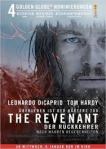
One of the most successful global trade negotiators added a few hours to his work day 17 years ago to write a novel about fur trader Hugh Glass. His book, ‘The Revenant’ was published in 2002 and sold 15,000 copies. Last year publisher Picador reissued the novel, selling over half a million copies.

images

Michael Punke, the deputy United States Trade Representative and the United States ambassador to the World Trade Organization and author, has become a rock star among colleagues in global trade.

“We all think it’s quite cool,” said Keith Rockwell, a spokesman for the W.T.O., who added that colleagues occasionally tease Mr. Punke by asking him how his buddy Leo is doing. “The W.T.O. isn’t normally known for having a Hollywood connection.”

Some of his colleagues marvel that he has such a successful side career, while steering the country’s international trade policy from his post in Geneva.

“The guy is so talented, you read his bio, and it’s like he has two lives,” said Christopher Wenk, the executive director for international policy at the U.S. Chamber of Commerce.”

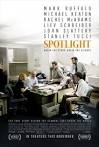
Joining Ambassador Punke at the Dolby Theater on Oscar night is current Washington Post executive editor and former Boston Globe editor Martin Baron.

In November, Esquire Magazine ran a career profile asking ‘Is Martin Baron the Best News Editor of All Time?’. In the Oscar nominated film, ‘Spotlight’, actor Liev Schreiber’s performance channels the editor who led the Pulitzer Prize winning team investigating the child abuse scandal in the Catholic Church.

Unknown-1.jpeg

This week, Mr. Baron used his time in the Oscar ‘spotlight’ to reflect on the long term rewards of the film and journalism today, ‘I’m in ‘Spotlight’, but it’s not really about me. It’s about the power of journalism.’

“Aside from the acclaim of critics, “Spotlight” already has delivered one gratifying result. In emails, tweets and Facebook posts, journalists have declared themselves inspired, buoyed and affirmed. That is no small matter in this badly bruised profession. We have felt the traumatizing financial effect of the Internet and been berated by just about everyone, especially politicians in a campaign season that has seen us cynically labeled “scum.”

One journalist wrote me that “the story that inspired the movie serves as a wonderful, wonderful reminder why so many of us got into this business in the first place and why so many stayed despite all the gloom and doom and all the left hooks that landed squarely on our chins along the way.”

The article is required reading for all who earn a living pursuing a journalism career. It should be framed on the walls of journalism schools and be the first google search result on the world ‘journalism’.

Two additional stories about work in Hollywood this week addressed the ongoing conversation on inclusion:

‘From C-Suite to Characters on Screen: How inclusive is the entertainment industry?’ USC Annenberg professor Stacy L. Smith authored the MDSC Initiative’s first report on diversity in the entertainment industry.

Melena Ryzik profiled 27 industry professionals in ‘What It’s Really Like to Work in Hollywood*  (*If you’re not a straight white man.)’

Before leaving the week@work, let’s travel to the International Space Station where astronaut Scott Kelly is completing his 240 day mission in space.

CTeSzSOWIAApQID

“10,944 sunrises and sunsets

“The International Space Station zips around Earth at more than 17,000 miles per hour, or once every 90 minutes. That means over the course of Mr. Kelly’s stay, the space station will have made 5,440 orbits, and the sun will have gone up and down 10,944 times from the perspective of the astronauts aboard. Of course, Mr. Kelly did not see all of them. He is not continuously looking out the window, and he sleeps, too.”

(Scott Kelly tweeted the photo above of sunrise on February 27 and ice earlier today)CcT9mfcW4AAZFvx.jpg

NASA announced this week that it had received 18,300 applications for 14 open spots in the new astronaut class. The recruiting effort which began in the fall demonstrates a rekindled interest in exploration and discovery.

“Now that NASA’s Feb. 18 deadline for applicants has passed, the agency’s 18-month winnowing process has begun.

NASA staff will look at 400 to 600 applicants who survive the initial purge and identify those who pass reference and background checks. Then 120 will be invited to the Johnson Space Center for interviews.

The final 14 will be announced in July 2017 and begin two years of extensive training on spacecraft systems, spacewalking skills, team building and Russian language. Those who complete the program will be assigned to NASA’s Orion deep space exploration ship, the International Space Station or one of two commercial vehicles in development.”

As @StationCDRKelley vacates his spot on the ISS, it’s good to know there are thousands who hope to fill his seat.

This week@work – it’s in the stars, and the dreams of those who aspire to be actors, film makers, journalists, writers, astronauts, and international trade negotiators.


The Saturday Read ‘War and Peace’ by Leo Tolstoy

Are you one of the many who fumbles their way through a conversation of the classics, with vague memories of the Cliff Notes version, having never read the original? You’re not alone, and the ‘Saturday Read’ this week is the first step to fill in the blanks with ‘War and Peace’ by Leo Tolstoy.

“Do you feel pressured to read certain books?” Journalist Alison Flood posed this question after a poll conducted by market research firm, ‘YouGov’, found that “Britons are weighed down with regret over novels they haven’t found ‘time and patience’ for”, garnering a series of Twitter comments concluding, you should try it, you might like it.

“…maybe it’s a classic because it’s good, not because it’s hard. I did precisely that with War and Peace; giving it a crack because I felt I should, and then being startled to discover that it was actually fun. Not a trial at all.”

Only 4% of Britons surveyed had read War and Peace, but that began to change with the broadcast this month of the Harvey Weinstein produced, BBC Television production of the novel as a four part, eight hour mini series.

“Judging by our recent sales … an awful lot of people have finally crossed this classic off their must-read list. Four different editions of the book have hit our bestseller list, shifting an almost equal number of copies each,” said Waterstones buyer Joseph Knobbs.

At publisher Wordsworth Editions, managing director Helen Trayler said that sales of War and Peace had grown steadily after the first episode of the new TV adaptation, with its edition in the top 20 of the Bookseller’s small publisher charts ever since the show launched.”

In December, 1,300 people joined together for a live, four day, marathon reading of the novel on Russian TV.

“Tolstoy’s great-great-granddaughter Fekla Tolstaya coordinated the participants, who are each reading a two to three-minute passage of the novel’s more than half a million words from schools, museums, libraries and other locations around the world.

Readers include Polish film director and Oscar winner Andrzej Wajda, Bolshoi Ballet director Vladimir Urin and Russian politician Valentina Matvienko. Cosmonaut Sergei Volkov contributed a reading from the International Space Station, and French readers were coordinated to read the book’s French sections”


IMG_3888

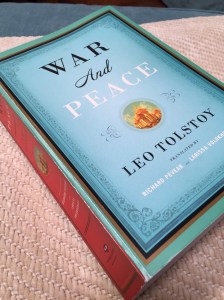
Yes, the book is written in French and English in the Pevear and Volokhonsky translation.

Clara Bell, reviewing the novel in 1886 for the New York Times criticized both the novel and Count Tolstoy’s domestic environment.

“In fact, War and Peace may be called an illustrated historical essay rather than a novel, there being no semblance of a plot, and the characters serving to develop the public events rather than being developed by them. This inversion of the usual rule, together with the subtle but unmistakeable savor of fatalism which pervades the whole work, disturbs the reader with the same sense of vague discomfort that must have chilled many of Count Tolstoi’s foreign admirers when they found their hero living in a shabby, comfortless, untidy house a little way out of Moscow, where carpets and clean tablecloths appeared to be equally rare.”

So we avoid reading ‘War and Peace’ because it’s described as daunting, boring, long, confusing and required. What if we took the advice of journalist Flood and read it for enjoyment? I did and it is long, but amazing and you will find the seeds of many subsequent classics, and ‘not so classic’ in the story.

It turns out Count Tolstoy had a lot to say about contemporary issues; the individual, happiness and occupation-work. One example, the thoughts of character Pierre Bezukov after he is released from prison at the end of the war.

“The absence of suffering, the satisfaction of one’s needs, and the resulting freedom to choose one’s occupation, that is, one’s way of life, now seemed to Pierre the highest and most unquestionable human happiness.

“…the satisfaction of his needs…now that he was deprived of them all, seemed perfect happiness to Pierre, and the choice of an occupation, that is, of a life, now, when that choice was so limited, seemed to him such an easy matter that he forgot that a superfluidity of life’s comforts destroys all the happiness of the satisfaction of one’s needs, and that a greater freedom to choose one’s occupation, the freedom which in this life was granted him by education, wealth, social position – precisely that freedom made the choice of an occupation insolubly difficult and destroyed the very need and possibility of an occupation.”

This is why we read ‘War and Peace’. It’s why Russian TV devoted four days to a live reading. And why one of Hollywood’s leaders decided to executive produce a screenplay of his favorite novel.

If you are still a bit of a skeptic, Philip Hensher of The Guardian offers ‘War and Peace: the 10 things you need to know (if you haven’t actually read it)’

” 7. Anyone who tells you that you can skip the “War” parts and only read the “Peace” parts is an idiot. The bits that interest you personally and the bits that you find of only abstract curiosity are going to change when you read the book at 20, and again at 50. The book is the product of a very big mind, who lost interest in almost everything War and Peace was about before he died. It is a living organism that is never quite the same as you remembered when you go back to it.”


The week@work – A vacancy on the Supreme Court, the power of creative cross training, deciding to ‘jump ship’ and targeting teachers

The headline story of the week@work came with the late Saturday evening announcement of the death of U.S. Supreme Court Justice Antonin Scalia. The theme of transition was echoed in other stories this week, on creative cross-training and deciding when to make your next career move. If you are a teacher, you may be considering both, as educational reform efforts seem to be targeting those leading the classroom vs. students.

A few hours before the Republican candidates were to take the stage in their on-going interview process for the job of U.S. president, news broke that conservative Supreme Court Justice Antonin Scalia had died. Within seconds, it seemed, politicians were redefining the rules on the naming of a successor. In terms of job openings, it’s one of the most coveted appointments in government. The vacancy in the judicial branch will be added to the open position of President and 469 seats in Congress on November 8. It’s enough to overwhelm your average Human Resources manager. Oh, wait, we are the human resources manager here. Time to start paying attention to resumes and experience.

Most of us hope to find meaning in our work, and make some impact on our community with our efforts. For Justice Scalia, his impact was described by Jeffrey Toobin for The New Yorker.

“The loss of Justice Antonin Scalia is immensely significant on two levels. First, Scalia himself ranks among the most influential Justices in American history, alongside such figures as John Marshall, Oliver Wendell Holmes, Jr., and William Brennan. Second, Scalia was the linchpin of the Supreme Court’s five-justice conservative majority. His departure gives President Obama—or a Democratic successor—the opportunity to reshape the ideological balance among the Justices.

When Scalia joined the court, in 1986, the leading school of constitutional interpretation was the “living Constitution”—the claim that the meaning of the document evolves with changes in American society. Scalia brought with him the concept of “originalism”—that the Constitution should be interpreted as its eighteenth-century framers understood it. In practical terms, originalism gives constitutional sanction to conservative politics.

In interpreting laws, he was the leading spokesperson for “textualism,” the idea that, when interpreting laws, courts should look not to legislative history, or congressional “intent,” but rather only to the words of the law itself. While originalism remains controversial within the legal community, textualism won support from nearly all his colleagues (all except Stephen Breyer). This means that the Justices will limit the reach of laws to their precise terms, expanding the court’s power over Congress.”

Srinivas Rao writes about ‘The Power of Creative Cross Training: How Experimentation Creates Possibility’.

Although he is describing the careers of creative professionals, his suggestions to immerse  yourself in tangential activities to broaden your thinking and portfolio, has broad application across career disciplines.

“For most creative professionals, we have a tendency to live within the limitations of our labels: copywriter, web designer, filmmaker, illustrator, and author. Those are the things we do and we get paid for.

The point of creative cross training is to immerse yourself for a short period of time in an art form that is not your primary one. For a writer that could mean designing or drawing something. For a visual artist, that could mean learning to write code.”

An entrepreneur doesn’t have the luxury of labels, and must continually cross train to develop a suite of skills in marketing, finance, customer relations and communication. If you have the mindset of an entrepreneur, creative cross training will become your mandatory daily ritual to stay competitive irrespective of profession.

Creative cross training allows you to take ownership of your career and be prepared for changes @work. Paul Sullivan explored the risks for folks who have ‘jumped ship’, leaving  a stable career to pursue a passion.

“…a Gallup Poll in October found that when American workers make a career change, they almost always do so by leaving their employer instead of taking a new job within the company. Some 93 percent said they took a new role elsewhere. The survey found this was true whether the job change occurred 30 years ago or within the last year.

…consider the tale of DeJuan Stroud, a former Wall Street broker and compliance officer…he gave up his well-paid job and put their modest savings at risk to turn a hobby — floral design, which he had learned from his grandmother growing up in Alabama — into a business.

Now, two decades later, Mr. Stroud is one of the most sought-after floral and event designers in New York City.

His is a success story. But there are big risks in following a similar path — giving up a regular salary and losing your savings for one; throwing away the security of a career is another. For those who go forward, the payoff may be more psychic than monetary, and they need to feel comfortable that the chance of a more modest lifestyle is worth it.”

For some reason, its become ok in our society to devalue the folks who inspire, encourage and transfer knowledge to each generation. Well, it’s not ok and David Denby urges us to ‘Stop Humiliating Teachers’.

“A necessary commonplace: Almost everyone we know has been turned around, or at least seriously shaken, by a teacher—in college, maybe, but often in high school, often by a man or a woman who drove home a point or two about physics, literature, or ethics, and looked at us sternly and said, in effect, You could be more than what you are. At their best, teachers are everyday gods, standing at the entryway to the world. If they are fair and good, they are possibly the most morally impressive adults that their students will ever know. For a while, they are the law, they are knowledge, they are justice.

Our view of American public education in general has been warped by our knowledge of these failing kids in inner-city and rural schools. In particular, the system as a whole has been described by “reformers” as approaching breakdown. But this is nonsense. There are actually many good schools in the United States—in cities, in suburbs, in rural areas. Pathologizing the system as a whole, reformers insist on drastic reorganization, on drastic methods of teacher accountability. In the past dozen or so years, we’ve seen the efforts, often led by billionaires and hedge-fund managers and supported by elected officials, to infuse K-12 education with models and methods derived from the business world—for instance, the drive to privatize education as much as possible with charter schools, which receive public money but are independently run and often financed by entrepreneurs. This drive is accompanied by a stream of venom aimed at unions, as if they were the problem in American education. (Most charter schools hire non-union teachers.) In the real world, however, highly unionized areas of the country, such as the Northeast, produce students with scores higher than the national average in standardized tests; the Deep South, where union teachers are more scarce, produces scores that are lower. So unions alone can hardly be the problem.”

Many recent college graduates, and career changers consider teaching as a career. In reality, our society values the profession at 70% of what peers in other professions earn.  Teachers may not be motivated by money, but that doesn’t allow the rest of us to abdicate our responsibility. It’s time to place a higher premium on those who significantly influence our future.

Two additional articles of interest to consider this week@work:

‘Women in Company Leadership Tied to Stronger Profits, Study Says’ by Daniel Victor “Having women in the highest corporate offices is correlated with increased profitability, according to a new study of nearly 22,000 publicly traded companies in 91 countries.”

‘Why do my co-workers keep confusing me with other people? Because I’m Asian.’ by Iris Kuo   “All my life I’ve been mistaken for other people of my race. It’s a degrading and thoughtless error that boils away my identity and simplifies me as one thing: “that Asian.”


The Saturday Read ‘Patience and Fortitude’ by Scott Sherman

In times of financial crisis, you start looking around the house for things you might sell off until you realize all you have left is the real estate under your roof. For the New York Public Library in the early years of the 21st century, the fine art had been sold at auction, the staff had been ‘right sized’ and all that was left to remain solvent were the private donors and the coveted real estate footprint of branch locations.

This week’s ‘Saturday Read’ is ‘Patience and Fortitude: Power, Real Estate, And The Fight To Save A Public Library’ by Scott Sherman.

“This is a book about a world-class library that lost its way in the digital age.”

patience and fortitude

A public library is a community sanctuary that has historically offered immigrants a way to the middle class. In the Preface, author Sherman retells the story of former New York Senator, Daniel Patrick Moynihan who was working as a boot-black in 1940s Times Square, visiting the main library at 42nd Street.  “It was the first time I was taught that I was welcome in a place of education and learning. I would go into that great marble palace, and I would check my shoeshine box. A gentleman in a brown cotton jacket would take it as if I’d passed over an umbrella and bowler hat.”

This is a New York story, but one that illustrates the fate of the non-profit organization in an economic downturn. In the case of the NYPL, originally founded by bankers and corporate titans, the seismic shifts in the economy forced the influential board, of modern day financiers, to engage big name consultants in an attempt to apply “free-market solutions to complex institutional problems.”

The central narrative of the book was first reported by author Sherman in the December 2011 issue of ‘The Nation’. ‘Upheaval at the New York Public Library’ made public a four year old ‘Central Library Plan’, conceived and ratified by the NYPL’s trustees.

“The core trustees – led by the developer Marshall Rose – did what came naturally to them: they sold the NYPL’s land and took steps to shrink an institution they may have viewed as bureaucratic and inefficient…Personal enrichment was certainly not the trustees’ intention; they were sincere in their desire to assist the Library. It was hubris that drove them forward, and which ultimately led them astray: they believed that corporate logic could be effortlessly applied to a sprawling, decrepit library system.”

Consider this the first shot across the bow, as the Sherman chronicles the response from writers, researchers, NYPL employees, politicians and library patrons.

A 2012 Op-Ed piece written by Theodore Roosevelt biographer, Edmund Morris for The New York Times offers a sample of the opposition.

“I read newspaper reports about the determination of Anthony W. Marx, the president of the library, to spend $300 million to transform the main building, long devoted to reference, into what sounds like a palace of presentism. He wants to close the library system’s biggest circulating branch, the Mid-Manhattan (located just across the street) and the Science, Industry and Business Library (also in Midtown) and somehow wedge their contents into the already overstocked central research library.

For that he will need all the spatial ingenuity of his trendy architect-designate, Norman Foster. But something’s going to have to give, and you can be sure that what is new and hard and digital will prevail over what is old and papery and transportable elsewhere.”

On May 7, 2014 Robin Pogrebin reported that the NYPL has abandoned its renovation plan.

Last month, Tom Mashberg of The New York Times reported on the new plan to create a high-tech space under Bryant Park to house 2.5 million research works from the original stacks.

“This was not, of course, Plan A. That plan entailed a makeover of the flagship Fifth Avenue library that would have sent the research books to Princeton, N.J. But it set off a virtual Fahrenheit 451 of outrage among scholars and others for whom the library’s role as a research mecca seemed endangered. Critics, who hoped the old steel stacks could stay in use, remain apprehensive about the new stocking and retrieval system, which they say is impressive but has not been tested.”

To be continued…

And while you wait, catch up on the history and the cast of characters who bring ‘Patience and Fortitude’ to life.


The week@work – College choice & future earnings, friends@work, ‘ambition’ and a networking mindset

This week@work we learned that future earnings @work is affected by where you attended college. In the workplace, it’s not so easy to make friends@work, ‘ambition’ can be an insult and a networking mindset is about authenticity and generosity.

The New York Times contributor Kevin Carey reported on ‘Gaps in Earnings Stand Out in Release of College Data’. Analyzing the data from the federal government’s ‘College Scorecard’ he found not only a disparity in earnings between elite college grads and second tier universities, but also a gender gap in earnings among alumni of those elite colleges.

“The data reveals how much money students are borrowing in exchange for earnings after graduation. While U.C.L.A. and Penn State are both prestigious public research universities, recent U.C.L.A. grads leave with about 30 percent less debt, even as their predecessors are earning about 30 percent more money than counterparts at Penn State. Harvard students borrow barely a quarter of what Brandeis students take on, and earn nearly twice as much.

The return is unequal in other ways. There is an earnings gender gap at every top university. The size of the difference varies a great deal. At Duke, for example, women earned $93,100 per year on average, compared with $123,000 for men, a difference of $29,900. At Princeton, men earned more and women earned less, for a difference of $47,700. Women who enrolled at Cornell earned more than women who enrolled at Yale.”

Let’s imagine you have landed a great job, what are your expectations of the workplace? Do you want to socialize with colleagues?

University of Pennsylvania professor Adam Grant asked the question, ‘can work colleagues be friends?’

“Once, work was a major source of friendships. We took our families to company picnics and invited our colleagues over for dinner. Now, work is a more transactional place. We go to the office to be efficient, not to form bonds. We have plenty of productive conversations but fewer meaningful relationships. 

It’s not that Americans are less concerned with relationships overall. We’re social creatures outside work, yet the office interaction norm tends to be polite but impersonal. Some people think pleasantries have no place in professional meetings.

Why are Americans so determined to get down to business?

The economic explanation is that long-term employment has essentially vanished: Instead of spending our careers at one organization, we expect to jump ship every few years. Since we don’t plan to stick around, we don’t invest in the same way. We view co-workers as transitory ties, greeting them with arms-length civility while reserving real camaraderie for outside work.

Some observers blame the rise of flextime and virtual work. When more people are working remotely, we have fewer chances for the face-to-face encounters that are so critical to companionship. But a comprehensive analysis of 46 studies of over 12,000 employees demonstrated that as long as people were in the office for at least two and a half days per week, “telecommuting had no generally detrimental effects on the quality of workplace relationships.”

If you don’t build relationships @work, how will you navigate the corporate culture? How will you understand how to motivate a diverse workforce? How will you learn that the word ‘ambition’ is one of those code words with different meaning for men and women?

Kristin van Ogtrop, editor of Real Simple magazine reported on the results of a poll conducted by Real Simple and Time magazine exploring how men and women define success and ambition.

“When it comes to success in corporate America, context trumps competence. Lisa Shalett, now the chief marketing officer of The Odyssey, a social content platform, recently concluded a 20-year career at Goldman Sachs with both a highly sought-after partner title and the wisdom of experience regarding what women must do to thrive in a male environment. “Ambition,” says Shalett, “needs care and feeding, having the kind of informal relationships where you understand ‘How do I navigate this path, what do I need to know, how can I get there?’ Men tend to be ambitious for things, for positions, for titles, for results. Women tend to be ambitious to be recognized for performance, to be valued, to be included, and maybe expect that good things will come from that.”

“Barnard president Debora Spar believes entrepreneurial has replaced ambitious for a new generation. “I don’t think anyone has ever come in my office and said, ‘I’m ambitious.’ Everyone I know is ‘entrepreneurial.’” And now a number of ambitious women are simply channeling their dissatisfaction with traditional corporate life into fast-growing new businesses.”

The key to building and sustaining relationships in the workplace is networking. Our attempts to reach out may fail and it may be because we are a bit too focused on our side of the equation.

CEO and co-founder of Alumnify, AJ Agrawal shared his thoughts on ‘How to Develop a Networking Mindset’.

“Over and over again, we hear about the importance of having connections to get ahead in business and in life. “It’s not what you know, it’s who know” as the famous saying goes. While people repeat this all the time, it questions the meaning behind relationships. Do we make connections because we like the person’s work and ideals, or because we think they can help us?

To build a strong network, as (Sar) Haribhakti puts it, your mindset should be focused on initiating relationships with authenticity and generosity. People always tend to capitalize on what they think the other person might be offer them for achieving their personal goals, growing their businesses, or get an introduction to an influential person. He thinks what most people fail to realize is that every human has an innate desire of being appreciated and valued.”

One additional article of interest on the topic of professional development:

‘Teaching Tech Skills to Millions, And Fast’ – on-line degree provider,Udacity partnered with technology companies to create online courses geared toward teaching a set of discrete, highly prized technical skills — including mobile programming, data analysis and web development. Students who complete these courses are awarded the nanodegree, a credential that Udacity has worked with Google, AT&T and other companies to turn into a new form of workplace certification.”

Marissa Mayer – Tag Team Parent?

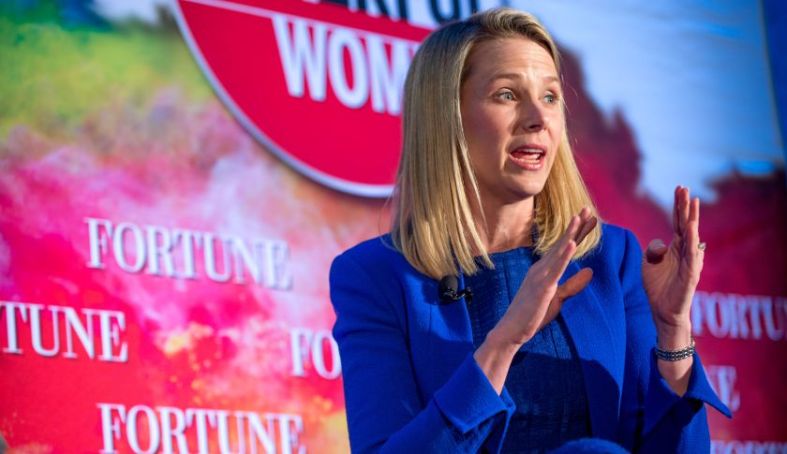
On Tuesday, Yahoo CEO Marissa Mayer announced via Tumblr that she is expecting twin girls. On the same day New York Magazine writer, Oz Spies described her life, as a mother of three, as a ‘tag-team parent’. These two distinct narratives provide a vivid illustration of how folks cope with balancing work and life in a world of income inequality.

Ms. Mayer became one of the highest profile working mothers three years ago, not long after her appointment as head of the global internet service. A 2013 profile in Vogue described her strategy to balance work and child care.

“She set up a nursery next to her office, and for several months after Macallister was born, he and his nanny came to work with her.”

In her announcement this week, she implied she would utilize a similar approach with the birth of the twins.

“Since my pregnancy has been healthy and uncomplicated and since this is a unique time in Yahoo’s transformation, I plan to approach the pregnancy and delivery as I did with my son three years ago, taking limited time away and working throughout. I’ve shared the news and my plans with Yahoo’s Board of Directors and my executive team, and they are incredibly supportive and happy for me. I want to thank them for all of their encouragement as well as their offers of help and continued support.”

What is the message to the employees at Yahoo who might be planning family leave when the CEO opts out?

Writers Claire Cain Miller and David Streitfeld explored the issue in their NYT article, ‘Big Leaps for Parental Leave, if Workers Actually Take It’.

“Such contradictory signaling from Yahoo, which lengthened its parental leave in 2013, is typical and ambiguous, said Joan Williams, director of the Center for WorkLife Law at the University of California, Hastings. “The underlying work culture sends the message that if you’re really committed, you’re here all the time,” she said.”

On the other side of the spectrum, meet a Colorado couple, parents of three. One is a firefighter and the other a writer and consultant in the non-profit sector.

“We’re tag-team parents. It’s a term coined by the Center for Economic and Policy Research for parents who work alternating schedules, taking turns at both paid employment and child care, and it’s a work-parenting setup that’s on the rise. More than one-fourth of two-income couples include an adult working a nonstandard schedule (other than nine to five with evening or weekend hours).

Shift work is nothing new, but traditionally, many men who worked overnight, including firefighters, had wives who were stay-at-home moms. Now, more of these couples trade off work and kid duties. On my husband’s crew (all married fathers), the wives are all in the workforce, most of us fitting that work in around our husbands’ 48-hour shift blocks and our children’s school schedules. As a nonprofit consultant and writer, my job often gets done from a computer in our basement late at night, and I fit in the rest on the days when my husband is home with the kids. It’s yet another way that families today don’t look like the breadwinner father and stay-at-home mother ones of the past.”

While the media focuses on the birth announcements of business rockstars, it ignores the larger issue facing middle class families today. The average parent cannot bring their child and nanny to work. The cost of child care for two or more children exceeds the additional revenue of most second incomes. In the majority of families there is only one solution, alternating schedules with frequent handoffs of toddlers in parking lots when the best plans fail and shifts overlap.

This is our new American dream.

“Single parents, deployed parents, grandparents who are raising the children of their children — there are all kinds of complexities with which to wrestle. We figure it out as we go and we keep going.”

For the majority, including Oz Spies and her family this is the new normal.

“For us, tag-team parenting is the best way to see the kids we adore, do work we love, and still pay the bills. We’ll never have a standing Friday date night or every weekend together, but all this tag-team parenting has made us appreciate that we’re a team.”

Maybe Marissa Mayer’s strategy for blending family and work is a version of ‘tag team parenting’. It’s just hard to visualize a pre-dawn Silicon Valley McDonalds parking lot where a CEO and venture capitalist husband exchange toddlers, diaper bags and car seats.

Workthoughts from outside the margins

Was anyone working yesterday? As social media and cable news forecast the financial apocalypse, I escaped to my ‘go to’ twitter account of Tony winning composer, lyricist and actor, Lin-Manuel Miranda. (For those of you who have been living under a rock for the past year, he is the leader of the merry band of actors who have been recreating the life of Alexander Hamilton on Broadway in nine performances per week this summer.)

And for those of you who think Twitter is an intellectual wasteland, time to get on board. You are missing out on at least one connection with an innovator who is truly transforming the American musical.

Innovation is one of our most overused words, but John Kander, composer of ‘Cabaret’ and ‘Chicago’ used that exact word to describe Mr. Miranda earlier this month in a New York Times profile.

“Innovators are usually synthesizers — they synthesize everything they know and add their own personal talents, and out comes something new,” Mr. Kander said. “What Lin is is a refreshing and healthy contemporary synthesist of everything he’s known before.”

But I digress. Back to Monday and Twitter and @Lin_Manuel. Let’s just say he has a high level of interaction with his followers. And one of those followers, @jjaxtweets, posted ‘My annual back to school post’, which #YayHamlet retweeted. And here is the message.

“Keep an eye out for that kid in the back of your classroom, scribbling in the margins. He or she is dreaming of worlds we haven’t yet imagined, scribbling toward a place we haven’t yet seen. Engage those kids, get them out of the margins, and there’s no telling where they may lead you.”

This is where a career begins. A parent, a teacher taking time to engage the child scribbling in the margins.

How do you get to Broadway or whatever your dream might be? You really, really need to love what you are doing. Check out the YouTube videos of the Ham4Ham performances between shows for those in the ticket lottery line and you get the idea.

Infuse your dream with the essence of those first scribbles, and the relationships you build over time.

Connect the dots and synthesize everything you know. Constantly nurture your talent. Lifelong learning has no expiration date.

Work really, really hard and have fun.

I think the ‘kid in the back of the classroom’ was Lin-Manuel Miranda. Or was it you?

The week@work – The time we spend @work, unpaid interns@the UN, no union for college football and the value of one good friend

Sarah Boseley reported on Wednesday on the health risks of working long hours for The Guardian newspaper in the UK.

“The largest study conducted on the issue, carried out in three continents and led by scientists at University College London, found that those who work more than 55 hours a week have a 33% increased risk of stroke compared with those who work a 35- to 40-hour week. They also have a 13% increased risk of coronary heart disease.

The findings will confirm the assumptions of many that a long-hours culture, in which people work from early in the morning until well into the evening, with work also intruding into weekends, is potentially harmful to health.”

During a discussion of these findings on CBS This Morning, co-anchor Charlie Rose turned the conversation to a discussion of how we define work.

“For some people reading a lot is play and pleasure. For others it’s work. It’s part of what they do and how they spend their time. It’s one thing to be on an assembly line, I think, and another thing to be reading a novel in preparation to interview someone. 

Where do we draw the line? Is there a line? That is the topic of the next article this week@work.

The New Yorker writer, Tim Wu thinks ‘You Really Don’t Need To Work So Much’. He questions why we have allowed ourselves to become players in “a football game where the whistle is never blown”. His solution, work should fulfill society’s needs with minimal effort. Let the workaholics have their fun, but not at the expense of the rest of us.

“The past fifty years have seen massive gains in productivity, the invention of countless labor-saving devices, and the mass entry of women into the formal workforce. If we assume that there is, to a certain degree, a fixed amount of work necessary for society to function, how can we at once be more productive, have more workers, and yet still be working more hours? Something else must be going on.”

“…in white-collar jobs, the amount of work can expand infinitely through the generation of false necessities—that is, reasons for driving people as hard as possible that have nothing to do with real social or economic needs.”

“The antidote is simple to prescribe but hard to achieve: it is a return to the goal of efficiency in work—fulfilling whatever needs we have, as a society, with the minimal effort required, while leaving the option of more work as a hobby for those who happen to love it.”

Does society need more unpaid interns? Apparently the United Nations thinks so and has grown their ‘volunteer workforce’ from 131 in 1996 to over 4,000 worldwide this year. ‘The Economist Explains why the UN doesn’t pay it’s interns’.

“The story of an unpaid intern living in a tent in Geneva did not make the United Nations look good. David Hyde, a fresh-faced 22-year-old from New Zealand, said he set up camp on the banks of Lake Geneva because he could not afford the Swiss city’s exorbitant rents while working for free. The news stirred up public outrage as well as sympathy from Mr Hyde’s colleagues: scores of UN interns in Geneva walked off the job on August 14th to protest against his plight. That same day a cluster of “interns’ rights” groups penned an open letter to the UN’s secretary-general, Ban Ki-moon, pointing out that the practice of not paying interns sits awkwardly with Article 23 of the organisation’s own Universal Declaration of Human Rights (“Everyone who works has the right to just and favourable remuneration ensuring for himself and his family an existence worthy of human dignity”). So why doesn’t the UN pay its interns?”

“They fear that paid internships may become a back door for recruitment and increase competition for coveted low-level “professional” positions.”

Excuse me, isn’t that why you do an internship? Isn’t this the apprenticeship that may one day lead to a full time job?

And while we are on the subject, let’s turn our attention to another group of unpaid collegians in the news this week, college football players. On Monday the U.S. National Labor Relations Board dismissed a petition from Northwestern University football players to form a union.

Ben Strauss reported on the board’s rationale in The New York Times:

“The board did not rule directly on the central question in the case — whether the players, who spend long hours on football and help generate millions of dollars for Northwestern, are university employees. Instead, it found that the novelty of the petition and its potentially wide-ranging impacts on college sports would not have promoted “stability in labor relations.”

Citing competitive balance and the potential impact on N.C.A.A. rules, the board made it clear that it harbored many reservations about the ramifications of granting college athletes, much less a single team, collective bargaining rights.”

For some college football players, their teammates are their best friends. And it may explain why many are so resilient.

Melissa Dahl described recent research in the UK for New York Magazine, ‘Having Just One Good Friend Strengthens Kids’ Resilience’.

“Let’s take a moment to praise the wonders of the true-blue best friendship, an especially powerful thing during the teenage years. A new study, published earlier this summer in the British Journal of Psychology, looked at this idea specifically among kids from low-income neighborhoods, and found that kids with just one solid, supportive friendship also tended to show signs of greater resilience when facing adversity than the kids with lower-quality friendships.

In their analysis, the researchers found an association between higher-quality friendships and greater resilience, likely, they theorize, because of the emotional support and the sounding board a real best friend provides.”

Here are a few more articles from the week@work that you may have missed.

The Future of Work and Workers – The Pacific Standard began a series this week exploring “What worries you most—and/or excites you most—about the future of work and workers? Put another way: What will be the most consequential changes in the world of work and workers, and what anxieties and possibilities will they produce?”

What the First Female Rangers ProveElizabeth Samet for Bloomberg View “Access to Ranger School, and combat units, is really about access to leadership opportunities. Of the 12 four-star Army generals currently on active duty, all are men. Eleven began their careers in the infantry or armor branch. Ten wear the Ranger tab. In other words, if you want a chance of running the Army, you would do well to go to Ranger School.”

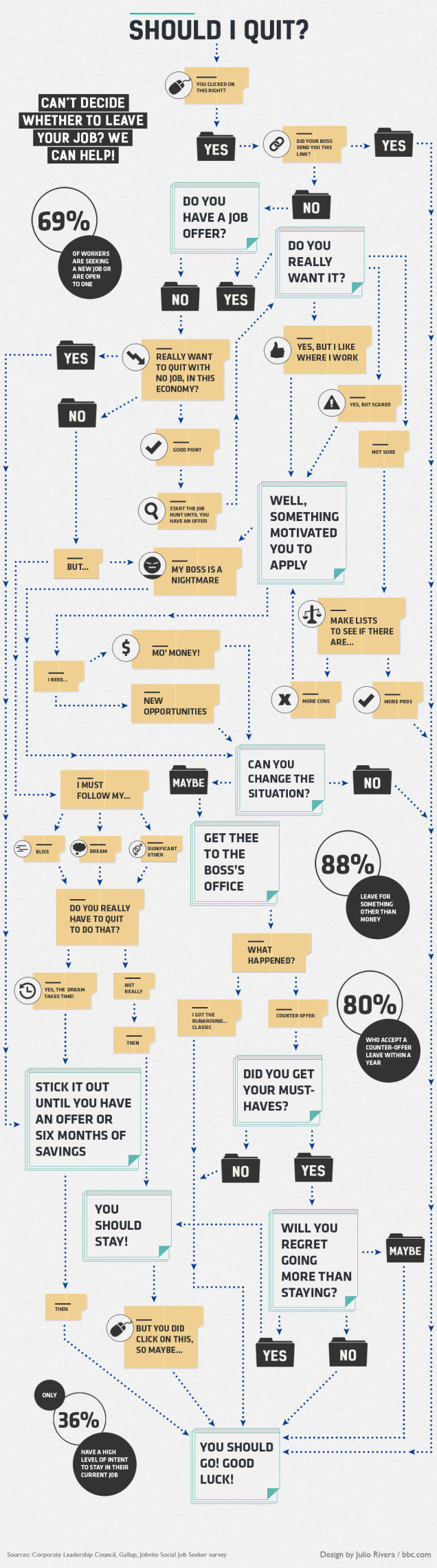
To Quit Or Not To Quit? This Flowchart Tells If It’s Time George Mortimer for Lifehack “Changing jobs or careers is something many people think about, but never seriously consider until it’s too late to change. The use of this flowchart makes it easier for you to determine if your current job satisfies your lifestyle. In basic terms, if your job isn’t making your life better you’re probably better off finding a new one.”

1372360723813364326