The ‘Black’ Friday Poem – ‘Why I Have A Crush On You, UPS Man’ by Alice N. Persons

It’s the perfect poem for ‘Black’ Friday or ‘Cyber’ Monday. Soon the big brown box trucks will be delivering all sorts of packages for the holidays. This one, from poet Alice N. Persons, is for all those who work at UPS (including the drivers of those tandem trucks on Interstate 40 who terrify me twice a year on my cross country journeys).

Why I Have A Crush On You, UPS Man

you bring me all the things I order
are never in a bad mood
always have a jaunty wave as you drive away
look good in your brown shorts
we have an ideal uncomplicated relationship
you’re like a cute boyfriend with great legs
who always brings the perfect present
(why, it’s just what I’ve always wanted!)
and then is considerate enough to go away
oh, UPS Man, let’s hop in your clean brown truck and elope !
ditch your job, I’ll ditch mine
let’s hit the road for Brownsville
and tempt each other
with all the luscious brown foods —
roast beef, dark chocolate,
brownies, Guinness, homemade pumpernickel, molasses cookies
I’ll make you my mama’s bourbon pecan pie
we’ll give all the packages to kind looking strangers
live in a cozy wood cabin
with a brown dog or two
and a black and brown tabby
I’m serious, UPS Man. Let’s do it.
Where do I sign?

Alice N. Persons  ‘Don’t Be A Stranger’, Sheltering Pines Press 2007

Thanksgiving 1944

I am a daughter of the generation who rarely talked about their earlier lives. Even in later years when their mortality became evident, there was no sharing of history. It’s only in the wake of their demise that clues appear in the back of sock drawers and attic boxes in photos and paper.

In 1944 President Franklin D. Roosevelt proclaimed Thursday the twenty-third of November a day of national thanksgiving.

On that Thanksgiving Day in the Netherlands, East Indies, members of the 989 Signal Corps at Base G, under the command of Captain John Gammon, shared a dinner of roast turkey, turkey dressing, giblet gravy, cranberry sauce, mashed potatoes, creamed peas and carrots, creamed corn and fruit salad. Parker house rolls were served with butter and jam. And for dessert there was devils food cake, pumpkin pie and coffee.

The meal was prepared under the supervision of the mess sergeant, Lloyd V Green, assistant mess sergeant Theodore J Sherian and baker Ralph L Bowman. Seven cooks prepared the meal, PP Urban, WE Hovermale, SV Schultz, JA Bozer, IA Johnson, C Branham, RC Click, M Lynn and L Downs.

My father left few clues to his time in the South Pacific.  There were a few coins, photos, but only one sheet of paper, mimeographed and folded. On one side, a hand drawn sketch of a palm tree, a roast turkey and ‘Thanksgiving 1944’. On the other, the menu and the list of those who prepared the meal.

Why that menu traveled thousands of miles back to New Jersey remains a mystery. On this Thanksgiving, I thank the families of those who served with him, and on that day in 1944 helped create a special memory in the chaos of the South Pacific Theater.

Happy Thanksgiving.

1944  menu.jpg


The week@work:’post-truth’, Facebook’s ‘news feed’, Gwen Ifill, a new leader @Lincoln Center, & Udacity’s tech job tryouts

This past week@work Oxford Dictionaries declared ‘post-truth’ the 2016 word of the year, and Facebook’s Mark Zuckerberg realized his job description included a responsibility to combat fake news. In contrast, the week marked the death of an authentic journalist, PBS NewsHour co-anchor Gwen Ifill. Lincoln Center chose a new leader from academia and MOOC provider, Udacity announced tech job tryouts.

On Wednesday, the BBC reported “Oxford Dictionaries has declared “post-truth” as its 2016 international word of the year, reflecting what it called a “highly-charged” political 12 months.

It is defined as an adjective relating to circumstances in which objective facts are less influential in shaping public opinion than emotional appeals.

post-truth_B4BED3DEF1DC47D4B21C7D697F06CC91.jpg

Oxford Dictionaries says post-truth is thought to have been first used in 1992. However, it says the frequency of its usage increased by 2,000% in 2016 compared with last year.”

The Economist explored ‘post-truth’ in ‘The Art of the Lie’.

“The term picks out the heart of what is new: that truth is not falsified, or contested, but of secondary importance…

Post-truth politics has many parents. Some are noble. The questioning of institutions and received wisdom is a democratic virtue. A sceptical lack of deference towards leaders is the first step to reform. The collapse of communism was hastened because brave people were prepared to challenge the official propaganda.

Post-truth has also been abetted by the evolution of the media… The fragmentation of news sources has created an atomised world in which lies, rumour and gossip spread with alarming speed. Lies that are widely shared online within a network, whose members trust each other more than they trust any mainstream-media source, can quickly take on the appearance of truth. Presented with evidence that contradicts a belief that is dearly held, people have a tendency to ditch the facts first. Well-intentioned journalistic practices bear blame too. The pursuit of “fairness” in reporting often creates phoney balance at the expense of truth.”

The New Yorker contributor, Nathan Heller examined one example of the phenomena in ‘The Failure of Facebook Democracy’.

fbwm_cw_07.jpg

“The unexpected election of Donald Trump is said to owe debts to both niche extremism and rampant misinformation. Facebook, the most pervasive of the social networks, has received much scrutiny and blame. During the final weeks of the campaigns, it grew apparent that the site’s “news” algorithm—a mechanism that trawls posts from one’s online friends and rank-displays those deemed of interest—was not distinguishing between real news and false information: the sort of tall tales, groundless conspiracy theories, and oppositional propaganda that, in the Cenozoic era, circulated mainly via forwarded e-mails.

Facebook is not the only network to have trafficked phony news, but its numbers have been striking. A much-cited Pew survey, released in May, suggested that forty-four per cent of the general population used Facebook as a news source, a figure unrivalled by other social networks. An analysis this week by Craig Silverman, of BuzzFeed, found that the twenty top-performing fake news stories on the network outperformed the twenty top real-news stories during the final three months before the election—and that seventeen of those fakes favored the Trump campaign.

If a majority of Americans are getting their news from Facebook, then Facebook surely has a civic obligation to insure the information it disseminates is sound.”

Which brings us to the initial response from Facebook founder/CEO Mark Zuckerberg.

“Identifying the ‘truth’ is complicated.”

12208495_10102454385528521_4749095086285673716_n.jpg

On Friday, he posted details of the projects in place to address the issue.

“A lot of you have asked what we’re doing about misinformation, so I wanted to give an update.

The bottom line is: we take misinformation seriously. Our goal is to connect people with the stories they find most meaningful, and we know people want accurate information. We’ve been working on this problem for a long time and we take this responsibility seriously. We’ve made significant progress, but there is more work to be done.”

Buried in paragraph four was this nugget that seemed to transfer ownership from the corporation to the community, ignoring a leader’s civic obligation.

“We do not want to be arbiters of truth ourselves, but instead rely on our community and trusted third parties.”

Contrast this approach to the definition of the role of a journalist, courtesy of the American Press Institute.

“The journalist places the public good above all else and uses certain methods – the foundation of which is a discipline of verification – to gather and assess what he or she finds.”

So let’s return to the days of ‘truth’ and remember the contribution of journalist Gwen Ifill through the eyes of two colleagues.
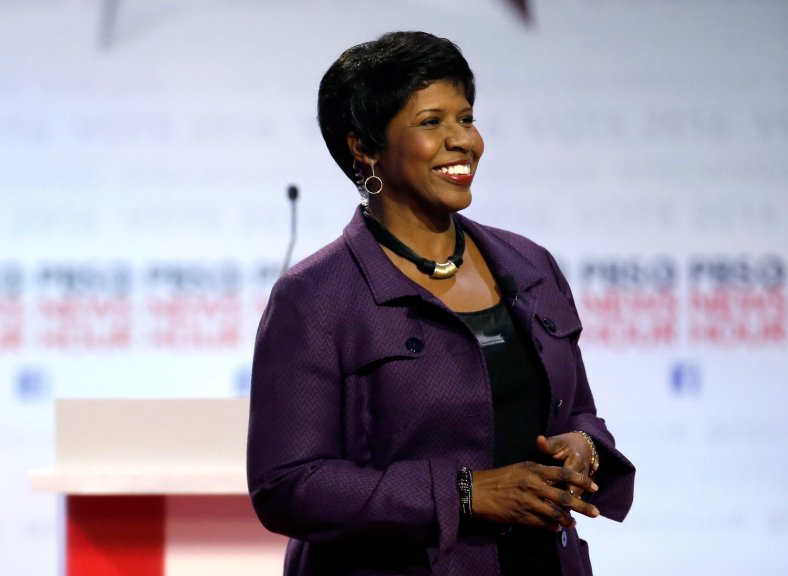
ap_193273822329_custom-095cea2744af0cdfc2393dae5431919449a19d63-s1500-c85

‘What Gwen Ifill Knew About Race in America’  by Jeffrey Goldberg “An insufficient number of people have recognized what is obvious. Gwen’s death is a punishing blow to her family, and to her wide circle of friends, to her colleagues and to her viewers. But it is also a cruel blow to her profession, which hasn’t recently covered itself in glory. And it’s an especially cruel blow to her lovely nation, which is right now in need of her bravery, her farsightedness, and her willingness to tell the truth. Hers is an incalculable loss.”

‘The Life and Example of Gwen Ifill’ by David Brooks “Gwen worked in a tough business, and being an African-American woman in that business brought its own hardships and scars, but Gwen’s smile did not hold back. Her whole personality was the opposite of reticent, and timidity was a stranger to her. When the Ifill incandescence came at you, you were getting human connection full-bore.

I suppose every profession has a few people like this, people who love the whole profession, who pay compliments when its standards are met and who are tough when they are not.

Gwen’s death merits a bit of the reaction that greeted the death of the writer Samuel Johnson centuries ago: She has left a chasm, which nobody else can fill up and which nobody has a tendency to fill.

Now that Gwen is dead, who is the next best thing? There’s nobody. There are many great people who will follow her example. But nobody quite reminds you of Gwen.”

In other news this week@work:

‘Debora L. Spar, Barnard President, to Lead Lincoln Center’Michael Cooper for The New York Times  “In appointing Ms. Spar, who is also an author and a former Harvard Business School professor, Lincoln Center’s board looked beyond arts administration circles and decided to tap someone with experience running a large nonprofit and with a track record of raising money for capital projects — skills that could prove useful as the renovation proceeds.”

Mr. Cooper reported in a related story that you may want to share with the aspiring musicians in your life, ‘It’s Official: Many Orchestras Are Now Charities’.

‘Udacity, an Online Learning Start-Up, Offers Tech Job Trials’Steve Lohr for The New York Times “The program, called Blitz, provides what is essentially a brief contract assignment, much like an internship. Employers tell Udacity the skills they need, and Udacity suggests a single candidate or a few. For the contract assignment, which usually lasts about three months, Udacity takes a fee worth 10 to 20 percent of the worker’s salary. If the person is then hired, Udacity does not collect any other fees, such as a finder’s fee.

The Blitz initiative and Udacity’s evolution point to the role that nontraditional education organizations might play in addressing the needs of workers and employers in the fast-changing labor market for technology skills.”

In closing this week of work, I am still trying to clear the fog in my brain and understand ‘post truth’. I reside in the real word, but apparently it’s changing. What does work look like when words hold no meaning?

I’ll end with classicist Mary Beard‘s reflection on the U.S. election.

“Trump and Trump’s policies are truly ghastly, but you have to face the fact that a very large number of people actually voted for him. What is more, resentment at “the elite” has morphed into a proud contempt for truth, expertise and knowledge – not unlike Michael Gove’s jibe at “experts” before the Brexit vote. And in the broader context of political rhetoric, the idea that he won’t be as bad as he claimed is more, rather than less, worrying. I thought that the conciliatory speech was the worst thing I had heard all evening. The idea that he could be thanking Clinton for her service to the country (“I mean that very sincerely”) and be speaking of “binding the wounds of division” – when only the day before he’d promised to impeach her and poured salt into the very wounds he was now promising to heal – beggars belief. It has nothing to do with being “gracious” (as the television pundits had it), and everything to do with words not meaning anything. It was precisely what ancient rhetorical and political theorists feared almost more than anything else: that speech might not be true, and the corrosive effect of that on popular power.”


Photo credits: Facebook Menlo Park HQ courtesy of Facebook Newsroom Media Gallery, Mark Zuckerberg from his Facebook page, Gwen Iffil/Morry Gash AP


The Friday Poem ‘The Familiar Has Taken Leave’

Why are we always surprised when national events veer from a predicted trajectory? Maybe we’ve been spending too much time with analytics and not enough time with the poets.

Megan Garber wrote in The Atlantic last week about the role of poetry in the aftermath of the 2016 U.S. presidential election. “Campaign in poetry; govern in prose,” the old adage goes. This moment, though, has in many ways flipped that idea: The 2016 presidential campaign was decidedly lacking in poetry. Yet in its aftermath, as Americans consider the contours of their new government, they are, often, turning to poems…”

She interviewed Don Share, the editor of Poetry magazine to discover why poetry was having a ‘moment’.

“Well, it’s always been speaking to people—and it’s always been speaking to people about the kinds of things they’re taking about now, because one of the things poetry is really good at is anticipating things that need discussion. Poets are kind of like—it’s a bad metaphor, but—canaries in a coal mine. They have a sense for things that are in the air. Partly because that’s what they do—they think about things that are going on—but partly because they take their own personal experience and see how that fits in with what they see in the world. A lot of people might think that poetry is very abstract, or that it has to do with having your head in the clouds, but poets, actually, walk on the earth. They’re grounded, feet-first, pointing forward. They’re moving around and paying attention at every moment.”

Perhaps next time, we should survey the poets, not the pollsters.

Until then, the events of the past 11 days brought me to a poem selected by Matthew Zapruder for the August 16, 2016 issue of The New York Times Magazine.

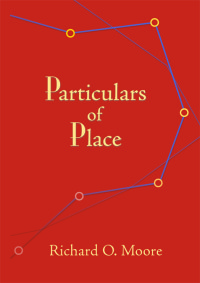
The poem, written by broadcaster, documentary filmmaker and poet, Richard O. Moore was part of a “sequence of sonnets about the consequences of losing his sight in old age”.

At its core, the poem is about change…and how we respond.

The Familiar Has Taken Leave

Responding to a world turned outside in
Requires a fresh agility of will
And a surreal mode of thought, both distant
When the world was visible and real.
The only carry-over is the sound:
The hollow clatter of the commonplace,
Ancestral voices, sepulchral complaints
From many sources now invisible.

This is the most dispassionate I can be.
The familiar has taken leave with all I know
And what is left is mostly echo fading,
Never to return. What takes shape then
Is virtual and is a world apart
Assembled half by memory, half by art.

Richard O. Moore (1920-2015) from ‘Particulars of Place’ April, 2015

ParticularsOfPlace-Cover-1.5x2.25-300dpi-CMYK-200x283.jpg


“Once you have traveled, the voyage never ends…”

“Once you have traveled, the voyage never ends, but is played out over and over again in the quietest chambers. The mind can never break off from the journey.” Pat Conroy, ‘Prince of Tides’.

What started out as a two week vacation in October, stretched to include an unexpected medical diversion, into November. It’s time to return to sharing thoughts about work: the lessons we learn from experience, and those we acquire in poetry, novels and non-fiction. It’s in the storytelling that we discover our dreams.

Once you embark on the voyage of your career, the journey never ends, but resonates in the quietest chambers of the imagination. There may be distractions along the way, but the spirit of a ‘calling’ is a constant companion in the adventure of finding your ‘true north.


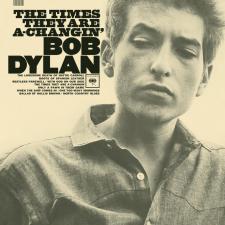
The Times They Are A-Changin’

On Thursday morning Professor Sara Danius, Permanent Secretary of the Swedish Academy, announced the 2016 Nobel Prize in Literature.

“The Nobel Prize in Literature for 2016 is awarded to Bob Dylan “for having created new poetic expressions within the great American song tradition”.

In the hours that followed, the surprise decision was debated by the literati. A frequently mentioned candidate for the prize in literature, author Salman Rushdie, placed the choice in context via Twitter.

“From Orpheus to Faiz, song & poetry have been closely linked. Dylan is the brilliant inheritor of the bardic tradition. Great choice.”

In honor of that choice, the Friday Poem this week is Dylan’s ‘The Times They Are A-Changin’.


The Times They Are A-Changin’

Come gather ’round people
Wherever you roam
And admit that the waters
Around you have grown
And accept it that soon
You’ll be drenched to the bone
If your time to you is worth savin’
Then you better start swimmin’ or you’ll sink like a stone
For the times they are a-changin’

Come writers and critics
Who prophesize with your pen
And keep your eyes wide
The chance won’t come again
And don’t speak too soon
For the wheel’s still in spin
And there’s no tellin’ who that it’s namin’
For the loser now will be later to win
For the times they are a-changin’

Come senators, congressmen
Please heed the call
Don’t stand in the doorway
Don’t block up the hall
For he that gets hurt
Will be he who has stalled
There’s a battle outside and it is ragin’
It’ll soon shake your windows and rattle your walls
For the times they are a-changin’

Come mothers and fathers
Throughout the land
And don’t criticize
What you can’t understand
Your sons and your daughters
Are beyond your command
Your old road is rapidly agin’
Please get out of the new one if you can’t lend your hand
For the times they are a-changin’

The line it is drawn
The curse it is cast
The slow one now
Will later be fast
As the present now
Will later be past
The order is rapidly fadin’
And the first one now will later be last
For the times they are a-changin’

Bob Dylan, 1963

3992253_159.jpg

Photo credit: Rolling Stone Magazine

On the road again…

For the next two weeks I will be traveling in France and Spain and taking a respite from blogging. Join me on Twitter @workthoughts for work/career related updates, or @EileenKohan for travel notes and pics.

The week@work – good lives without good jobs?, good vs. great leaders, Yahoo hacked, and are university rankings hurting higher ed?

The workplace is changing, and politicians are beginning to recognize the impact of the shift on long term policy planning. This week@work a ‘think tank’ fellow considered the possibility of good lives without good jobs, a professor found leadership is not a continuum, Yahoo announced 500 million users accounts were hacked, and Irish universities missed the top tier of international schools for the first time, generating a debate on the value of global rankings.

New America Fellow, Michael Lind suggested “Politicians should tell working Americans what they need to hear, not what they want to hear. And what they need to hear is that it is possible for all Americans to have good lives, even if they can’t all have good jobs.”

Writing in The New York Times Sunday Review he asked, ‘Can You Have a Good Life if You Don’t Have a Good Job?’

“…the political problem remains. Even if center-left and center-right policy wonks agree that the goal should be good lives for all workers, even those with bad jobs, many Americans do not agree, to judge from the rhetoric of politicians, who know their audiences well. The replacement of a world in which one or a few lifetime jobs in a paternalistic company that provided benefits during your working life and a pension after your retirement by a future in which individuals struggle to survive by piecing together “gigs” and “tasks” with a bewildering variety of federal, state and local social programs may strike many workers as a dystopian nightmare. The price of increased flexibility may be increased stress.

The unelected policy experts who envision a future of multiple job types and a greater, if hidden, role for government in maintaining minimum incomes and providing health and retirement benefits are essentially right. The elements of a “good job” — adequate income, health insurance and retirement benefits — that were once combined in the package that a Detroit automobile manufacturer provided to a unionized male steelworker in 1950 are likely to be provided, for most American workers now, by some combination of employer and government.

Until most American workers are persuaded that they will not be worse off in a system characterized by flexible work arrangements and partly socialized benefits, they may continue to make unrealistic demands that 21st century politicians restore something like the occupational structure of the 20th century.”

Which of the folks vying for U.S. President will have the courage to deliver this message? It may depend on their leadership style. Professor James R. Bailey of George Washington University’s School of Business examined ‘The Difference Between Good Leaders and Great Ones’ for HBR digital.

W160913_BAILEY_LEADERSHIPISNOT.png

“That anyone can develop as a leader is not in question. What I dispute is the stubborn resolve that great and good are points along the same stream. That just isn’t so. Great leadership and good leadership have distinctly different characteristics and paths. Leadership is not one-dimensional. It can be great and good, or one but not the other, or neither.

The tug between great and good leadership is one of perpetual and dynamic coexistence. There is great — a force that is often inexplicable, occasionally irrational, and, importantly, intermittently ungovernable. Then there is good — a direction that is north-star true, providing the point of values of mutual benefit.

It’s natural to think of leadership as running from one end to the other. To do so, though, is to mistake what great and good leadership are. They’re fundamentally different. Separating them, thus upending the ever-convenient continuum, seems counterintuitive. But it’s absolutely necessary for understanding the very elements that explain leadership’s operation and impact. Great can be vital but destructive; good can be compassionate but impotent. The coexistence of the two is the best hope for leadership — without good we should fear.”

Switching gears, to privacy – it came as no surprise when Yahoo announced a massive data breach. Kara Swisher reported for recode in advance of the public disclosure.

yahoo-535059009-1024x683.jpg

“Earlier this summer, Yahoo said it was investigating a data breach in which hackers claimed to have access to 200 million user accounts and one was selling them online. “It’s as bad as that,” said one source. “Worse, really.” 

…this hack, said sources, which became known in August when an infamous cybercriminal named “Peace” claimed on a website that he was selling credentials of 200 million Yahoo users from 2012 on the dark web for just over $1,800. The data allegedly included user names, easily decrypted passwords and personal information like birth dates and other email addresses.

At the time, Yahoo said it was “aware of the claim,” but the company declined to say if it was legitimate and said that it was investigating the information. But it did not issue a call for a password reset to users. Now, said sources, Yahoo might have to, although it will be a case of too little, too late.”

Over 500 million accounts have been reported hacked…about that earlier article on good/great leadership and “another blemish on the record of CEO Marissa Mayer”.

On campus, this week@work, university presidents and deans awaited the verdict of the annual ‘World University Rankings’.

oxford.jpg

Grainne Loughran reported on the implications of the new rankings for The Irish Times.

“Another week, another set of university rankings as the Times Higher Education releases it league table. It follows others recently published by Quacquarelli Symonds (QS) and the Academic Ranking of World Universities (Shanghai).

The organisations may differ, but the pattern is broadly the same: Ireland’s best higher education institutions are in free-fall.

The decline in rankings has been alarming university presidents for the past six years. But while rankings are of significant reputational importance worldwide, they only take into account a tiny proportion of the picture of how universities stand.

Lack of understanding of what they actually measure has resulted in the rankings gaining an unwarranted notoriety and position to influence policy, with the potential to harm higher education institutions in Ireland and worldwide.

There are about 20 global rankings of higher education. All have varying methodologies and in some cases give vastly different weightings to the factors they have in common.”

This week@work also marked the anniversary of ‘The Death of the Phone Call’. Timothy Noah looked back on a moment in history.

“The phone call died, according to Nielsen, in the autumn of 2007. During the final three months of that year the average monthly number of texts sent on mobile phones (218) exceeded, for the first time in recorded history, the average monthly number of phone calls (213). A frontier had been crossed. The primary purpose of most people’s primary telephones was no longer to engage in audible speech.”

Also this week@work – two stories from Silicon Valley:

‘Zuckerberg, Chan Start $3 Billion Initiative to Cure Disease’ Sarah Frier for bloomberg.com “Mark Zuckerberg and his wife, Priscilla Chan, are pledging to spend more than $3 billion over the next decade to work on curing diseases.

“Can we work together to cure, prevent or manage all disease within our children’s lifetime?” Chan said Wednesday onstage at an event in San Francisco for the Chan Zuckerberg Initiative. “Mark and I believe that this is possible.”

‘How Tech Companies Disrupted Silicon Valley’s Restaurant Scene’ Nicole Perlroth for The New York Times “All told, more than 70,000 square feet of Palo Alto retail and restaurant space were lost to office space from 2008 to 2015, as the tech bubble drove demand for commercial space downtown.

It is a story playing out across Silicon Valley, where restaurateurs say that staying afloat is a daily battle with rising rents, high local fees and acute labor shortages. And tech behemoths like Apple, Facebook and Google are hiring away their best line cooks, dishwashers and servers with wages, benefits and perks that restaurant owners simply cannot match.

Silicon Valley technologists love to explain how they have disrupted the minutiae of daily life, from our commutes to the ways we share family photos. But along the way, they have also managed to disrupt their local restaurant industry.”

Finally, from The New York Times Magazine survey (September 18): “In an eight-hour workday, how much time do you spend actually working? 44% 4-6 hours, 43% 7-8 hours, 7% 1-3 hours, and 6% less than an hour.”


Photo credits: Yahoo, Lisa Werner/Getty for Wired

The Saturday Read – The National Book Award ‘Long List’

This past week The National Book Foundation announced the ‘long list’ of nominees for The National Book Award to be announced on November 16. The books nominated fall into four categories: Fiction, Non-Fiction, Poetry, and Young People’s Literature.

A quick review of the titles provides a cultural snapshot of the issues we face as individuals and society as a whole. ‘The Saturday Read’ this week offers a list those nominated in the  fiction and non-fiction categories.

The fiction nominees includes an Oprah Book Club pick, my favorite of the past year, and an anticipated new novel to be released in October.

In non-fiction, racism is a common topic; echoing the theme of last year’s ‘required reading’, 2016 award winner, Ta-Nehisi Coates’ ‘Between the World and Me’. The nominees in this category remind us why we read non-fiction: to listen, to understand the world in all its complexity, and to make thoughtful decisions about our future.

Fiction

Chris Bachelder, The Throwback Special (W. W. Norton & Company)

Garth Greenwell, What Belongs to You (Farrar, Straus and Giroux/Macmillan)

Adam Haslett, Imagine Me Gone (Little, Brown and Company/Hachette Book Group)

Paulette Jiles, News of the World (William Morrow/HarperCollinsPublishers)

Karan Mahajan, The Association of Small Bombs (Viking Books/Penguin Random House)

Elizabeth McKenzie, The Portable Veblen (Penguin Press/Penguin Random House)

Lydia Millet, Sweet Lamb of Heaven (W. W. Norton & Company)

Brad Watson, Miss Jane (W. W. Norton & Company)

Colson Whitehead, The Underground Railroad (Doubleday/Penguin Random House)

Jacqueline Woodson, Another Brooklyn (Amistad/HarperCollinsPublishers)

Non-Fiction

Andrew J. Bacevich, America’s War for the Greater Middle East: A Military History
(Random House/Penguin Random House)

Patricia Bell-Scott, The Firebrand and the First Lady: Portrait of a Friendship: Pauli Murray, Eleanor Roosevelt, and the Struggle for Social Justice (Alfred A. Knopf /Penguin Random House)

Adam Cohen, Imbeciles: The Supreme Court, American Eugenics, and the Sterilization of Carrie Buck (Penguin Press/Penguin Random House)

Arlie Russell Hochschild, Strangers in Their Own Land: Anger and Mourning on the American Right (The New Press)

Ibram X. Kendi, Stamped from the Beginning: The Definitive History of Racist Ideas in America (Nation Books)

Viet Thanh Nguyen, Nothing Ever Dies: Vietnam and the Memory of War
(Harvard University Press)

Cathy O’Neil, Weapons of Math Destruction: How Big Data Increases Inequality and Threatens Democracy (Crown Publishing Group/Penguin Random House)

Andrés Reséndez, The Other Slavery: The Uncovered Story of Indian Enslavement in America (Houghton Mifflin Harcourt)

Manisha Sinha, The Slave’s Cause: A History of Abolition (Yale University Press)

Heather Ann Thompson, Blood in the Water: The Attica Prison Uprising of 1971 and Its Legacy (Pantheon Books/Penguin Random House)


The Friday Poem ‘Fall Song’ by Mary Oliver

On Thursday those of us living in the Northern Hemisphere transitioned into fall. At the moment the sun was directly over the equator, the seasons changed. In celebration of change, the Friday Poem this week is Mary Oliver’s ‘Fall Song’.

Fall Song

Another year gone, leaving everywhere
its rich spiced residues: vines, leaves,

the uneaten fruits crumbling damply
in the shadows, unmattering back

from the particular island
of this summer, this NOW, that now is nowhere

except underfoot, moldering
in that black subterranean castle

of unobservable mysteries – roots and sealed seeds
and the wanderings of water. This

I try to remember when time’s measure
painfully chafes, for instance when autumn

flares out at the last, boisterous and like us longing
to stay – how everything lives, shifting

from one bright vision to another, forever
in these momentary pastures.

Mary Oliver, winner of the Pulitzer Prize and author, most recently of ‘Felicity’, a collection of poems