The week@work – agents of change, NY values and imagining a windfall

The week@work was dominated by stories of the small group of workers in entertainment, sports and politics. It was also the week that everyone had the opportunity to imagine entry into the world of celebrity via the purchase of a single $2 lottery ticket.

On Sunday evening the Hollywood Foreign Press Association handed out their annual Golden Globes, with the surprise winner being Mexican actor, Gael Garcia Bernal for his role as conductor of the fictional ‘New York Symphony’ in Amazon’s Golden Globe winning ‘Mozart in the Jungle’. “I want to dedicate this to music, to all the people that find the music and common ground for communication, for justice for happiness.”

As Huell Howser might say, “This is amazing!”, that a series about classical musicians led by a talented Mexican actor, wins an award in a year of political polarization and classical music’s declining prominence in our culture.

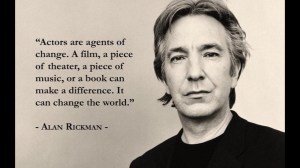
On Thursday, the actor who played Severus Snape in the Harry Potter series, Alan Rickman died. “With the last film it was very cathartic because you were finally able to see who he was,” Mr. Rickman said “It was strange, in a way, to play stuff that was so emotional. A lot of the time you’re working in two dimensions, not three.”
CYs2JjqWkAAWSqZ

Agents of change in theater, music, and the workplace challenge our thinking. On Monday we learned of the death of another transformational icon, David Bowie.

“In his dazzling artistry, daring style, unabashed intelligence, intensity of emotion, cultivation of magic, mystery and imagination, Bowie was a figure who bridged high and low culture, reverberating on so many different levels.”

On Monday morning, NPR replayed his 2002 interview with ‘Fresh Air’ host Terry Gross.

“I’m not actually a very keen performer. I like putting shows together. I like putting events together. In fact, everything I do is about the conceptualizing and realization of a piece of work, whether it’s the recording or the performance side. And kind of when I put the thing together, I don’t mind doing it for a few weeks, but then, quite frankly, I get incredibly, incredibly bored because I don’t see myself so much as a – I mean, I don’t live for the stage. I don’t live for an audience.”

David Bowie event planner? When we think of careers, we make assumptions about success, only to realize that each of us holds a unique definition which sculpts our approach to a calling.

“People often forgot, but up until his death, on Sunday at age 69, Mr. Bowie was a New Yorker

And though Mr. Bowie was enormously wealthy, he wasn’t one of those rich guys who kept an apartment in the city, along with a portfolio of global real estate holdings, and flew in. Aside from a mountain retreat in Ulster County, N.Y., his Manhattan apartment was his only home.

You may not have considered all this because Mr. Bowie was an apparition in the city, rarely glimpsed. You heard it mentioned that he lived here. Somewhere downtown, someone thought. But seeing him out? Good luck.”

Which brings us to the political discourse on ‘New York values’ and its relevance to job search. Relocation is a major consideration for many seeking career advancement. Understanding the character of the community you join outside of your workplace is equally, if not more important to understanding the values of your workplace community.

How many folks have decided to take a job in New York or LA only to later realize a major disconnect? This is not a value judgement, just a realization that we all need to find a place where we can be successful. Unfortunately, the job perks sometimes outweigh the geographical/cultural component in the decision making mix and it’s only when we are fully committed to our workplace that we begin to realize our success is being eroded by deficiencies in our neighborhood.

On to the world of sports. On Monday evening, two college football teams competed in the College Football National Championship game in Arizona. The University of Alabama’s team won by a score of 45-40 over Clemson. A few days later at the NCAA’s annual meeting, “NCAA president Mark Emmert praised student-athlete activism during his annual speech Thursday at the NCAA convention.”

During his 20-minute address at the NCAA’s opening business session, Emmert urged schools to continue to emphasize academics, fairness and the health and well-being of student-athletes.”

And yet, actions speak louder than words. Inside Higher Education reported“While the time demands on college athletes ­became the central focus of the National Collegiate Athletic Association’s annual meeting here this week, several proposals to deal with the issue were seemingly tabled the day before the NCAA’s five wealthiest conferences were scheduled to vote on them.”

Here’s the thing. With the exception of college coaches, everyone is in agreement that the ‘student’ in the ‘student-athlete’ equation takes priority. ‘Official’ time demands don’t begin to reflect the ‘unofficial’ time requirements of competing in Division I sports. And with only a select few moving on to compete in their sport as professionals, these students need the flexibility to explore career opportunities and participate in internships.

“Roderick McDavis, president of Ohio University, said it would be a mistake for colleges to wait for NCAA policy changes to prompt that shift. “Policies don’t change behavior,” he said. “People change behavior. We can hope that the NCAA catches up with us all one day, but what I know I can control is I can go home tomorrow and make a difference on my campus.”

And then there were the omnipresent billboards advertising the Powerball Jackpot at $999 million. Except the amount had grown to over $1.5 billion, which gave us all an opportunity to contemplate what we would do with that amount of money.

On a CNN broadcast the night before the drawing, international anchor Richard Quest asked anchor Anderson Cooper what he would do with the winnings if he had the lucky set of numbers. (You may know that Mr. Cooper is a Vanderbilt by ancestry.) His response, “I would buy a watch.” And he would be back at work the next day.

Here are a few additional articles that you may have missed from the past week.

‘Why I Always Wanted to Be a Secretary’ by Bryn Greenwood – Does your work define you? What if your dream job is central to an organization, but society’s definition is demeaning?

‘At Work And Feeling All Alone’ by Phyllis Korkki – In the world of telecommuting, new research indicates those left behind in the office have ended up feeling lonely and disconnected.

‘60% of Women in Silicon Valley Have Been Sexually Harassed’ by Lydia Dishman – Results of a survey of 200 women demonstrates a serious level of dysfunction in the tech giants’ workplace.

‘Yahoo’s Brain Drain Shows a Loss of Faith Inside the Company’ by Vindu Goel – “More than a third of the company’s work force has left in the last year, say people familiar with the data. Worried about the brain drain, Ms. Mayer has been approving hefty retention packages — in some cases, millions of dollars — to persuade people to reject job offers from other companies. But those bonuses have had the side effect of creating resentment among other Yahoo employees who have stayed loyal and not sought jobs elsewhere.”



‘How to Be Perfect’ a poem by Ron Padgett

We are two weeks into the new year and once again we find it’s hard work to be perfect, as our resolutions collide with reality. So we turn to philosophers and poets to remind us that success is achieved with a measure of common sense.

In the seventeenth century a Spanish Jesuit scholar, writer, and philosopher, Baltasar Gracian, offered a collection of maxims on how to achieve personal and professional success. My favorite, “Be common in nothing”, might be the ‘perfect’ tenet to start the new year.

The Friday Poem this week reminded me of Gracian’s maxims, adding humor and common sense, from the poet, Ron Padgett, and his poem, ‘How to Be Perfect’.

How to Be Perfect

Get some sleep.

Don’t give advice.

Take care of your teeth and gums.

Don’t be afraid of anything beyond your control. Don’t be afraid, for
instance, that the building will collapse as you sleep, or that someone
you love will suddenly drop dead.

Eat an orange every morning.

Be friendly. It will help make you happy.

Raise your pulse rate to 120 beats per minute for 20 straight minutes
four or five times a week doing anything you enjoy.

Hope for everything. Expect nothing.

Take care of things close to home first. Straighten up your room
before you save the world. Then save the world.

Know that the desire to be perfect is probably the veiled expression
of another desire—to be loved, perhaps, or not to die.

Make eye contact with a tree.

Be skeptical about all opinions, but try to see some value in each of
them.

Dress in a way that pleases both you and those around you.

Do not speak quickly.

Learn something every day. (Dzien dobre!)

Be nice to people before they have a chance to behave badly.

Don’t stay angry about anything for more than a week, but don’t
forget what made you angry. Hold your anger out at arm’s length
and look at it, as if it were a glass ball. Then add it to your glass ball
collection.

Be loyal.

Wear comfortable shoes.

Design your activities so that they show a pleasing balance
and variety.

Be kind to old people, even when they are obnoxious. When you
become old, be kind to young people. Do not throw your cane at
them when they call you Grandpa. They are your grandchildren!

Live with an animal.

Do not spend too much time with large groups of people.

If you need help, ask for it.

Cultivate good posture until it becomes natural.

If someone murders your child, get a shotgun and blow his head off.

Plan your day so you never have to rush.

Show your appreciation to people who do things for you, even if you
have paid them, even if they do favors you don’t want.

Do not waste money you could be giving to those who need it.

Expect society to be defective. Then weep when you find that it is far
more defective than you imagined.

When you borrow something, return it in an even better condition.

As much as possible, use wooden objects instead of plastic or metal
ones.

Look at that bird over there.

After dinner, wash the dishes.

Calm down.

Visit foreign countries, except those whose inhabitants have
expressed a desire to kill you.

Don’t expect your children to love you, so they can, if they want to.

Meditate on the spiritual. Then go a little further, if you feel like it.
What is out (in) there?

Sing, every once in a while.

Be on time, but if you are late do not give a detailed and lengthy
excuse.

Don’t be too self-critical or too self-congratulatory.

Don’t think that progress exists. It doesn’t.

Walk upstairs.

Do not practice cannibalism.

Imagine what you would like to see happen, and then don’t do
anything to make it impossible.

Take your phone off the hook at least twice a week.

Keep your windows clean.

Extirpate all traces of personal ambitiousness.

Don’t use the word extirpate too often.

Forgive your country every once in a while. If that is not possible, go
to another one.

If you feel tired, rest.

Grow something.

Do not wander through train stations muttering, “We’re all going to
die!”

Count among your true friends people of various stations of life.

Appreciate simple pleasures, such as the pleasure of chewing, the
pleasure of warm water running down your back, the pleasure of a
cool breeze, the pleasure of falling asleep.

Do not exclaim, “Isn’t technology wonderful!”

Learn how to stretch your muscles. Stretch them every day.

Don’t be depressed about growing older. It will make you feel even
older. Which is depressing.

Do one thing at a time.

If you burn your finger, put it in cold water immediately. If you bang
your finger with a hammer, hold your hand in the air for twenty
minutes. You will be surprised by the curative powers of coldness and
gravity.

Learn how to whistle at earsplitting volume.

Be calm in a crisis. The more critical the situation, the calmer you
should be.

Enjoy sex, but don’t become obsessed with it. Except for brief periods
in your adolescence, youth, middle age, and old age.

Contemplate everything’s opposite.

If you’re struck with the fear that you’ve swum out too far in the
ocean, turn around and go back to the lifeboat.

Keep your childish self alive.

Answer letters promptly. Use attractive stamps, like the one with a
tornado on it.

Cry every once in a while, but only when alone. Then appreciate
how much better you feel. Don’t be embarrassed about feeling better.

Do not inhale smoke.

Take a deep breath.

Do not smart off to a policeman.

Do not step off the curb until you can walk all the way across the
street. From the curb you can study the pedestrians who are trapped
in the middle of the crazed and roaring traffic.

Be good.

Walk down different streets.

Backwards.

Remember beauty, which exists, and truth, which does not. Notice
that the idea of truth is just as powerful as the idea of beauty.

Stay out of jail.

In later life, become a mystic.

Use Colgate toothpaste in the new Tartar Control formula.

Visit friends and acquaintances in the hospital. When you feel it is
time to leave, do so.

Be honest with yourself, diplomatic with others.

Do not go crazy a lot. It’s a waste of time.

Read and reread great books.

Dig a hole with a shovel.

In winter, before you go to bed, humidify your bedroom.

Know that the only perfect things are a 300 game in bowling and a
27-batter, 27-out game in baseball.

Drink plenty of water. When asked what you would like to drink,
say, “Water, please.”

Ask “Where is the loo?” but not “Where can I urinate?”

Be kind to physical objects.

Beginning at age forty, get a complete “physical” every few years
from a doctor you trust and feel comfortable with.

Don’t read the newspaper more than once a year.

Learn how to say “hello,” “thank you,” and “chopsticks”
in Mandarin.

Belch and fart, but quietly.

Be especially cordial to foreigners.

See shadow puppet plays and imagine that you are one of the
characters. Or all of them.

Take out the trash.

Love life.

Use exact change.

When there’s shooting in the street, don’t go near the window.

Ron Padgett  ‘Collected Poems’ 2013

Reinvent or Authenticate?

In the first weeks of the new year the media message is to ‘reinvent’ yourself; new year, new you. Do we really need this annual makeover? Does one more layer of makeup change who we are as individuals? Perhaps this year we should focus on the ‘real’ you, not the person ‘appearing in the role…’as you. Let’s enhance the talent that’s in your DNA.

Start the year with a realistic assessment of your skills. Ask for feedback from your closest friends and colleagues. How does your view of self compare to how others see you? How much energy are you expending to create a perception with no connection to reality?

We all play roles in our professional lives. I believe that the most successful and happy among us are the ones whose ‘roles’ can’t be distinguished from who they are in real life.

What will it take to bridge the gap and live the authentic life? In other words, why not just be you?

It may be that you need to listen to that little voice that is telling you what you really want to do with your life, something that doesn’t involve creating a character each morning as you enter your workplace.

Rather than reinvent, authenticate. Be yourself. Be happy.

The week@work – issues that will shape the world in 2016, positive forecast on salary growth, George R.R. Martin misses a deadline and why we should focus on our ‘already done’ list

The past week@work marked the transition from the old year to the new. We have seen the last of the ‘best and worst of the year’ in every imaginable category and it’s time to turn our attention to the future. Here’s the problem; global issues, work issues, customer issues and career issues don’t magically resolve themselves at the stroke of midnight on 12/31.

What the new year does provide is a demarcation point in time, to set aside previous solutions and reimagine innovative answers. We have permission to start anew.

Rose Pastore offers a list of ’10 Issues That Will Shape the World In 2016′. Recognizing the continuum of events from the old year to the new – “The end of 2015 leaves many of the year’s most significant issues still very much in flux, including the reform of U.S. gun control laws, the fates of thousands of Syrian refugees, and the legal status of massive startups like Uber and Airbnb.”

Some of these issues seem so beyond our everyday lives that it may be hard to grasp a connection to our work and workplace. But somewhere, a diplomat, an entrepreneur, an educator or a student may seize the moment, and solve one piece of the puzzle, in one of our multiple global challenges: “the refugee crisis, climate change, data security, gun violence, social justice and regulating the sharing economy.” 

Don Lee reported on the view that salaries will increase in 2016, driven by the decrease in unemployment and the implementation of new minimum wage laws in a number of states.

“American workers are poised in 2016 to finally get what they’ve been missing for years: higher salaries.

…worker wages will get an additional boost from higher minimum wages taking effect in a number of cities and states. California’s new minimum pay goes to $10 an hour in January. The increase will amount to an 11% pay raise for Marco Ruiz, a carwash worker in Anaheim who earns $9 an hour.

That’s an additional $40 a week, more than enough to cover Ruiz’s bus fare to his job from his home in Norwalk, which he rents with his brother-in-law. “It’s marvelous,” said the divorced 35-year-old, who started at the carwash eight years ago making $7.50 an hour, the state’s minimum wage then.

Like Ruiz, most people in the U.S. already feel more secure in their jobs. As layoffs have receded sharply, weekly filings for new jobless benefits have fallen this year to numbers not seen since the early 1970s. And Gallup polls show workers’ “complete satisfaction” with job security rose to a 15-year high in summer 2014. Their overall satisfaction with pay, however, hasn’t returned to prerecession levels. In fact, many workers still feel that the recovery from the Great Recession passed them by.”

Early Saturday morning, author George R.R. Martin posted his admission, “THE WINDS OF WINTER is not finished.”

The year ended and the author of the series, ‘A Song of Ice and Fire’, publicly announced he had missed a deadline and gave us a glimpse of his creative process.

“Believe me, it gave me no pleasure to type those words. You’re disappointed, and you’re not alone. My editors and publishers are disappointed, HBO is disappointed, my agents and foreign publishers and translators are disappointed… but no one could possibly be more disappointed than me. For months now I have wanted nothing so much as to be able to say, “I have completed and delivered THE WINDS OF WINTER” on or before the last day of 2015.

But the book’s not done.

Nor is it likely to be finished tomorrow, or next week. Yes, there’s a lot written. Hundreds of pages. Dozens of chapters. (Those ‘no pages done’ reports were insane, the usual garbage internet journalism that I have learned to despise). But there’s also a lot still left to write. I am months away still… and that’s if the writing goes well. (Sometimes it does. Sometimes it doesn’t.) Chapters still to write, of course… but also rewriting. I always do a lot of rewriting, sometimes just polishing, sometimes pretty major restructures.”

Alison Flood of The Guardian reported on the response from readers and fans.

“This time, though, Martin’s readers were quick to encourage him, with the more than 1,000 comments on his blog ranging from “Love your work, George! Get it done when it’s done. I’ll be there” to “Don’t sweat it, George” and “Take as long as you need to, sir”.

“That couldn’t have been fun to write,” wrote one reader in response to Martin’s blog. “But fact is in 50 years readers will judge on the book’s quality and not if they met some arbitrary deadline and beat the TV adaptation. As much as I’d like to see it released soon, I ultimately approve of the priority on quality.”

For all of you who have started the new year with a missed deadline, consider the lesson here. It’s impossible to live without failure. Even the most successful fail. It’s the next step in the lifelong learning process that matters, and that might be the most important thought to hold in the new year.

Minda Zetlin offers some timely practical advice, that George R. R. Martin might consider ‘Five Reasons You Should Make an Already-Done List Right Now’.

“…if you want to feel motivated, set that to-do list aside, and make a list of what you’ve already accomplished instead.

That advice comes from best-selling author and executive coach Wendy Capland. A while back, I wrote a column from an interview with Capland and as a follow-up we decided she would coach me and that I would write about it. These coaching sessions come with homework, and one recent assignment was to make a list of all the things I had already done​ to advance toward my most ambitious goals. It was something I’d never done before, and it was a revelation.”

Perhaps the best advice is to start the year with an accomplishments audit, focusing on the strengths derived from your success (and failure) and build on that foundation @work in the new year.


The year @work – equal pay, organization culture, Mark Zuckerberg’s books, the widening class divide, space exploration & Hamilton

Topics of work and the workplace often captured the headlines in 2015. And some of those headlines seemed to echo the 1970’s. As the economy improved, the wage gap between rich and poor increased. And we are still talking about equal pay for equal work.

One flashback was posted on the NPR website on January 2 in tribute to former New York governor, Mario Cuomo, who died on New Year’s Day. The post included the text and video of his speech to the Democratic National Convention in 1984, two years after the Equal Rights Amendment  failed to gain support from the 38 states required to pass.

“We speak for women who are indignant that this nation refuses to etch into its governmental commandments the simple rule “thou shalt not sin against equality,” a rule so simple —

I was going to say, and I perhaps dare not but I will. It’s a commandment so simple it can be spelled in three letters: E.R.A.”

Even though this year’s slate of Presidential candidates includes two women, the legacy of Cuomo’s passion is largely ignored.

Two stories in the past year served to visibly illustrate the continuing inequity.

In Hollywood, major studio, Sony was hacked, revealing, among other things, the disparity between the compensation of lead actress Jennifer Lawrence and her male co-stars. Madeline Berg covered the story for Forbes

“More frequent are anecdotes of discrimination like those recently related by Selma Hayek, Gwyneth Paltrow and even Streep.

All of these women have echoed the sentiment of Patricia Arquette, who brought the issue to the world’s attention at last year’s Oscars when she said in her acceptance speech for Best Supporting Actress, “It’s our time to have wage equality for once and for all.”

But it is not only the number on the paycheck that is the problem: Women are also greatly underrepresented on the big screen, leading to fewer opportunities to make money, an issue that Reese Witherspoon brought up at the American Cinematheque Awards in October: “Women make up 50% of the population, and we should be playing 50% of the roles on the screen.”

That is a dream that is far from a reality. According to a report by the Annenberg School at USC’s Media, Diversity & Social Change Initiative released in August, only 28.1% of characters in 2014’s top 100 films were female and of that percent, only 21 had a female lead or co-lead.”

The misrepresentation is even worse behind the camera: Of the same films, women made up only 1.9% of directors, 11.2% of writers and 18.9% of producers. This only aggravates the problem. The report found that in productions where women held key positions off-screen—as directors, writers and producers—the films featured women more often, and in less sexualized roles.”

We may find it hard to garner sympathy for those who earn millions @work for acting or competing in sport. But those are the visible workers who set the bar for the rest of us on the lower rungs of the career ladder.

The year in sport was dominated by the FIFA scandal, but women who work in sport created the memorable moments of the year. Christopher Clarey, summarizing the year in sport for women noted ‘Women Surge On Playing Field but Fall Behind in Boardroom’.

“As visible as female athletes were in 2015, women lost prominence and power in another key domain in the sports world: the boardroom.

Stacey Allaster, chief executive of the WTA Tour, stepped down citing burnout and the desire to spend more time with her young children. Debbie Jevans, a Briton who was perhaps Europe’s leading women’s sports executive, also cited personal reasons for resigning as chief executive of England Rugby 2015 less than six months before the start of the Rugby World Cup that she had been instrumental in organizing.

Another industry leader, Mary Wittenberg, who oversaw the New York City marathon as chief executive of New York Road Runners, resigned to lead a start-up lifestyle company, Virgin Sport.

Allaster, Jevans and Wittenberg were all replaced by men, and by year’s end there was no woman leading a major professional sport, not even one for women. Steve Simon is in charge of the WTA, Michael Whan is in charge of the L.P.G.A., Jeff Plush runs the National Women’s Soccer League in the United States and Mark Tatum oversees the W.N.B.A., the most prominent women’s professional basketball league, on an interim basis after Laurel J. Richie stepped down after five seasons in 2015.

Considering the scandals and governance crises that enveloped leading male-dominated federations like FIFA and the I.A.A.F. in 2015, more women in power looked very much like part of the solution. The men could clearly benefit from new perspectives.

“For me, the most important thing about diversity in a workplace is definitely making everyone feel included,” Wittenberg said. “But the diversity that comes from diversity of thinking is also invaluable, and if you don’t have diversity around your executive table or any table, I think you really run a risk today. Organizations, and especially political organizations that lack diversity in any number of ways, including gender — you’re not coming close to representing a world view. Leadership today should be challenged at every turn.”

The topic of work/life balance continues to dominate the water cooler conversations from Silicon Valley to Wall Street. And the conversation is at the heart of defining organizational culture.

In mid-August The New York Times published a story, ‘Inside Amazon: Wrestling Big Ideas in a Bruising Workplace’ with the following sub-heading: “The company is conducting an experiment in how far it can push
white-collar workers to get them to achieve its ever-expanding ambitions.” 

Definitely not a ‘puff piece’, but an important piece of journalism that ignited a dialog not only between the Amazon PR machine and the editors of The NY Times, but among workers in a variety of work settings about organizational values and personal tradeoffs. How an individual’s values mesh with those of their employer will determine ultimate success or failure. Who will you become? is a far more important question to ask than   What is the salary offer?

This was also the year that Mark Zuckerberg encouraged others to follow his example, and read a recommended book every two weeks. The final recommendation in  ‘A Year of Books’ was announced today, number 23, ‘The Beginning of Infinity’ by David Deutsch.

Richard Feloni compiled a list of the first 20 recommendations.

“Facebook CEO Mark Zuckerberg has made a tradition of dramatic New Year’s resolutions, and this year he decided that he’d read a book every two weeks.

He wanted his selections to focus on “different cultures, beliefs, histories, and technologies.”

“Books allow you to fully explore a topic and immerse yourself in a deeper way than most media today,” Zuckerberg wrote on his personal Facebook page. “I’m looking forward to shifting more of my media diet towards reading books.”

Hopefully, we have all met our resolutions from January and shifted our media diet to include some ‘long reads’ outside our comfort zone.

As the economy continued to improve, the gap between rich and poor widened. Claire Cain Miller examined the impact of differences in child rearing on growing class divisions.

“Children were not always raised so differently. The achievement gap between children from high- and low-income families is 30 percent to 40 percent larger among children born in 2001 than those born 25 years earlier, according to Mr. Reardon’s research.

People used to live near people of different income levels; neighborhoods are now more segregated by income. More than a quarter of children live in single-parent households — a historic high, according to Pew – and these children are three times as likely to live in poverty as those who live with married parents. Meanwhile, growing income inequality has coincided with the increasing importance of a college degree for earning a middle-class wage.”

And for awhile, a movie about space, not that one, the other one – ‘The Martian’, seemed to re-energize NASA’s plan to restart manned space exploration beyond the International Space Station.

Doug Bolton of The Independent reported on last week’s suspension of a proposed mission to the red planet.

“NASA has decided to suspend a mission to Mars scheduled for March 2016, due to the lander springing a leak.

The InSight Mission, which would have seen a rover analysing seismic activity and the interior structure of the red planet, was called off by Nasa bosses after technical staff failed to repair a leak in one of the rover’s prime instruments.

John Grunsfeld, the associate administrator for Nasa’s Science Mission Directorate in Washington, said: “We push the boundaries of space technology with our missions to enable science, but space exploration is unforgiving, and the bottom line is that we’re not ready to launch in the 2016 window.”

Which leaves our space efforts to two remarkable American entrepreneurs, Elon Musk and Jeff Bezos. In May, Jessica Orwig expressed optimism in the future of private space exploration.

“This year is shaping up to be an extremely exciting time for the future of commercial spaceflight, which will be built upon the backbone of revolutionary 21st-century rockets. The private American space companies Blue Origin and SpaceX are paving the way.

Blue Origin, which was founded by Amazon CEO Jeff Bezos in 2000, successfully launched its “New Shepard” space vehicle for the first time on April 29. The vehicle was named after Alan Shepard, who became the second human and first American to enter space 44 years ago. It is designed to eventually boost six people to space, where they can experience weightlessness for 10 minutes before returning to Earth. The ride is for entertainment and therefore not exclusively for astronauts, but these kinds of temporary spaceflights could become a new way for astronauts to train for coming space missions.

Two weeks earlier, on April 14, Elon Musk’s SpaceX, founded in 2002, attempted to land one of its Falcon 9 rockets on a floating platform in the Atlantic Ocean. SpaceX’s Falcon 9 rockets are designed to boost spacecraft to greater heights than Blue Origin’s and are therefore involved in other missions outside of commercial spaceflight, including supplying the International Space Station, launching satellites into orbit, and aspirations to reach Mars.”

On December 22, NBC News reported “SpaceX completed an historic vertical landing of its Falcon 9 rocket on Monday night — the first time such a feat had been achieved.

The launch and landing in Cape Canaveral, Florida, were the first from the private U.S. spaceflight company since its rocket exploded on liftoff in June.

SpaceX has come close to landing a rocket but until now, never actually pulled the feat off. Blue Origin, founded by Amazon CEO Jeff Bezos, stuck a landing last month — but Musk pointed out that was a suborbital trip, the requirements for which are considerably different.”

And then there was ‘Hamilton’ the musical. Just as the founding father was about to be replaced on the U.S. ten dollar bill, his story took center stage this summer on Broadway. In a 2015 recap article, ‘Surprises from 2015 and Reasons for Hope’, Gina Bellafante examined the ‘Hamilton effect’ on five year olds.

“As if it weren’t surprise enough that a hip-hop musical about the life of the country’s first Treasury secretary would become a Broadway sensation, finding impassioned fans in both President Obama and Dick Cheney, “Hamilton” has found an unlikely cohort of obsessives among 5-year-olds in New York, thanks to the cast album and scenes available on YouTube. At least one kindergartner in Brooklyn is regularly going to school with white socks pulled up over his pants. Some children are demanding quill pens, and many are singing the songs at home over and over and over.

“This is the new ‘Frozen,’” one already fatigued mother observed. Expect heated arguments about the limitations of Federalism among first graders next year.”


Holiday Homework: Write your story

It’s the holiday season and you have one assignment to complete before the New Year begins – write your story.

During the Thanksgiving holiday I encouraged readers to participate in the Story Corps ‘Great Thanksgiving Listen’, conducting interviews  with relatives to capture the oral history narrative of America.

This week’s challenge is about you; to think about your life as it has evolved to this point, highs and lows, and write a short story, your story.

Before you craft your resume, schedule a meeting with a networking contact or head to an interview, you need a story; the narrative of how you arrived at this point in your life and career.

The end goal is to collect as much information about your past before you open your laptop and begin to browse resume formats. Most folks make the mistake of finding a template and relating their story via someone else’s outline. That doesn’t mean that there aren’t acceptable resume formats. It does mean that it’s premature to begin with the resume before you have considered the narrative you wish to convey.

Storytelling has become the latest marketing approach adopted by entrepreneurs to Fortune 500 CEOs. Google ‘storytelling’ and the initial search results will reflect current business practice vs. writers working on the great American novel or the hottest new screenplay.

Here’s the thing. If the folks you hope to work with are employing storytelling to advance their business goals, it may be time for you to practice your skill.

Buried in the list of google results is a link to an Atlantic.com video, ‘George Saunders Explains How To Tell A Good Story’. It’s one of the most viewed videos of the year, which may provide another hint to why you should take seven minutes out of your life this week and watch.

Let’s pause a minute to address all of you who have gotten to this point and are stressed because all you wanted was a few words on how to write a resume in ten seconds.

Nothing of quality results from ten seconds of effort. And this is your life, eight to ten hours of every five days of seven.

Back to George Saunders.

“A story is kind of a black box, you’re going to put the reader in there, she’s going to spend some time with this thing that you have made and when she comes out, what’s going to have happened to her in there is something kind of astonishing. It feels like the curtain’s been pulled back and she’s gotten a glimpse into a deeper truth…

As a story writer, that’s not as easy as it sounds..”

It’s not easy to tell your story. There’s a lot of stuff that in the end may have no relevance to your job search. But it’s important to conduct an annual rewrite to update and adapt your original script.

Let’s borrow a term from the screenwriters and suggest you are developing a draft ‘treatment’ before you write a resume, network and interview.

Micki Grover defines and describes how this summary of a story fits into the screenwriting process.

“All we’re talking about is a short document written in prose form and in the present tense that emphasizes, with vivid description, the major elements of a screenplay. Yes, treatments are actually written in prose! The essence of the story and the characters should be evoked through exhilarating language and imagery.

Treatments have a style of their own just as screenplays do, and they too take time to master. Writers who swear by using treatments find that it’s a fun outlet to write with a voice that screenplays and synopses sometimes constrain. The ultimate goal is simply to tell your story in an engaging way, as if you were passionately telling your best friend about a new script over coffee.”

That’s your holiday assignment. Develop a ‘treatment’ that tells your story in an engaging way, connecting the dots and inviting an audience who may be interested in promoting your talent.


‘Cruising with the Beach Boys’ a poem by Dana Gioia

Have you ever taken a ‘daydream detour’ on a business trip, driving from the airport to a client along a winding beach side road? Maybe your playlist takes a momentary shuffle to a memory inducing moment. If yes, the ‘Friday Poem’ this week is for you, from Dana Gioia, California’s new Poet Laureate.

Gioia earned both his BA and MBA from Stanford University and an MFA from Harvard University. He was a marketing executive for General Foods for 15 years before his transition to full time writer. In 2003 he was named head of the National Endowment for the Arts, a position he held until 2009.

His poetry reflects his roots in a working class suburb of Los Angeles, and often references the time before, when his place @work was in corporate America. He continues to be a new millennium model for successful career transition.

This week’s Friday Poem is his ‘Cruising with the Beach Boys’; a California poem, by a California guy, from his shared hometown with the Beach Boys, before a freeway ran through it, Hawthorne, California.

Cruising with the Beach Boys

So strange to hear that song again tonight
Travelling on business in a rented car
Miles from anywhere I’ve been before.
And now a tune I haven’t heard for years
Probably not since it last left the charts
Back in L.A. in 1969.
I can’t believe I know the words by heart
And can’t think of a girl to blame them on.

Every lovesick summer has its song,
And this one I pretended to despise,
But if I was alone when it came on,
I turned it up full-blast to sing along –
A primal scream in croaky baritone,
The notes all flat, the lyrics mostly slurred.
No wonder I spent so much time alone
Making the rounds in Dad’s old Thunderbird.

Some nights I drove down to the beach to park
And walk along the railings of the pier.
The water down below was cold and dark,
The waves monotonous against the shore.
The darkness and the mist, the midnight sea,
The flickering lights reflected from the city –
A perfect setting for a boy like me,
The Cecil B. DeMille of my self-pity.

I thought by now I’d left those nights behind,
Lost like the girls that I could never get,
Gone with the years, junked with the old T-Bird.
But one old song, a stretch of empty road,
Can open up a door and let them fall
Tumbling like boxes from a dusty shelf,
Tightening my throat for no reason at all
Bringing on tears shed only for myself.

Dana Gioia   ‘Daily Horoscope’ 1986

This one is for the Class of 2009

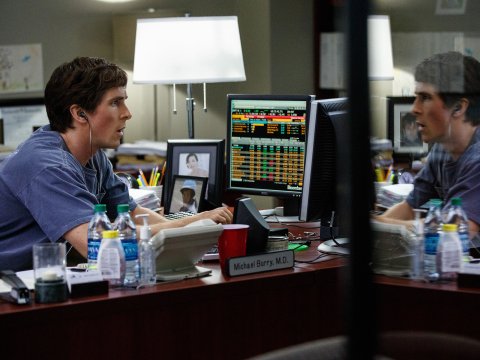
This past weekend Paramount Pictures released ‘The Big Short’ based on the 2010 Michael Lewis book of the same title about the build up of the housing and credit bubble in the first years of the new millennium.

There were many casualties of the worst financial crisis since the great depression.  I thought it might be worthwhile, as moviegoers line up for tickets, to revisit that time and the impact on those who graduated from college in 2009.

It took a few months for the ripples of economic crisis to reach college campuses. But in the fall of 2008 corporate recruiters began to cancel on-campus interviews and career fairs shrunk to a quarter of their previous year’s participation.

Students who had entered college in the fall of 2005 faced optimistic prospects as the economy was booming and entry level jobs were plentiful. But the global economy began to turn in the spring of junior year, with many heading off to summer internships in anticipation of transitioning to full time work at graduation.

By final exams in 2008, things were looking bleak. Here is an excerpt of a blog I wrote on December 11th.

“When the semester began in August, not even the experts could have predicted the level of change we would experience this fall. While each academic year provides opportunities to embrace challenge and celebrate success, these past four months have created historical moments with the potential to redefine our place in the world.

As you are writing your final papers and studying for exams, let’s take a minute to review what we have learned.

First, we are in an age of globalization. If you have been hiding under the covers for the past ten years, the economic downturn brought the reality of the global banking community to the forefront. In a few short months we have learned more than we may have wanted to know about real estate, mortgages, investment banking, insurance and the auto industry. And we now have a better sense of how our domestic economy depends on the health of these industries. For many of us, the impact of the downturn in the economy has hit close to home with friends and family out of work.

Change can be difficult. If you are a freshman this year, your transition from high school to college is a fresh memory. There was the excitement of a new place mixed with missing friends and family. With every new opportunity to change there is a sentimental longing for the past. For seniors, there is the anticipation of the next step: graduate school, professional school, a new job or and entrepreneurial start up. It is a time of hope mixed with uncertainty.

You are a part of a historic moment in time. Become an active participant. If opportunities in a career field are limited, look toward the new careers emerging as a result of change. All you have learned this semester in your classes, organizations and internships have provided you with a solid foundation to adjust and adapt. This is your strength.”

If the rumors are true, the Federal Reserve will raise interest rates this week, bringing an end to the economic downturn that began in the spring of 2008.

I think it’s important not to forget the lessons learned in 2008 and 2009. Check your social network and schedule a sit down with a 2009 graduate. Get a first person account of how to recalibrate a career path to eventually arrive at success.


The week@work – Mark Zuckerberg writes a letter, equality comes to combat, 20 predictions/20 years, the November jobs report and terrorism@work

This week@work was dominated, until mid-week, by the story of the ‘Chan Zuckerberg initiative’ to set aside 99% of their Facebook wealth, and overshadowed a major shift in policy within the Pentagon, opening all combat jobs to women, without exception. The November jobs report continued the positive trajectory of the economy with the revision upward of September and October numbers. And the editor of Fast Company Magazine offered ‘Twenty Predictions for the Next Twenty Years’.

All of those stories pale in comparison to the return of terrorism to the workplace at a holiday party at 11 AM on Wednesday in San Bernardino, California.

Mark Zuckerberg wrote a letter to his new daughter and lots of attention was paid to the section on sharing his wealth.  Carmine Gallo of Forbes took closer look and noted that the letter read like a great speech.

“As you’ve probably read by now Facebook founder Mark Zuckerberg and his wife Priscilla Chan welcomed a daughter into the world in a very big way – with the creation of a new initiative to donate 99% of their Facebook shares ($45 billion currently) to philanthropy. That’s the headline. I was struck, however, by how the open letter to their daughter read more like a speech than a letter. It was meant for the eye…and the ear. It was meant to inspire a generation to commit itself to giving and to making the world a better place.

“Like all parents, we want you to grow up in a world better than ours today,” the letter begins. Read aloud at an average speaking pace, the 2,200-word letter takes about twelve minutes to recite, the ideal amount of time for a good speech (many of the most notable speeches in recent history clock in at 15 minutes or less).

Zuckerberg’s hope for his daughter’s generation provides the theme of the letter, a headline that fits into one short sentence. In bold letters, Zuckerberg writes:

“Advancing human potential and promoting equality.”

Amanda Platell of The Daily Mail offered an alternate version.

“Let’s start with the ‘friends’ you may have on Facebook. Do not confuse them with the friends you should trust in the real world. Many will barely know you, plenty may be jealous, others will be insincere and spiteful…

If I have learned anything from running Facebook, it’s that there is no such thing as privacy any more. After all, that’s how I made our billions!

Come to think of it, perhaps we won’t give you a computer until you’re 18, just to be safe. Love, Dad.”

On Thursday the Dan Lamothe reported on the groundbreaking change in staffing policy at the Pentagon.

“Defense Secretary Ashton B. Carter said Thursday that he is opening all jobs in combat units to women, a landmark decision that would for the first time allow female service members to join the country’s most elite military forces.

Women will now be eligible to join the Navy SEALs, Army Special Forces and other Special Operations Units. It also opens the Marine Corps infantry, a battle-hardened force that many service officials had openly advocated keeping closed to female service members.

“There will be no exceptions,” Carter said. “This means that, as long as they qualify and meet the standards, women will now be able to contribute to our mission in ways they could not before.”

Robert Safian, the editor-in-chief of Fast Company magazine marked the twentieth anniversary of the publication with ‘Twenty Predictions for the Next Twenty Years’.

“We celebrate birthdays to remember all that has gone before, and also what is to come. This month, with issue No. 201, we recognize Fast Company’s 20th anniversary by looking toward the future. The dynamic change of the past two decades is just a warm-up for what is still to come.

I have used the phrase Generation Flux to describe this era of transition. Because the changes are coming so fast, there is a rising premium on our ability to adjust, to be adaptable in new ways. This can be scary for some, but it is also undeniably exciting, and for those prepared to embrace this emerging reality, the possibilities are tantalizing.

What follows are 20 observations that we believe will hold fast in the years ahead. They are predictions and, as such, are fraught with limitation and supposition. None of them, on their own, is shocking. That is by design. In combination, though, they outline a world of tomorrow where work is still personal, computing is still social, and knowledge is still power. And where the rules for success will be ever-changing.”

Bouree Lam covered the optimistic economic report from the Labor Department on Friday.

“The November jobs report is out, and it’s meeting what were moderately high expectations. The figures from the Labor Department show that the unemployment rate remained at 5 percent and the economy added 211,000 jobs in November. Jobs were added in construction, health care, and “professional and technical services”—the Labor Department’s term for an assortment of white-collar jobs. Among those, the construction sector showing particularly strong growth, adding 46,000 jobs.”

On Wednesday morning a group of colleagues went to work at the Inland Regional Center in San Bernardino, California. As they were taking a break, preparing for a holiday celebration, one of their team and his wife, both heavily armed, entered the room and changed lives forever.

In 2014 there were 404 workplace homicides, 80% were shootings. The ‘mass shooting’ in San Bernardino was the fourth of this year.

Yesterday the editors of The New York Times published an editorial on the front page of the paper, ‘End the Gun Epidemic in America’.

I’m done with the retailers who give away guns to the first 200 customers on Black Friday. And I’m not comfortable with my cubicle mates carrying weapons to work. The workplace is a place to create, engage and perhaps follow a dream. Fear and hostility have never been a productive part of life @work. The last time leading by fear worked was in the mid-20th century Catholic grammar school classroom.

“It is a moral outrage and a national disgrace that civilians can legally purchase weapons designed specifically to kill people with brutal speed and efficiency. These are weapons of war, barely modified and deliberately marketed as tools of macho vigilantism and even insurrection. America’s elected leaders offer prayers for gun victims and then, callously and without fear of consequence, reject the most basic restrictions on weapons of mass killing, as they did on Thursday. They distract us with arguments about the word terrorism. Let’s be clear: These spree killings are all, in their own ways, acts of terrorism.”

On March 4, 1933 newly elected President Franklin Roosevelt delivered his inaugural address. The familiar phrase, “…the only thing we have to fear is fear itself..” has been whispering from the back of my mind since Wednesday and I think it’s particularly relevant to our political conversation today.

“This is preeminently the time to speak the truth, the whole truth, frankly and boldly. Nor need we shrink from honestly facing conditions in our country today. This great Nation will endure as it has endured, will revive and will prosper. So, first of all, let me assert my firm belief that the only thing we have to fear is fear itself—nameless, unreasoning, unjustified terror which paralyzes needed efforts to convert retreat into advance. In every dark hour of our national life a leadership of frankness and vigor has met with that understanding and support of the people themselves which is essential to victory. I am convinced that you will again give that support to leadership in these critical days.”


Does your resume reflect your values?

Yesterday was #GivingTuesday, a day to give back after the frenzy of Black Friday and Cyber Monday. Let’s start a new tradition, #ValuesWednesday and do a quick audit of our community involvement activities over the past year, and update our resumes to reflect our values.

It’s not just our individual contributions to our local area, but the activities aligned with the places we work. As a new employee at Salesforce you spend your first day outside the office working for a community non-profit organization. It’s a clear message that ‘giving back’ is part of the corporate DNA.

“Salesforce operates on what it calls a “1-1-1” philanthropy approach, in which it supports local nonprofits by giving 1 percent of its products, 1 percent of its equity and 1 percent of its employees’ time.

As an added incentive, employees get six paid days off a year to volunteer. If they complete that, they receive a $1,000 grant to donate to a nonprofit of their choice.”

Most folks forget to include a community involvement section on their resume and omit a key component of their work narrative.

Your resume should communicate what’s important to you. It’s a living document that reflects your commitment @work and in your community.

Conducting a ‘values audit’ is not only an exercise to build your resume, it’s a way to evaluate how you set your priorities over the past year. If you notice your perception is out of balance with reality, you may want to consider the work/family pressures that redirected your plans. If work and values are coming unglued, expand your audit to take in the bigger picture of career/life decisions.

Po Bronson wrote an article for Fast Company magazine 13 years ago. It’s a piece that continues to resonate over time as it applies to our life @work.

“Every industry has a culture. And every culture is driven by a value system.

One of the most common mistakes is not recognizing how these value systems will shape you. People think that they can insulate themselves, that they’re different. They’re not. The relevant question in looking at a job is not What will I do? but Who will I become? What belief system will you adopt, and what will take on heightened importance in your life? Because once you’re rooted in a particular system — whether it’s medicine, New York City, Microsoft, or a startup — it’s often agonizingly difficult to unravel yourself from its values, practices, and rewards. Your money is good anywhere, but respect and status are only a local currency. They get heavily discounted when taken elsewhere. If you’re successful at the wrong thing, the mix of praise and opportunity can lock you in forever.”

On this #ValuesWednesday, ask yourself, Who’s driving the values bus? Are you morphing into a corporate clone or maintaining the integrity of your personal value system? We’re not talking mutually exclusive terms here, just taking an annual values audit.