The week@work – An astronaut in Greenland, a McDonald’s worker in Edinburgh, Facebook’s identity crisis, and how to design a happier life

This week@work, a former astronaut and climate scientist, and a McDonald’s employee in Edinburgh challenged expectations and stereotypes, journalists questioned Facebook’s content algorithm, and a leading happiness scholar shared his formula.

In January, Piers J. Sellers, Deputy Director of the Sciences and Exploration Directorate and Acting Director of the Earth Sciences Division at NASA/GSFC wrote an opinion for The New York Times Sunday Review, ‘Cancer and Climate Change’.

“I’m a climate scientist who has just been told I have Stage 4 pancreatic cancer.

This diagnosis puts me in an interesting position. I’ve spent much of my professional life thinking about the science of climate change, which is best viewed through a multidecadal lens. At some level I was sure that, even at my present age of 60, I would live to see the most critical part of the problem, and its possible solutions, play out in my lifetime. Now that my personal horizon has been steeply foreshortened, I was forced to decide how to spend my remaining time. Was continuing to think about climate change worth the bother?

1024px-Piers_Sellers_spacewalk.jpg

Journalist and author, Jon Gertner continued the story this week with ‘An Astronaut Finds Himself in Greenland’ for The New Yorker.

“Piers Sellers landed in Greenland on a frigid Monday morning in April, and as he stepped off the plane at Thule Air Base he regarded the surrounding snow-covered hills with delight…Sellers was visiting the country for the first time. “I didn’t even see this from space, since the farthest north the shuttle goes is fifty-one degrees latitude,” he said. “We’re at seventy-six degrees now, right? Fantastic.” Sellers’s plan was to rendezvous with NASA researchers at Thule (pronounced “TOO-lee”) and accompany them on Operation IceBridge, an annual mission to collect data on the diminishing ice in the Arctic Ocean and on the Greenland ice sheet. “These guys at IceBridge are always saying, ‘Oh, you should come along, see where the rubber meets the road,’ and I say that I’m too busy, with too much piled on my desk,” Sellers explained. “But, given my current situation, of all the things that we’re doing in the field, this one is probably the most critical right now.”

After the diagnosis, he briefly considered living his final year or so—assuming his doctors’ expectations prove correct—as a rich man might, in a tropical, hedonistic splurge. “I thought of myself sitting for weeks on a beach,” he said. “What would I do? I’d be thinking about climate.”

So Sellers went back to his desk job at Goddard, where he oversees the work of about sixteen hundred people, and considered how he could fit a few modest adventures between his office duties and chemotherapy sessions. Soon it occurred to him to go to the Arctic, which is warming faster than any other part of the world.

The second story this week comes via Mashable and writer Davina Merchant‘s coverage of the Facebook post of McDonald’s employee, Mike Waite. Bravo for debunking stereotypes!

Unknown.png

“Today I have had enough of the judgemental criticism. Let me be clear. YES I work at Mcdonalds and do it nearly 50 hours a week. Why? Not because I have no aspiration, motivation or intelligence…but for the opposite…because in a few months time like a great number of people I work with I will be going back into higher education. McDonalds has this reputation which is quite unfounded in the recent age, every person I work with has a story and every person is working their ass off in what can be a very tough job for their own reasons…be it they are in school, uni, have family, have kids, saving…etc. The one thing McDonalds is is a job which is extremely (extremely) flexible, has opportunities for growth and can allow you to do what you want to do. There are people becoming pilots, lawyers, designers, architects, and people who are at a point in their life that they will do whatever it takes to look after their family. I work with people I would aspire to be like, who have strengths in areas I wish I had, who have overcome situations I never could and who have the determination to not fade away on handouts but rather step up and work for their living unlike a huge number of people in this country. In the past I have known and worked with very rich folks in very high end jobs, and a few of them could never match the resilience and work ethic of some of the current lads/lassies. After the ending of a big part of my life McD’s is not only letting me save up for University, but setting me up with flexible work I can continue over the next years to come. Not only that but I intend on eventually progressing into the management side of things, something which ties in directly to my degree and will enhance my future job prospects.”

Beyond brilliant posts to its site, Facebook was in the news this week when Gizmodo reported that content on the platform was being ‘subjectively’ curated.

14LfacebookWeb-mediumThreeByTwo210.jpg

David Uberti reported ‘Facebook wants you to think it’s just a platform. It’s not.’ for the Columbia Journalism Review.

“As prominently argued by Emily Bell, director of Columbia’s Tow Center for Digital Journalism, Facebook is increasingly shaping the contours of the public square, and citizens and news organizations have little choice but to go along for the ride. The power shift raises the all-important question of how information travels in free societies—and what we know about it.

“This is an unregulated field. There is no transparency into the internal working of these systems,” Bell said in a University of Cambridge speech earlier this year. “We are handing the controls of important parts of our public and private lives to a very small number of people, who are unelected and unaccountable.”

News organizations once had a more central role in setting the terms of public debate, balancing money-making aspects of publishing with more civically minded accountability journalism. They also generally followed widely accepted journalistic standards. Social networks have assumed much of the same power, Bell and others have argued, though they typically use more opaque processes and have a greater focus on those profitable slices of publishing. That’s not to say this new construct is necessarily worse, but it is foreign. And Facebook has little incentive to open up about its methodology.”

Fast Company’s Elizabeth Segran introduced us to London School of Economics professor and happiness scholar, Paul Dolan in ‘How To Intentionally Design A Happier Life’.

37398b0

“After decades of studying happiness, Dolan has developed a happiness formula. He says that happy people pay attention to the everyday experiences that give them pleasure and purpose, then organize their lives so that they are doing more of those things. It sounds obvious, right? Sure, but the problem is that we spend so much of our lives on autopilot instead of consciously focusing on doing things that make us happy. “We are creatures of habit and we automate processes very quickly,” Dolan says. “We do a lot of what we do because we’ve always done it, not because it is good for us or because we enjoy it.” The good news, however, is that Dolan offers two tangible ways for us create more happy moments in our lives. The first is creating a mental habit of paying attention to what makes us happy and the second is designing our lives so it is easier to do those things.”

Two additional stories of interest this week@work:

‘It’s a Tough Job Market for the Young Without College Degrees’  by Patricia Cohen for The New York Times

“Only 10 percent of 17- to 24-year-olds have a college or advanced degree, according to a new study by the Economic Policy Institute, although many more of them will eventually graduate.

And for young high school graduates, the unemployment rate is disturbingly high: 17.8 percent. Add in those who are underemployed, either because they would like a full-time job but can only find part-time work, or they are so discouraged that they’ve given up actively searching, and the share jumps to more than 33 percent.”

‘The Miserable French Workplace’ by Pamela Druckerman opinion for The New York Times

“While many other European countries have revamped their workplace rules, France has barely budged. The new labor bill — weakened after long negotiations — wouldn’t alter the bifurcated system, in which workers either get a permanent contract called a “contrat à durée indéterminée,” known as a C.D.I., or a short-term contract that can be renewed only once or twice. Almost all new jobs have the latter.

(French workers) believe that a job is a basic right — guaranteed in the preamble to their Constitution — and that making it easier to fire people is an affront to that. Without a C.D.I., you’re considered naked before the indifferent forces of capitalism.

No matter what the government does, the workplace is becoming less secure.”

To close this week@work, let’s return to Piers Sellers’ January 2016 NYT opinion piece.

“As for me, I’ve no complaints. I’m very grateful for the experiences I’ve had on this planet. As an astronaut I spacewalked 220 miles above the Earth. Floating alongside the International Space Station, I watched hurricanes cartwheel across oceans, the Amazon snake its way to the sea through a brilliant green carpet of forest, and gigantic nighttime thunderstorms flash and flare for hundreds of miles along the Equator. From this God’s-eye-view, I saw how fragile and infinitely precious the Earth is. I’m hopeful for its future.

And so, I’m going to work tomorrow.”
The week@work – A ‘fumbled’ transition @ABC, a second chance for Cho, the Class of 2016 & the ‘Secret Shame of the American Middle-Class”

When is the right time to share news of a career transition with a colleague? This week@work, the communication of Michael Strahan’s move to ‘Good Morning America’ provided a lesson in what not to do. In other stories: Jerry Seinfeld stepped in to mentor fellow comedian Margaret Cho, the Class of 2016 enters the job market, and the middle class continues to live paycheck to paycheck.

‘Kelly Ripa’s Absence From ‘Live’ Points to Rancor at ABC’ was the #1 most read New York Times business article this past week. #8 on the list was ‘Michael Strahan, Switching Shows, Is Headed to ‘Good Morning America’. Leadership lesson: the reaction shouldn’t be bigger news than the announcement.

Unknown.png

Why did this story resonate with readers?  Because it’s a story about fairness @work, professional respect among colleagues, and being left out of the loop. We have all been Kelly and many of us have been Michael.

Both GMA and Live fall within the Disney brand portfolio. It might be time to send the management team to the Disney Institute for a ‘values’ refresh. Jeff James, president and general manager of the Institute, often writes for INC. Here is a sample from April, 2014.

“Walt Disney said, “You can design and create, and build the most wonderful place in the world. But it takes people to make the dream a reality.”

To achieve success, leaders should consider these three concepts to motivate and inspire their team:

  1. Vision and Values. At Disney Institute, we believe every leader is telling a story about what he or she values. These values must be aligned with the vision for an organization or team… 
  2. Behaviors over Intentions. Individuals within an organization will look to a leader as a model to develop their own behaviors and decisions… As a leader, it is essential that your behaviors reflect your values and your vision… 
  3. Purpose before Task. When assigning new projects to a team, it is important to discuss the purpose behind the task… if a team understands the common purpose behind individual responsibilities, they will be more inspired to own the tasks as well as the goal.

Tomorrow morning Kelly Ripa will return to the ‘Live’ studio to resume her hosting assignment. In anticipation, Ned Ehrbar of CBS News asks “Is 9 a.m. too early for popcorn? Because this should be good.” Stay tuned.

There was a small story last week about second chances.

“Last month, the stand-up comedian Margaret Cho had a bad set at the Stress Factory in New Jersey. It happens. O.K., it was worse than usual since a clip of Ms. Cho being booed by the crowd showed up on TMZ. But for a comic, bombing is part of the job. What’s less common is getting a second chance with the same audience.”

images.jpeg

We’ve all been there. We prepare a presentation complete with all possible tech bedazzling, and imagine kudos from a receptive audience. However, the execution doesn’t quite match the expectation and we experience an epic fail.

Recovery for the average worker is a combination of coaching, training and perhaps client feedback. It’s extremely rare for an entertainer to revisit the scene of a bad set. Enter Jerry Seinfeld.

“In an invitation sent to all the ticketbuyers from her late-night show in New Brunswick on March 26, Mr. Seinfeld wrote: “At most workplaces, if there’s a problem on the job, there’s a conversation and usually some sort of outcome. But when a stand-up show doesn’t go well, the audience and the comedian both go home unhappy, sometimes not really sure what went wrong.”

Then Mr. Seinfeld made a proposal: “So as I was talking with Margaret about this show last week during the taping in L.A., we started wondering, wouldn’t it be something if we could go back to New Jersey, back to that club with the same audience and try to make things right? Have a discussion where both sides — comedian and audience — could talk about what happened? And then both of us could do a show — a sort of redo for the audience?”

When the jacaranda trees begin to bloom in Southern California, you know it’s time for commencement, and the string of news stories on the job prospects for the Class of 2016.

la-me-jacaranda-mk-la0009868688-20130604.jpeg

Lydia Dishman reported on the Economic Policy Institute’s analysis of work prospects for this year’s grads.

“Members of the class of 2016 are about to take their first steps on career paths. While no one can predict how they will do once they become part of the workforce, the Economic Policy Institute analyzed employment, enrollment, and wage trends to determine their economic prospects.

A paper, titled “Class of 2016,” found that this cohort has better job prospects than members of last year’s graduating class. Thanks to the steady economic recovery, these young people are expected to do better than any other class since 2009.”

The Economic Policy Institute’s paper is not an optimistic read, but a well researched study on the impact of nonexistent wage growth and a volatile economic future.

“Graduating in a weak economy has long-lasting economic consequences. For the next 10 to 15 years, those in the Class of 2016 will likely earn less, and have more spells of unemployment, than if they had graduated when job opportunities were plentiful.”

Saving the best for last, Neal Gabler‘s courageous, must read article in The Atlantic Magazine, ‘The Secret Shame of Middle-Class Americans’.

“Since 2013, the federal reserve board has conducted a survey to “monitor the financial and economic status of American consumers.” Most of the data in the latest survey, frankly, are less than earth-shattering: 49 percent of part-time workers would prefer to work more hours at their current wage; 29 percent of Americans expect to earn a higher income in the coming year; 43 percent of homeowners who have owned their home for at least a year believe its value has increased. But the answer to one question was astonishing. The Fed asked respondents how they would pay for a $400 emergency. The answer: 47 percent of respondents said that either they would cover the expense by borrowing or selling something, or they would not be able to come up with the $400 at all. Four hundred dollars! Who knew?

Well, I knew. I knew because I am in that 47 percent.”

In an interview with NPR last week, Gabler spoke of “the shame of financial impotence”.

“That shame weighed on me — and I am not overstating the case — on not only a daily basis, but an hourly basis. It keeps you up at night. It is ruinous for relationships, the shame is so great. The ongoing sense of shame, that in a country where we are told anyone can be successful, and where, as Donald Trump has told us endlessly, if you don’t make it you’re a “loser.”

So, yes, did I feel like a loser? You bet I did. But what can you do with that sense of shame? You can’t share it with anybody, because to expose it is, like sexual impotence, something you just don’t want to talk about.”


Uncovering genius in the aftermath of a mistake

There are countless stories of product development errors that resulted in brilliant inventions: penicillin, Post-it notes, Coca-Cola, and the color mauve. What about human error; when a group of high school seniors is offered admission to college by mistake? Can an administrative blunder result in undiscovered genius?

I’ve been thinking about those students who received letters of admission from Vassar, UCLA and the University of Ulster in the spring of 2012, only to learn later that they hadn’t made the cut. What happened to those students who planned to attend college as members of Class of 2016 at these schools?

I’m sure there is a grad student in search of a thesis topic, who will one day interview the admitted/rejected cohort and determine the long-term impact on success. I guarantee a significant number of these students used the experience to excel at an alternate institution.

What if these schools had honored their offer of admission?

Let’s imagine a freshman class at Vassar College that included the 76 students who had been sent a letter of admission by mistake.

I can hear the opposition preparing for debate.

In some instances, this would be impractical if the numbers of mistakenly accepted students exceeded the capacity of classroom and living space. There’s probably an argument that admitting a ‘second tier’ roster would impact national rankings.

At the top of the higher education pyramid, selectivity is the guiding principle. It’s no different at the most competitive corporations. Employers want folks who have the highest GPA, and go to war with one another over the same pool of candidates.

This is what they both miss; students who could thrive in a challenging academic environment, and employees who would contribute over the long term rather than continually fend off offers to join the competition.

Alexander W. Astin, professor emeritus at UCLA and author of a new book, ‘Are You Smart Enough? How Colleges’ Obsession With Smartness Shortchanges Students’ describes the focus on ‘acquiring’ vs.’developing’ students.

“When the entire system of higher education gives favored status to the smartest students, even average students are denied equal opportunities,” he writes. “If colleges were instead to be judged on what they added to each student’s talents and capacities, then applicants at every level of academic preparation might be equally valued.”

The next time the admission office makes a mistake; I hope they take a minute to consider the alternative.

It’s the undiscovered genius among the rejected that are the true ‘opportunity cost’.


How many people have a job @graduation?

On college campuses across the country it’s ‘conversion’ time; next level marketing to the chosen to turn them into the enrolled. How do you differentiate between alternatives? If you take the commodity approach, it’s all about guaranteed employment. Here’s the thing – there are no guarantees.

It’s reasonable to consider post-grad employment when you’re investing a significant amount of money in a college degree. But that’s what it is, an investment, not a purchase. For the student, ‘attending’ college is not a passive act, it’s a full-time commitment. The ROI is a direct result of the effort, not dollars expended.

Former Cornell University president and current AAU president, Hunter Rawlings weighed in on the value of college debate last spring.

“A college education, then, if it is a commodity, is no car. The courses the student decides to take (and not take), the amount of work the student does, the intellectual curiosity the student exhibits, her participation in class, his focus and determination — all contribute far more to her educational “outcome” than the college’s overall curriculum, much less its amenities and social life. Yet most public discussion of higher ed today pretends that students simply receive their education from colleges the way a person walks out of Best Buy with a television.”  

When you ask the question ‘How many students are employed at graduation?’ you’re asking about the resale value of the car.

No one in today’s job market is guaranteed work. Any individual who believes their institutional pedigree will stand alone to open career doors is delusional.

The level of student engagement in internships, research, community service and extra-curricular activities, combined with faculty, staff and alumni connections, are far better predictors of post-grad success than destination survey statistics.

The question to ask is ‘What are the resources available to assist students seeking work?’ The ‘support’ assets are the constant in a volatile job market. Access to this ‘capital’ is the true measure of a university’s commitment to post-grad employment.


When choosing a college, ask ‘Who will I become?’

The questions we ask when selecting an undergraduate or graduate program focus on the financial and vocational. What will it cost? Will I get a job when I graduate? What we miss is the critical question. Who will I become?

It’s not a question just for philosophy majors.

Each university community is a micro culture defined by traditions, behaviors and beliefs. Even the most jaded will be transformed by the experience. That’s why imagining your selfie in four years is as important as financial and career planning.

The Atlantic’s senior editor, Derek Thompson acknowledged this developmental progression when he examined the impact of college choice on future success.

“While hundreds of thousands of 17- and 18-year-olds sit around worrying that a decision by a room of strangers is about to change their lives forever, the truer thing is that their lives have already been shaped decisively by the sum of their own past decisions—the habits developed, the friends made, and the challenges overcome. Where you go to college does matter, because it’s often an accurate measure of the person you’re becoming.”

If you accept that college is a point on the developmental continuum, your challenge is to find a place where your past intersects with your optimal opportunity for continued growth.

If place defines you, it’s a campus where you’ll discover the gaps in your experience and explore every possible resource to fill in the blanks. Networking will not be an abstract process for job search, but a four year active engagement with faculty, administrators and colleagues.

Your future is not determined by the decision of an admissions committee, but by the sum of your individual decisions over time, and who you will become.


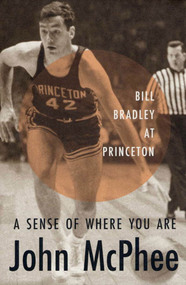
The Saturday Read ‘A Sense of Where You Are’ by John McPhee

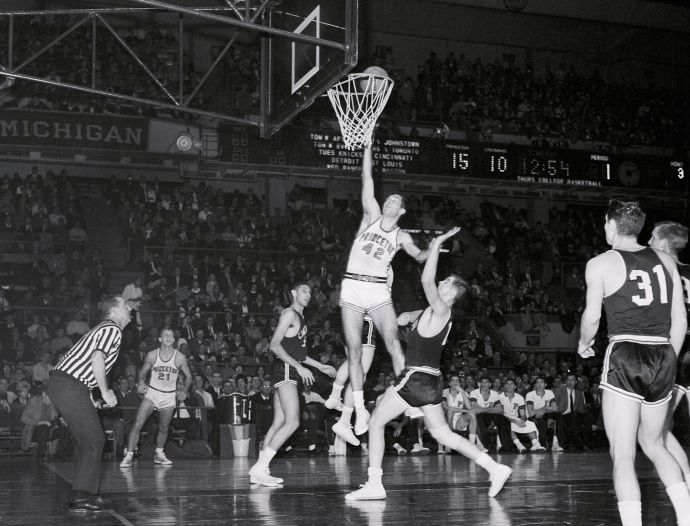
In 1964 Bill Bradley was a senior at Princeton University, and a star player on the basketball team. John McPhee was just beginning his career as a writer. In a moment to make networking history, McPhee’s dad, the athletic department physician, suggested John visit campus and profile the Ivy League phenom.

The Saturday Read this week is ‘A Sense of Where You Are’, the original New Yorker article, published in the January 23, 1965 issue.

images.jpeg

As the NCAA tournament narrows the field from 64 to 16 this weekend, let John McPhee be  your ‘throwback Saturday’ guide to Princeton University in the fall of 1964.

“The basketball locker room in the gymnasium at Princeton has no blackboard, no water fountain, and, in fact, no lockers. Up on the main floor, things go along in the same vein. Collapsible grandstands pull out of the walls and crowd up to the edge of the court. Jolly alumni sometimes wander in just before a game begins, sit down on the players’ bench, and are permitted to stay there. The players themselves are a little slow getting started each year, because if they try to do some practicing on their own during the autumn they find the gymnasium full of graduate students who know their rights and won’t move over. When a fellow does get some action, it can be dangerous. The gym is so poorly designed that a scrimmaging player can be knocked down one of two flights of concrete stairs. It hardly seems possible, but at the moment this scandalous milieu includes William Warren Bradley, who is the best amateur basketball player in the United States and among the best players, amateur or professional, in the history of the sport.”

McPhee introduces us to Bradley, his work ethic, and a time when basketball competition provided “a real period of relief from the academic load”.

Stay with me, fellow time traveller. This is not fiction. This is the future Pulitzer Prize winner, and pioneer of creative non-fiction, John McPhee, painting a picture of college life and basketball in the early 1960s.

In September of his senior year, Bradley competed on the U.S. Olympic basketball team in Tokyo, defeating Russia for the gold medal. In December, he was elected a Rhodes Scholar. He opted out of an opportunity to play for the NY Knicks to study at Oxford.

“Bradley says that when he was seventeen he came to realize that life was much longer than a few winters of basketball. He is quite serious in his application to the game, but he has wider interests and, particularly, bigger ambitions.”

Last year Marc Tracy revisited McPhee, the profile that began his career at The New Yorker, and Bradley’s last NCAA tournament.

“Fifty years earlier, McPhee had good reason to be at the Palestra for a basketball game, and for looking more than simply interested. He was covering an N.C.A.A. tournament game between Princeton and Penn State. Princeton won and then, at College Park, Md., defeated North Carolina State (whose zone press had just handled Duke) and Providence to advance to the Final Four in Portland, Ore. There, it lost to Michigan and, in the consolation game, devastated Wichita State, 118-82.”

The profile, which was later expanded into a book of the same title, provides a tutorial on basketball, and the life of one true ‘student-athlete’, as he balances his academics, sport, and community involvement.

9780374526894.jpg

About that title:

“I asked him what he called his over-the-shoulder shot. He said that he had never heard a name for it, but that he had seen Oscar Robertson, of the Cincinnati Royals, and Jerry West, of the Los Angeles Lakers, do it, and had worked it out for himself. He went on to say that it is a much simpler shot than it appears to be, and, to illustrate, he tossed a ball over his shoulder and into the basket while he was talking and looking me in the eye. I retrieved the ball and handed it back to him. “When you have played basketball for a while, you don’t need to look at the basket when you are in close like this,” he said, throwing it over his shoulder again and right through the hoop. “You develop a sense of where you are.”

In 1964 his classmates predicted Bradley might run for governor in his home state of Missouri, and one day run for president.

With Bradley off to Oxford, McPhee closed his profile with this sentence.

“And like Hank Luisetti, of Stanford, who never played professional basketball, he will have the almost unique distinction of taking only the name of his college with him into the chronicles of the sport.”

That was not the end of the story.

Bradley returned after earning a masters degree at Oxford to play ten seasons with the NY Knicks, and was inducted into the Basketball Hall of Fame in 1983. He served as the U.S. Senator from New Jersey (not Missouri) from 1979-1997. And he ran for president in 2000.

In the 2015, NY Times article,“Bradley explained what the book’s title means to him”.

“You have a sense of where you are in life,” he said. “You don’t get carried away. You know who you are. You understand the environment, the context in which you’re living, and you make decisions based upon the centeredness.”

He added, “You’re also always working on who you are.”


The week@work – leadership, lawyers, student loans & the economy

What makes a great leader or a great lawyer? What’s the best strategy to retire student debt? This week@work surveys articles that provide some answers, and as the economy continues to strengthen, offers some practical advice on career advancement.

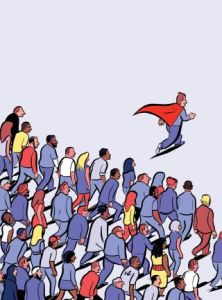
Joshua Rothman wrote ‘Shut Up and Sit Down: Why the leadership industry rules’ for The New Yorker. He gives us a quick tutorial on the history of leadership, why we value the concept, but are so often disappointed in the people. He alludes to the current presidential contest, and then focuses on change in both our expectations of leaders, and the roles they play in contemporary organizations.Print

“In recent years, technological and economic changes like social media and globalization have made leaders less powerful.

Leaders used to be titanic and individual; now they’re faceless guiders of processes. Once, only the people in charge could lead; now anyone can lead “emergently.” The focus has shifted from the small number of people who have been designated as leaders to the background systems that produce and select leaders in the first place.

Leaders, moreover, used to command; now they suggest. Conceptually, at least, leadership and power have been decoupled.

To some extent, leaders are storytellers; really, though, they are characters in stories. They play leading roles, but in dramas they can’t predict and don’t always understand. Because the serialized drama of history is bigger than any one character’s arc, leaders can’t guarantee our ultimate narrative satisfaction. Because events, on the whole, are more protean than people, leaders grow less satisfying with time, as the stories they’re ready to tell diverge from the stories we want to hear. And, because our desire for a coherent vision of the world is bottomless, our hunger for leadership is insatiable, too. Leaders make the world more sensible, but never sensible enough.”

The New York Times profiled two women who chose law as their profession and took divergent, pioneering paths to achieve success. What makes a good lawyer? Meet Kimberley Chongyong Motley and Damaris Hernandez.

David Jolly profiled Ms. Motley, who has been practicing her profession in Afghanistan for close to eight years and was recently the subject of an award winning documentary, ‘Motley’s Law’.

image.adapt.990.high.kimberley_motley_05feb2016_portrait.1454770287607“Ms. Motley, 40, a Marquette University Law School graduate, had never before traveled overseas when she enrolled in a Justice Department program to train Afghan lawyers and flew to one of the world’s more dangerous places.

After her nine-month assignment, she did not return home to Milwaukee, instead hanging out her own shingle in Kabul. She studied Shariah, the Islamic code that lies beneath the fragile new Afghan Constitution, and she established herself as the only foreign litigator in one of the world’s most conservative and male-dominated cultures.

Ms. Motley says she makes a point of closely studying the cultures of both Afghanistan and the courtroom. “I’m a sort of legal archaeologist,” she said. “I try to uncover laws that have not been used, and then use them for the benefit of my clients.”

Damaris Hernandez was recently promoted to partner at the firm Cravath, Swaine & Moore, becoming the first Latina to reach that position. Elizabeth Olson tells her story as a first generation college student, who advanced in her career with the support of a unique scholarship at NYU.

Hernandez web.jpg

That achievement is an acknowledgment of her talent and hard work. But the story of her route to the top also reveals how much more complex the journey is for minorities and women than for the white men who overwhelmingly dominate the firms. Skill is only one of the keys. Being able to navigate unspoken rules is at least as important.

“When I was the only one of color or the only woman in the room, I had the confidence to believe in my ability,” said Ms. Hernández, 36, describing the advantages of the program to her. “When you are the first, you need someone to have your back.”

Over the last decade and a half, she and 100 others who attended the New York University School of Law received that support from a scholarship program that paid their full tuition and also gave them access to a network of luminaries including federal judges, law firm partners and even Supreme Court justices.”

If you are seeking ways to reduce your student loan obligation, NPR’s Yuki Noguchi offers ‘Strategies For When You’re Starting Out Saddled With Student Debt’. It’s not just about individual liability, but also the long term impact on career choice and economic growth.

“Experts say studies show rising student debt is limiting peoples’ career options. They decide against graduate school. Or feel they can’t afford lower-paying public service jobs or the risk of starting a new business. That’s a problem, because new companies create new jobs.”

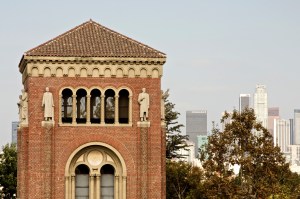
University Park campus of the University of Southern California

This past week the University of  Southern California announced a tuition increase that will bring the annual bill to over $51,000. Financing college involves loans as part of the  package. Having a repayment strategy is critical to long term career success.

“Chris Costello, CEO of Blooom, a personal finance advice firm targeting lower-net-worth people, advises his firm’s clients to tackle student debt with this strategy.

First, if your employer matches contributions to a retirement plan, such as a 401(k) or 403(b), max out on the matching contributions.

After maxing out on the matching contributions, pay off the debt with the lowest balance.

Check to see if you can qualify for loan forgiveness, refinancing or debt consolidation.

Do not incur new debts: in other words, live below your means.”

Chico Harlan of The Washington Post reported on the latest figures released by the U.S. Labor Department on Friday.

“U.S. employers continued their rapid hiring in February, new government data showed Friday, a sign of the nation’s economic durability during a tumultuous global slowdown.

The U.S. added 242,000 jobs as the unemployment rate held at 4.9 percent, the lowest mark during the seven-year recovery from the Great Recession.

That pace, consistent with gains over the last year, indicates Americans are returning rapidly to the labor force, helped by steady consumer spending that is bolstering demand and prompting employers to expand their workforces. In data released Friday by the Department of Labor, sluggish wages provided the only disappointing note — a signal that labor market still has room to improve.”

Two other articles of interest this week:

’15 things successful 20-somethings do in their spare time’ by Jacquelyn Smith and Rachel Gillett for Business Insider

‘How to Advance In Your Career Without Becoming A Workaholic’ by Lisa Evans for Fast Company


This one is for the Class of 2009

This past weekend Paramount Pictures released ‘The Big Short’ based on the 2010 Michael Lewis book of the same title about the build up of the housing and credit bubble in the first years of the new millennium.

There were many casualties of the worst financial crisis since the great depression.  I thought it might be worthwhile, as moviegoers line up for tickets, to revisit that time and the impact on those who graduated from college in 2009.

It took a few months for the ripples of economic crisis to reach college campuses. But in the fall of 2008 corporate recruiters began to cancel on-campus interviews and career fairs shrunk to a quarter of their previous year’s participation.

Students who had entered college in the fall of 2005 faced optimistic prospects as the economy was booming and entry level jobs were plentiful. But the global economy began to turn in the spring of junior year, with many heading off to summer internships in anticipation of transitioning to full time work at graduation.

By final exams in 2008, things were looking bleak. Here is an excerpt of a blog I wrote on December 11th.

“When the semester began in August, not even the experts could have predicted the level of change we would experience this fall. While each academic year provides opportunities to embrace challenge and celebrate success, these past four months have created historical moments with the potential to redefine our place in the world.

As you are writing your final papers and studying for exams, let’s take a minute to review what we have learned.

First, we are in an age of globalization. If you have been hiding under the covers for the past ten years, the economic downturn brought the reality of the global banking community to the forefront. In a few short months we have learned more than we may have wanted to know about real estate, mortgages, investment banking, insurance and the auto industry. And we now have a better sense of how our domestic economy depends on the health of these industries. For many of us, the impact of the downturn in the economy has hit close to home with friends and family out of work.

Change can be difficult. If you are a freshman this year, your transition from high school to college is a fresh memory. There was the excitement of a new place mixed with missing friends and family. With every new opportunity to change there is a sentimental longing for the past. For seniors, there is the anticipation of the next step: graduate school, professional school, a new job or and entrepreneurial start up. It is a time of hope mixed with uncertainty.

You are a part of a historic moment in time. Become an active participant. If opportunities in a career field are limited, look toward the new careers emerging as a result of change. All you have learned this semester in your classes, organizations and internships have provided you with a solid foundation to adjust and adapt. This is your strength.”

If the rumors are true, the Federal Reserve will raise interest rates this week, bringing an end to the economic downturn that began in the spring of 2008.

I think it’s important not to forget the lessons learned in 2008 and 2009. Check your social network and schedule a sit down with a 2009 graduate. Get a first person account of how to recalibrate a career path to eventually arrive at success.


The week@work – End of the fossil fuel era, founders, introverts, college athletes and the one business book to read

The generational disruption continues. This week@work world leaders committed to cut greenhouse gases, ensuring the environment for future generations. MTV labeled the next of these generations ‘the founders’. Silicon Valley is quickly becoming the vortex for college consulting, making sure these ‘founders’ gain admission to the best universities. And a group of Clemson alumni have come up with a creative alternative to legally compensate college athletes via crowdfunding.

For introverts, there were hints for employers to maximize success. And if you only read one business book this year, the experts recommend ‘Rise of the Robots’ by Martin Ford.

The global story this week was reported from Paris by The Guardian.

“After 20 years of fraught meetings, including the past two weeks spent in an exhibition hall on the outskirts of Paris, negotiators from nearly 200 countries signed on to a legal agreement on Saturday evening that set ambitious goals to limit temperature rises and to hold governments to account for reaching those targets.

Government and business leaders said the agreement, which set a new goal to reach net zero emissions in the second half of the century, sent a powerful signal to global markets, hastening the transition away from fossil fuels and to a clean energy economy.”

In national news, The Atlantic’s David Sims summarized the MTV survey that resulted in a name for the children of the new millennium.

“The name “The Founders” comes from the kids themselves, according to MTV’s survey of more than 1,000 respondents born after the year 2000. America is still reckoning with Millennials (loosely classified as those born from the mid-1980s to the late-’90s) one thinkpiece at a time, but according to this survey, their fate is already sealed. As the children of indulgent baby boomers, Millennials are classified as “dreamers” who live to disrupt and challenge established norms. The Founders, by contrast, are “pragmatists” who will navigate a tougher world defined by 9/11, the financial crisis, and gender fluidity. Previous generations had to worry about getting into college and finding a job, but the next one is tasked with cleaning up their mess.”

Nathan Heller, writing in The New Yorker imagined how today’s fourteen year olds will impact the economy.

“When the teen-agers call themselves founders, they are not thinking of Roger Sherman or, for that matter, of Henry Ford. They are allying themselves with West Coast startup culture—a milieu that regards inventive business-building as the ultimate creative and constructive act…In embracing “founders,” it affirms the idea that creativity is essential—and performed through business enterprise.

“If the founders hold to their founding, it is not hard to extrapolate the economic model that their interests will support. A founder-friendly society is deregulated, privatized, and philanthropic in its best intent. (See ur-founder Mark Zuckerberg’s recent tax-incentivized pledge.) “Founders,” whose popularity as a Silicon Valley concept followed the 2009 recession, has become a stand-in for more charged, and less heroic-sounding words, such as “small-business owner,” “C.E.O.,” and “boss.” To found is not to manage; it’s to dream and to design. This is the new model for innovative business, scrupulously cleansed of the dank trappings of corporate industry. It’s business all the same, though, and it aims for growth.”

If you are working in the underpaid and undervalued world of college admissions, you have a future in the lucrative business of college consulting. Georgia Perry reported on the growing industry, fueled by parental anxiety, that helps high school students find summer internships, prepare applications and refine essays.

“Private college-admissions consulting is a rapidly growing industry across the U.S. According to the Independent Educational Consultants Association, the number of independent admissions consultants in the U.S. has grown from 2,000 to nearly 5,000 in recent years. In a nationwide study, the marketing firm Lipman Hearne found that of students who scored in the 70th percentile or higher on the SAT, 26 percent had hired a professional consultant to help with their college search. The San Francisco Bay Area has a higher concentration per capita of independent college-admissions consultants than “most cities,” says IECA communications manager Sarah Brachman, though the association doesn’t have specific numbers. The IECA’s most recent report found that nationally, $400 million was spent on college consultants in 2012. Hourly rates in the Bay Area can be as high as $400 an hour, and comprehensive packages with regular meetings throughout high school can add up to several thousand dollars.”

How student-athletes are compensated continues to be a topic in legal proceedings, but this week a group of Clemson folks have come up with an innovative approach that just might work and meet NCAA requirements. Ben Strauss provided the details in his article ‘If Colleges Can’t Pay Athletes, Maybe Fans Can, Group Says’.

“The answer to the riddle of putting money in the hands of amateur student-athletes, who according to the N.C.A.A. cannot be paid, is crowdfunding, said Rob Morgan, a Clemson business school graduate and an anesthesiologist based in Greenville, S.C. His new website, UBooster, started on Friday with the goal of soliciting payments for high school recruits from fans, and delivering the money to the athletes after their college careers end.

“We think this is the direction college sports is headed,” said Morgan, who has been helped in his venture by a former Clemson football player and the interim dean of the university’s business school. “At some point, there is going to be an opportunity for players to make money, and here’s how we can be a part of it.”

“The business model is simple. Fans pledge money to individual recruits, and can leave public notes on the site urging them to attend their favorite college. Morgan said all high school recruits — men and women in every sport from Division I to Division III — would be eligible, though it would seem obvious that most of the interest and money would be directed at top-flight football and basketball prospects. The accounts lock, and no more money can be pledged to players once they formally commit to a college. UBooster will then hold the money in a trust before turning it over to the athletes after their college careers.”

Quiet Revolution founder Susan Cain is an advocate for the introvert in all facets of life. And it’s her website’s section on work that provides insight into fostering career success. This week, Liz Fosslien and Mollie West offered an ‘Illustrated Guide to Introverts in a Start-Up’.

An-Illustrated-Guide-to-Introverts-in-a-Start-Up.jpg

“Famous introvert entrepreneurs include Thomas Edison, Bill Gates, Warren Buffett, Marissa Mayer, and Mark Zuckerberg.

When we imagine our ideal workplace, it looks more like a library full of quiet rooms and isolated carrels than the ball-pit and bullpen situation start-ups are currently obsessed with. As introverts, we may be outnumbered by extroverts at start-ups. According to Laney, “The introvert is pressured daily, almost from the moment of awakening, to respond and conform to the outer world.” This need to conform can be tiring. But we promise, with just a few tweaks in the workplace, you could make us very happy.”

Finally, if there is only one business book you will read this year… and the clock is ticking…the experts recommend ‘Rise of the Robots’ by Martin Ford. Jessica Stillman reported:

“According to the Financial Times and consultancy McKinsey, there’s at least one title even the busiest business owners shouldn’t miss. They recently crowned Rise of the Robots by entrepreneur Martin Ford the very best business book of the year.

Hugely topical, the book discusses the much debated idea that advances in automation will soon radically affect the labor market. “The book reflects growing anxiety in some quarters about the possible negative impact of automation on jobs, from manufacturing to professional services,” explains the FT write-up of the award. This economic reshuffle may require “a fundamental restructuring of our economic rules,” according to Ford, who proposes a guaranteed minimum basic income as one possible remedy.”

Enjoy your week@work… the founders and robots are coming…


What are you planning to do after graduation?

It’s the question that can cause one to instantly lose their appetite. It’s Thanksgiving and just as you are about to digest your first bite of turkey, someone decides it’s the perfect time to quiz you on your plans after graduation.

Here are a few ideas to manage the conversation.

If you have a job offer, focus on discussing your plans for starting your career. You may find that family and friends have contacts within the organization or career field you are entering. Ask for names and start to build your professional network.

If you have recently started your job search, share your experience to date and ask for advice. My favorite response is “I am considering a number of options, what ideas do you have for me?” This turns the question around and you may gain some new insight in the responses you receive.

Let’s say you have been focused on midterms and getting through the semester. You haven’t started to look for a job or internship. You may still be undeclared, considering a variety of concentrations. Ask for advice. Talk about the classes you enjoy the most and your activities outside the classroom. This gives people a starting point to respond and suggest possible options.

Whenever possible, give people something they can work with. The more specific you can be in talking about what career interests you have, the better the chance they will be able to help and provide a referral. Bring home a few copies of your resume. I am not suggesting you leave them on the dining room table, but it is a good idea to be prepared.