‘Choose’ a poem by Carl Sandburg

On Tuesday morning folks living in the beautiful, Belgian capital city of Brussels boarded a train that reliably conveyed them to work each day. Others made one of those unconscious daily decisions to grab a cup of coffee at the airport before boarding a flight.

Researchers estimate we make over 200 decisions a day. Now, one of those individual decisions will aggregate to the global; how do we respond to acts of terror?

America’s ‘working man’s poet’, Carl Sandburg, plainly sets out the alternatives in The Friday Poem, ‘Choose’, from his 1916 collection, Chicago Poems.

Choose

The single clenched fist lifted and ready,
Or the open asking hand held out and waiting.
Choose:
For we meet by one or the other.

Beyond competence; resilience is the new competitive advantage

When we talk about failure, we have to talk about resilience. It’s the companion piece that measures our ability to become successful again after something bad happens. It’s not the mistake we value, it’s the recovery.

it’s what J.K. Rowling was talking about when she addressed the Harvard Class of 2008.

060508_COM_JC_425.jpg

“The knowledge that you have emerged wiser and stronger from setbacks means that you are, ever after, secure in your ability to survive. You will never truly know yourself, or the strength of your relationships, until both have been tested by adversity. Such knowledge is a true gift, for all that it is painfully won, and it has been worth more than any qualification I ever earned.”

In a recent interview , U.S. transportation secretary, Anthony Foxx, prioritized resilience over all other qualities he seeks in a potential candidate.

“What I’m trying to understand is whether the person, if things get really tough, is going to stay in there or fall apart. I’d rather hire somebody who’s maybe not a genius, but they will dig in on any assignment. I’d rather have resilience than almost any other quality. Competence is obviously critical, but a lot of people who are really smart actually end up walking away from some pretty tough assignments because they’re worried about whether they can do them or not.”

How do you demonstrate this new competence to a potential employer? How do you offer examples of your own ‘phoenix rising out of the ashes’ moment?

Andrea Ovans provides some hints in her article ‘What Resilience Means and Why It Matters’. Her survey of recent research on the topic broadens the definition of resilience to include adapting well to change, and pushing through in adversity.

“Resilient people possess three characteristics — a staunch acceptance of reality; a deep belief, often buttressed by strongly held values, that life is meaningful; and an uncanny ability to improvise. You can bounce back from hardship with just one or two of these qualities, but you will only be truly resilient with all three. These three characteristics hold true for resilient organizations as well.…Resilient people and companies face reality with staunchness, make meaning of hardship instead of crying out in despair, and improvise solutions from thin air. Others do not.”

It’s about confidence, ownership, continuous learning and an ability to adapt to a continually changing reality.

Resilience is not new. Robert Waterman, Judith Waterman and Betsy Collard were offering advice to workers and organizations over twenty years ago.

“By a career-resilient workforce, we mean a group of employees who not only are dedicated to the idea of continuous learning but also stand ready to reinvent themselves to keep pace with change; who take responsibility for their own career management; and, last but not least, who are committed to the company’s success. For each individual, this means staying knowledgeable about market trends and understanding the skills and behaviors the company will need down the road. It means being aware of one’s own skills—of one’s strengths and weaknesses—and having a plan for enhancing one’s performance and long-term employability. It means having the willingness and ability to respond quickly and flexibly to changing business needs. And it means moving on when a win-win relationship is no longer possible.”

What is new? Resilience is now a core competence, not an option. When an interviewer asks about a time you failed, respond with a narrative of strength and grit, and seize your competitive advantage.


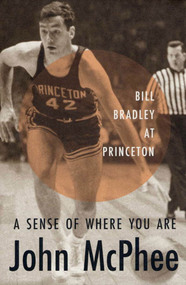
The Saturday Read ‘A Sense of Where You Are’ by John McPhee

In 1964 Bill Bradley was a senior at Princeton University, and a star player on the basketball team. John McPhee was just beginning his career as a writer. In a moment to make networking history, McPhee’s dad, the athletic department physician, suggested John visit campus and profile the Ivy League phenom.

The Saturday Read this week is ‘A Sense of Where You Are’, the original New Yorker article, published in the January 23, 1965 issue.

images.jpeg

As the NCAA tournament narrows the field from 64 to 16 this weekend, let John McPhee be  your ‘throwback Saturday’ guide to Princeton University in the fall of 1964.

“The basketball locker room in the gymnasium at Princeton has no blackboard, no water fountain, and, in fact, no lockers. Up on the main floor, things go along in the same vein. Collapsible grandstands pull out of the walls and crowd up to the edge of the court. Jolly alumni sometimes wander in just before a game begins, sit down on the players’ bench, and are permitted to stay there. The players themselves are a little slow getting started each year, because if they try to do some practicing on their own during the autumn they find the gymnasium full of graduate students who know their rights and won’t move over. When a fellow does get some action, it can be dangerous. The gym is so poorly designed that a scrimmaging player can be knocked down one of two flights of concrete stairs. It hardly seems possible, but at the moment this scandalous milieu includes William Warren Bradley, who is the best amateur basketball player in the United States and among the best players, amateur or professional, in the history of the sport.”

McPhee introduces us to Bradley, his work ethic, and a time when basketball competition provided “a real period of relief from the academic load”.

Stay with me, fellow time traveller. This is not fiction. This is the future Pulitzer Prize winner, and pioneer of creative non-fiction, John McPhee, painting a picture of college life and basketball in the early 1960s.

In September of his senior year, Bradley competed on the U.S. Olympic basketball team in Tokyo, defeating Russia for the gold medal. In December, he was elected a Rhodes Scholar. He opted out of an opportunity to play for the NY Knicks to study at Oxford.

“Bradley says that when he was seventeen he came to realize that life was much longer than a few winters of basketball. He is quite serious in his application to the game, but he has wider interests and, particularly, bigger ambitions.”

Last year Marc Tracy revisited McPhee, the profile that began his career at The New Yorker, and Bradley’s last NCAA tournament.

“Fifty years earlier, McPhee had good reason to be at the Palestra for a basketball game, and for looking more than simply interested. He was covering an N.C.A.A. tournament game between Princeton and Penn State. Princeton won and then, at College Park, Md., defeated North Carolina State (whose zone press had just handled Duke) and Providence to advance to the Final Four in Portland, Ore. There, it lost to Michigan and, in the consolation game, devastated Wichita State, 118-82.”

The profile, which was later expanded into a book of the same title, provides a tutorial on basketball, and the life of one true ‘student-athlete’, as he balances his academics, sport, and community involvement.

9780374526894.jpg

About that title:

“I asked him what he called his over-the-shoulder shot. He said that he had never heard a name for it, but that he had seen Oscar Robertson, of the Cincinnati Royals, and Jerry West, of the Los Angeles Lakers, do it, and had worked it out for himself. He went on to say that it is a much simpler shot than it appears to be, and, to illustrate, he tossed a ball over his shoulder and into the basket while he was talking and looking me in the eye. I retrieved the ball and handed it back to him. “When you have played basketball for a while, you don’t need to look at the basket when you are in close like this,” he said, throwing it over his shoulder again and right through the hoop. “You develop a sense of where you are.”

In 1964 his classmates predicted Bradley might run for governor in his home state of Missouri, and one day run for president.

With Bradley off to Oxford, McPhee closed his profile with this sentence.

“And like Hank Luisetti, of Stanford, who never played professional basketball, he will have the almost unique distinction of taking only the name of his college with him into the chronicles of the sport.”

That was not the end of the story.

Bradley returned after earning a masters degree at Oxford to play ten seasons with the NY Knicks, and was inducted into the Basketball Hall of Fame in 1983. He served as the U.S. Senator from New Jersey (not Missouri) from 1979-1997. And he ran for president in 2000.

In the 2015, NY Times article,“Bradley explained what the book’s title means to him”.

“You have a sense of where you are in life,” he said. “You don’t get carried away. You know who you are. You understand the environment, the context in which you’re living, and you make decisions based upon the centeredness.”

He added, “You’re also always working on who you are.”


The week@work – leadership, lawyers, student loans & the economy

What makes a great leader or a great lawyer? What’s the best strategy to retire student debt? This week@work surveys articles that provide some answers, and as the economy continues to strengthen, offers some practical advice on career advancement.

Joshua Rothman wrote ‘Shut Up and Sit Down: Why the leadership industry rules’ for The New Yorker. He gives us a quick tutorial on the history of leadership, why we value the concept, but are so often disappointed in the people. He alludes to the current presidential contest, and then focuses on change in both our expectations of leaders, and the roles they play in contemporary organizations.Print

“In recent years, technological and economic changes like social media and globalization have made leaders less powerful.

Leaders used to be titanic and individual; now they’re faceless guiders of processes. Once, only the people in charge could lead; now anyone can lead “emergently.” The focus has shifted from the small number of people who have been designated as leaders to the background systems that produce and select leaders in the first place.

Leaders, moreover, used to command; now they suggest. Conceptually, at least, leadership and power have been decoupled.

To some extent, leaders are storytellers; really, though, they are characters in stories. They play leading roles, but in dramas they can’t predict and don’t always understand. Because the serialized drama of history is bigger than any one character’s arc, leaders can’t guarantee our ultimate narrative satisfaction. Because events, on the whole, are more protean than people, leaders grow less satisfying with time, as the stories they’re ready to tell diverge from the stories we want to hear. And, because our desire for a coherent vision of the world is bottomless, our hunger for leadership is insatiable, too. Leaders make the world more sensible, but never sensible enough.”

The New York Times profiled two women who chose law as their profession and took divergent, pioneering paths to achieve success. What makes a good lawyer? Meet Kimberley Chongyong Motley and Damaris Hernandez.

David Jolly profiled Ms. Motley, who has been practicing her profession in Afghanistan for close to eight years and was recently the subject of an award winning documentary, ‘Motley’s Law’.

image.adapt.990.high.kimberley_motley_05feb2016_portrait.1454770287607“Ms. Motley, 40, a Marquette University Law School graduate, had never before traveled overseas when she enrolled in a Justice Department program to train Afghan lawyers and flew to one of the world’s more dangerous places.

After her nine-month assignment, she did not return home to Milwaukee, instead hanging out her own shingle in Kabul. She studied Shariah, the Islamic code that lies beneath the fragile new Afghan Constitution, and she established herself as the only foreign litigator in one of the world’s most conservative and male-dominated cultures.

Ms. Motley says she makes a point of closely studying the cultures of both Afghanistan and the courtroom. “I’m a sort of legal archaeologist,” she said. “I try to uncover laws that have not been used, and then use them for the benefit of my clients.”

Damaris Hernandez was recently promoted to partner at the firm Cravath, Swaine & Moore, becoming the first Latina to reach that position. Elizabeth Olson tells her story as a first generation college student, who advanced in her career with the support of a unique scholarship at NYU.

Hernandez web.jpg

That achievement is an acknowledgment of her talent and hard work. But the story of her route to the top also reveals how much more complex the journey is for minorities and women than for the white men who overwhelmingly dominate the firms. Skill is only one of the keys. Being able to navigate unspoken rules is at least as important.

“When I was the only one of color or the only woman in the room, I had the confidence to believe in my ability,” said Ms. Hernández, 36, describing the advantages of the program to her. “When you are the first, you need someone to have your back.”

Over the last decade and a half, she and 100 others who attended the New York University School of Law received that support from a scholarship program that paid their full tuition and also gave them access to a network of luminaries including federal judges, law firm partners and even Supreme Court justices.”

If you are seeking ways to reduce your student loan obligation, NPR’s Yuki Noguchi offers ‘Strategies For When You’re Starting Out Saddled With Student Debt’. It’s not just about individual liability, but also the long term impact on career choice and economic growth.

“Experts say studies show rising student debt is limiting peoples’ career options. They decide against graduate school. Or feel they can’t afford lower-paying public service jobs or the risk of starting a new business. That’s a problem, because new companies create new jobs.”

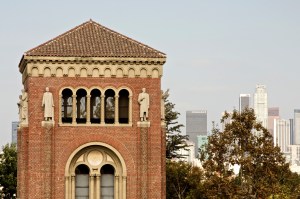
University Park campus of the University of Southern California

This past week the University of  Southern California announced a tuition increase that will bring the annual bill to over $51,000. Financing college involves loans as part of the  package. Having a repayment strategy is critical to long term career success.

“Chris Costello, CEO of Blooom, a personal finance advice firm targeting lower-net-worth people, advises his firm’s clients to tackle student debt with this strategy.

First, if your employer matches contributions to a retirement plan, such as a 401(k) or 403(b), max out on the matching contributions.

After maxing out on the matching contributions, pay off the debt with the lowest balance.

Check to see if you can qualify for loan forgiveness, refinancing or debt consolidation.

Do not incur new debts: in other words, live below your means.”

Chico Harlan of The Washington Post reported on the latest figures released by the U.S. Labor Department on Friday.

“U.S. employers continued their rapid hiring in February, new government data showed Friday, a sign of the nation’s economic durability during a tumultuous global slowdown.

The U.S. added 242,000 jobs as the unemployment rate held at 4.9 percent, the lowest mark during the seven-year recovery from the Great Recession.

That pace, consistent with gains over the last year, indicates Americans are returning rapidly to the labor force, helped by steady consumer spending that is bolstering demand and prompting employers to expand their workforces. In data released Friday by the Department of Labor, sluggish wages provided the only disappointing note — a signal that labor market still has room to improve.”

Two other articles of interest this week:

’15 things successful 20-somethings do in their spare time’ by Jacquelyn Smith and Rachel Gillett for Business Insider

‘How to Advance In Your Career Without Becoming A Workaholic’ by Lisa Evans for Fast Company


Imagining the Monday morning conversation at PwC

I have two questions. What happened to the PricewaterhouseCoopers lead partner for the Academy of Motion Picture Arts and Sciences and his colleague, and Oscar balloting co-leader, Sunday night? How did they face their colleagues on Monday morning after the Oscar host turned their most visible annual ‘guest spot’ into the saddest stereotype ‘joke’?

Melena Ryzik described what happened at the point in the award ceremony when the team from the PwC was brought on stage.

“Introducing the accountants from PricewaterhouseCoopers, which tabulates the vote results, Mr. Rock instead brought onstage two boys and a girl of Asian heritage, whom he named Ming Zu, Bao Ling and David Moskowitz. As they clutched briefcases, they visually illustrated the stereotype that Asians are diligent workers who excel at math.

“If anybody’s upset about that joke, just tweet about it on your phone that was also made by these kids,” Mr. Rock added, a punch line interpreted as a reference to child labor in Asia.”

What happened to Matt Damon ‘look alike’ and managing partner for the Academy of Motion Picture Arts and Sciences, Brian Cullinan and his colleague, Martha Ruiz ?

The conversation on social media since the Oscar broadcast has centered on the ‘joke’, and the fine line between satire and slur. But what happened as hundreds of PwC’s employees arrived at work on Monday morning? What was the conversation between corporate recruiters and expectant applicants on college campuses? How did the meeting start between engagement managers and clients? Why did a company that values diversity allow it’s moment in the spotlight to turn into an epic fail?

PwC’s corporate website and recruiting site advertise the diversity of the firm as a core value.

“Role models inspire others by bringing possibilities to life. And I believe we all have the power to shape the course of other people’s careers. Active sponsorship makes all the difference when it comes to advancing diverse professionals.”

Maria Castañón Moats
Chief Diversity Officer

“At PwC, we foster an inclusive culture by acknowledging the unique experiences and perspectives all of our people bring to work. Our goal is to be known as the place to build a career, regardless of one’s background, beliefs, gender or sexual orientation. Diversity, in all its dimensions, is a key element of our people and our client strategy, and we continue to invest in the area diversity and inclusion knowing we will ultimately be measured on the progress we make.”

Bob Moritz
US Chairman and Senior Partner

Who makes the decision to violate corporate values for a moment of ill timed humor? On Sunday, a company with a publicized core value of diversity allowed itself to be manipulated in the midst of a nationwide controversy about the lack of inclusion.

In February, journalist Iris Quo wrote an article for the Washington Post, posing the question,  ‘Why do my co-workers keep confusing me with other people? Because I’m Asian.’

“All my life I’ve been mistaken for other people of my race. It’s a degrading and thoughtless error that boils away my identity and simplifies me as one thing: “that Asian.” One reason is that our society has so few Asians and people of color in positions of prominence that some people have little exposure to them. Diversity is so lacking in film and television that a director thinks it’s okay to cast a white person as Chinese, as Cameron Crowe did with Emma Stone in “Aloha,” and the Hollywood Reporter mistakes “Master of None” actor Kelvin Yu for show co-creator Alan Yang, who tweeted in response, “Same race, different dude.”

On Sunday night, I was thinking about Iris Quo, ‘degrading and thoughtless errors’, PwC employees and all the college students who are considering offers from PwC. An aberration, or a catalyst to revise the resume?


“If you just focus on the work…” A leadership lesson from Taylor Swift

While the annual TED conference is taking place 1,300 miles north, the event at the Staples Center in Los Angeles last night provided a valuable soundbite of career advice from an industry leader. Perhaps the folks at TED might think about an invite for 2017.

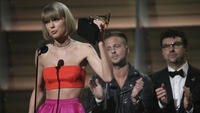
You had to wait for it. After two hours and 20 minutes, the woman who opened the 58th Grammy Award telecast returned to the stage to accept the iconic statuette for Album of the Year. Taylor Swift took her moment of recognition to encourage those in dysfunctional workplaces keep going and avoid the distractions of toxic coworkers.

“I want to say to all the young women out there – they’re going to be people along the way who will try to undercut your success, or take credit for your accomplishments or your fame. But if you just focus on the work and you don’t let those people sidetrack you, someday, when you get where you’re going, you’ll look around and you will know that it was you and the people who love you who put you there, and that will be the greatest feeling in the world.”

la-et-ms-taylor-swift-shames-kanye-west-empowering-grammys-acceptance-speech-20160215.jpeg

You may read in the tabloids that the speech was all about an on-going feud with a member of the Kardashian family, but that would trivialize the weight of the words, and devalue the message.

Ms. Swift is a hero to many young women and last night she became the first woman to receive the Album of the Year Award twice. She is an industry leader who has kept her focus on the work and become a major influence on how music is produced and distributed, and artists compensated. Don’t let the fashion distract, it’s a strategic piece of product packaging.

Still skeptical that a 26 year old performer should be taken seriously as a leader?

Last year, writer and magazine contributor Chuck Klosterman profiled Ms. Swift for GQ. Here she describes a key to her success that comes right out of all the research on emotional intelligence.

“I used to watch Behind the Music every day,” she says. (Her favorite episode was the one about the Bangles.) “When other kids were watching normal shows, I’d watch Behind the Music. And I would see these bands that were doing so well, and I’d wonder what went wrong. I thought about this a lot. And what I established in my brain was that a lack of self-awareness was always the downfall. That was always the catalyst for the loss of relevance and the loss of ambition and the loss of great art. So self-awareness has been such a huge part of what I try to achieve on a daily basis. It’s less about reputation management and strategy and vanity than it is about trying to desperately preserve self-awareness, since that seems to be the first thing to go out the door when people find success.”

Last night Taylor Swift spoke from her workplace experience, and shared an essential leadership lesson for us all…”just focus on the work”.

The week@work – Super Bowl@50, Facebook@12 and unemployment@4.9%

This week@work the center of the media universe shifted from Iowa to New Hampshire, and Silicon Valley where, separated by about 12 miles on Highway 101, Levi Stadium in Santa Clara will host the 50th Super Bowl game, and Facebook celebrated it’s twelfth birthday at corporate HQ in Menlo Park. And, in the U.S. the unemployment rate dropped to 4.9%, the lowest since 2008.

In the lead up to the big game there were hundreds of stories about those who choose football as a career, from the high school senior announcing a college choice to the veteran player rewarded with membership in the Football Hall of Fame.

The typical NFL player takes their first step in their career at the annual February ritual, ‘National Signing Day’. It’s the day high school football players sign a ‘Letter of Intent’ to accept an offer of admission and commit to play football at the collegiate level. This year, Tom Brady and Derek Jeter were on hand in Ann Arbor, Michigan to participate in ‘The Signing of the Stars’ “a flamboyant national signing day pep rally streamed live on Wednesday by The Players’ Tribune — the website founded by Jeter, a Michigan native — and intended to build the hype around this year’s class of prospective Wolverines football players.”

Time will tell if the top college recruit, Rashan Gary, from Paramus Catholic High School in New Jersey will advance beyond his playing days at Michigan.

On the other end of the football career spectrum is recognition as an inductee into the NFL Hall of Fame. The class of 2016 includes former Oakland Raiders quarterback, Ken Stabler who let his team to their first Super Bowl victory after the 1976 season.

“While generally a cause for celebration, Saturday’s announcement of the class of 2016 for the Pro Football Hall of Fame carried a somber tone as Ken Stabler, a Super Bowl-winning quarterback for the Oakland Raiders, was elected days after it was publicly revealed that he had had Stage 3 chronic traumatic encephalopathy, or C.T.E., a degenerative brain disease, before his death in July.

Stabler, known as the Snake, who won a Most Valuable Player Award for the 1974 season and led the Raiders to the team’s first Super Bowl victory after the 1976 season, was previously a finalist for election three times, but this year, as a senior candidate, he was elected alongside Dick Stanfel, a star offensive lineman in the 1950s. The modern-era electees were Brett Favre, Marvin Harrison, Kevin Greene, Orlando Pace and Tony Dungy, as well as Edward J. DeBartolo Jr., who owned the San Francisco 49ers for all five of their Super Bowl wins and was elected as a contributor.”

On Wednesday, journalist, John Branch’s profile of Stabler, and his life after football with chronic traumatic encephalopathy (C.T.E.) was published in The New York Times.

“After retiring from football, Stabler worked as a broadcast analyst for the N.F.L. and for the University of Alabama, where he had played quarterback under Coach Bear Bryant. His damaged knees became such a problem in the past 10 years that he rarely ventured out.

“His vision of what a leader is, what a strong person is, is someone who did not show signs of weakness,” said Alexa Stabler, 29, the second of Stabler’s three grown daughters. “Because it would affect the people he relied on and the people he cared about, whether that was his family or his teammates.”

When Stabler was 31, a 1977 Sports Illustrated feature story detailed his penchant for honky-tonks and marinas, usually with a drink in one hand and a pretty woman in the other…He pondered what he might do after football.

“My lifestyle is too rough — too much booze and babes and cigarettes — to be a high school coach,” Stabler said. “I’d hardly be a shining example to the young athletes of the future.”

His family hopes that the most powerful lesson he provides is the one delivered after he was gone.

In between signing day and induction into the Football Hall of Fame, if you’re impossibly lucky, is a chance to compete in the national championship of professional football, the Super Bowl.

The annual spectacle, held this year in the vortex of Silicon Valley has exposed the growing economic divide, “gentrification, sky-high housing prices and the technology industry’s influence on local government, even the nation’s biggest party has become a battleground.”

“The cost of hosting the Super Bowl — estimated at about $5 million for the city — has unleashed a storm of anger among residents already resentful of the influx of expensive restaurants, high-end stores and rich, young tech workers who have snapped up apartments in historically low-income neighborhoods. To tidy up for the tourists, the city’s large homeless population has been swept out of view, which some people here see as evidence that this city, long a seat of leftist activism, has sold itself to corporate interests.

“In San Francisco, we’re supposed to be the bastion of crazy liberals,” Ms. Leitner said. “Instead of raising wages for teachers so they can afford to live here, why are we spending money on a party for people who work for the N.F.L.?”

Fast Company writer, Michael Grothaus marked the birthday celebration on Thursday at Facebook.

“It’s a bit crazy when you think about it, but Facebook is 12 years old today. On February 4, 2004, Mark Zuckerberg launched his fledgling social media site at Harvard. And the rest, as they say, is history. Twelve years on, Facebook has become the largest social media company ever. It influences myriad aspects of our lives and recently passed a billion active users each day.

It’s also kind of doing what candy makers and online retailers have tried to do in the past by deeming February 4th as an unofficial holiday that it hopes catches on: Friend’s Day.”

A look back to the 2004 Harvard Crimson article about ‘thefacebook.com’ may be the best  argument for why venture capitalists should be reading their alma mater’s student newspaper.

“Thousands of students across the country use it. Major corporations are falling over themselves to buy it.

But nearly a semester after creating thefacebook.com, a social networking website launched on Feb. 4, Mark E. Zuckerberg ’06 doesn’t seem to have let things go to his head.

Wearing a yellow t-shirt, blue jeans, and open-toe Adidas sandals, Zuckerberg sits on a ragged couch in the middle of a messy Kirkland House common room, surrounded by strewn clothes and half-closed boxes.

Amidst this squalor, he smiles.

“I’m just like a little kid. I get bored easily and computers excite me. Those are the two driving factors here.”

Thefacebook.com allows university students to create personal profiles listing their interests, contact info, relationship status, classes and more.

It started locally at Harvard. It now has almost 160,000 members from across the country.”

Twelve years later, Thomas Friedman considers the question, ‘Social Media: Destroyer or Creator?’

“Over the last few years we’ve been treated to a number of “Facebook revolutions,” from the Arab Spring to Occupy Wall Street to the squares of Istanbul, Kiev and Hong Kong, all fueled by social media. But once the smoke cleared, most of these revolutions failed to build any sustainable new political order, in part because as so many voices got amplified, consensus-building became impossible.

Question: Does it turn out that social media is better at breaking things than at making things?

Recently, an important voice answered this question with a big “ yes.” That voice was Wael Ghonim, the Egyptian Google employee whose anonymous Facebook page helped to launch the Tahrir Square revolution in early 2011 that toppled President Hosni Mubarak — but then failed to give birth to a true democratic alternative.

“Five years ago,” concluded Ghonim, “I said, ‘If you want to liberate society, all you need is the Internet.’ Today I believe if we want to liberate society, we first need to liberate the Internet.”

Beyond the Super Bowl and Facebook, the economy continues to improve. The jobless rate is under 5% and wages are rising.

“It’s not that the new data blew the lid off expectations or pointed to some radical acceleration in job growth in the opening weeks of 2016. Quite the contrary. The nation added 151,000 jobs in January, which was below analysts’ expectations and well below the revised 262,000 jobs added in December. That looks an awful lot like “reversion to the mean,” and it wouldn’t be surprising if final revisions show a slower pace of job growth across the two months.

But while economists and financial markets have traditionally placed the greatest weight on that payroll number as the key indicator of whether economic growth is speeding up or slowing down, we’re entering a phase where some other components of the jobs report are more important.”

Two additional articles of interest this week profile the executive who created the culture at Netflix and a BBC photo essay on the career dreams of the children who have fled Syria.

‘The Woman Who Created Netflix’s Enviable Company Culture’  Vivian Giang for Fast Company – “The woman behind “Netflix Culture: Freedom & Responsibility” was the company’s chief talent officer at the time, Patty McCord…Instead of listing the company’s core values like every other company was doing, McCord decide to write down the things the company valued, what mattered to them, what they expected in their people.”

‘When I grow up I want to be…’ (BBC) “Despite their current predicament, children who have fled the conflict in Syria and are now living in neighbouring countries dream of what the future holds for them, and the International Rescue Committee (IRC) sent photographer Meredith Hutchison to find out.”

To end this week@work, let me introduce you to Rama, age 13, and her dream of becoming a doctor, as a reminder to honor your dreams.

_88034777_a80f7902-6be1-4991-913e-aed456838390.jpg“Walking down the street as a young girl in Syria or Jordan, I encountered many people suffering – sick or injured – and I always wanted to have the power and skills to help them.
“Now, as a great physician in my community, I have that ability. Easing someone’s pain in the most rewarding aspect of my job. To be able to give them relief is the most rewarding aspect of my job. To be able to give them relief and make them smile – this is what I love most.”


The week@work – Davos, Sundance, transparency and the benefits of procrastination

This week@work world leaders and policy gurus headed to Davos, Switzerland for the annual World Economic Forum, actors and directors arrived in Park City, Utah for the Sundance Film Festival and the rest of us enjoyed a snow day without the airfare. Transparency was suggested as a way to close the pay gap and provide a fair balloting process for the Oscars. And finally, for you procrastinators, research finds your approach to problem solving is more creative.

Of all the tweets emanating from the World Economic Forum, the most stunning came from Sharan Burrow, participating on ‘The New Climate and Development Imperative’ panel. Ms. Burrow is General Secretary of the International Trade Union Confederation. In discussing the drivers of action for development and climate targets she stated, “For workers, there are no jobs on a dead planet.” If that doesn’t bring home the reality of climate change to each global citizen, I’m not sure what will.

One of the ten major global challenges identified by the WEF poses the question, What does the world of work look like today and what will it look like in the future?

x_XWsHJRi2iKmV_VfOn05Y-3m7PnuCjow9VbC0kvDgc

“The scale of the employment challenge is vast. The International Labour Organization estimates that more than 61 million jobs have been lost since the start of the global economic crisis in 2008, leaving more than 200 million people unemployed globally.

Nearly 500 million new jobs will need to be created by 2020 to provide opportunities to those currently unemployed and to the young people who are projected to join the workforce over the next few years.

At the same time, many industries are facing difficulty hiring qualified staff. One 2015 survey found that, globally, 38% of all employers are reporting difficulty filling jobs, a two-percentage point rise from 2014.

Put simply, we need jobs for the hundreds of millions of unemployed people around the world, and we need the skilled employees that businesses are struggling to find.”

Two additional perspectives of the Davos conference were provided by Alexandra Stevenson for The New York Times, ‘Glass Ceilings at Davos, Now on the Agenda’, and Anne Marie Slaughter‘s ‘A Tale of Two Feminisms at Davos’.

Several time zones west, the Sundance Film Festival began its ten day run in Park City, Utah. Since 1978, it has been the place for independent film makers to show their dramatic and documentary films. A number of these films eventually became Oscar nominees, which brings us to a conversation on transparency.

For the past two weeks, since the announcement of the Academy Awards, the major recognition for those who work in film, the conversation has centered on the lack of progress in diversifying the industry and its major export, films. How many of us even knew how the voting was done as we mindlessly watch red carpet arrivals and comment on fashion, performances and our bets to win?

Glenn Whipp of the LA Times shared ‘Here’s How Oscar Voting Is Done’.

“Who nominates the actors for the Oscars? And how does the voting process work? Here’s a step-by-step primer:

The Motion Picture Academy of Arts and Sciences has 6,261 voting members. The entire body votes for best picture.

Nominations for most of the remaining categories are determined by the balloting of the academy’s various branches. A committee selects the foreign-language film nominees.”

The full article, though short, will definitely make your hair hurt, and prompt the question, why the delay in reform?

Film mogul, actor and producer, Tyler Perry offered his solution “If the Academy – I think all this would go away if they revealed the votes,” Perry said. “If you look at a movie like ‘Straight Outta Compton’ right and just say it got 1,000 votes and ‘The Revenant’ got 1, 001 votes, is that racism or is it just this is the way the votes went?”

We might all benefit from transparency and a clear set of rules beyond the intersection of Hollywood and Vine. Claire Cain Miller proposes we “publish everyone’s pay” as one answer to ‘What We Can Do to Close the Pay Gap’.

“When the comedian Ricky Gervais joked that he was paid the same to host the Golden Globes as the actresses Tina Fey and Amy Poehler — combined — his barbed humor most likely resonated in many workplaces.

When employers publish people’s salaries, the pay gap shrinks.

Jake Rosenfeld, a sociologist at Washington University, has found that salary transparency raises wages, in part by lending legitimacy to employees’ arguments in wage bargaining. “Even being cognizant of gender pay disparity being an issue can change norms,” he said.

That has been true in the public sector, where disclosing pay information is often required. Alexandre Mas, an economist at Princeton, studied the effects of a 2010 California law that required cities to publish municipal salaries. It prompted pay cuts, but only among men.

Women might have been spurred to negotiate after seeing that their salaries were lower, he theorized, or cities might have made salaries more equitable to avoid lawsuits.”

Bottom line, there are a lot of global and domestic problems to be solved and they require serious thought, teamwork and creativity.

Wharton professor Adam Grant shared the benefits of re-thinking his pre-crastination habit in ‘Why I Taught Myself to Procrastinate’, and found “..while procrastination is a vice for productivity, I’ve learned — against my natural inclinations — that it’s a virtue for creativity. It turns out postponement can encourage divergent thinking.

A few years ago, though, one of my most creative students, Jihae Shin, questioned my expeditious habits. She told me her most original ideas came to her after she procrastinated. I challenged her to prove it. She got access to a couple of companies, surveyed people on how often they procrastinated, and asked their supervisors to rate their creativity. Procrastinators earned significantly higher creativity scores than pre-crastinators like me.”


The year @work – equal pay, organization culture, Mark Zuckerberg’s books, the widening class divide, space exploration & Hamilton

Topics of work and the workplace often captured the headlines in 2015. And some of those headlines seemed to echo the 1970’s. As the economy improved, the wage gap between rich and poor increased. And we are still talking about equal pay for equal work.

One flashback was posted on the NPR website on January 2 in tribute to former New York governor, Mario Cuomo, who died on New Year’s Day. The post included the text and video of his speech to the Democratic National Convention in 1984, two years after the Equal Rights Amendment  failed to gain support from the 38 states required to pass.

“We speak for women who are indignant that this nation refuses to etch into its governmental commandments the simple rule “thou shalt not sin against equality,” a rule so simple —

I was going to say, and I perhaps dare not but I will. It’s a commandment so simple it can be spelled in three letters: E.R.A.”

Even though this year’s slate of Presidential candidates includes two women, the legacy of Cuomo’s passion is largely ignored.

Two stories in the past year served to visibly illustrate the continuing inequity.

In Hollywood, major studio, Sony was hacked, revealing, among other things, the disparity between the compensation of lead actress Jennifer Lawrence and her male co-stars. Madeline Berg covered the story for Forbes

“More frequent are anecdotes of discrimination like those recently related by Selma Hayek, Gwyneth Paltrow and even Streep.

All of these women have echoed the sentiment of Patricia Arquette, who brought the issue to the world’s attention at last year’s Oscars when she said in her acceptance speech for Best Supporting Actress, “It’s our time to have wage equality for once and for all.”

But it is not only the number on the paycheck that is the problem: Women are also greatly underrepresented on the big screen, leading to fewer opportunities to make money, an issue that Reese Witherspoon brought up at the American Cinematheque Awards in October: “Women make up 50% of the population, and we should be playing 50% of the roles on the screen.”

That is a dream that is far from a reality. According to a report by the Annenberg School at USC’s Media, Diversity & Social Change Initiative released in August, only 28.1% of characters in 2014’s top 100 films were female and of that percent, only 21 had a female lead or co-lead.”

The misrepresentation is even worse behind the camera: Of the same films, women made up only 1.9% of directors, 11.2% of writers and 18.9% of producers. This only aggravates the problem. The report found that in productions where women held key positions off-screen—as directors, writers and producers—the films featured women more often, and in less sexualized roles.”

We may find it hard to garner sympathy for those who earn millions @work for acting or competing in sport. But those are the visible workers who set the bar for the rest of us on the lower rungs of the career ladder.

The year in sport was dominated by the FIFA scandal, but women who work in sport created the memorable moments of the year. Christopher Clarey, summarizing the year in sport for women noted ‘Women Surge On Playing Field but Fall Behind in Boardroom’.

“As visible as female athletes were in 2015, women lost prominence and power in another key domain in the sports world: the boardroom.

Stacey Allaster, chief executive of the WTA Tour, stepped down citing burnout and the desire to spend more time with her young children. Debbie Jevans, a Briton who was perhaps Europe’s leading women’s sports executive, also cited personal reasons for resigning as chief executive of England Rugby 2015 less than six months before the start of the Rugby World Cup that she had been instrumental in organizing.

Another industry leader, Mary Wittenberg, who oversaw the New York City marathon as chief executive of New York Road Runners, resigned to lead a start-up lifestyle company, Virgin Sport.

Allaster, Jevans and Wittenberg were all replaced by men, and by year’s end there was no woman leading a major professional sport, not even one for women. Steve Simon is in charge of the WTA, Michael Whan is in charge of the L.P.G.A., Jeff Plush runs the National Women’s Soccer League in the United States and Mark Tatum oversees the W.N.B.A., the most prominent women’s professional basketball league, on an interim basis after Laurel J. Richie stepped down after five seasons in 2015.

Considering the scandals and governance crises that enveloped leading male-dominated federations like FIFA and the I.A.A.F. in 2015, more women in power looked very much like part of the solution. The men could clearly benefit from new perspectives.

“For me, the most important thing about diversity in a workplace is definitely making everyone feel included,” Wittenberg said. “But the diversity that comes from diversity of thinking is also invaluable, and if you don’t have diversity around your executive table or any table, I think you really run a risk today. Organizations, and especially political organizations that lack diversity in any number of ways, including gender — you’re not coming close to representing a world view. Leadership today should be challenged at every turn.”

The topic of work/life balance continues to dominate the water cooler conversations from Silicon Valley to Wall Street. And the conversation is at the heart of defining organizational culture.

In mid-August The New York Times published a story, ‘Inside Amazon: Wrestling Big Ideas in a Bruising Workplace’ with the following sub-heading: “The company is conducting an experiment in how far it can push
white-collar workers to get them to achieve its ever-expanding ambitions.” 

Definitely not a ‘puff piece’, but an important piece of journalism that ignited a dialog not only between the Amazon PR machine and the editors of The NY Times, but among workers in a variety of work settings about organizational values and personal tradeoffs. How an individual’s values mesh with those of their employer will determine ultimate success or failure. Who will you become? is a far more important question to ask than   What is the salary offer?

This was also the year that Mark Zuckerberg encouraged others to follow his example, and read a recommended book every two weeks. The final recommendation in  ‘A Year of Books’ was announced today, number 23, ‘The Beginning of Infinity’ by David Deutsch.

Richard Feloni compiled a list of the first 20 recommendations.

“Facebook CEO Mark Zuckerberg has made a tradition of dramatic New Year’s resolutions, and this year he decided that he’d read a book every two weeks.

He wanted his selections to focus on “different cultures, beliefs, histories, and technologies.”

“Books allow you to fully explore a topic and immerse yourself in a deeper way than most media today,” Zuckerberg wrote on his personal Facebook page. “I’m looking forward to shifting more of my media diet towards reading books.”

Hopefully, we have all met our resolutions from January and shifted our media diet to include some ‘long reads’ outside our comfort zone.

As the economy continued to improve, the gap between rich and poor widened. Claire Cain Miller examined the impact of differences in child rearing on growing class divisions.

“Children were not always raised so differently. The achievement gap between children from high- and low-income families is 30 percent to 40 percent larger among children born in 2001 than those born 25 years earlier, according to Mr. Reardon’s research.

People used to live near people of different income levels; neighborhoods are now more segregated by income. More than a quarter of children live in single-parent households — a historic high, according to Pew – and these children are three times as likely to live in poverty as those who live with married parents. Meanwhile, growing income inequality has coincided with the increasing importance of a college degree for earning a middle-class wage.”

And for awhile, a movie about space, not that one, the other one – ‘The Martian’, seemed to re-energize NASA’s plan to restart manned space exploration beyond the International Space Station.

Doug Bolton of The Independent reported on last week’s suspension of a proposed mission to the red planet.

“NASA has decided to suspend a mission to Mars scheduled for March 2016, due to the lander springing a leak.

The InSight Mission, which would have seen a rover analysing seismic activity and the interior structure of the red planet, was called off by Nasa bosses after technical staff failed to repair a leak in one of the rover’s prime instruments.

John Grunsfeld, the associate administrator for Nasa’s Science Mission Directorate in Washington, said: “We push the boundaries of space technology with our missions to enable science, but space exploration is unforgiving, and the bottom line is that we’re not ready to launch in the 2016 window.”

Which leaves our space efforts to two remarkable American entrepreneurs, Elon Musk and Jeff Bezos. In May, Jessica Orwig expressed optimism in the future of private space exploration.

“This year is shaping up to be an extremely exciting time for the future of commercial spaceflight, which will be built upon the backbone of revolutionary 21st-century rockets. The private American space companies Blue Origin and SpaceX are paving the way.

Blue Origin, which was founded by Amazon CEO Jeff Bezos in 2000, successfully launched its “New Shepard” space vehicle for the first time on April 29. The vehicle was named after Alan Shepard, who became the second human and first American to enter space 44 years ago. It is designed to eventually boost six people to space, where they can experience weightlessness for 10 minutes before returning to Earth. The ride is for entertainment and therefore not exclusively for astronauts, but these kinds of temporary spaceflights could become a new way for astronauts to train for coming space missions.

Two weeks earlier, on April 14, Elon Musk’s SpaceX, founded in 2002, attempted to land one of its Falcon 9 rockets on a floating platform in the Atlantic Ocean. SpaceX’s Falcon 9 rockets are designed to boost spacecraft to greater heights than Blue Origin’s and are therefore involved in other missions outside of commercial spaceflight, including supplying the International Space Station, launching satellites into orbit, and aspirations to reach Mars.”

On December 22, NBC News reported “SpaceX completed an historic vertical landing of its Falcon 9 rocket on Monday night — the first time such a feat had been achieved.

The launch and landing in Cape Canaveral, Florida, were the first from the private U.S. spaceflight company since its rocket exploded on liftoff in June.

SpaceX has come close to landing a rocket but until now, never actually pulled the feat off. Blue Origin, founded by Amazon CEO Jeff Bezos, stuck a landing last month — but Musk pointed out that was a suborbital trip, the requirements for which are considerably different.”

And then there was ‘Hamilton’ the musical. Just as the founding father was about to be replaced on the U.S. ten dollar bill, his story took center stage this summer on Broadway. In a 2015 recap article, ‘Surprises from 2015 and Reasons for Hope’, Gina Bellafante examined the ‘Hamilton effect’ on five year olds.

“As if it weren’t surprise enough that a hip-hop musical about the life of the country’s first Treasury secretary would become a Broadway sensation, finding impassioned fans in both President Obama and Dick Cheney, “Hamilton” has found an unlikely cohort of obsessives among 5-year-olds in New York, thanks to the cast album and scenes available on YouTube. At least one kindergartner in Brooklyn is regularly going to school with white socks pulled up over his pants. Some children are demanding quill pens, and many are singing the songs at home over and over and over.

“This is the new ‘Frozen,’” one already fatigued mother observed. Expect heated arguments about the limitations of Federalism among first graders next year.”

 

The Holiday Read – ‘Alexander Hamilton’ by Ron Chernow

Have you just entered the chaos of holiday travel at your local airport, and realized you forgot to bring something along to read? Quick, before you lose the wi-fi, download this week’s Saturday/Holiday read, ‘Alexander Hamilton’ by Ron Chernow.

This was the year American history left boring behind with the staging of the Broadway musical Hamilton. Based on Chernow’s 2004 best seller, Lin-Manuel Miranda transformed a casual airport bookstore purchase into a hip hop score, reflecting contemporary themes of immigration, revolution and finance. This holiday break is the perfect time to dive into the 700+ page biography.

David Brooksreview summarized why Hamilton had come to be erased from the national memory, to the point we are about to eliminate his last vestige on the ten dollar bill.

“He is the most neglected, first because he was a relentless climber (and nobody has unalloyed views about ambition), second because he was a great champion of commerce (and nobody has uncomplicated views about that either) and third because his most bitter rivals, Thomas Jefferson and John Adams, outlived him by decades and did everything they could to bury his reputation. So there is no Hamilton monument in Washington, but at least we now have Ron Chernow’s moving and masterly ”Alexander Hamilton,” which is by far the best biography ever written about the man.”

With the presidential primary season looming, ‘Alexander Hamilton’ is a reminder that current political tactics don’t fall far from the founders’ tree.

“In the polarized atmosphere of American politics, Burr knew that a northern renegade aligned with southern Republicans could provide a critical swing. This was Alexander Hamilton’s recurring nightmare: an electoral deal struck between Virginia and New York Republicans.

In the New York City elections that spring (1800), Hamilton and Burr descended from the lofty heights to spar in the grit and bustle of lower Manhattan ward politics…

That April, New Yorkers out for a stroll could have stumbled upon either Alexander Hamilton or Aaron Burr addressing crowds on street corners, sometimes alternating on the same platform.”

Hamilton lost, the Republican slate swept New York City, the Federalists were out and the road was paved for a Jefferson presidency.

Which brings us to a reader, like you, going on holiday, picking up a book in an airport bookstore, and the rest is, well, history.

“He told me as he was reading the book, hip-hop lyrics started rising off the page. I was completely astonished by his response.”

Miranda assured him that he was serious.

“He made a complete believer out of me,” Chernow said. “The story of Alexander Hamilton lends itself to hip-hop treatment. Hamilton’s personality is driven and unrelenting, and the music has that same quality. The music and the man mirror each other.”

Miranda purchased theatrical rights to the book and signed on Chernow as historical consultant.

“A lot of people might have started off with the unspoken assumption that history is boring — Lin-Manuel Miranda felt exactly the opposite,” Chernow said. “He felt the most dramatic way to tell the story was to stick to the facts. He felt the story was so sensational you couldn’t improve on it.”

Spend some time this holiday with the ‘sensational’ Alexander Hamilton.