The week@work – The ‘Fallows question’, flexibility@work and the long term impact of student debt

On Saturday Night Live actor Cecily Strong delivered a line that summed up what many of us are feeling this week@work, “I want one day without a CNN alert that scares the hell out of me.” 

It got me thinking about the question Facebook COO, Sheryl Sandberg posed to the Barnard Class of 2011, “What would you do if you weren’t afraid?”

This week@work The New York Times Op-Ed Columnist David Brooks posed ‘the Fallows question’“If you could move to the place on earth where history is most importantly being made right now, where would you go?”

“James and Deborah Fallows have always moved to where history is being made…James and Deb have an excellent sense of where world-shaping events are taking place at any moment — and a fervent commitment to be there to see it happen.

If you want to “observe” history, the Fallows say, go to Washington. If you want to “participate,” go elsewhere.”

If you weren’t afraid, and could pick up and move to where the action is, where would you go? Brooks offered a few destinations to start, but just maybe, this week@work you might spend some time considering a temporary relocation “in search of history”.

IMG_7024.jpg

Folks@work are moving forward, finding ways to succeed independent of national politics. Some voice concern about the potential impact of new policies on their workplace, while others seek ways to express a response in their work. For many, the challenges of the gender gap and student debt remain a constant, often extending into retirement.

Claire Cain Miller examined the tension in employer expectations between flexibility and presence@work in ‘How to Close a Gender Gap: Let Employees Control Their Schedules’.

“The main reason for the gender gaps at work — why women are paid less, why they’re less likely to reach the top levels of companies, and why they’re more likely to stop working after having children — is employers’ expectation that people spend long hours at their desks, research has shown.

Flexibility regarding the time and place that work gets done would go a long way toward closing the gaps, economists say.

A new job search company, Werk, is trying to address the problem by negotiating for flexibility with employers before posting jobs, so employees don’t have to.”

And then there are the financial pressures; spanning generations from twenty-somethings being subsidized by parents, as their grandparents face social security payment garnishment to repay outstanding student loan debt.

IMG_8146.jpg

Quoctrung Bui reported on ‘A Secret of Many Urban 20-Somethings: Their Parents Help With the Rent’.

“According to surveys that track young people through their first decade of adulthood, about 40 percent of 22-, 23- and 24-year-olds receive some financial assistance from their parents for living expenses. Among those who get help, the average amount is about $3,000 a year.

It’s a stark reminder that social and economic mobility continues past grade school, high school and even college. Economic advantages continue well into the opening chapters of adulthood, a time when young people are making big personal investments that typically lead to higher incomes but can be hard to pay for.”

On the other side of the generation spectrum, The Editorial Board of The New York Times identified an emerging trend threatening older Americans, ‘Haunted by Student Debt Past Age 50’.

“The experience of being crushed by student debt is no longer limited to the young. New federal data shows millions of Americans who are retired or nearing retirement face this burden, as well as the possibility of having their Social Security benefits garnished to make payments.

Americans age 60 and older are the fastest-growing age group of student loan debtors. Older debtors, many of whom live hand-to-mouth on fixed incomes, are more likely to default. When that occurs with federal loans, as happens with nearly 40 percent of such borrowers who are 65 and over, the government can seize a portion of their Social Security payments — even if it pushes them into poverty. About 20,000 Americans over the age of 50 in 2015 had their Social Security checks cut below the poverty line because of student loans, with poverty-level benefits falling even further for 50,000 others, according to a recent report by the Government Accountability Office.”

IMG_7827.jpg

The last story this week@work, highlights the importance of art@work and in our lives. The Metropolitan Museum of Art announced the next step in their digital evolution – open access to over 375,000 archive images. (Monet’s ‘Garden at Sainte-Adresse’, 1867 above)

The week@work – Davos, transition, transferable skills and a ‘profundo’ life


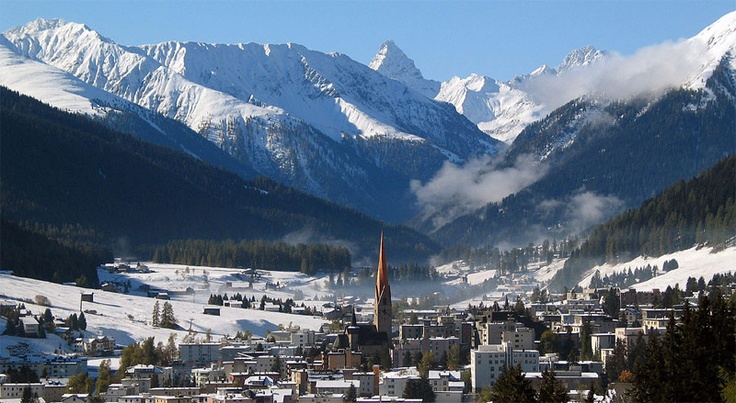
The headline of the week@work did not originate in Washington D.C., but in Davos, Switzerland: ‘Davos Elite Fret About Inequality Over Vintage Wine and Canapés’. “…globalization has reduced the bargaining power of workers, and corporations have taken advantage of it.”

In other news – January is often a month of transition, not just in government, but across all fields. Articles this week@work explored the value of being fired and finding the right ‘fit’ next time. Physicists are the new software engineers in Silicon Valley and PhDs just may be the newest entrepreneurs.

Finally, this week@work we remember Kevin Starr, who went to work every day as a historian chronicling the past of his home state, California. “I’ve always tried to write California history as American history.”

4096.jpgPeter S. Goodman covered the annual meeting of the World Economic Forum for The New York Times.

“What is striking is what generally is not discussed: bolstering the power of workers to bargain for better wages and redistributing wealth from the top to the bottom.

“That agenda is anathema to a lot of Davos men and women,” said Joseph E. Stiglitz, a Nobel laureate economist and author of numerous books on globalization and economic inequality. “More rights to bargain for workers, that’s the part where Davos man is going to get stuck. The stark reality is that globalization has reduced the bargaining power of workers, and corporations have taken advantage of it. ”

That perhaps private equity overseers should not be paid 1,000 times as much as teachers while availing themselves of tax breaks is thinking that gets little airing here.”

1e97282770fb153b749b691b25832c03.jpgFor those of us not networking with the super elite in the Swiss Alps, Julie Ma compiled a sampling of quotes from ’25 Famous Women on How Getting Fired Makes You Stronger’.

“If you don’t get fired at least once, you’re not trying hard enough. This isn’t quite true yet, but it is becoming truer. As the pace of change in business increases, the chances of having a placid career are receding. And if in this period of rapid change, you’re not making some notable mistakes along the way, you’re certainly not taking enough business and career chances.” Sallie Krawcheck, chair Ellevate

“Is it hard to say I was fired? No. I’ve said it about 20 times, and it’s not. I was in fact insistent that that be publicly clear because I was not ashamed of that. And I don’t think young women — it’s hard, I know — they should not feel stigmatized if they are fired. Especially in this economy people are fired right and left for arbitrary reasons, and there are sometimes forces beyond your control.”
Jill Abramson, author and faculty @Harvard

IMG_8148.jpgMost folks leave their life @work because of the ‘human factor’: colleagues, leadership and values. Sharon Daniels offered advice to those starting the job search.

“If you have passion and enthusiasm, you’re on your way. People want to be around people who have passion and enthusiasm, because we all gravitate toward something greater than ourselves. If you do something wholeheartedly versus halfheartedly, it’s going to have a completely different effect.”

Cade Metz reported on how transferable skills are changing the profile of some tech workers, ‘Move Over, Coders—Physicists Will Soon Rule Silicon Valley’.

“If physics and software engineering were subatomic particles, Silicon Valley has turned into the place where the fields collide…It’s not on purpose, exactly. “We didn’t go into the physics kindergarten and steal a basket of children,” says Stripe president and co-founder John Collison. “It just happened.” And it’s happening across Silicon Valley. Because structurally and technologically, the things that just about every internet company needs to do are more and more suited to the skill set of a physicist.”

Ainsley O’Connell described another experiment in skill transference, ‘Can Entrepreneurship Revive The Troubled PhD?’

“PhD students once dreamed of lifelong tenure, generous sabbaticals, and a closet full of jackets with elbow patches. Academic life, with its dusty-booked charm, ruled the day. No longer. Even in STEM fields, roughly 40% of PhDs are graduating without employment commitments. Could the solution be teaching postdocs to create their own jobs, as entrepreneurs?

In the heart of Manhattan, in a set of conference rooms on loan from Google, one radical experiment in postdoc entrepreneurship is now entering its fourth year. Called “Runway” and managed by Cornell Tech’s Jacobs Technion-Cornell Institute, the program bills itself as “part business school, part research institution, part startup incubator.” Since its founding, Runway postdocs have founded 13 companies, from an intelligent baby monitor to an urban planning analytics platform, and collectively raised $15 million in funding.”

img_8194

Finally, this week@work, we remember Kevin Starr, former California State Librarian, professor and author of an eight-volume history of his home state ‘Americans and the California Dream’.

Colleague William Deverell remembered the historian and author as ‘A Golden State Champion’.

“I knew Kevin Starr only as profundo. He was big, his voice was big, his persona was big, his books are big, his ideas are big, his influence is big. Some, and only some, of this has now been silenced by his death Saturday. Kevin’s outsize impact and his sheer significance to both our regional and our national culture, will continue long hence. Death has robbed us of the most important guide we have ever had to our state’s history and culture, our ingenious interpreter of the elusive and many meanings of the California Dream over several centuries.”


The week@work – the top stories of ’16, a new year, the eternal optimist’s talking points, French workers get the right to disconnect, and leadership lessons from Michelle Obama

Happy New Year! This week@work we take a final look at the top stories of 2016, and the stories from the first week of 2017. On the work-life balance front – French workers now have the legal right to disconnect from the office. The U.S. unemployment rate is at 4.7%, with hourly salary earnings rising 2.9%. And for women@work, an article considered the future of women in this new year, as First Lady Michelle Obama delivered her final formal remarks on Friday, giving us a parting gift – a model for what a leader looks like.

The Economist’s top ten most read stories of 2016 centered on the U.S. election and Brexit. In the U.S., NPR’s top 20 did not include Brexit, but the question of how Donald Trump will govern, led the list. “The top 20 most popular stories from the past year ranged from fact checks to mosquito bites, from Aleppo to taxes, and how to raise kids who will thrive, whatever the future brings.” 

There were many stories about work and the workplace, but most became a subset of the larger stories. Susan Chira reflected on ‘What Women Lost’.

“This was supposed to be the year of triumph for American women.

A year that would cap an arc of progress: Seneca Falls, 1848. The 19th Amendment, 1920. The first female American president, 2017. An inauguration that would usher in a triumvirate of women running major Western democracies. Little girls getting to see a woman in the White House.

Instead, for those at the forefront of the women’s movement, there is despair, division and defiance. Hillary Clinton’s loss was feminism’s, too.”

2017 will be the year we ask, what are the long term implications for women@work? On January 21, in Washington, and cities around the country, women will have an opportunity to reinsert themselves into the national conversation.

Unknown.png

For additional reading @year end:

‘The Echoes of 1914’ by historian Margaret MacMillan for the BBC. She responsed to a query about which year in history most closely resembled 2016.

“I wish I could stop, but I find myself thinking of 1914. The world then had seemed so stable, so manageable. Crises – political, social, economic, military – came and went but “they”, bankers, statesmen, politicians, always managed them in the end.

Yes, there were grumblings – from the working classes or women, or those who were losing their livelihoods because of free trade or mechanisation.

And there were some strong emotions about: fears of rapid change, passionate nationalisms that meant love of one’s own country and hatred of others. Ominous in retrospect because we know what happened. But at the time there was a complacency – it would surely all work out all right.

That confidence was dangerous because it meant that people didn’t take the warning signs seriously enough.

I wish I could stop making the comparisons.

In ‘1999 Was The Last Time Everything Was Fine’ BuzzFeed Culture Writer Doree Shafrir revisited her first year@work.

“I had no job and almost no money. My parents had given me the security deposit on the apartment as a graduation present, but now I was on my own. I was entranced by the classifieds section of the New York Times, with its pages and pages of appeals for secretaries and programmers and architects and retail store managers. I didn’t really know what I wanted to do. I knew I liked to be around words, but I wasn’t sure what that meant in terms of actually making money. Maybe now was the time to try something new. Maybe I could close my eyes and point to something on the page and that would be my destiny.

That was how 1999 felt, like anything was possible.”

Artist Tucker Nichols created a rainbow rendering of an ‘Eternal Optimist Talking Points for 2017’ as OpArt for The New York Times.  A sample of musings: “Somehow not as freaked out by scary clowns anymore…Midtown traffic has always been pretty jammed up…Smog makes great sunsets…Still a chance it’s a very long dream.”

On January 1, a new law in France went into effect allowing workers to ‘disconnect’ from their workplace.

IMG_5895.jpg

The BBC reported on France’s implementation of a law to protect work-life balance.

“Companies with more than 50 workers will be obliged to draw up a charter of good conduct, setting out the hours when staff are not supposed to send or answer emails. France has a working week of 35 hours, in place since 2000.”

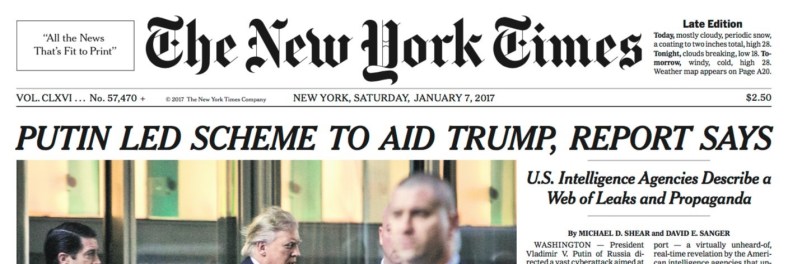
And then there was this from the professionals who go to work every day in U.S. Intelligence Services.IMG_8057.JPG

On Friday afternoon, First Lady Michelle Obama gave a memorable farewell speech at a White House event honoring the 2017 School Counselor of the Year. The text set an aspirational vision for all Americans and provides all of us with a lesson in leadership.

“…for all the young people in this room and those who are watching, know that this country belongs to you — to all of you, from every background and walk of life. If you or your parents are immigrants, know that you are part of a proud American tradition — the infusion of new cultures, talents and ideas, generation after generation, that has made us the greatest country on earth.”

C1hKGRJUcAAgab2.jpg

“If your family doesn’t have much money, I want you to remember that in this country, plenty of folks, including me and my husband — we started out with very little. But with a lot of hard work and a good education, anything is possible — even becoming President. That’s what the American Dream is all about.

But I also want to be very clear: This right isn’t just handed to you. No, this right has to be earned every single day. You cannot take your freedoms for granted. Just like generations who have come before you, you have to do your part to preserve and protect those freedoms. And that starts right now, when you’re young.

Right now, you need to be preparing yourself to add your voice to our national conversation. You need to prepare yourself to be informed and engaged as a citizen, to serve and to lead, to stand up for our proud American values and to honor them in your daily lives. And that means getting the best education possible so you can think critically, so you can express yourself clearly, so you can get a good job and support yourself and your family, so you can be a positive force in your communities.

And when you encounter obstacles — because I guarantee you, you will, and many of you already have — when you are struggling and you start thinking about giving up, I want you to remember something that my husband and I have talked about since we first started this journey nearly a decade ago, something that has carried us through every moment in this White House and every moment of our lives, and that is the power of hope — the belief that something better is always possible if you’re willing to work for it and fight for it.

It is our fundamental belief in the power of hope that has allowed us to rise above the voices of doubt and division, of anger and fear that we have faced in our own lives and in the life of this country. Our hope that if we work hard enough and believe in ourselves, then we can be whatever we dream, regardless of the limitations that others may place on us. The hope that when people see us for who we truly are, maybe, just maybe they, too, will be inspired to rise to their best possible selves.

So that’s my final message to young people as First Lady. It is simple. I want our young people to know that they matter, that they belong. So don’t be afraid — you hear me, young people? Don’t be afraid. Be focused. Be determined. Be hopeful. Be empowered. Empower yourselves with a good education, then get out there and use that education to build a country worthy of your boundless promise. Lead by example with hope, never fear. And know that I will be with you, rooting for you and working to support you for the rest of my life.”

We work in the context of global events, as responsible citizens. Our role in our workplace is to reflect the best in human and organizational values. In this new year@work, stay focused, be determined and lead by example with hope, never fear.


Photo credits: New Year’s Eve London – Ben Cawthra/LNP, Michelle Obama – BBC.com

The week@work – U.S. unemployment at nine year low, Rosberg and Schultz exit roles on top, and “mother nature needs her daughters”

If you weren’t paying attention, you would have thought the major story this week@work was about the 800 folks who will retain positions at Carrier, a division of United Technologies. You might have missed the news that U.S. unemployment reached a nine year low @4.6%, adding 178,000 jobs in November.

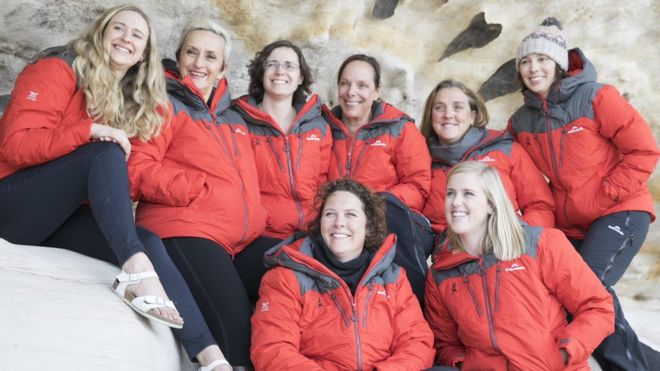
In ‘departures’, newly crowned Formula One champion, Nico Rosberg announced his retirement and Starbuck chief, Howard Schultz, will be stepping down from his position next year.  Seventy-six women scientists have embarked on an expedition to Antarctica to focus on climate change and women who work in the sciences.

Ana Swanson reported on the U.S. unemployment news for The Washington Post, Wonkblog.

“Data released on Friday showed a sharp drop in the unemployment rate from 4.9 percent the previous month, driven partly by the creation of new jobs and partly by people retiring and otherwise leaving the labor force.

A broader measure of unemployment, the U-6 rate, which includes those who have given up looking for work and part-time workers who would like to have full-time jobs, fell to 9.3 percent, the lowest reading since April 2008. The figure still remains elevated from average levels in the 2000s.”

Paul Weaver covered the announcement of F1 champion, Nico Rosberg’s decision to retire from racing five days after capturing the title for The Guardian.

551069_10152244647569874_65635453_n.png

“Nico Rosberg has stunned Formula One by announcing his retirement, just five days after the 31-year-old became the sport’s world champion…

He said he had “climbed my mountain”. Now he is going out at the peak.

Rosberg said he first started thinking about retiring when he won the Japanese Grand Prix in early October and realised the title was within his grasp. “From the moment when the destiny of the title was in my own hands, the big pressure started and I began to think about ending my racing career if I became world champion,” he wrote in a post on his Facebook page announcing his departure.”

At the other end of the career spectrum, the visionary leader of Starbucks, Howard Schultz announced he will be stepping away from his leadership position at the company he joined in 1982. Andrew Ross Sorkin reported on the change at the top for The New York Times.

“I wanted to build the company my father never got to work for,” he said.

Howard_Schultz_and_Kevin_Johnson.JPG

At an all-hands employee meeting at the company’s headquarters on Thursday, Mr. Schultz was greeted with tears and a standing ovation. “For me, perhaps there are other things that are part of my destiny,” he told them.”

Mr. Schultz said he intends for Starbucks to “maintain our moral courage.” And he defended efforts like the company’s “Race Together” campaign to spur a conversation about race relations, saying that it “was not a failure. I’d do it again.” He said such campaigns are deeply embedded in the company’s brand of “challenging the status quo about the role of a public company.” He is excited by the question, “Since we have stores in every community in America, how can we use our scale for good?”

How do folks successfully transition from one phase of their work life to the next?

Adam Bryant‘s ‘Corner Office’ interview with Nyansa chief executive, Abe Ankumah provides a hint.

“Be a lifelong student. That doesn’t mean go enroll in a bunch of classes all the time. It’s a mind-set. It means continuing to push yourself to learn rather than saying, “I’ve got this degree in this, and that’s what I’m going to do.”

The other thing is not to become too comfortable in a role. Chances are that if you’re comfortable, you’re not learning, you’re not pushing the envelope and you’re probably going to get stagnated.”

The last story this week@work is an example of pushing the envelope, for the greater good.

On Thursday I received a tweet from BBC Australia about an expedition of women scientists traveling to Antarctica. The tag line of their sponsor, ‘Homeward Bound’, is “mother nature needs her daughters”.

img_2600-1-1080x675

From the BBC  Australia story – “They call Ushuaia, a cold and windy port city in Argentina, the end of the world.

It’s from here that the largest ever all-female expedition to Antarctica will depart, with more than 70 women with backgrounds in science set to spend 20 days at sea.

The voyage is part of the Homeward Bound initiative, an Australian programme aimed at increasing the representation of women in top science jobs across the globe.

“We’re missing half the voice at the leadership table,” says Dr Jessica Melbourne-Thomas, who along with entrepreneur and management expert Fabian Dattner, came up with the idea.

The pair met during a leadership development course run by Dattner, and their frustration at the challenges faced by women in science quickly became a bold idea.

Two years later, the first of what is hoped to be several voyages is about to depart.”

We talk a lot about ‘dream jobs’ and whether ‘finding your passion’ is attainable. For those of you skeptics out there, I close with the closing paragraphs of Fabian Dattner‘s blog post, co-founder of Homeward Bound, who as I write is on her journey south.

“So, right now as I work with a group of leaders in my day job, my mind wanders effortlessly to what lies ahead – now only a few sleeps away – and I am finally lost for words, carried forward – as with all the people involved – on a deeply felt sense of rightness: right purpose, right time, right people, right outcome.

I know what ‘flow’ means now; I know what purpose, autonomy and freedom mean. I know what it means to lead and be led. And I know in my bones what is possible for humans, when leaders act on behalf of the greater good.

Stay with us on this journey. It’s for all of us.”  @HomewardBound16


Photo credits: Antarctica expedition – Homeward Bound, Kevin Johnson/Howard Schultz -Starbucks Newsroom

The week@work:’post-truth’, Facebook’s ‘news feed’, Gwen Ifill, a new leader @Lincoln Center, & Udacity’s tech job tryouts

This past week@work Oxford Dictionaries declared ‘post-truth’ the 2016 word of the year, and Facebook’s Mark Zuckerberg realized his job description included a responsibility to combat fake news. In contrast, the week marked the death of an authentic journalist, PBS NewsHour co-anchor Gwen Ifill. Lincoln Center chose a new leader from academia and MOOC provider, Udacity announced tech job tryouts.

On Wednesday, the BBC reported “Oxford Dictionaries has declared “post-truth” as its 2016 international word of the year, reflecting what it called a “highly-charged” political 12 months.

It is defined as an adjective relating to circumstances in which objective facts are less influential in shaping public opinion than emotional appeals.

post-truth_B4BED3DEF1DC47D4B21C7D697F06CC91.jpg

Oxford Dictionaries says post-truth is thought to have been first used in 1992. However, it says the frequency of its usage increased by 2,000% in 2016 compared with last year.”

The Economist explored ‘post-truth’ in ‘The Art of the Lie’.

“The term picks out the heart of what is new: that truth is not falsified, or contested, but of secondary importance…

Post-truth politics has many parents. Some are noble. The questioning of institutions and received wisdom is a democratic virtue. A sceptical lack of deference towards leaders is the first step to reform. The collapse of communism was hastened because brave people were prepared to challenge the official propaganda.

Post-truth has also been abetted by the evolution of the media… The fragmentation of news sources has created an atomised world in which lies, rumour and gossip spread with alarming speed. Lies that are widely shared online within a network, whose members trust each other more than they trust any mainstream-media source, can quickly take on the appearance of truth. Presented with evidence that contradicts a belief that is dearly held, people have a tendency to ditch the facts first. Well-intentioned journalistic practices bear blame too. The pursuit of “fairness” in reporting often creates phoney balance at the expense of truth.”

The New Yorker contributor, Nathan Heller examined one example of the phenomena in ‘The Failure of Facebook Democracy’.

fbwm_cw_07.jpg

“The unexpected election of Donald Trump is said to owe debts to both niche extremism and rampant misinformation. Facebook, the most pervasive of the social networks, has received much scrutiny and blame. During the final weeks of the campaigns, it grew apparent that the site’s “news” algorithm—a mechanism that trawls posts from one’s online friends and rank-displays those deemed of interest—was not distinguishing between real news and false information: the sort of tall tales, groundless conspiracy theories, and oppositional propaganda that, in the Cenozoic era, circulated mainly via forwarded e-mails.

Facebook is not the only network to have trafficked phony news, but its numbers have been striking. A much-cited Pew survey, released in May, suggested that forty-four per cent of the general population used Facebook as a news source, a figure unrivalled by other social networks. An analysis this week by Craig Silverman, of BuzzFeed, found that the twenty top-performing fake news stories on the network outperformed the twenty top real-news stories during the final three months before the election—and that seventeen of those fakes favored the Trump campaign.

If a majority of Americans are getting their news from Facebook, then Facebook surely has a civic obligation to insure the information it disseminates is sound.”

Which brings us to the initial response from Facebook founder/CEO Mark Zuckerberg.

“Identifying the ‘truth’ is complicated.”

12208495_10102454385528521_4749095086285673716_n.jpg

On Friday, he posted details of the projects in place to address the issue.

“A lot of you have asked what we’re doing about misinformation, so I wanted to give an update.

The bottom line is: we take misinformation seriously. Our goal is to connect people with the stories they find most meaningful, and we know people want accurate information. We’ve been working on this problem for a long time and we take this responsibility seriously. We’ve made significant progress, but there is more work to be done.”

Buried in paragraph four was this nugget that seemed to transfer ownership from the corporation to the community, ignoring a leader’s civic obligation.

“We do not want to be arbiters of truth ourselves, but instead rely on our community and trusted third parties.”

Contrast this approach to the definition of the role of a journalist, courtesy of the American Press Institute.

“The journalist places the public good above all else and uses certain methods – the foundation of which is a discipline of verification – to gather and assess what he or she finds.”

So let’s return to the days of ‘truth’ and remember the contribution of journalist Gwen Ifill through the eyes of two colleagues.

ap_193273822329_custom-095cea2744af0cdfc2393dae5431919449a19d63-s1500-c85

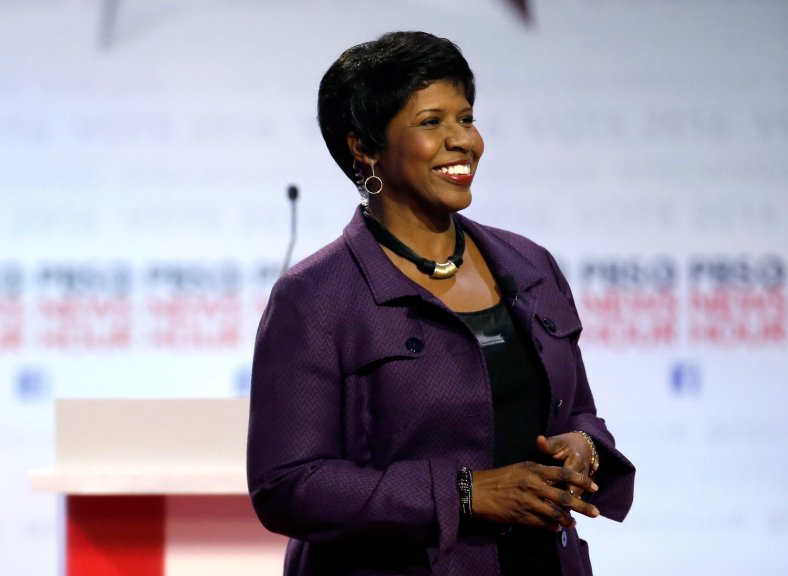
‘What Gwen Ifill Knew About Race in America’  by Jeffrey Goldberg “An insufficient number of people have recognized what is obvious. Gwen’s death is a punishing blow to her family, and to her wide circle of friends, to her colleagues and to her viewers. But it is also a cruel blow to her profession, which hasn’t recently covered itself in glory. And it’s an especially cruel blow to her lovely nation, which is right now in need of her bravery, her farsightedness, and her willingness to tell the truth. Hers is an incalculable loss.”

‘The Life and Example of Gwen Ifill’ by David Brooks “Gwen worked in a tough business, and being an African-American woman in that business brought its own hardships and scars, but Gwen’s smile did not hold back. Her whole personality was the opposite of reticent, and timidity was a stranger to her. When the Ifill incandescence came at you, you were getting human connection full-bore.

I suppose every profession has a few people like this, people who love the whole profession, who pay compliments when its standards are met and who are tough when they are not.

Gwen’s death merits a bit of the reaction that greeted the death of the writer Samuel Johnson centuries ago: She has left a chasm, which nobody else can fill up and which nobody has a tendency to fill.

Now that Gwen is dead, who is the next best thing? There’s nobody. There are many great people who will follow her example. But nobody quite reminds you of Gwen.”

In other news this week@work:

‘Debora L. Spar, Barnard President, to Lead Lincoln Center’Michael Cooper for The New York Times  “In appointing Ms. Spar, who is also an author and a former Harvard Business School professor, Lincoln Center’s board looked beyond arts administration circles and decided to tap someone with experience running a large nonprofit and with a track record of raising money for capital projects — skills that could prove useful as the renovation proceeds.”

Mr. Cooper reported in a related story that you may want to share with the aspiring musicians in your life, ‘It’s Official: Many Orchestras Are Now Charities’.

‘Udacity, an Online Learning Start-Up, Offers Tech Job Trials’Steve Lohr for The New York Times “The program, called Blitz, provides what is essentially a brief contract assignment, much like an internship. Employers tell Udacity the skills they need, and Udacity suggests a single candidate or a few. For the contract assignment, which usually lasts about three months, Udacity takes a fee worth 10 to 20 percent of the worker’s salary. If the person is then hired, Udacity does not collect any other fees, such as a finder’s fee.

The Blitz initiative and Udacity’s evolution point to the role that nontraditional education organizations might play in addressing the needs of workers and employers in the fast-changing labor market for technology skills.”

In closing this week of work, I am still trying to clear the fog in my brain and understand ‘post truth’. I reside in the real word, but apparently it’s changing. What does work look like when words hold no meaning?

I’ll end with classicist Mary Beard‘s reflection on the U.S. election.

“Trump and Trump’s policies are truly ghastly, but you have to face the fact that a very large number of people actually voted for him. What is more, resentment at “the elite” has morphed into a proud contempt for truth, expertise and knowledge – not unlike Michael Gove’s jibe at “experts” before the Brexit vote. And in the broader context of political rhetoric, the idea that he won’t be as bad as he claimed is more, rather than less, worrying. I thought that the conciliatory speech was the worst thing I had heard all evening. The idea that he could be thanking Clinton for her service to the country (“I mean that very sincerely”) and be speaking of “binding the wounds of division” – when only the day before he’d promised to impeach her and poured salt into the very wounds he was now promising to heal – beggars belief. It has nothing to do with being “gracious” (as the television pundits had it), and everything to do with words not meaning anything. It was precisely what ancient rhetorical and political theorists feared almost more than anything else: that speech might not be true, and the corrosive effect of that on popular power.”


Photo credits: Facebook Menlo Park HQ courtesy of Facebook Newsroom Media Gallery, Mark Zuckerberg from his Facebook page, Gwen Iffil/Morry Gash AP


The week@work – good lives without good jobs?, good vs. great leaders, Yahoo hacked, and are university rankings hurting higher ed?

The workplace is changing, and politicians are beginning to recognize the impact of the shift on long term policy planning. This week@work a ‘think tank’ fellow considered the possibility of good lives without good jobs, a professor found leadership is not a continuum, Yahoo announced 500 million users accounts were hacked, and Irish universities missed the top tier of international schools for the first time, generating a debate on the value of global rankings.

New America Fellow, Michael Lind suggested “Politicians should tell working Americans what they need to hear, not what they want to hear. And what they need to hear is that it is possible for all Americans to have good lives, even if they can’t all have good jobs.”

Writing in The New York Times Sunday Review he asked, ‘Can You Have a Good Life if You Don’t Have a Good Job?’

“…the political problem remains. Even if center-left and center-right policy wonks agree that the goal should be good lives for all workers, even those with bad jobs, many Americans do not agree, to judge from the rhetoric of politicians, who know their audiences well. The replacement of a world in which one or a few lifetime jobs in a paternalistic company that provided benefits during your working life and a pension after your retirement by a future in which individuals struggle to survive by piecing together “gigs” and “tasks” with a bewildering variety of federal, state and local social programs may strike many workers as a dystopian nightmare. The price of increased flexibility may be increased stress.

The unelected policy experts who envision a future of multiple job types and a greater, if hidden, role for government in maintaining minimum incomes and providing health and retirement benefits are essentially right. The elements of a “good job” — adequate income, health insurance and retirement benefits — that were once combined in the package that a Detroit automobile manufacturer provided to a unionized male steelworker in 1950 are likely to be provided, for most American workers now, by some combination of employer and government.

Until most American workers are persuaded that they will not be worse off in a system characterized by flexible work arrangements and partly socialized benefits, they may continue to make unrealistic demands that 21st century politicians restore something like the occupational structure of the 20th century.”

Which of the folks vying for U.S. President will have the courage to deliver this message? It may depend on their leadership style. Professor James R. Bailey of George Washington University’s School of Business examined ‘The Difference Between Good Leaders and Great Ones’ for HBR digital.

W160913_BAILEY_LEADERSHIPISNOT.png

“That anyone can develop as a leader is not in question. What I dispute is the stubborn resolve that great and good are points along the same stream. That just isn’t so. Great leadership and good leadership have distinctly different characteristics and paths. Leadership is not one-dimensional. It can be great and good, or one but not the other, or neither.

The tug between great and good leadership is one of perpetual and dynamic coexistence. There is great — a force that is often inexplicable, occasionally irrational, and, importantly, intermittently ungovernable. Then there is good — a direction that is north-star true, providing the point of values of mutual benefit.

It’s natural to think of leadership as running from one end to the other. To do so, though, is to mistake what great and good leadership are. They’re fundamentally different. Separating them, thus upending the ever-convenient continuum, seems counterintuitive. But it’s absolutely necessary for understanding the very elements that explain leadership’s operation and impact. Great can be vital but destructive; good can be compassionate but impotent. The coexistence of the two is the best hope for leadership — without good we should fear.”

Switching gears, to privacy – it came as no surprise when Yahoo announced a massive data breach. Kara Swisher reported for recode in advance of the public disclosure.

yahoo-535059009-1024x683.jpg

“Earlier this summer, Yahoo said it was investigating a data breach in which hackers claimed to have access to 200 million user accounts and one was selling them online. “It’s as bad as that,” said one source. “Worse, really.” 

…this hack, said sources, which became known in August when an infamous cybercriminal named “Peace” claimed on a website that he was selling credentials of 200 million Yahoo users from 2012 on the dark web for just over $1,800. The data allegedly included user names, easily decrypted passwords and personal information like birth dates and other email addresses.

At the time, Yahoo said it was “aware of the claim,” but the company declined to say if it was legitimate and said that it was investigating the information. But it did not issue a call for a password reset to users. Now, said sources, Yahoo might have to, although it will be a case of too little, too late.”

Over 500 million accounts have been reported hacked…about that earlier article on good/great leadership and “another blemish on the record of CEO Marissa Mayer”.

On campus, this week@work, university presidents and deans awaited the verdict of the annual ‘World University Rankings’.

oxford.jpg

Grainne Loughran reported on the implications of the new rankings for The Irish Times.

“Another week, another set of university rankings as the Times Higher Education releases it league table. It follows others recently published by Quacquarelli Symonds (QS) and the Academic Ranking of World Universities (Shanghai).

The organisations may differ, but the pattern is broadly the same: Ireland’s best higher education institutions are in free-fall.

The decline in rankings has been alarming university presidents for the past six years. But while rankings are of significant reputational importance worldwide, they only take into account a tiny proportion of the picture of how universities stand.

Lack of understanding of what they actually measure has resulted in the rankings gaining an unwarranted notoriety and position to influence policy, with the potential to harm higher education institutions in Ireland and worldwide.

There are about 20 global rankings of higher education. All have varying methodologies and in some cases give vastly different weightings to the factors they have in common.”

This week@work also marked the anniversary of ‘The Death of the Phone Call’. Timothy Noah looked back on a moment in history.

“The phone call died, according to Nielsen, in the autumn of 2007. During the final three months of that year the average monthly number of texts sent on mobile phones (218) exceeded, for the first time in recorded history, the average monthly number of phone calls (213). A frontier had been crossed. The primary purpose of most people’s primary telephones was no longer to engage in audible speech.”

Also this week@work – two stories from Silicon Valley:

‘Zuckerberg, Chan Start $3 Billion Initiative to Cure Disease’ Sarah Frier for bloomberg.com “Mark Zuckerberg and his wife, Priscilla Chan, are pledging to spend more than $3 billion over the next decade to work on curing diseases.

“Can we work together to cure, prevent or manage all disease within our children’s lifetime?” Chan said Wednesday onstage at an event in San Francisco for the Chan Zuckerberg Initiative. “Mark and I believe that this is possible.”

‘How Tech Companies Disrupted Silicon Valley’s Restaurant Scene’ Nicole Perlroth for The New York Times “All told, more than 70,000 square feet of Palo Alto retail and restaurant space were lost to office space from 2008 to 2015, as the tech bubble drove demand for commercial space downtown.

It is a story playing out across Silicon Valley, where restaurateurs say that staying afloat is a daily battle with rising rents, high local fees and acute labor shortages. And tech behemoths like Apple, Facebook and Google are hiring away their best line cooks, dishwashers and servers with wages, benefits and perks that restaurant owners simply cannot match.

Silicon Valley technologists love to explain how they have disrupted the minutiae of daily life, from our commutes to the ways we share family photos. But along the way, they have also managed to disrupt their local restaurant industry.”

Finally, from The New York Times Magazine survey (September 18): “In an eight-hour workday, how much time do you spend actually working? 44% 4-6 hours, 43% 7-8 hours, 7% 1-3 hours, and 6% less than an hour.”


Photo credits: Yahoo, Lisa Werner/Getty for Wired

The week@work – the value of cross-functional experience, empowering introverts, economic recovery, and a new leader @librarycongress

It turns out that the path to leadership is paved not just by elite MBA degrees, but also with experience across a range of business functions. Once you arrive in the ‘C Suite’ it’s to your advantage to pay attention to the introverts in the room.

In other stories this week@work, evidence shows an increase in middle class incomes, there’s a new Librarian of Congress, and can you remember Oprah’s first book club pick 20 years ago?

Generalize or specialize? That is the question Neil Irwin answers in ‘A Winding Path to the Top’ for The New York Times.

“How does a person get to be the boss? What does it take for an ambitious young person starting a career to reach upper rungs of the corporate world — the C.E.O.’s office, or other jobs that come with words like “chief” or “vice president” on the office door?

The answer has always included hard work, brains, leadership ability and luck. But in the 21st century, another, less understood attribute seems to be particularly important.

To get a job as a top executive, new evidence shows, it helps greatly to have experience in as many of a business’s functional areas as possible. A person who burrows down for years in, say, the finance department stands less of a chance of reaching a top executive job than a corporate finance specialist who has also spent time in, say, marketing. Or engineering. Or both of those, plus others.”

Many corporations, in the past, had institutionalized ‘rotational assignments’ in a variety of business functions under the aegis of ‘leadership development programs’. When ‘shareowner’ value became the primary measure for CEOs, these internal employee development initiatives were shut down. But the need for cross-functional expertise never went away.

“To be a C.E.O. or other top executive, said Guy Berger, an economist at LinkedIn, “you need to understand how the different parts of a company work and how they interact with each other and understand how other people do their job, even if it’s something you don’t know well enough to do yourself.”

Developing multiple areas of expertise provide a pragmatic workplace foundation for the aspiring entrepreneur, the Fortune 500 CEO, and the variety of public and private leadership opportunities in between.

You learn the language, make life-long career connections, and maintain contact with your customer.

grand central ny.jpg

Location seems to influence opportunities as well. Take note, all you folks who hesitate to relocate.

“Beyond the results on job functions, the data from LinkedIn shows some trends for which the explanations aren’t completely obvious. For example, former consultants who lived in New York or Los Angeles had higher odds of ending up with a top job than people in other large cities like Washington or Houston. A former management consultant with 15 years of work experience in six different functions and an M.B.A. from a top school had a 66 percent chance of becoming a top executive if he lived in New York compared with a 38 percent chance in Washington.”

Bottom line, moving out of you career comfort zone, whether that means function or city, holds long-term implications for career success.

The second story this week@work comes from the print edition of The Economist, ‘Shhhh! Companies would benefit from helping introverts to thrive’.

Most companies worry about discriminating against their employees on the basis of race, gender or sexual preference. But they give little thought to their shabby treatment of introverts.

The recent fashion for hyper-connectedness also reinforces an ancient prejudice against introverts when it comes to promotion. Many companies unconsciously identify leadership skills with extroversion—that is, a willingness to project the ego, press the flesh and prattle on in public.

What can companies do to make life better for introverts? At the very least, managers should provide private office space and quiet areas where they can recharge. Firms need to recognise that introverts bring distinctive skills to their jobs. They may talk less in meetings, but they tend to put more thought into what they say. Leaders should look at their organisations through the introverts’ eyes. Does the company hold large meetings where the loudest voices prevail? That means that it is marginalising introverts. Does it select recruits mainly on the basis of how they acquit themselves in interviews? That could be blinding it to people who dislike performing in public.”

Jim Tankersley reported for The Washington Post Wonkblog, ‘Middle class incomes had their fastest growth on record last year’.

ny-corner

“Middle-class Americans and the poor enjoyed their best year of economic improvement in decades in 2015, the Census Bureau reported Tuesday, a spike that broke a years-long streak of disappointment for American workers but did not fully repair the damage inflicted by the Great Recession.

Real median household income was $56,500 in 2015, the bureau reported, up from $53,700 in 2014. That 5.2 percent increase was the largest, in percentage terms, recorded by the bureau since it began tracking median income statistics in the 1960s.

In addition, the poverty rate fell by 1.2 percentage points, the steepest decline since 1968. There were 43.1 million Americans in poverty on the year, 3.5 million fewer than in 2014. The share of Americans who lack health insurance continued a years-long decline, falling 1.3 percentage points, to 9.1 percent.

“The highest income growth was in the bottom fifth” of workers, “which is very welcome news,” said Lawrence Mishel, president of the liberal Economic Policy Institute think tank. Furman, of the White House, credited wage-boosting policy initiatives for some of that increase: “The fact that millions of workers have gotten a raise, as states have raised minimum wages, has definitely had an effect there,” he said.

All told, the gains brought median incomes nearly back to their levels before the recession, after adjusting for inflation, though they remain below 1999 levels. Bureau officials said the 5.2 percent growth rate was not statistically distinguishable from five other previous increases in the data, most recently the 3.7 percent jump from 1997 to 1998.”

On Wednesday, Carla Hayden was sworn in as the 14th Librarian of Congress“Hayden, the first woman and the first African American to lead the national library, was nominated to the position by President Barack Obama on February 24, 2016, and her nomination was confirmed by the U.S. Senate on July 13.”4532.jpg

Baynard Woods covered the appointment for The Guardian, ‘Carla Hayden: new librarian of Congress makes history, with an eye on the future’.“Even though librarianship is one of the four what they call feminized professions – social work, education nursing, and librarianship – where 85% of the workforce is female, there haven’t been an equal amount of women in the leadership positions,” Hayden said in an interview.

Hayden is also only the third Librarian of Congress to actually have training as a librarian.

“There have been lawyers and politicians, historians, scholars, librarians, and I think at this time it’s not a detriment to have a librarian be librarian of Congress,” she said.

The librarian of Congress oversees the world’s largest library system. As the name indicates, one of the main roles of the library is to assist Congress in the research it needs in order to pass bills. It also oversees the US copyright system, names the poet laureate, and preserves historical documents and books.

Hayden first came to national prominence in 2003 when she spoke out against certain elements of the Patriot Act as the head of the American Library Association. Attorney general John Ashcroft attacked Hayden for sowing “hysteria” about the provision of the act that would allow the government to search library and bookstore records.

Hayden shot back.

“We are deeply concerned that the attorney general should be so openly contemptuous of those who seek to defend our Constitution,” she said. “Rather than ask the nation’s librarians and Americans nationwide to ‘just trust him,’ Ashcroft could allay concerns by releasing aggregate information about the number of libraries visited using the expanded powers created by the USA Patriot Act.”

At the time, there was political risk in such statements, but Hayden said she never considered that.”

In history@work this week, September 17 marked the 20th anniversary of Oprah Winfrey’s Book Club. Do you remember the first pick? Jacquelyn Mitchard‘s ‘Deep End of the Ocean’.201603-ep521-own-watn-9-949x534.jpgOprah’s Book Club quickly became a hugely influential force in the publishing world, with the popular TV host’s endorsement capable of catapulting a previously little-known book onto best-seller lists.

When Oprah’s Book Club first launched, some in the publishing world were skeptical about its chances for success. As The New York Times noted: “Winfrey’s project—recommending books, even challenging literary novels, for viewers to read in advance of discussions on her talk show—initially provoked considerable skepticism in the literary world, where many associated daytime television with lowbrow entertainments like soap operas and game shows.” However, the club proved to be a hit with Winfrey’s legions of fans, and many of her picks sold over 1 million copies. (She earned no money from book sales.) Winfrey’s ability to turn not just books but almost any product or person she recommended into a phenomenon came to be known as the “Oprah Effect.”

Celebrate this week@work with a selection from Oprah’s long list of book recommendations.


Photo credit: Carla Hayden by Pablo Martinez Monsivais/AP

The week@work – end of summer, Wells Fargo issues an apology to artists, start-ups adapt, cycling is the new networking, and the August jobs report

In news this week@work: Wells Fargo placed advertising in advance of ‘Teen Financial Education Day’ implying the worth of career aspirations in the sciences rank above those in the arts, Silicon Valley start-ups are adapting  to anticipate a market downturn, networking has moved from the bar to the bike (that’s a good thing), and the U.S. unemployment rate remained unchanged at 4.9%.

Late Saturday morning I checked my Twitter feed and found this from novelist Caroline Leavitt. Forget post-tropical cyclone Hermine, this was the Labor Day weekend’s perfect storm.

According to Forbes contributing writer, Emily Willingham,“Wells Fargo rolled out an ad campaign this week that it almost immediately withdrew following on Internet outrage from a lot of angry artists and humanities professors. That may not sound that scary, but these folks know how to use words and emote.

The ads, using images depicting teens engaging in sciencey things, urge us to “get them ready for tomorrow” by ensuring that the aspiring ballerinas and actors of today become engineers and botanists of the future…

The message here is, of course, that the future is science. That becoming a ballerina or an actor is a dreamscape fairytale that has no place in a real world of cold hard cash and sciencey-sounding things like botany. Imagine if some parents buy into that ad’s message and try to push their budding ballerina into botany instead. The world loses an artist and gains a mediocre, uninterested botanist who’s given up her life’s dream? Lose–lose.”

This was not just a ‘business section’ story. Olivia Clement reported on Broadway’s reaction on Playbill.com.

“A new advertising campaign from Wells Fargo, an American banking and financial services company, has prompted outrage from the theatre community. The ads imply that it is more valuable for young people to pursue a career in the sciences rather than the arts.

A Wells Fargo brochure depicts a young man in a science lab. “An actor yesterday. A botanist today. Let’s get them ready for tomorrow,” reads the accompanying text. Another, depicting a young woman in a lab, reads: “A ballerina yesterday. An engineer today.”

Among those to express their disappointment and frustration at the campaign on September 3 were Alex Brightman, Ann Harada, Cynthia Erivo, Heather Headley and Benj Pasek—who took to Twitter to call out the company directly. “Apparently @WellsFargo doesn’t think that an actor or ballerina require any work at all. Shame!” read Erivo’s tweet.”

Wells Fargo apologized via Twitter late Saturday.

Anticipating the end of the boom, Katie Benner delivered a tech industry status report, ‘Warned of a Crash, Start-Ups in Silicon Valley Narrow Their Focus’.

“Last year, many tech executives, venture capitalists and entrepreneurs were convinced that a multiyear boom that had propelled young companies to great heights could no longer sustain itself.

The worst fallout may yet come, but many of the start-ups have hung on. Across Silicon Valley, engineers are still commanding annual salaries that average $136,000, according to Hired, a recruiting firm. Demand is brisk for $4 buttered toast, and office space rents remain near record highs. The biggest start-ups, like Uber and Airbnb, continue to land billions of dollars in funding. And investors are shoveling money into venture capital funds, which raised so much cash in the first half of this year that it rivaled the amount raised in all of 2015.

For all of the hand-wringing, “there just hasn’t been much of a downturn,” said Paul Buchheit, a managing partner at Y Combinator, a prominent start-up incubator that nurtured companies including Dropbox and Airbnb. “I don’t even see many companies going out of business.”

Wondering where you might meet one of those tech execs or VCs? This past week Sarah Max covered a story that has been growing globally over the past year, ‘Cycling Matches the Pace and Pitches of Tech’. In other words, cycling is the new networking.

20160511__12DCBBIKw~1.jpg

“Thinking he needed to take up a “California sport,” Greg Gretsch started cycling in 1988, when he moved to the Bay Area to work in marketing at Apple after graduating from the University of Georgia. He bought a 10-speed road bike and joined a group of other Apple employees for a standing noon ride.

Today, Mr. Gretsch, 49, is a founding partner with San Francisco-based Jackson Square Ventures, which makes early-stage investments in fledgling companies, including a social network and performance-tracking app for athletes call Strava. He rides an average of five days a week on paved roads in the Bay Area and on trails near his second home near Lake Tahoe. Cycling is primarily for exercise and escape, he said, but it has also been good for his career.

“Connecting with people is important to what I do, and you can learn a lot about a person, and from a person, on the bike,” said Mr. Gretsch, who founded three companies before going into venture capital in 2000 at a firm called Sigma Partners.”

On Friday, the U.S. Labor Department released the August jobs report. Camila Domonoske summarized the data for NPR.

“The U.S. added 151,000 new jobs in August and the unemployment rate held steady at 4.9 percent, according to the monthly jobs report from the Bureau of Labor Statistics.

Both those metrics fell short of expectations: Economists were expecting about 180,000 new jobs, and a slight dip in the unemployment rate, to 4.8 percent…”

Finally, this week@work, we celebrated the last weekend of summer.

IMG_5468.jpg


Photo credit: Boulder cyclists, Cliff Grassmick, Daily Camera


The week@work – Grad students win right to unionize, the changing conversation about the economy, why America’s leaders fail and the story of Luke’s Lobster

Academia was in the headlines this week@work with the Tuesday announcement from the National Labor Relations Board, voting 3-1 to overturn a 2004 ruling allowing graduate students to form collective bargaining units. A Pew Research Center survey detected a shift in election season conversation from the economy (2012) to keeping the U.S. safe from terrorism. What conversation? The system isn’t working, and it may be we don’t have leaders who view their ‘calling’ as a ‘vocation’. And finally, a career transition story – from investment banker to ‘lobsterpreneur’ for this last week of summer.

images.jpeg

‘Ruling Pushes Door to Grad-Student Unions ‘Wide Open’ Peter Schmidt for The Chronicle of Higher Education

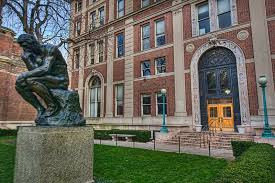
“Many more private universities can expect to see their graduate employees move to form unions in the wake of Tuesday’s National Labor Relations Board decision on such an effort at Columbia University.

The federal labor board’s 3-to-1 ruling resoundingly overturned a 2004 decision involving Brown University. In the Brown ruling, the board asserted that graduate employees should not be allowed to form unions because their doing so would intrude into the educational process.

In Tuesday’s decision, the majority held that such a belief “is unsupported by legal authority, by empirical evidence, or by the board’s actual experience.” It not only rejected the Brown precedent, but also overturned a 1974 ruling that had declared research assistants at Stanford University ineligible to unionize based on a belief that such research is part of the educational process.

The board’s decision in the Columbia case says graduate students employed by a private university are as eligible as any other type of worker to form collective-bargaining units under the National Labor Relations Act.”

In a letter to the Columbia University community, Provost John H. Coatsworth reiterated the long-held view of university administrators.

“Columbia and many of our peer universities have challenged this position. Nearly all of the students at Columbia affected by this decision are graduate students. We believe that the daily activities and the advisor-advisee relationships involved in the scholarly training of graduate students define an experience that is different from that of the typical workplace. Being a graduate student can take many years of intense research, teaching and study. But unlike university employees, graduate students who serve as teaching or research assistants come to this institution first and foremost to acquire through that work the knowledge and expertise that are essential to their becoming future scholars and teachers.”

The world of academia is changing, and with it the profile of the teaching community. As more adjunct faculty assume the classroom role, it may be harder to differentiate the job description of part-time faculty from that of grad assistant.

To be continued…

New-York-Stock-Exchange-1.jpg

‘Since 2012, The Economy Has Changed — And So Has The Conversation’ Marilyn Geewax for NPR

“Ah, 2012. You seem so long ago.

Back then, the economy was the star of the presidential election season, with more than 9 in 10 voters ranking it as Issue No. 1.

Voters worried about scarce jobs, expensive gasoline and a huge federal deficit.

Candidates proposed detailed solutions…

This year, the political conversation is very different, with much of the focus on non-economic issues: Republican Donald Trump’s temperament and Democrat Hillary Clinton’s trustworthiness.

And a Pew Research Center survey showed that the issue voters want to hear about most in a presidential debate is “keeping the US safe from terrorism.”

Of course, economic issues remain extremely important, but they are different from 2012. This year, the hottest money topics involve income inequality, trade deals and immigrants.”

Why are we focused on temperament and trustworthiness while the ‘big problems’ that effect our daily lives are ignored? David Brooks thinks it’s about career vs. calling, and he may be right.

Washington,_D.C._-_2007_aerial_view.jpg

‘Why America’s Leadership Fails’ David Brooks for The New York Times

“Over the past few decades, thousands of good people have gone into public service, but they have found themselves enmeshed in a system that drains them of their sense of vocation.

Let’s start with a refresher on the difference between a vocation and a career. A career is something you choose; a vocation is something you are called to.

A person choosing a career asks, How can I get the best job or win the most elections? A person summoned by a vocation asks, How can my existing abilities be put in service of the greatest common good?

A career is a job you do as long as the benefits outweigh the costs; a vocation involves falling in love with something, having a conviction about it and making it part of your personal identity.

A vocation involves promises to some ideal, it reveals itself in a sense of enjoyment as you undertake its tasks and it can’t be easily quit when setbacks and humiliations occur. As others have noted, it involves a double negative — you can’t not do this thing.

I do think there’s often an arc to vocation. People start with something outside themselves. Then, in the scramble to get established, the ambition of self takes over. But then at some point people realize the essential falseness of all that and they try to reconnect with their original animating ideals.

And so I think it possible to imagine a revival of vocation.”

The last story this week@work is an ‘end of summer’ career transition feature.

417562_10150602911837473_423900675_n.jpg

‘A Restaurant’s Sales Pitch: Know Your Lobster’  Janet Morrissey for The New York Times

“It was a steamy summer day in New York in 2009 when Luke Holden, an investment banker, had a craving for a lobster roll. Not just any lobster roll, though. He longed for the “fresh off the docks” taste he enjoyed growing up in Cape Elizabeth, Me.

After an exhaustive search on New York’s streets, he came up dissatisfied and disappointed.

“Every lobster was served over a white tablecloth, extremely expensive, drowning in mayo and diluted with celery,” he said. “I wondered why all the great chefs in this city had screwed this up so badly.”

So that year, Mr. Holden decided to open an authentic Maine lobster shack in Manhattan. To replicate that fresh taste that he remembered, he would need to oversee, track and, where possible, own every step in the process.

Today, he owns 19 Luke’s Lobster restaurants, two food trucks and a lobster tail cart in the United States, and five shacks in Japan.”

If you only  read one of these this week, spend some time with David Brooks…and reconnect with your “original animating ideals” and begin a “revival of vocation”. 

The week@work: Olympics close: memories remain, the power of vulnerability, workplace lessons from the cineplex, and Seattle’s millennials @work

This week@work the world’s best athletes headed to the airport and the rest of us, mere mortals, returned to our workplace. A CEO discussed the benefits of embracing vulnerability and a movie critic found workplace advice at the multiplex. In Seattle, the most recent additions to the workforce ‘gig’ their way to dream jobs.

As the Olympics came to a close on Sunday evening, there were three stories that continued to resonate from the ‘workplace’ of track and field.

‘That girl is the Olympic spirit’: After colliding, runners help each other cross finish line’ Marissa Payne for the Washington Post

Cp_KizoXgAA1MbY.jpg

For track and field athletes, the Olympics offers the biggest prize of their careers. A gold medal is a tangible symbol of years of hard work and dedication. But on Tuesday, long-distance runners Nikki Hamblin of New Zealand and Abbey D’Agostino of the United States proved hardware doesn’t always trump heart.

After the two collided on the track during the 5,000-meter race, resulting in a bad leg injury for D’Agostino, the two urged each other on and both eventually were able to finish the race, albeit seemingly sacrificing their chances at a finals berth along the way.

“Everyone wants to win and everyone wants a medal. But as disappointing as this experience is for myself and for Abbey, there’s so much more to this than a medal,” Hamblin told reporters after the race.”

‘This Great-Grandmother Coaches an Olympic Champion. Now Let Her By.’ Karen Crouse for The New York Times

634.jpg

“The great-grandmother who could pass as Barbara Bush’s kid sister waded through the stands at Olympic Stadium on Sunday night, trying to get close enough to congratulate the South African runner Wayde van Niekerk, who had just captured the gold medal in the 400 meters and broken one of the oldest world records in men’s track and field.

This is Botha’s first Olympics. She competed — without distinction, she said — in the sprints and the long jump when she was young and began coaching in 1968 while living in her native Namibia, then a territory under the rule of South Africa. Her first athletes were her son and daughter, but when they reached a certain level, she passed them off to other coaches, she said, “because I feel that’s not always a good thing as a parent to coach your own children.”

The woman who didn’t believe it prudent to coach her own children has earned the trust of her athletes by treating them as family.

“She doesn’t see us as athletes or as people; she sees us as her children,” said van Niekerk, who asked Botha in late 2012 if he could train under her at the University of the Free State, where she has been the head track and field coach since 1990.

Van Niekerk won the race from Lane 8, considered a disadvantageous position. Botha said it didn’t bother her that he was in an outside lane. “Because every lane is the same distance,” she said.”

Rio+Olympics+Athletic_Spof+(4).jpg

Can Ashton Eaton Save the Decathlon?  Mary Pilon for The New Yorker

“Ten years ago, Tate Metcalf, a high-school track coach in Bend, Oregon, was trying to find a college that would give one of his athletes a scholarship. Ashton Eaton was a talented sprinter with a fierce long jump, but Metcalf received mostly lukewarm responses. His coach felt that Eaton would have the best shot at getting into a Division I college if he competed in one of track and field’s multi-event disciplines, like the heptathlon or the decathlon. Metcalf knew it would make Eaton, who was raised by a single mother and had never had any private coaching, one of the first people in his family to go to college. So he suggested it. “Sure,” Eaton replied, as Metcalf recently recalled. Then Eaton said, “What’s the decathlon?”

Eaton, who is twenty-eight, is now the defending Olympic gold medallist and world-record holder in the event. “He’s the face of track and field,” Metcalf said, sitting underneath a giant banner of Eaton draped over Hayward Field, in Eugene, Oregon, at the Olympic trials earlier this summer. “But nobody knows it because he’s a decathlete.” It’s true: though he has a gleaming smile, press-perfect interview skills, and historic talent, Eaton has remained virtually unknown relative to his Olympic-champion counterparts and even some of his decathlete predecessors. The one place he’s remained indisputably famous is Eugene: here, his face graces billboards and bus signs; the local minor-league baseball team recently distributed Ashton Eaton bobblehead dolls as part of a tribute night to him. “I haven’t seen them yet,” Eaton told me. “It’s a little weird.”

The decathlon hasn’t always been a path to athletic obscurity. Many consider the winner of the event, which can trace its origins to ancient Greece, the “world’s greatest athlete.”

On Thursday evening, after two days of competition in ten events, Olympian Ashton Eaton repeated as gold medalist in the decathlon. He continues to hold the title of ‘the world’s greatest athlete’.

One of the best series in journalism is Adam Bryant‘s weekly column in The New York Times, ‘The Corner Office’. Bryant poses five or six questions to a selected CEO, and their responses appear in the Sunday Business Section. This past week, Christa Quarles of Open Table shared ‘early leadership lessons’.

287803.jpeg

“The importance of embracing vulnerability. Early on, especially when I worked on Wall Street, God forbid that you declare any granular weakness, because people would pounce on it.

But the paradox of owning what you know and what you don’t know is that you actually seem more powerful as you expose more vulnerability. I’ve become more comfortable with exposing my vulnerability and not being afraid to go there.

When I give criticism now, I’ll talk about how I failed in a similar situation. I try to humanize the criticism in a way that says this is about an action, it’s not about you as a person. I want to make you better. If somebody feels like they’re in a safe place and they can hear the message, they’re more likely to change.”

Theater critic A.O. Scott may seem an unlikely source of management wisdom. This week he suggests ‘Even Superheroes Punch the Clock’.

suicide-squad-14.jpg

“This summer, your local multiplex is home to an extended business seminar. There are sessions on crisis-management and how to deal with office romances (“Star Trek Beyond”); on office rivalries and mission-statement drafting (“Captain America: Civil War”); on start-ups (“Ghostbusters”) and I.T. disasters (“Jason Bourne”). Every action movie is a workplace sitcom in disguise.

What is “Suicide Squad”? A bad movie, to be sure — and yes, I’m aware of opinions to the contrary (thanks, Twitter) — but also a movie about difficult personnel issues….The central problem of “Suicide Squad” is one that bedevils department heads and midlevel employees in every corner of the modern economy: team building.”

The last story this week is journalist Kirk Johnson‘s profile, ‘Debt. Terror. Politics. To Seattle Millennials, the Future Looks Scary.’

“Part of Jillian Boshart’s life plays out in tidy, ordered lines of JavaScript computer code, and part in a flamboyant whirl of corsets and crinoline. She’s a tech student by day, an enthusiastic burlesque artist and producer by night. “Code-mode” and “show-mode,” she calls those different guises.

This year she won a coveted spot here at a nonprofit tech school for women, whose recent graduates have found jobs with starting salaries averaging more than $90,000 a year. Seattle, where she came after college in Utah to study musical theater, is booming with culture and youthful energy.

But again and again, life has taught Ms. Boshart, and others in her generation, that control can be elusive.

Even for someone who seems to have drawn one of her generation’s winning hands, it feels like a daunting time to be coming of age in America.

“I don’t just expect things to unfold, or think, ‘Well, now I’ve got it made,’ because there’s always a turn just ahead of you and you don’t know what’s around that corner,” she said.”

A final thought this week @work – When we find that ‘dream job’, in an uncertain global economy, we realize there is more to what we do than the compensation: money or medals. The Olympics is our quadrennial reminder to honor our values. Thanks to @abbey_dags and @NikkiHamblin.


Photo credits: ‘Fireworks explode during the Rio 2016 closing ceremony’   Robert Gauthier Los Angeles Times, ‘Abbey D’Agostino and Nikki Hamblin’ @NCAA, ‘Ashton Eaton’ Matt Slocum for AP, ‘Ans Botha and Wayde van Niekerk’ Twitter, ‘Suicide Squad’ courtesy of Warner Bros.