‘The Saturday Read’ Pope Francis’ Speech to the Congress of the United States of America

On Thursday morning Pope Francis addressed the a joint session of the 114th US Congress. He challenged his audience to address issues of immigration, climate change, poverty, family and to abolish the death penalty. Throughout his delivery he demonstrated his quiet but firm leadership style and structured his remarks to reflect American values in the stories of four American careers.

‘The Saturday Read’ this week is the text of Pope Francis’ congressional speech.

“My visit takes place at a time when men and women of good will are marking the anniversaries of several great Americans. The complexities of history and the reality of human weakness notwithstanding, these men and women, for all their many differences and limitations, were able by hard work and self-sacrifice — some at the cost of their lives — to build a better future. They shaped fundamental values which will endure forever in the spirit of the American people. A people with this spirit can live through many crises, tensions and conflicts, while always finding the resources to move forward, and to do so with dignity. These men and women offer us a way of seeing and interpreting reality. In honoring their memory, we are inspired, even amid conflicts, and in the here and now of each day, to draw upon our deepest cultural reserves.

I would like to mention four of these Americans: Abraham Lincoln, Martin Luther King, Dorothy Day and Thomas Merton.”

“Three sons and a daughter of this land, four individuals and four dreams: Lincoln, liberty; Martin Luther King, liberty in plurality and non-exclusion; Dorothy Day, social justice and the rights of persons; and Thomas Merton, the capacity for dialogue and openness to God.”

He included remarks that provided insight to his view of leadership.

“It is my duty to build bridges and to help all men and women, in any way possible, to do the same. When countries which have been at odds resume the path of dialogue — a dialogue which may have been interrupted for the most legitimate of reasons — new opportunities open up for all. This has required, and requires, courage and daring, which is not the same as irresponsibility. A good political leader is one who, with the interests of all in mind, seizes the moment in a spirit of openness and pragmatism. A good political leader always opts to initiate processes rather than possessing spaces.”

But, as noted by NPR, the pope omitted a section in the text challenging the influence of money in American politics.

“A potentially controversial sentence in the prepared text of Pope Francis’ address went unspoken when he delivered the speech to Congress.

The line appears to challenge the dominant role of money in American politics.

A paragraph in the prepared text quotes briefly from the Declaration of Independence — the passage on self-evident truths — and then says, “If politics must truly be at the service of the human person, it follows that it cannot be a slave to the economy and finance.”

The paragraph defines politics in terms of the “compelling need to live as one” and building a common good that “sacrifices particular interests in order to share, in justice and peace, its goods, its interests, its social life.”

The text is written to be read. It is a model of how to craft a message: connect with an audience, employ storytelling to illustrate that message, and insure individuality shines through.


The week@work – VP Biden on leadership, Serena@US Open and #NeverForget

This week@work captured snapshots of genuine human moments: a vp expressing emotion in a late night talk show conversation, a tennis champion’s loss to an unseeded and 43rd world ranked competitor and commemorations of a day 14 years ago that we will #NeverForget.

In the U.S. we are in the midst of a presidential selection process that accentuates the loud and outrageous vs. the rational and purposeful. So it was refreshing to read an article by David Zweig, ‘The Myth of the Larger Than Life Leader’.

“The reality, as many professionals who tend to fall more on the quiet end of the spectrum can attest to, is that many of the best workers—be they at the top of the pyramid or somewhere in the middle—go about their business, achieving great results without fanfare. And while it may feel as though the whole world is beguiled by those who make the most noise in conference rooms and boardrooms, it’s encouraging and, critically, worth noting that that’s not actually the case.”

Which brings me to the extraordinary interview by Steven Colbert with Vice President Biden on Thursday evening. In a conversation that ranged from the personal to the professional, the vice president shared his perspective on the interview process for president.

Unknown-1

He began by posing a question to the audience, that’s relevant to each of us when we are looking for work. “Would you want a job, that in fact, every day you had to get up and you had to modulate what you said and believed?”

He continued with more career advice. “If you can’t state why you want the job, then there’s a lot more lucrative opportunities in other places.”

He then talked in specifics about the requirements to interview for the top job. “I don’t think any man or woman should run for president unless, number one, they know exactly why they would want to be president, and two, they can look at the folks out there and say, “I promise you, you have my whole heart, my whole soul, my energy and my passion to do this.”

On Friday, one of tennis’ greatest players, Serena Williams, lost her semi-final match at the US Open and ended her quest for the calendar Grand Slam. It’s a reminder to all of us that there are no guarantees. In any competitive situation, there is always the chance we will fail. This week it was an unseeded, 33 year old player from Taranto, Italy, Roberta Vinci who prevailed in three sets.

Unknown-2

The stage was set for a women’s final between two former Italian tennis academy roommates, Flavia Pennetta and Roberta Vinci. Cue the author, Elena Ferrante to script this story worthy of her heroines Elena and Lila of the Neopolitan novels.

In front of a sold out crowd, including Italian Prime Minister, Matteo Renzi, Flavia won in straight sets on Saturday, announcing her retirement as she accepted the US Open Championship trophy. Just as we met her, she shared a career lesson and  stepped away to reinvent her life.

13OPENWOMENshow-slide-DQRY-jumbo

So we #NeverForget, a poem written for the 43 members of Hotel Employees and Restaurant Employees Local l00, working at the Windows on the World restaurant, who lost their lives in the attack on the World Trade Center

Martín Espada’s “Alabanza: In Praise of Local 100″

Alabanza. Praise the cook with a shaven head
and a tattoo on his shoulder that said Oye,
a blue-eyed Puerto Rican with people from Fajardo,
the harbor of pirates centuries ago.
Praise the lighthouse in Fajardo, candle
glimmering white to worship the dark saint of the sea.
Alabanza. Praise the cook’s yellow Pirates cap
worn in the name of Roberto Clemente, his plane
that flamed into the ocean loaded with cans for Nicaragua,
for all the mouths chewing the ash of earthquakes.
Alabanza. Praise the kitchen radio, dial clicked
even before the dial on the oven, so that music and Spanish
rose before bread. Praise the bread. Alabanza.

Praise Manhattan from a hundred and seven flights up,
like Atlantis glimpsed through the windows of an ancient aquarium.
Praise the great windows where immigrants from the kitchen
could squint and almost see their world, hear the chant of nations:
Ecuador, México, Republica Dominicana,
Haiti, Yemen, Ghana, Bangladesh.
Alabanza. Praise the kitchen in the morning,
where the gas burned blue on every stove
and exhaust fans fired their diminutive propellers,
hands cracked eggs with quick thumbs
or sliced open cartons to build an altar of cans.
Alabanza. Praise the busboy’s music, the chime-chime
of his dishes and silverware in the tub.

Alabanza. Praise the dish-dog, the dishwasher
who worked that morning because another dishwasher
could not stop coughing, or because he needed overtime
to pile the sacks of rice and beans for a family
floating away on some Caribbean island plagued by frogs.
Alabanza. Praise the waitress who heard the radio in the kitchen
and sang to herself about a man gone. Alabanza.

After the thunder wilder than thunder,
after the shudder deep in the glass of the great windows,
after the radio stopped singing like a tree full of terrified frogs,
after night burst the dam of day and flooded the kitchen,
for a time the stoves glowed in darkness like the lighthouse in Fajardo,
like a cook’s soul. Soul I say, even if the dead cannot tell us
about the bristles of God’s beard because God has no face,
soul I say, to name the smoke-beings flung in constellations
across the night sky of this city and cities to come.
Alabanza I say, even if God has no face.

Alabanza. When the war began, from Manhattan and Kabul
two constellations of smoke rose and drifted to each other,
mingling in icy air, and one said with an Afghan tongue:
Teach me to dance. We have no music here.
And the other said with a Spanish tongue:
I will teach you. Music is all we have.

Unknown

Can ‘YouTube’ be a mentor?

If YouTube videos can teach us how to wire a smoke detector, can they also teach us how to lead? That may seem like a ridiculous question, but in our evolving ‘conversation adverse’ culture, are we turning to videos to provide guidance in the workplace?

Think about your first job, your first day at work. Aside from the anticipation, you might as well have been visiting another planet. Perceptions collided with reality as you navigated your way through the first days; an amateur anthropologist alert to  any clue to success in this new society you had joined. Who could you trust to advise you on your journey?

That is the question we all ask at some point in our first weeks at work. All is new and colleagues seem equal. Then the sorting begins as you filter conversations and observe interactions among colleagues and the leadership team. A picture begins to emerge of the culture, the influencers and the business problems to be solved. For most of us, we wing it. We take our experience, as limited as it may be, and experiment. We offer solutions. Find they are not well constructed. Go back and revise and then venture back with the edited proposal. It’s a process of trial and error as we independently craft an answer.

We find ourselves at a turning point. We need help. Where do we go to find it?

There are thousands of articles that define the role of mentors, how to find one, how to manage the relationship, but it was the first paragraph of an article I read a few weeks ago that introduced a significant hybrid approach to how we learn to work.

In early August, Starbucks CEO Howard Schultz wrote an opinion piece in The New York Times on the topic of servant leadership, putting others first and leading from the heart.

“From the earliest days of Starbucks, I’ve been captivated by the art of leadership. I was mentored over three decades by Warren G. Bennis, the eminent professor and scholar on leadership. I’ve gathered insights from peers, and I’ve drawn inspiration from our 300,000 employees. But nothing I’ve read or heard in the past few years has rivaled the power of the image I viewed on my cellphone a few years ago: Pope Francis, shortly after his election, kneeling and washing the feet of a dozen prisoners in Rome, one of them a young Muslim woman, in a pre-Easter ritual.”

In one short paragraph, the CEO describes a combination of activities that build upon each other to form his leadership style. He relies on a mentor from outside his business, gathers insights from peers and employees and in the end it’s an image from the internet that provides the inspiration for his leadership view.

Can YouTube be a mentor? There is no substitute for human interaction and advice. Learning to work is a lifetime quest and hard work. But the ability to access online courses, TED Talks and podcasts provide an essential element in our professional development.

Take this class: Quarterbacks and Leadership

What does it take to win a national championship in college football? One key differentiator might be leadership training. Look at the success of any college football team and there are three key players: the coach, the quarterback and the mentor. If any one of the three lacks the fundamental traits of a leader, you are looking at more losses than wins.

If football is your career, your leadership skills are your business card. If you don’t have the confidence of your players and lack the ability to inspire, the feedback will be quick and you will be unemployed.

The head coach, like the leader of any organization, sets the vision. If he cannot paint a picture of what success looks like, there will be 105 folks coming up with ideas of their own.

A position coach is expected to have the technical knowledge to coach players. They also serve as mentors to student-athletes balancing the dual responsibilities of academics and sports.  What sets them apart from the competition is their ability to gain the trust of their players utilizing all the elements of ’emotional intelligence’.

The majority of folks who have chosen coaching as their career learn leadership by osmosis. They build a skill set from experience and observation. Most coaches may never have heard the term ’emotional intelligence’, but the best lead from self-confidence, integrity, empathy, social skills and the drive to achieve.

The success of a team and the job security of the coach rests on the performance of folks between the ages of 17 and 22.

These folks who play football in Division I schools have been living separate lives from us mere mortals since elementary school. They have followed a career trajectory that parallels their peers in some ways, but diverges at key decision points, the most visible being the college admissions process.

Where along the way does the quarterback learn the foundations of leadership?

The ‘student’ part of student-athlete is the perfect portal to leadership development that will serve in the present on the field, and provide the foundation for success after football.

I was listening to sports radio on a nine hour drive through the Mid Atlantic states on Monday. On one program analysts were dissecting the quarterback selection decisions of a number of teams, both college and pro. Each decision considered physical ability, football ‘smarts’, but most importantly confidence and trust. If a player did not have the confidence and trust to their coach and team, they were benched.

How many of those folks sitting on the bench this season would be on the field if a mentor or professor had introduced them to the fundamentals of leadership? I’m not suggesting a complete turnaround, but if a player understood how to communicate more effectively, lose a bit of the arrogance and build support among his teammates, would the playing field be a bit more level?

Recently a court ruled that college athletes cannot be considered as employees. That does not exempt the adults in the athletic building from ensuring their student-athletes have access to the faculty expertise available on every college campus. Time for coaches to recognize the value of the academy, draw upon that wisdom and encourage their players to develop key leadership and life competencies.

The week@work – Stock market volatility, workplace violence, effective hiring tactics and the best jobs require you to be a ‘people person’

This was probably not the best week@work with stock market volatility and one of the most horrific incidents of workplace violence broadcast live on the morning news.

The first shock of the week came in the global stock market and created an opportunity for one corporate leader to step out from the cable news apocalyptic babble.

In response to the crisis in world financial markets, Starbucks CEO, Howard Schultz sent a email to his employees both to ease worries about the impact on Starbucks’ business and encourage them to understand the mood of their customers. The email was met with mixed reviews outside the Starbucks organization, but was consistent with the Shultz’s style and the culture of ‘servant leadership’.

“Our customers are likely to experience an increased level of anxiety and concern. Please recognize this and–as you always have–remember that our success is not an entitlement, but something we need to earn, every day. Let’s be very sensitive to the pressures our customers may be feeling, and do everything we can to individually and collectively exceed their expectations.”

The second shock of the week arrived with breakfast, in Roanoke, Virginia. Two journalists, Alison Parker and Adam Ward were murdered @work early Wednesday morning, doing what they loved. Their deaths will be added to the global total of 42 journalism deaths since the beginning of the year.

CNN political commentator, Errol Louis responded with a thoughtful opinion piece, ‘The real issue behind on-air killings of journalists’.

“According to the National Institute for Occupational Safety and Health, a federal agency, while workplace violence has dropped in recent years, it is still startlingly frequent. Nearly a decade ago, according to the agency, 20 workers were murdered every week. A more recent report shows the tide of violence declining, but as of 2009, 521 people were killed on the job and 572,000 non-fatal violent crimes took place, including rape, robbery and assault.”

“…we have to stop treating workplace killings as sporadic, one-time bursts of irrational behavior.”

Workplace safety has to be a priority for CEOs. It effects all aspects of organization culture, beginning with the ability to attract and retain talent.

Two additional stories from the week@work focus on talent@work: finding it and nurturing it.

How do you find people who will be successful in your organization? CEO Richard Sheridan of  software design firm, Menlo Innovations, shared his company’s approach.

“Menlo hires people in mass auditions conducted several times a year. The process is designed to mimic the company’s operations. Our staff spends their days working in pairs, with each pair collaborating on a distinct task, sharing a single computer. So when applicants show up for our auditions, we pair them up and give each pair a single sheet of paper and a pencil. Then we set them to work on a task, Menlo style.”

“Candidates who make the first cut return for a test of skills that–like the mass audition–is an immersion in our process and culture. The candidate comes in for a full paid day working on real projects. She pairs with one Menlonian in the morning and a different Menlonian after lunch. If both give her a thumbs-up, we offer a three-week trial contract. We make special arrangements for those who can’t risk taking time away from their current situations.”

The selection and retention of candidates who become contributing members of an organization’s community is a major challenge for leadership. Each week you can find articles on creative ways to recruit. In a world of algorithmic forecasts, maybe it’s time to get back to basics and invite candidates into the reality of the workplace with the first interview.

Andrew Flowers reporting for ‘The FIveThirtyEight Economics’ finds ‘The Best Jobs Now Require You To Be A People Person’.

“To land a lucrative job today, hard skills in math and engineering, for instance, may not be enough. As technology allows us to automate more technical jobs, new research shows that people skills — communicating clearly, being a team player — matter more than ever. And women appear to be the ones capitalizing on this shift in the workplace.

“The days of only plugging away at a spreadsheet are over,” David Deming, an associate professor of economics at Harvard, told me. Deming is the author of a new working paper, “The Growing Importance of Social Skills in the Labor Market,” which shows how today’s high-skill, high-paying jobs — like consultants and managers — increasingly require interpersonal skills.”

You can’t land your first job and relax. It’s the beginning of a lifelong learning experiment interacting with customers, investors and colleagues. And you will need an array of communication skills to advance. Which brings us back to the first story of Starbucks founder Howard Schultz. It’s his emotional intelligence combined with his business savvy that has led to his success and ability to influence the national conversation on work and workers.

What if you lost 25% of your organization on one day?

When we talk about corporate culture today we talk about change. What would you do if you lost 25% of your population in one day? In three months you can expect replacements for the 25% to arrive at your doorstep. The only complication is that the newbies lack the experience of the folks who left. One more thing. An increasing number in this group will never visit a physical location of the organization, communicating solely online.

Shall we have a conversation about ‘disruption’? What resources would you require to manage the scale of change?

This is the continuous management challenge for colleges and universities. And yet, those on the corporate side often discount the ‘unreality’ of the campus workplace, while those working in academia are suspicious of those in ‘the real world’.

Today is a good day to imagine this scenario as thousands of freshman arrive on campus or sign in to their first online course.

It’s time for business schools to take a look at what’s happening on their campuses and take the lead to cross-pollinate the lessons learned across the great academic – corporate divide.

When we talk about the 25% we are talking students. It doesn’t include the annual turnover in faculty and staff.

How do you manage the expectations of this diverse group that the organization (college) is hesitant to refer to as customer, many of whom have a team of consultants (parents) directing every move? How do you create a culture that is sustained through significant population shifts?

Start with the leaders?

The academic career path that leads to the university ‘C Suite’ rarely includes leadership training. The more enlightened college presidents invite the feedback of consultants, but the majority rely on the belief that they have always been the smartest person in the room and lead accordingly.

The realities of economic viability challenge the most effective leader to balance donor pressures with cultural continuity.

The job description has changed. It’s not just faculty and students anymore. The leadership portfolio may include a multi-million dollar entertainment complex (football), a multi-billion dollar health care campus, major real estate redevelopment and significant political lobbying.

College presidents once occupied a place of influence in the national conversation. They have been replaced by political voices who view universities as the sanctuary of the elite.

University presidents are running cities within cities. They are the guarantors of our civic future with their link to generational and social change.

I have worked in both corporate and academic environments. I am aware of the wall of bias that separate the two worlds. No one benefits from this insularity. Each could gain from the leadership lessons of the other.

The Saturday Read – Ed Catmull with Amy Wallace ‘Creativity, Inc.’

If you can’t find a business book that meets your needs, write one. Last year Pixar’s Ed Catmull decided to do just that with ‘Creativity, Inc.’ In the introduction, he tells the reader the book “is about the ongoing work of paying attention – of leading by being self-aware, as managers and as companies. It is an expression of the ideas that I believe make the best in us possible.”

The Saturday Read this week is ‘Creativity, Inc: Overcoming The Unseen Forces That Stand In The Way Of True Inspiration’.

What differentiates this ‘management bible’ from the others is how well it integrates Catmull’s personal story into the evolution of his management values. We learn how our first interactions with the workplace can influence how we expect all our work places to be structured.

The author changed his undergraduate major from art to physics. In graduate school at the University of Utah he was encouraged by a professor, Ivan Sutherland to study computer graphics “in essence, the making of digital pictures out of numbers, or data that can be manipulated by a machine”. 

It was in this collegial environment that he first experienced “This tension between the individual’s personal creative contribution and the leverage of the group is a dynamic that exists in all creative environments…we had the genius who seemed to do amazing work on his or her own; on the other end, we had the group that excelled precisely because of its multiplicity of views.”

His experiential memory of the environment needed to create the impossible informed his management approach as his career unfolded.

“I would devote myself to learning how to build not just a successful company but a sustainable creative culture.”

His guiding principles remain consistent. In a 2008 Harvard Business Review article, ‘How Pixar Fosters Collective Creativity’ he outlined his management philosophy.

“Empower your creatives. Create a peer culture. Free up communication. Craft a learning environment. Get more out of post-mortems.”

‘Creativity, Inc.’ expands on these principles with experiential lessons in failure and success. It’s about values.

“My belief is that good leadership can help creative people stay on the path to excellence no matter what business they’re in.”

“We start from the presumption that our people are talented and want to contribute. We accept that, without meaning to, our company is stifling that talent in myriad unseen ways. Finally, we try to identify those impediments and fix them.”

“What makes Pixar special is that we acknowledge we will always have problems, many of them hidden from our view; that we work hard to uncover these problems, even if doing so means making ourselves uncomfortable; and that, when we come across a problem, we marshal all of our energies to solve it.”

Throughout the book we are learning about his leadership approach. It’s one that is not exclusive to the head of a major entertainment enterprise, but relevant to all managers from start ups to the Fortune 100.

“The way I see it, my job as manager is to create a fertile environment, keep it healthy, and watch for the things that undermine it. I believe, to my core, that everybody has the potential to be creative – whatever form that creativity takes – and that to encourage such development is a noble thing.”

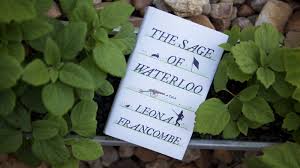
The Saturday Read – Leona Francombe ‘The Sage of Waterloo’

This year marks the bicentennial of the Battle of Waterloo. A number of books have been published to coincide with the anniversary, but it’s the unique storytelling of author Leona Francombe that gives us a very different view of the conflict. The ‘Saturday Read’ this week is ‘The Sage of Waterloo’.

The story begins when a French drummer boy releases a white rabbit into the Hougoumont gardens during the battle on June 18, 1815. Our narrator, William, is guided on his journey by his grandmother, Old Lavender and a wise researcher, Arthur. He invites us to join him along the route the rabbits call the ‘Hollow Way’:

“There are many soft hillocks and hollows along this part of the Way on which one can rest and look back, and I suggest that you do this, too, because the view behind is as clear as the view ahead, and offers some valuable lessons besides.”

Yes, we are talking bunnies. Or, the bunny is talking to us. And along his path we join the Battle of Waterloo.

“Waterloo is small as battlefields go…the Hougoumont part of it even smaller. How extraordinary, then, that my farm – my tiny corner of Belgium, which even today people have difficulty locating on a map – should have made history in just a few hours.”

For those readers unfamiliar with history, the Economist provides a thumbnail description:

“Waterloo not only brought to an end the extraordinary career of Napoleon Bonaparte, whose ambitions had led directly to the deaths of up to 6m people. It also redrew the map of Europe and was the climax of what has become known as the second Hundred Years War, a bitter commercial and colonial rivalry between Britain and France that had begun during the reign of Louis XIV. Through its dogged resistance to France’s hegemonic ambitions in the preceding 20 years, Britain helped create the conditions for the security system known as the Concert of Europe, established in 1815. The peace dividend Britain enjoyed for the next 40 years allowed it to emerge as the dominant global power of the 19th century.”

Which brings us back to our story and Arthur, the researcher, and did I mention black bird?, questioning humans’ short term memory.

“…they think they know what happened there. But their evolutionary process seems to be in reverse. They gradually forget the magnitude of what they’ve done – or at least, they’ve managed to disguise their violence as glory – so eventually, in the course of time, they can no longer feel what still hangs in the air. Not the way we do. So they don’t have any qualms about building cafes on burial grounds. They’ve never really stamped out their zeal for warmongering – quite the opposite, actually. They can’t seem to get enough of it.”

Near the end of the book William calculates an alternative if the soldiers had refused to fight: “approximately fifty thousand men would have lived. And ten thousand horses. And who knows how many rabbits?”

“Where did you learn all this?” I asked Arthur, after I’d finished my mulling. “Oh, you wouldn’t believe the things that remain in the woods around Hougoumont,” he said. “The resonance is quite astounding. Small creatures for miles around are still aware of the story.”

This small novel is a unique oral history of the Battle of Waterloo. Blending historical fact with fiction, author Francombe creates an unlikely ‘sage’ to carry the “collective memory…and resonance.” And reminds us to “feel what still hangs in the air” when we visit historic sites.

‘We Are The Champions’ by songwriter Freddie Mercury

On Sunday evening or Monday morning, depending where you were in the world, the US Women’s National Soccer Team defeated the women representing Japan 5-2 in the final of the Women’s World Cup in Vancouver, Canada.

At the end of the game, midfielder Carli Lloyd, who scored three goals in the first sixteen minutes of the final, commented on the victory.

“It’s been a long journey, my career. I’ve had a lot of people believe in me, in my corner, from day one,” said the midfielder, who turns 33 on July 16. “I’ve dedicated my whole life to this. Everything else comes second. But I wouldn’t want to do it any other way.”

On Tuesday, the New York Times reported on New York mayor, Bill de Blasio’s decision to recognize the women’s team:

“New York City will hold a ticker-tape parade on Friday for the United States women’s national soccer team, breaking with decades of precedent to bestow a rare honor upon a group that competes outside the metropolitan area.”

The Friday poem this week, on the day of the ticker tape parade, is the lyrics written by Freddie Mercury in 1977 and recorded by Queen. This one is for the members of the team, their families and coaches. And for all the young women and young men who have been inspired by the hard work, dedication and resilience of the US Women’s National Team.

We Are The Champions

I’ve paid my dues
Time after time
I’ve done my sentence
But committed no crime
And bad mistakes
I’ve made a few
I’ve had my share of sand
Kicked in my face
But I’ve come through

And we mean to go on and on and on and on

We are the champions – my friends
And we’ll keep on fighting
Till the end
We are the champions
No time for losers
‘Cause we are the champions of the World

I’ve taken my bows
And my curtain calls
You brought me fame and fortune
And everything that goes with it
I thank you all
But it’s been no bed of roses
No pleasure cruise
I consider it a challenge before
The whole human race
And I ain’t gonna lose

And we mean to go on and on and on and on

We are the champions – my friends
And we’ll keep on fighting
Till the end
We are the champions
No time for losers
‘Cause we are the champions of the World

We are the champions – my friends
And we’ll keep on fighting
Till the end
We are the champions
No time for losers
‘Cause we are the champions

Songwriter: Freddie Mercury, 1977

“Envisioning the non-obvious makes things unexpected”

Have you ever made a career move that had family and friends questioning your motives? Federica Marchionni became the CEO of apparel company, Lands’ End in February, leaving an executive position as President of US Operations at luxury brand Dolce & Gabbana.

Her career started in the telecommunications industry and led to an executive assignment at Ferrari before her move to D&G in 2001. Now she leads an organization with significant challenges after the company was spun off by parent Sears in 2014.

The ‘CBS This Morning’ news program reported on her move in a pre-taped interview:

“Marchionni is leading the company while splitting her time between New York and Wisconsin. From small town to Times Square, Marchionni is able to navigate two very different worlds.

“And I like it. And what I said is that envisioning the non-obvious makes things unexpected. And, of course, this wasn’t an expected choice. But only when you do take chances, you can grow,” she said.”

Take a minute to think about successful folks you have met. Why are they good at what they do? They take regular excursions away from their comfort zone. They make the ‘unexpected’ choice. They risk failure and professional reputation to achieve their definition of success.

In the case of Ms. Marchionni, her company is based in Dodgeville, Wisconsin but her office is in New York. She made a career choice that family and friends questioned, but her decision was not made in a void. Prior to joining Land’s End, she was familiar with the product line and supportive of the company founder’s commitment to the environment.

At the recent ‘Women in the World Summit’ she shared her vision for Land’s End:

“As the new CEO of Lands’ End, I want to lead this amazing American iconic company to become a meaningful global lifestyle brand. Meaningful in the way we conduct our business, in the way we make decisions, the way we inspire people (in our) community and the world.”

How will she accomplish her goals?

Speaking with CBS News: “The founder always said that if you take care of your people, if you take care of your customer, the business will take care of itself. And I totally, totally agree with that.”

Not all of us are contemplating ‘C-Suite’ employment packages, but we can learn from leaders who transition from one company to another.

Understand the culture, the product, the financials and the customer. Research will give you all the information you need before you accept a position.

Own the decision, even if friends and family are skeptical. Trust your gut.

Embrace change. Really. Corporate life today takes place in the world of the unexpected. That’s not a choice.