The week@work – Davos, Sundance, transparency and the benefits of procrastination

This week@work world leaders and policy gurus headed to Davos, Switzerland for the annual World Economic Forum, actors and directors arrived in Park City, Utah for the Sundance Film Festival and the rest of us enjoyed a snow day without the airfare. Transparency was suggested as a way to close the pay gap and provide a fair balloting process for the Oscars. And finally, for you procrastinators, research finds your approach to problem solving is more creative.

Of all the tweets emanating from the World Economic Forum, the most stunning came from Sharan Burrow, participating on ‘The New Climate and Development Imperative’ panel. Ms. Burrow is General Secretary of the International Trade Union Confederation. In discussing the drivers of action for development and climate targets she stated, “For workers, there are no jobs on a dead planet.” If that doesn’t bring home the reality of climate change to each global citizen, I’m not sure what will.

One of the ten major global challenges identified by the WEF poses the question, What does the world of work look like today and what will it look like in the future?

x_XWsHJRi2iKmV_VfOn05Y-3m7PnuCjow9VbC0kvDgc

“The scale of the employment challenge is vast. The International Labour Organization estimates that more than 61 million jobs have been lost since the start of the global economic crisis in 2008, leaving more than 200 million people unemployed globally.

Nearly 500 million new jobs will need to be created by 2020 to provide opportunities to those currently unemployed and to the young people who are projected to join the workforce over the next few years.

At the same time, many industries are facing difficulty hiring qualified staff. One 2015 survey found that, globally, 38% of all employers are reporting difficulty filling jobs, a two-percentage point rise from 2014.

Put simply, we need jobs for the hundreds of millions of unemployed people around the world, and we need the skilled employees that businesses are struggling to find.”

Two additional perspectives of the Davos conference were provided by Alexandra Stevenson for The New York Times, ‘Glass Ceilings at Davos, Now on the Agenda’, and Anne Marie Slaughter‘s ‘A Tale of Two Feminisms at Davos’.

Several time zones west, the Sundance Film Festival began its ten day run in Park City, Utah. Since 1978, it has been the place for independent film makers to show their dramatic and documentary films. A number of these films eventually became Oscar nominees, which brings us to a conversation on transparency.

For the past two weeks, since the announcement of the Academy Awards, the major recognition for those who work in film, the conversation has centered on the lack of progress in diversifying the industry and its major export, films. How many of us even knew how the voting was done as we mindlessly watch red carpet arrivals and comment on fashion, performances and our bets to win?

Glenn Whipp of the LA Times shared ‘Here’s How Oscar Voting Is Done’.

“Who nominates the actors for the Oscars? And how does the voting process work? Here’s a step-by-step primer:

The Motion Picture Academy of Arts and Sciences has 6,261 voting members. The entire body votes for best picture.

Nominations for most of the remaining categories are determined by the balloting of the academy’s various branches. A committee selects the foreign-language film nominees.”

The full article, though short, will definitely make your hair hurt, and prompt the question, why the delay in reform?

Film mogul, actor and producer, Tyler Perry offered his solution “If the Academy – I think all this would go away if they revealed the votes,” Perry said. “If you look at a movie like ‘Straight Outta Compton’ right and just say it got 1,000 votes and ‘The Revenant’ got 1, 001 votes, is that racism or is it just this is the way the votes went?”

We might all benefit from transparency and a clear set of rules beyond the intersection of Hollywood and Vine. Claire Cain Miller proposes we “publish everyone’s pay” as one answer to ‘What We Can Do to Close the Pay Gap’.

“When the comedian Ricky Gervais joked that he was paid the same to host the Golden Globes as the actresses Tina Fey and Amy Poehler — combined — his barbed humor most likely resonated in many workplaces.

When employers publish people’s salaries, the pay gap shrinks.

Jake Rosenfeld, a sociologist at Washington University, has found that salary transparency raises wages, in part by lending legitimacy to employees’ arguments in wage bargaining. “Even being cognizant of gender pay disparity being an issue can change norms,” he said.

That has been true in the public sector, where disclosing pay information is often required. Alexandre Mas, an economist at Princeton, studied the effects of a 2010 California law that required cities to publish municipal salaries. It prompted pay cuts, but only among men.

Women might have been spurred to negotiate after seeing that their salaries were lower, he theorized, or cities might have made salaries more equitable to avoid lawsuits.”

Bottom line, there are a lot of global and domestic problems to be solved and they require serious thought, teamwork and creativity.

Wharton professor Adam Grant shared the benefits of re-thinking his pre-crastination habit in ‘Why I Taught Myself to Procrastinate’, and found “..while procrastination is a vice for productivity, I’ve learned — against my natural inclinations — that it’s a virtue for creativity. It turns out postponement can encourage divergent thinking.

A few years ago, though, one of my most creative students, Jihae Shin, questioned my expeditious habits. She told me her most original ideas came to her after she procrastinated. I challenged her to prove it. She got access to a couple of companies, surveyed people on how often they procrastinated, and asked their supervisors to rate their creativity. Procrastinators earned significantly higher creativity scores than pre-crastinators like me.”



The week@work – agents of change, NY values and imagining a windfall

The week@work was dominated by stories of the small group of workers in entertainment, sports and politics. It was also the week that everyone had the opportunity to imagine entry into the world of celebrity via the purchase of a single $2 lottery ticket.

On Sunday evening the Hollywood Foreign Press Association handed out their annual Golden Globes, with the surprise winner being Mexican actor, Gael Garcia Bernal for his role as conductor of the fictional ‘New York Symphony’ in Amazon’s Golden Globe winning ‘Mozart in the Jungle’. “I want to dedicate this to music, to all the people that find the music and common ground for communication, for justice for happiness.”

As Huell Howser might say, “This is amazing!”, that a series about classical musicians led by a talented Mexican actor, wins an award in a year of political polarization and classical music’s declining prominence in our culture.

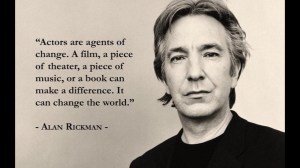
On Thursday, the actor who played Severus Snape in the Harry Potter series, Alan Rickman died. “With the last film it was very cathartic because you were finally able to see who he was,” Mr. Rickman said “It was strange, in a way, to play stuff that was so emotional. A lot of the time you’re working in two dimensions, not three.”

CYs2JjqWkAAWSqZ

Agents of change in theater, music, and the workplace challenge our thinking. On Monday we learned of the death of another transformational icon, David Bowie.

“In his dazzling artistry, daring style, unabashed intelligence, intensity of emotion, cultivation of magic, mystery and imagination, Bowie was a figure who bridged high and low culture, reverberating on so many different levels.”

On Monday morning, NPR replayed his 2002 interview with ‘Fresh Air’ host Terry Gross.

“I’m not actually a very keen performer. I like putting shows together. I like putting events together. In fact, everything I do is about the conceptualizing and realization of a piece of work, whether it’s the recording or the performance side. And kind of when I put the thing together, I don’t mind doing it for a few weeks, but then, quite frankly, I get incredibly, incredibly bored because I don’t see myself so much as a – I mean, I don’t live for the stage. I don’t live for an audience.”

David Bowie event planner? When we think of careers, we make assumptions about success, only to realize that each of us holds a unique definition which sculpts our approach to a calling.

“People often forgot, but up until his death, on Sunday at age 69, Mr. Bowie was a New Yorker

And though Mr. Bowie was enormously wealthy, he wasn’t one of those rich guys who kept an apartment in the city, along with a portfolio of global real estate holdings, and flew in. Aside from a mountain retreat in Ulster County, N.Y., his Manhattan apartment was his only home.

You may not have considered all this because Mr. Bowie was an apparition in the city, rarely glimpsed. You heard it mentioned that he lived here. Somewhere downtown, someone thought. But seeing him out? Good luck.”

Which brings us to the political discourse on ‘New York values’ and its relevance to job search. Relocation is a major consideration for many seeking career advancement. Understanding the character of the community you join outside of your workplace is equally, if not more important to understanding the values of your workplace community.

How many folks have decided to take a job in New York or LA only to later realize a major disconnect? This is not a value judgement, just a realization that we all need to find a place where we can be successful. Unfortunately, the job perks sometimes outweigh the geographical/cultural component in the decision making mix and it’s only when we are fully committed to our workplace that we begin to realize our success is being eroded by deficiencies in our neighborhood.

On to the world of sports. On Monday evening, two college football teams competed in the College Football National Championship game in Arizona. The University of Alabama’s team won by a score of 45-40 over Clemson. A few days later at the NCAA’s annual meeting, “NCAA president Mark Emmert praised student-athlete activism during his annual speech Thursday at the NCAA convention.”

During his 20-minute address at the NCAA’s opening business session, Emmert urged schools to continue to emphasize academics, fairness and the health and well-being of student-athletes.”

And yet, actions speak louder than words. Inside Higher Education reported“While the time demands on college athletes ­became the central focus of the National Collegiate Athletic Association’s annual meeting here this week, several proposals to deal with the issue were seemingly tabled the day before the NCAA’s five wealthiest conferences were scheduled to vote on them.”

Here’s the thing. With the exception of college coaches, everyone is in agreement that the ‘student’ in the ‘student-athlete’ equation takes priority. ‘Official’ time demands don’t begin to reflect the ‘unofficial’ time requirements of competing in Division I sports. And with only a select few moving on to compete in their sport as professionals, these students need the flexibility to explore career opportunities and participate in internships.

“Roderick McDavis, president of Ohio University, said it would be a mistake for colleges to wait for NCAA policy changes to prompt that shift. “Policies don’t change behavior,” he said. “People change behavior. We can hope that the NCAA catches up with us all one day, but what I know I can control is I can go home tomorrow and make a difference on my campus.”

And then there were the omnipresent billboards advertising the Powerball Jackpot at $999 million. Except the amount had grown to over $1.5 billion, which gave us all an opportunity to contemplate what we would do with that amount of money.

On a CNN broadcast the night before the drawing, international anchor Richard Quest asked anchor Anderson Cooper what he would do with the winnings if he had the lucky set of numbers. (You may know that Mr. Cooper is a Vanderbilt by ancestry.) His response, “I would buy a watch.” And he would be back at work the next day.

Here are a few additional articles that you may have missed from the past week.

‘Why I Always Wanted to Be a Secretary’ by Bryn Greenwood – Does your work define you? What if your dream job is central to an organization, but society’s definition is demeaning?

‘At Work And Feeling All Alone’ by Phyllis Korkki – In the world of telecommuting, new research indicates those left behind in the office have ended up feeling lonely and disconnected.

‘60% of Women in Silicon Valley Have Been Sexually Harassed’ by Lydia Dishman – Results of a survey of 200 women demonstrates a serious level of dysfunction in the tech giants’ workplace.

‘Yahoo’s Brain Drain Shows a Loss of Faith Inside the Company’ by Vindu Goel – “More than a third of the company’s work force has left in the last year, say people familiar with the data. Worried about the brain drain, Ms. Mayer has been approving hefty retention packages — in some cases, millions of dollars — to persuade people to reject job offers from other companies. But those bonuses have had the side effect of creating resentment among other Yahoo employees who have stayed loyal and not sought jobs elsewhere.”


The week@work – issues that will shape the world in 2016, positive forecast on salary growth, George R.R. Martin misses a deadline and why we should focus on our ‘already done’ list

The past week@work marked the transition from the old year to the new. We have seen the last of the ‘best and worst of the year’ in every imaginable category and it’s time to turn our attention to the future. Here’s the problem; global issues, work issues, customer issues and career issues don’t magically resolve themselves at the stroke of midnight on 12/31.

What the new year does provide is a demarcation point in time, to set aside previous solutions and reimagine innovative answers. We have permission to start anew.

Rose Pastore offers a list of ’10 Issues That Will Shape the World In 2016′. Recognizing the continuum of events from the old year to the new – “The end of 2015 leaves many of the year’s most significant issues still very much in flux, including the reform of U.S. gun control laws, the fates of thousands of Syrian refugees, and the legal status of massive startups like Uber and Airbnb.”

Some of these issues seem so beyond our everyday lives that it may be hard to grasp a connection to our work and workplace. But somewhere, a diplomat, an entrepreneur, an educator or a student may seize the moment, and solve one piece of the puzzle, in one of our multiple global challenges: “the refugee crisis, climate change, data security, gun violence, social justice and regulating the sharing economy.” 

Don Lee reported on the view that salaries will increase in 2016, driven by the decrease in unemployment and the implementation of new minimum wage laws in a number of states.

“American workers are poised in 2016 to finally get what they’ve been missing for years: higher salaries.

…worker wages will get an additional boost from higher minimum wages taking effect in a number of cities and states. California’s new minimum pay goes to $10 an hour in January. The increase will amount to an 11% pay raise for Marco Ruiz, a carwash worker in Anaheim who earns $9 an hour.

That’s an additional $40 a week, more than enough to cover Ruiz’s bus fare to his job from his home in Norwalk, which he rents with his brother-in-law. “It’s marvelous,” said the divorced 35-year-old, who started at the carwash eight years ago making $7.50 an hour, the state’s minimum wage then.

Like Ruiz, most people in the U.S. already feel more secure in their jobs. As layoffs have receded sharply, weekly filings for new jobless benefits have fallen this year to numbers not seen since the early 1970s. And Gallup polls show workers’ “complete satisfaction” with job security rose to a 15-year high in summer 2014. Their overall satisfaction with pay, however, hasn’t returned to prerecession levels. In fact, many workers still feel that the recovery from the Great Recession passed them by.”

Early Saturday morning, author George R.R. Martin posted his admission, “THE WINDS OF WINTER is not finished.”

The year ended and the author of the series, ‘A Song of Ice and Fire’, publicly announced he had missed a deadline and gave us a glimpse of his creative process.

“Believe me, it gave me no pleasure to type those words. You’re disappointed, and you’re not alone. My editors and publishers are disappointed, HBO is disappointed, my agents and foreign publishers and translators are disappointed… but no one could possibly be more disappointed than me. For months now I have wanted nothing so much as to be able to say, “I have completed and delivered THE WINDS OF WINTER” on or before the last day of 2015.

But the book’s not done.

Nor is it likely to be finished tomorrow, or next week. Yes, there’s a lot written. Hundreds of pages. Dozens of chapters. (Those ‘no pages done’ reports were insane, the usual garbage internet journalism that I have learned to despise). But there’s also a lot still left to write. I am months away still… and that’s if the writing goes well. (Sometimes it does. Sometimes it doesn’t.) Chapters still to write, of course… but also rewriting. I always do a lot of rewriting, sometimes just polishing, sometimes pretty major restructures.”

Alison Flood of The Guardian reported on the response from readers and fans.

“This time, though, Martin’s readers were quick to encourage him, with the more than 1,000 comments on his blog ranging from “Love your work, George! Get it done when it’s done. I’ll be there” to “Don’t sweat it, George” and “Take as long as you need to, sir”.

“That couldn’t have been fun to write,” wrote one reader in response to Martin’s blog. “But fact is in 50 years readers will judge on the book’s quality and not if they met some arbitrary deadline and beat the TV adaptation. As much as I’d like to see it released soon, I ultimately approve of the priority on quality.”

For all of you who have started the new year with a missed deadline, consider the lesson here. It’s impossible to live without failure. Even the most successful fail. It’s the next step in the lifelong learning process that matters, and that might be the most important thought to hold in the new year.

Minda Zetlin offers some timely practical advice, that George R. R. Martin might consider ‘Five Reasons You Should Make an Already-Done List Right Now’.

“…if you want to feel motivated, set that to-do list aside, and make a list of what you’ve already accomplished instead.

That advice comes from best-selling author and executive coach Wendy Capland. A while back, I wrote a column from an interview with Capland and as a follow-up we decided she would coach me and that I would write about it. These coaching sessions come with homework, and one recent assignment was to make a list of all the things I had already done​ to advance toward my most ambitious goals. It was something I’d never done before, and it was a revelation.”

Perhaps the best advice is to start the year with an accomplishments audit, focusing on the strengths derived from your success (and failure) and build on that foundation @work in the new year.


The week@work – The Fed raises rates, Martin Shkreli is arrested, ‘The Big Short’ premieres and so does a small film about a galaxy far, far away

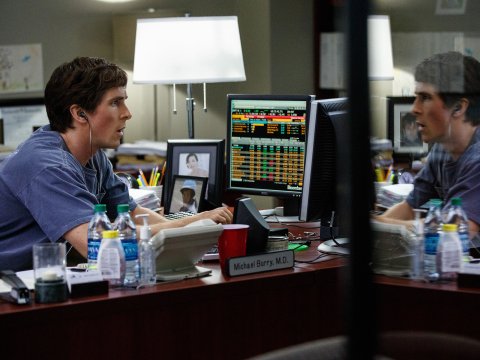
It’s that time of year when the world of finance takes center stage, only to be bested by the creativity of those who work in Hollywood. This week@work the Federal Reserve raised its benchmark rate, pharmaceutical executive, Martin Shkreli was arrested on securities fraud and the 2008 financial crisis originally chronicled by Michael Lewis, made its way onto the big screen in ‘The Big Short’. And that small movie from Disney? ‘Star Wars: The Force Awakens’ set new records with a $238 million weekend opening.

On Wednesday, the Wall Street Journal reported on the decision by the Federal Reserve to raise interest rates for the first time in seven years.

“The Fed’s decision today reflects our confidence in the U.S. economy,” Fed Chairwoman Janet Yellen said Wednesday in a press conference after a two-day policy meeting. “We believe we have seen substantial improvement in labor market conditions and while things may be uneven across regions of the country, and different industrial sectors, we see an economy that is on a path of sustainable improvement.

New projections show officials expect the fed-funds rate to creep up to 1.375% by the end of 2016, according to the median projection of 17 officials, to 2.375% by the end of 2017 and 3.25% in three years. That implies four quarter-percentage-point interest rate increases next year, four the next and three or four the following. It depends on whether the Fed’s forecasts for the economy—which have frequently been wrong in this expansion—hold up.”

The Fed rate increase was one of the ‘Four Charts That Defined the World in 2015’.

2014_Charts_Federal-690

Vauhini Vara writing in The New Yorker listed the other three:

“For the first time, fewer than ten per cent of people in the world were living in extreme poverty.

Facebook took over the world.

Greece’s economy started growing again—and then shrank.”

On Thursday, Bloomberg Business noted the arrest of Martin Shkreli, the infamous pharmaceutical head, and everyone’s leading candidate for this year’s Scrooge. You may remember Shkreli from his multiple media appearances after raising the price of the drug Daraprim from $13.50 a pill to $750. Apparently he not only violated the golden rule, but also an unspoken pact among those in financial services, not to draw attention to themselves or their activities.

“While the 32-year-old has earned a rare level of infamy for his brazenness in business and his personal life, what he was charged with had nothing to do with skyrocketing drug prices. He is accused of repeatedly losing money for investors and lying to them about it, illegally taking assets from one of his companies to pay off debtors in another.

“Shkreli essentially ran his company like a Ponzi scheme where he used each subsequent company to pay off defrauded investors from the prior company,” Brooklyn U.S. Attorney Robert Capers said at a press conference.”

He was released on bail on Friday and did what we would all do after being publicly shamed, began live streaming, chatting with ‘supporters’.

“Which brings me to a new movie the enemies of financial regulation really, really don’t want you to see.” writes nobel prize winner, Paul Krugman in The New York Times.

“But you don’t want me to play film critic; you want to know whether the movie (The Big Short) got the underlying economic, financial and political story right. And the answer is yes, in all the ways that matter.

I could quibble over a few points: The group of people who recognized that we were experiencing the mother of all housing bubbles, and that this posed big dangers to the real economy, was bigger than the film might lead you to believe. It even included a few (cough) mainstream economists. But it is true that many influential, seemingly authoritative players, from Alan Greenspan on down, insisted not only that there was no bubble but that no bubble was even possible.

And the bubble whose existence they denied really was inflated largely via opaque financial schemes that in many cases amounted to outright fraud — and it is an outrage that basically nobody ended up being punished for those sins aside from innocent bystanders, namely the millions of workers who lost their jobs and the millions of families that lost their homes.”

Need a holiday escape from everyday villains and economic reality? The folks at the ‘house the mouse built’ offer a 135 minute visit to an alternate universe.

“Chewie, we’re home” teases the plot in the trailer for the new Star Wars movie. This week the cast of the seventh installment of the intergalactic saga walked the red carpet, four blocks long, at the Hollywood premiere.

Variety covered the opening weekend box office results.

“Director J.J. Abrams’ nostalgic take on the series of space operas George Lucas created four decades ago was a hit with critics and fans, earning strong reviews and an A CinemaScore. Its opening soared past the previous high-water mark of $208.8 million established last summer by “Jurassic World.” It more than doubles “The Hobbit: An Unexpected Journey’s” December record debut of $84.6 million.

Globally, “Star Wars: The Force Awakens” scored the second-biggest opening in history, earning $517 million worldwide, behind only “Jurassic World’s” $525 million bow. Unlike “Jurassic World,” the seventh film in the “Star Wars” franchise did not have the benefit of showing in China on its inaugural weekend. It opens there on Jan. 9.”


This one is for the Class of 2009

This past weekend Paramount Pictures released ‘The Big Short’ based on the 2010 Michael Lewis book of the same title about the build up of the housing and credit bubble in the first years of the new millennium.

There were many casualties of the worst financial crisis since the great depression.  I thought it might be worthwhile, as moviegoers line up for tickets, to revisit that time and the impact on those who graduated from college in 2009.

It took a few months for the ripples of economic crisis to reach college campuses. But in the fall of 2008 corporate recruiters began to cancel on-campus interviews and career fairs shrunk to a quarter of their previous year’s participation.

Students who had entered college in the fall of 2005 faced optimistic prospects as the economy was booming and entry level jobs were plentiful. But the global economy began to turn in the spring of junior year, with many heading off to summer internships in anticipation of transitioning to full time work at graduation.

By final exams in 2008, things were looking bleak. Here is an excerpt of a blog I wrote on December 11th.

“When the semester began in August, not even the experts could have predicted the level of change we would experience this fall. While each academic year provides opportunities to embrace challenge and celebrate success, these past four months have created historical moments with the potential to redefine our place in the world.

As you are writing your final papers and studying for exams, let’s take a minute to review what we have learned.

First, we are in an age of globalization. If you have been hiding under the covers for the past ten years, the economic downturn brought the reality of the global banking community to the forefront. In a few short months we have learned more than we may have wanted to know about real estate, mortgages, investment banking, insurance and the auto industry. And we now have a better sense of how our domestic economy depends on the health of these industries. For many of us, the impact of the downturn in the economy has hit close to home with friends and family out of work.

Change can be difficult. If you are a freshman this year, your transition from high school to college is a fresh memory. There was the excitement of a new place mixed with missing friends and family. With every new opportunity to change there is a sentimental longing for the past. For seniors, there is the anticipation of the next step: graduate school, professional school, a new job or and entrepreneurial start up. It is a time of hope mixed with uncertainty.

You are a part of a historic moment in time. Become an active participant. If opportunities in a career field are limited, look toward the new careers emerging as a result of change. All you have learned this semester in your classes, organizations and internships have provided you with a solid foundation to adjust and adapt. This is your strength.”

If the rumors are true, the Federal Reserve will raise interest rates this week, bringing an end to the economic downturn that began in the spring of 2008.

I think it’s important not to forget the lessons learned in 2008 and 2009. Check your social network and schedule a sit down with a 2009 graduate. Get a first person account of how to recalibrate a career path to eventually arrive at success.


The week@work – End of the fossil fuel era, founders, introverts, college athletes and the one business book to read

The generational disruption continues. This week@work world leaders committed to cut greenhouse gases, ensuring the environment for future generations. MTV labeled the next of these generations ‘the founders’. Silicon Valley is quickly becoming the vortex for college consulting, making sure these ‘founders’ gain admission to the best universities. And a group of Clemson alumni have come up with a creative alternative to legally compensate college athletes via crowdfunding.

For introverts, there were hints for employers to maximize success. And if you only read one business book this year, the experts recommend ‘Rise of the Robots’ by Martin Ford.

The global story this week was reported from Paris by The Guardian.

“After 20 years of fraught meetings, including the past two weeks spent in an exhibition hall on the outskirts of Paris, negotiators from nearly 200 countries signed on to a legal agreement on Saturday evening that set ambitious goals to limit temperature rises and to hold governments to account for reaching those targets.

Government and business leaders said the agreement, which set a new goal to reach net zero emissions in the second half of the century, sent a powerful signal to global markets, hastening the transition away from fossil fuels and to a clean energy economy.”

In national news, The Atlantic’s David Sims summarized the MTV survey that resulted in a name for the children of the new millennium.

“The name “The Founders” comes from the kids themselves, according to MTV’s survey of more than 1,000 respondents born after the year 2000. America is still reckoning with Millennials (loosely classified as those born from the mid-1980s to the late-’90s) one thinkpiece at a time, but according to this survey, their fate is already sealed. As the children of indulgent baby boomers, Millennials are classified as “dreamers” who live to disrupt and challenge established norms. The Founders, by contrast, are “pragmatists” who will navigate a tougher world defined by 9/11, the financial crisis, and gender fluidity. Previous generations had to worry about getting into college and finding a job, but the next one is tasked with cleaning up their mess.”

Nathan Heller, writing in The New Yorker imagined how today’s fourteen year olds will impact the economy.

“When the teen-agers call themselves founders, they are not thinking of Roger Sherman or, for that matter, of Henry Ford. They are allying themselves with West Coast startup culture—a milieu that regards inventive business-building as the ultimate creative and constructive act…In embracing “founders,” it affirms the idea that creativity is essential—and performed through business enterprise.

“If the founders hold to their founding, it is not hard to extrapolate the economic model that their interests will support. A founder-friendly society is deregulated, privatized, and philanthropic in its best intent. (See ur-founder Mark Zuckerberg’s recent tax-incentivized pledge.) “Founders,” whose popularity as a Silicon Valley concept followed the 2009 recession, has become a stand-in for more charged, and less heroic-sounding words, such as “small-business owner,” “C.E.O.,” and “boss.” To found is not to manage; it’s to dream and to design. This is the new model for innovative business, scrupulously cleansed of the dank trappings of corporate industry. It’s business all the same, though, and it aims for growth.”

If you are working in the underpaid and undervalued world of college admissions, you have a future in the lucrative business of college consulting. Georgia Perry reported on the growing industry, fueled by parental anxiety, that helps high school students find summer internships, prepare applications and refine essays.

“Private college-admissions consulting is a rapidly growing industry across the U.S. According to the Independent Educational Consultants Association, the number of independent admissions consultants in the U.S. has grown from 2,000 to nearly 5,000 in recent years. In a nationwide study, the marketing firm Lipman Hearne found that of students who scored in the 70th percentile or higher on the SAT, 26 percent had hired a professional consultant to help with their college search. The San Francisco Bay Area has a higher concentration per capita of independent college-admissions consultants than “most cities,” says IECA communications manager Sarah Brachman, though the association doesn’t have specific numbers. The IECA’s most recent report found that nationally, $400 million was spent on college consultants in 2012. Hourly rates in the Bay Area can be as high as $400 an hour, and comprehensive packages with regular meetings throughout high school can add up to several thousand dollars.”

How student-athletes are compensated continues to be a topic in legal proceedings, but this week a group of Clemson folks have come up with an innovative approach that just might work and meet NCAA requirements. Ben Strauss provided the details in his article ‘If Colleges Can’t Pay Athletes, Maybe Fans Can, Group Says’.

“The answer to the riddle of putting money in the hands of amateur student-athletes, who according to the N.C.A.A. cannot be paid, is crowdfunding, said Rob Morgan, a Clemson business school graduate and an anesthesiologist based in Greenville, S.C. His new website, UBooster, started on Friday with the goal of soliciting payments for high school recruits from fans, and delivering the money to the athletes after their college careers end.

“We think this is the direction college sports is headed,” said Morgan, who has been helped in his venture by a former Clemson football player and the interim dean of the university’s business school. “At some point, there is going to be an opportunity for players to make money, and here’s how we can be a part of it.”

“The business model is simple. Fans pledge money to individual recruits, and can leave public notes on the site urging them to attend their favorite college. Morgan said all high school recruits — men and women in every sport from Division I to Division III — would be eligible, though it would seem obvious that most of the interest and money would be directed at top-flight football and basketball prospects. The accounts lock, and no more money can be pledged to players once they formally commit to a college. UBooster will then hold the money in a trust before turning it over to the athletes after their college careers.”

Quiet Revolution founder Susan Cain is an advocate for the introvert in all facets of life. And it’s her website’s section on work that provides insight into fostering career success. This week, Liz Fosslien and Mollie West offered an ‘Illustrated Guide to Introverts in a Start-Up’.

An-Illustrated-Guide-to-Introverts-in-a-Start-Up.jpg

“Famous introvert entrepreneurs include Thomas Edison, Bill Gates, Warren Buffett, Marissa Mayer, and Mark Zuckerberg.

When we imagine our ideal workplace, it looks more like a library full of quiet rooms and isolated carrels than the ball-pit and bullpen situation start-ups are currently obsessed with. As introverts, we may be outnumbered by extroverts at start-ups. According to Laney, “The introvert is pressured daily, almost from the moment of awakening, to respond and conform to the outer world.” This need to conform can be tiring. But we promise, with just a few tweaks in the workplace, you could make us very happy.”

Finally, if there is only one business book you will read this year… and the clock is ticking…the experts recommend ‘Rise of the Robots’ by Martin Ford. Jessica Stillman reported:

“According to the Financial Times and consultancy McKinsey, there’s at least one title even the busiest business owners shouldn’t miss. They recently crowned Rise of the Robots by entrepreneur Martin Ford the very best business book of the year.

Hugely topical, the book discusses the much debated idea that advances in automation will soon radically affect the labor market. “The book reflects growing anxiety in some quarters about the possible negative impact of automation on jobs, from manufacturing to professional services,” explains the FT write-up of the award. This economic reshuffle may require “a fundamental restructuring of our economic rules,” according to Ford, who proposes a guaranteed minimum basic income as one possible remedy.”

Enjoy your week@work… the founders and robots are coming…


The week@work – Mark Zuckerberg writes a letter, equality comes to combat, 20 predictions/20 years, the November jobs report and terrorism@work

This week@work was dominated, until mid-week, by the story of the ‘Chan Zuckerberg initiative’ to set aside 99% of their Facebook wealth, and overshadowed a major shift in policy within the Pentagon, opening all combat jobs to women, without exception. The November jobs report continued the positive trajectory of the economy with the revision upward of September and October numbers. And the editor of Fast Company Magazine offered ‘Twenty Predictions for the Next Twenty Years’.

All of those stories pale in comparison to the return of terrorism to the workplace at a holiday party at 11 AM on Wednesday in San Bernardino, California.

Mark Zuckerberg wrote a letter to his new daughter and lots of attention was paid to the section on sharing his wealth.  Carmine Gallo of Forbes took closer look and noted that the letter read like a great speech.

“As you’ve probably read by now Facebook founder Mark Zuckerberg and his wife Priscilla Chan welcomed a daughter into the world in a very big way – with the creation of a new initiative to donate 99% of their Facebook shares ($45 billion currently) to philanthropy. That’s the headline. I was struck, however, by how the open letter to their daughter read more like a speech than a letter. It was meant for the eye…and the ear. It was meant to inspire a generation to commit itself to giving and to making the world a better place.

“Like all parents, we want you to grow up in a world better than ours today,” the letter begins. Read aloud at an average speaking pace, the 2,200-word letter takes about twelve minutes to recite, the ideal amount of time for a good speech (many of the most notable speeches in recent history clock in at 15 minutes or less).

Zuckerberg’s hope for his daughter’s generation provides the theme of the letter, a headline that fits into one short sentence. In bold letters, Zuckerberg writes:

“Advancing human potential and promoting equality.”

Amanda Platell of The Daily Mail offered an alternate version.

“Let’s start with the ‘friends’ you may have on Facebook. Do not confuse them with the friends you should trust in the real world. Many will barely know you, plenty may be jealous, others will be insincere and spiteful…

If I have learned anything from running Facebook, it’s that there is no such thing as privacy any more. After all, that’s how I made our billions!

Come to think of it, perhaps we won’t give you a computer until you’re 18, just to be safe. Love, Dad.”

On Thursday the Dan Lamothe reported on the groundbreaking change in staffing policy at the Pentagon.

“Defense Secretary Ashton B. Carter said Thursday that he is opening all jobs in combat units to women, a landmark decision that would for the first time allow female service members to join the country’s most elite military forces.

Women will now be eligible to join the Navy SEALs, Army Special Forces and other Special Operations Units. It also opens the Marine Corps infantry, a battle-hardened force that many service officials had openly advocated keeping closed to female service members.

“There will be no exceptions,” Carter said. “This means that, as long as they qualify and meet the standards, women will now be able to contribute to our mission in ways they could not before.”

Robert Safian, the editor-in-chief of Fast Company magazine marked the twentieth anniversary of the publication with ‘Twenty Predictions for the Next Twenty Years’.

“We celebrate birthdays to remember all that has gone before, and also what is to come. This month, with issue No. 201, we recognize Fast Company’s 20th anniversary by looking toward the future. The dynamic change of the past two decades is just a warm-up for what is still to come.

I have used the phrase Generation Flux to describe this era of transition. Because the changes are coming so fast, there is a rising premium on our ability to adjust, to be adaptable in new ways. This can be scary for some, but it is also undeniably exciting, and for those prepared to embrace this emerging reality, the possibilities are tantalizing.

What follows are 20 observations that we believe will hold fast in the years ahead. They are predictions and, as such, are fraught with limitation and supposition. None of them, on their own, is shocking. That is by design. In combination, though, they outline a world of tomorrow where work is still personal, computing is still social, and knowledge is still power. And where the rules for success will be ever-changing.”

Bouree Lam covered the optimistic economic report from the Labor Department on Friday.

“The November jobs report is out, and it’s meeting what were moderately high expectations. The figures from the Labor Department show that the unemployment rate remained at 5 percent and the economy added 211,000 jobs in November. Jobs were added in construction, health care, and “professional and technical services”—the Labor Department’s term for an assortment of white-collar jobs. Among those, the construction sector showing particularly strong growth, adding 46,000 jobs.”

On Wednesday morning a group of colleagues went to work at the Inland Regional Center in San Bernardino, California. As they were taking a break, preparing for a holiday celebration, one of their team and his wife, both heavily armed, entered the room and changed lives forever.

In 2014 there were 404 workplace homicides, 80% were shootings. The ‘mass shooting’ in San Bernardino was the fourth of this year.

Yesterday the editors of The New York Times published an editorial on the front page of the paper, ‘End the Gun Epidemic in America’.

I’m done with the retailers who give away guns to the first 200 customers on Black Friday. And I’m not comfortable with my cubicle mates carrying weapons to work. The workplace is a place to create, engage and perhaps follow a dream. Fear and hostility have never been a productive part of life @work. The last time leading by fear worked was in the mid-20th century Catholic grammar school classroom.

“It is a moral outrage and a national disgrace that civilians can legally purchase weapons designed specifically to kill people with brutal speed and efficiency. These are weapons of war, barely modified and deliberately marketed as tools of macho vigilantism and even insurrection. America’s elected leaders offer prayers for gun victims and then, callously and without fear of consequence, reject the most basic restrictions on weapons of mass killing, as they did on Thursday. They distract us with arguments about the word terrorism. Let’s be clear: These spree killings are all, in their own ways, acts of terrorism.”

On March 4, 1933 newly elected President Franklin Roosevelt delivered his inaugural address. The familiar phrase, “…the only thing we have to fear is fear itself..” has been whispering from the back of my mind since Wednesday and I think it’s particularly relevant to our political conversation today.

“This is preeminently the time to speak the truth, the whole truth, frankly and boldly. Nor need we shrink from honestly facing conditions in our country today. This great Nation will endure as it has endured, will revive and will prosper. So, first of all, let me assert my firm belief that the only thing we have to fear is fear itself—nameless, unreasoning, unjustified terror which paralyzes needed efforts to convert retreat into advance. In every dark hour of our national life a leadership of frankness and vigor has met with that understanding and support of the people themselves which is essential to victory. I am convinced that you will again give that support to leadership in these critical days.”


The Saturday Read ‘Patience and Fortitude’ by Scott Sherman

In times of financial crisis, you start looking around the house for things you might sell off until you realize all you have left is the real estate under your roof. For the New York Public Library in the early years of the 21st century, the fine art had been sold at auction, the staff had been ‘right sized’ and all that was left to remain solvent were the private donors and the coveted real estate footprint of branch locations.

This week’s ‘Saturday Read’ is ‘Patience and Fortitude: Power, Real Estate, And The Fight To Save A Public Library’ by Scott Sherman.

“This is a book about a world-class library that lost its way in the digital age.”

patience and fortitude

A public library is a community sanctuary that has historically offered immigrants a way to the middle class. In the Preface, author Sherman retells the story of former New York Senator, Daniel Patrick Moynihan who was working as a boot-black in 1940s Times Square, visiting the main library at 42nd Street.  “It was the first time I was taught that I was welcome in a place of education and learning. I would go into that great marble palace, and I would check my shoeshine box. A gentleman in a brown cotton jacket would take it as if I’d passed over an umbrella and bowler hat.”

This is a New York story, but one that illustrates the fate of the non-profit organization in an economic downturn. In the case of the NYPL, originally founded by bankers and corporate titans, the seismic shifts in the economy forced the influential board, of modern day financiers, to engage big name consultants in an attempt to apply “free-market solutions to complex institutional problems.”

The central narrative of the book was first reported by author Sherman in the December 2011 issue of ‘The Nation’. ‘Upheaval at the New York Public Library’ made public a four year old ‘Central Library Plan’, conceived and ratified by the NYPL’s trustees.

“The core trustees – led by the developer Marshall Rose – did what came naturally to them: they sold the NYPL’s land and took steps to shrink an institution they may have viewed as bureaucratic and inefficient…Personal enrichment was certainly not the trustees’ intention; they were sincere in their desire to assist the Library. It was hubris that drove them forward, and which ultimately led them astray: they believed that corporate logic could be effortlessly applied to a sprawling, decrepit library system.”

Consider this the first shot across the bow, as the Sherman chronicles the response from writers, researchers, NYPL employees, politicians and library patrons.

A 2012 Op-Ed piece written by Theodore Roosevelt biographer, Edmund Morris for The New York Times offers a sample of the opposition.

“I read newspaper reports about the determination of Anthony W. Marx, the president of the library, to spend $300 million to transform the main building, long devoted to reference, into what sounds like a palace of presentism. He wants to close the library system’s biggest circulating branch, the Mid-Manhattan (located just across the street) and the Science, Industry and Business Library (also in Midtown) and somehow wedge their contents into the already overstocked central research library.

For that he will need all the spatial ingenuity of his trendy architect-designate, Norman Foster. But something’s going to have to give, and you can be sure that what is new and hard and digital will prevail over what is old and papery and transportable elsewhere.”

On May 7, 2014 Robin Pogrebin reported that the NYPL has abandoned its renovation plan.

Last month, Tom Mashberg of The New York Times reported on the new plan to create a high-tech space under Bryant Park to house 2.5 million research works from the original stacks.

“This was not, of course, Plan A. That plan entailed a makeover of the flagship Fifth Avenue library that would have sent the research books to Princeton, N.J. But it set off a virtual Fahrenheit 451 of outrage among scholars and others for whom the library’s role as a research mecca seemed endangered. Critics, who hoped the old steel stacks could stay in use, remain apprehensive about the new stocking and retrieval system, which they say is impressive but has not been tested.”

To be continued…

And while you wait, catch up on the history and the cast of characters who bring ‘Patience and Fortitude’ to life.


What are you planning to do after graduation?

It’s the question that can cause one to instantly lose their appetite. It’s Thanksgiving and just as you are about to digest your first bite of turkey, someone decides it’s the perfect time to quiz you on your plans after graduation.

Here are a few ideas to manage the conversation.

If you have a job offer, focus on discussing your plans for starting your career. You may find that family and friends have contacts within the organization or career field you are entering. Ask for names and start to build your professional network.

If you have recently started your job search, share your experience to date and ask for advice. My favorite response is “I am considering a number of options, what ideas do you have for me?” This turns the question around and you may gain some new insight in the responses you receive.

Let’s say you have been focused on midterms and getting through the semester. You haven’t started to look for a job or internship. You may still be undeclared, considering a variety of concentrations. Ask for advice. Talk about the classes you enjoy the most and your activities outside the classroom. This gives people a starting point to respond and suggest possible options.

Whenever possible, give people something they can work with. The more specific you can be in talking about what career interests you have, the better the chance they will be able to help and provide a referral. Bring home a few copies of your resume. I am not suggesting you leave them on the dining room table, but it is a good idea to be prepared.

Planning for the Thanksgiving Career Conversation

It’s the annual celebration of Thanksgiving, that time of year when families get together and complain about dissatisfaction with work. What if we approached the holiday season as an opportunity for taking action on shelved career plans?

We tend to think of the holidays as a time to get away from our workplace. And yet, it can be a time to reconsider career choices and solicit input from family and friends.

Let’s reimagine the pre or post-dinner conversation that has previously been a competition to demonstrate who has the worst boss, longest hours, deadest of dead end jobs. Consider a conversation where you identify your spot on your career timeline, articulate your goals and ask for guidance on next steps.

Your friends and family are your most trusted advisors. They’re the folks who know all your faults and are still there. Don’t waste their time with a whining session. Respect their abilities to listen and share feedback.

Start with the past year and what you have accomplished. Even in the worst job situation we can salvage a few learning experiences, from both failure and success. Come up with a way to communicate your skills, leaving out acronyms, to enable folks to envision how your strengths apply across fields.

Next, recall that dream job that has been tantalizing you, but disappears in the fog of the everyday demands of the workplace. Got it? Now you have your baseline and end goal. Don’t be shy about sharing it.

What’s missing? The interim steps to get you from point A to point B.

And this is where those negative conversations turn into positive and productive discussions. Now that you have shared your goals, folks are empowered to help: adding to your list of skills based on a long term view of your career, providing input on strategy and offering connections to keep the conversation going after the holidays.

It’s not just the folks who are contemplating career transition that can benefit from these holiday interactions. If you think all is well in your career, a close confidant can often detect warning signs you may be missing in your optimism.

The real value of your family/friends ‘board of advisors’ is their ability to hold you accountable to your dream. You will see them, same time next year, and they will ask you how far you’ve travelled on the road to your destination.